music-lovershistory-buffs
Fosforito flamenco singer theme: a cantaor mid-song at a wooden table in a whitewashed Andalusian patio, eyes half closed, one hand raised, an old guitar leaning on a chair, warm evening light

Fosforito, the Flamenco Singer Who Won Every Prize in Córdoba
Fosforito, the Puente Genil singer who swept Córdoba's 1956 flamenco contest and was the last holder of the Llave de Oro del Cante, died aged 93 in 2025.

Portrait of Sophie Marchand
Written by

Art history background with eight years writing interpretive content on Córdoba's Caliphal heritage.

Published
Modern Córdoba1808–today
The flamenco singer Fosforito died in Málaga on 13 November 2025, aged 93.[1] He was the last holder of the Llave de Oro del Cante, the fifth ever presented.[2][3] Born in Puente Genil rather than the city itself, he became Córdoba's adopted son in 1981, twenty-five years after sweeping its flamenco contest.[4]
Death in Málaga
13 Nov 2025
He was 93; his son Alejandro Fernández announced it[1]
Córdoba's adopted son
1981
Council tribute and a book, 25 years after the contest win[4]
Llave de Oro presented
11 Oct 2005
Fifth Llave de Oro del Cante, given at Málaga's Teatro Cervantes[3]

A tavern singer from Puente Genil

Antonio Fernández Díaz was born in Puente Genil on 3 August 1932, taught himself to sing, and grew up in a family of keen aficionados.[5] Puente Genil, the quince-paste town in the province of Córdoba, is not the city, and Córdoba would take some decades to claim its flamenco singer as its own.
Fosforito began as his father's nickname, not his. The father was called that for his likeness to the Cádiz singer Francisco Lema, known as Fosforito el Viejo, though the two men were never related.[6] The son inherited a name that already belonged to someone else's face and sang it into a reputation of his own.
He was about ten when he started singing in taverns and grocers' bars and following the cattle fairs of the villages around Seville and the Serranía de Málaga.[7] A cattle fair is a hard room: no stage, no silence, an audience that came to buy and sell. A child who holds attention there learns projection and nerve long before he learns refinement. That apprenticeship, with no academy and no teacher of record, says something about the voice he developed: one formed to carry across open ground rather than to fill a theatre, and later disciplined into the long, patient phrasing of the deep cantes.

1956: the Córdoba contest he won outright

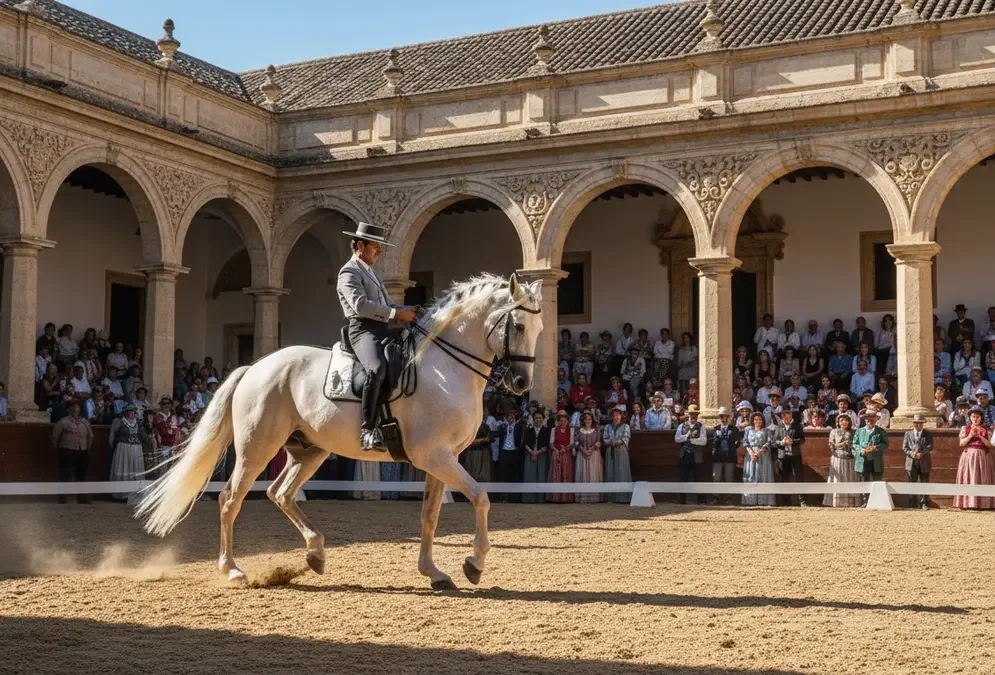
In 1956 he entered the first Córdoba contest and took every prize, surprising people with how many styles he commanded.[8] The event appears in print as the Concurso Nacional de Cante Jondo and as the first Concurso Nacional de Arte Flamenco de Córdoba; both names point to the same competition. Its designers were the poet and flamenco scholar Ricardo Molina and Anselmo González Climent, who aimed to do for the traditional cante what Granada's 1922 contest had tried to do.[9]
Molina, who had helped build the contest, said that Spain was now "fosforizada", Fosforito-struck, even more than the jurors who had crowned the singer from Puente Genil.[10] A designer coining a verb from the winner's name says more about the result than the list itself.
The prizes ran across the whole repertoire: the Premio de Honor for siguiriyas, martinetes, carceleras and saetas; a Primer Premio for soleares, caña, polo and serrana, and another for malagueñas, rondeñas, verdiales and fandangos de Lucena;[11] and the Premio Absoluto for tonás, livianas, debla and temporeras.[12]

Why the sweep mattered

The timing mattered. In the hard post-war years Ópera Flamenca had pushed the music toward something lighter and more commercial, and he stayed loyal to the deep roots of cante jondo: seguiriyas, tonás and soleares.[13] He was also a payo, not a Gitano, and outside the famous triangle of flamenco heartlands, yet his style stood close to the Gitano aesthetic, which showed that flamenco goes beyond race and geography.[14] That outsider status is part of why the contest became a founding moment in the history of flamenco in Córdoba.

Mairena's Llave, 1962

In 1962 Antonio Mairena won the third Llave de Oro at Córdoba's contest against rivals that included Fosforito, El Platero de Alcalá, Chocolate and Juan Varea.[15] Fosforito, ironically, was one of the main promoters of that Llave going to Mairena.[16] By then the singer from Puente Genil was one of the names a Gitano master had to measure himself against.

Records, tours and the styles he rescued
Fosforito built his career on stage and in the studio rather than on a single hit. In 1964 he toured the whole North American coast around the World's Fair with his friend, the guitarist Juan Habichuela,[17] and through the 1970s he and Antonio Mairena headlined every flamenco festival in Spain, while he rescued styles of his own land such as the zángano of Puente Genil.[18]
Obituaries call his collaboration with Paco de Lucía a landmark;[19] the record they made together is the Selección antológica del cante flamenco, four LPs recorded for the Barcelona label Belter between 1968 and 1974.[20] The critic José Manuel Gamboa called his discography "a school in itself", which for a man who learnt in taverns is a fair reversal.[21]
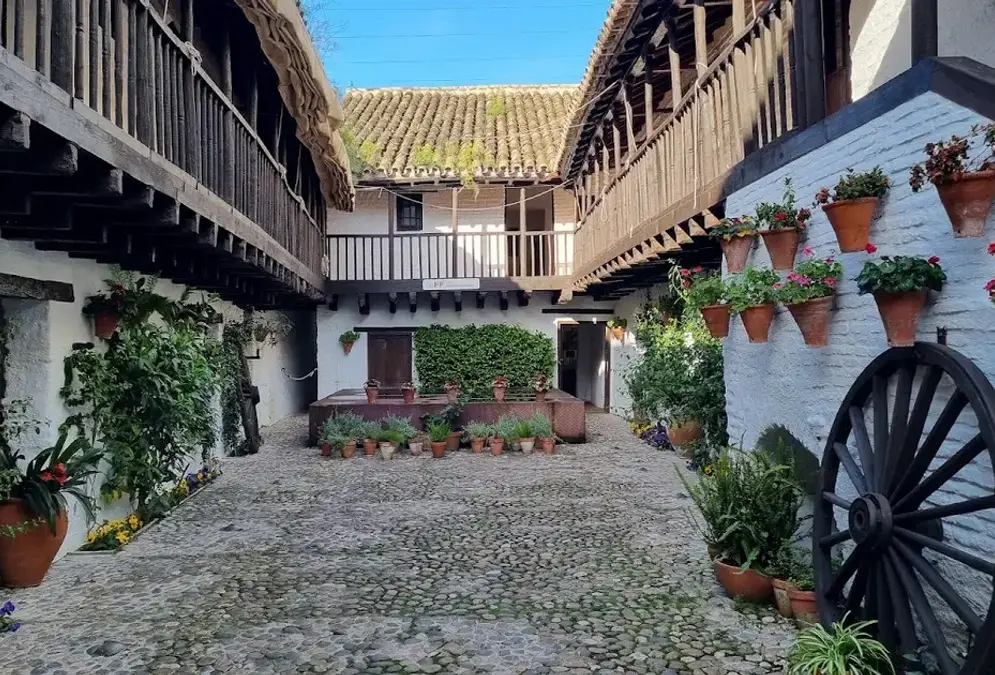
Interior courtyard of the Centro Flamenco Fosforito in the historic Posada del Potro, Córdoba

Explore nearby · Museum

Centro Flamenco Fosforito

Córdoba's premier flamenco museum in the historic Posada del Potro. Interactive exhibits, seasonal Sunday recitals and bilingual displays for all ages.

That set is not the 1950s Antología del Cante Flamenco, a separate project directed by Perico el del Lunar, recorded in the Hispavox studios in late 1953 and published in Paris by Ducretet-Thomson in 1954.[22]
The styles tied to his name show how far he reached beyond the standard repertoire:[23]
  • the polo, which he popularised from 1956
  • the zángano of Puente Genil
  • the debla
  • the taranto de Almería, which he included in his recitals and recorded several times[24]
He wrote his own lyrics and composed for other singers, and Camarón used his verses at the start of his career.[25] In the 1960s he also got a flamenco festival started in Puente Genil, the town where he was born.[26] A singer who builds a festival in the place that raised him, instead of only leaving it for the national circuit, is also building an audience for the cante he sings, and that habit of cultivating listeners runs through the whole career.

Honours, and the key he joked about

Córdoba made him its Hijo Adoptivo in 1981, with a council tribute and a published book twenty-five years after the contest triumph.[4] Other honours include the Premio Nacional de Cante of Jerez's Cátedra de Flamencología in 1968 and the Pastora Pavón prize in 1999,[27] a Medalla de Andalucía in 2006 and the Gold Medal of Merit in the Fine Arts in 2007.[28]
The honour that closes his story is the Llave de Oro del Cante, and it reached its five holders by five different routes:
  • El Nitri, in the 1860s: given spontaneously by a group of aficionados[29]
  • Manuel Vallejo, in 1926: awarded second, and not without controversy[30]
  • Antonio Mairena, in 1962: won after a jury deliberation at an extraordinary Córdoba contest that weighed each singer's flamenco record as well as the performance[31][32]
  • Camarón de la Isla, in 2000: awarded posthumously by the Junta de Andalucía, which took over the award in 1984[33]

Recommended tours

Tours are selected for quality, not commission. We earn a small fee if you book — at no extra cost to you.
Fosforito received the fifth from the Andalusian government at Málaga's Teatro Cervantes on 11 October 2005, for his work dignifying flamenco and reviving styles in disuse.[3][34] He turned out to be its last holder.[2]
He put it as a joke: they had given him the key to the cante so that he would close the door.[35] The line carries an edge. He was the last name on the list, so the door he was asked to shut really was the last one. With his death the roster of living holders came to an end, and the quip reads now less as modesty than as an accurate description of his place in the line.

Where Fosforito's Córdoba is today

The clearest place to meet Fosforito in Córdoba is the Centro Flamenco Fosforito. His trace runs through three places, two in the city and one in his hometown:
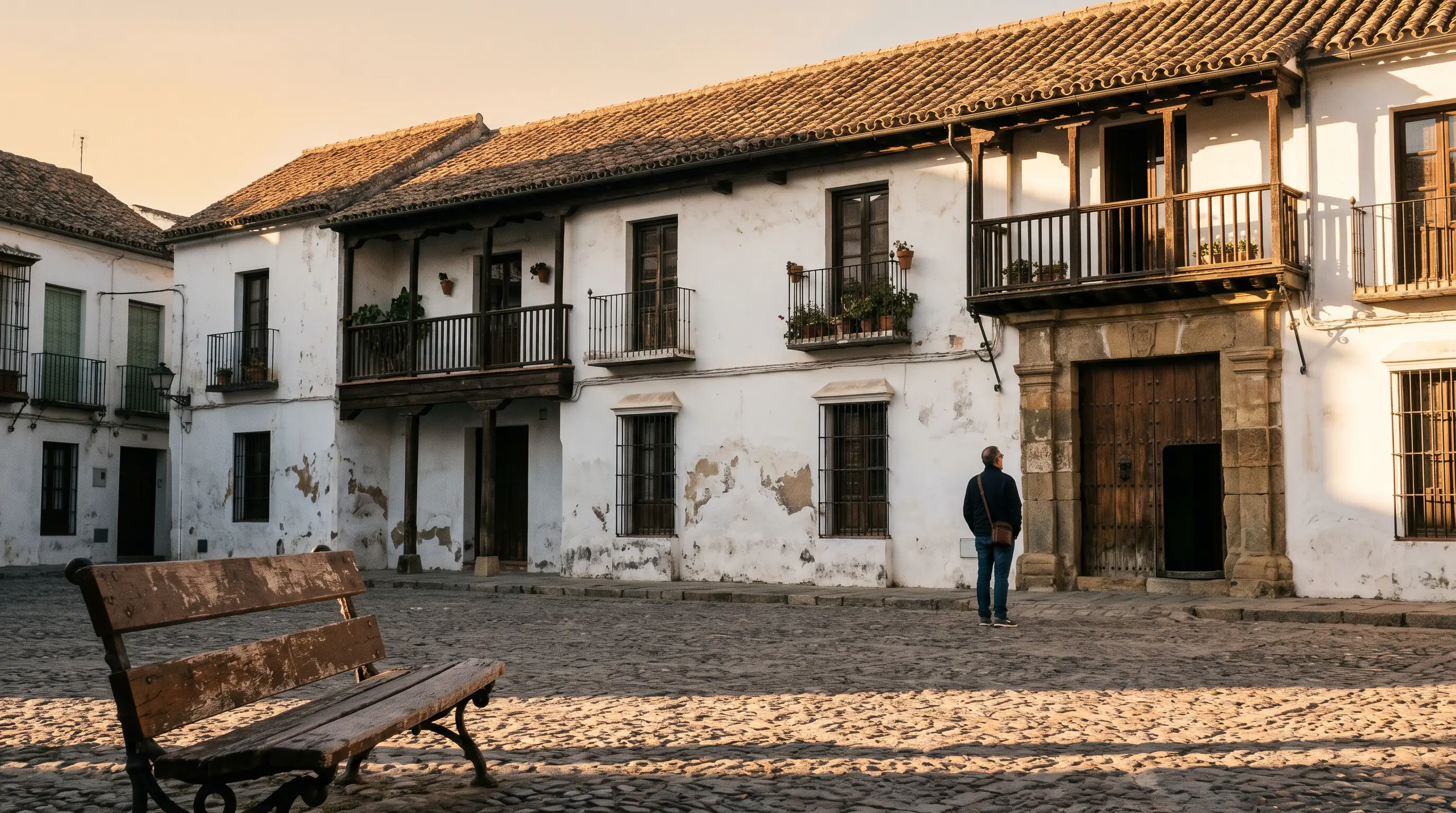
  • Plaza del Potro: the centre occupies the former Posada del Potro on the Plaza del Potro, a 15th-century corral house declared an artistic monument[36]
  • Sala del Maestro, inside the centre: it holds much of the legacy he gave to the city[37]
  • Paseo del Romeral, Puente Genil: Jesús Gálvez's statue of the singer at the height of his stage career[38]
His name also sits on a prize: since 2001 Córdoba's national flamenco contest has named one of its awards after him.[39]
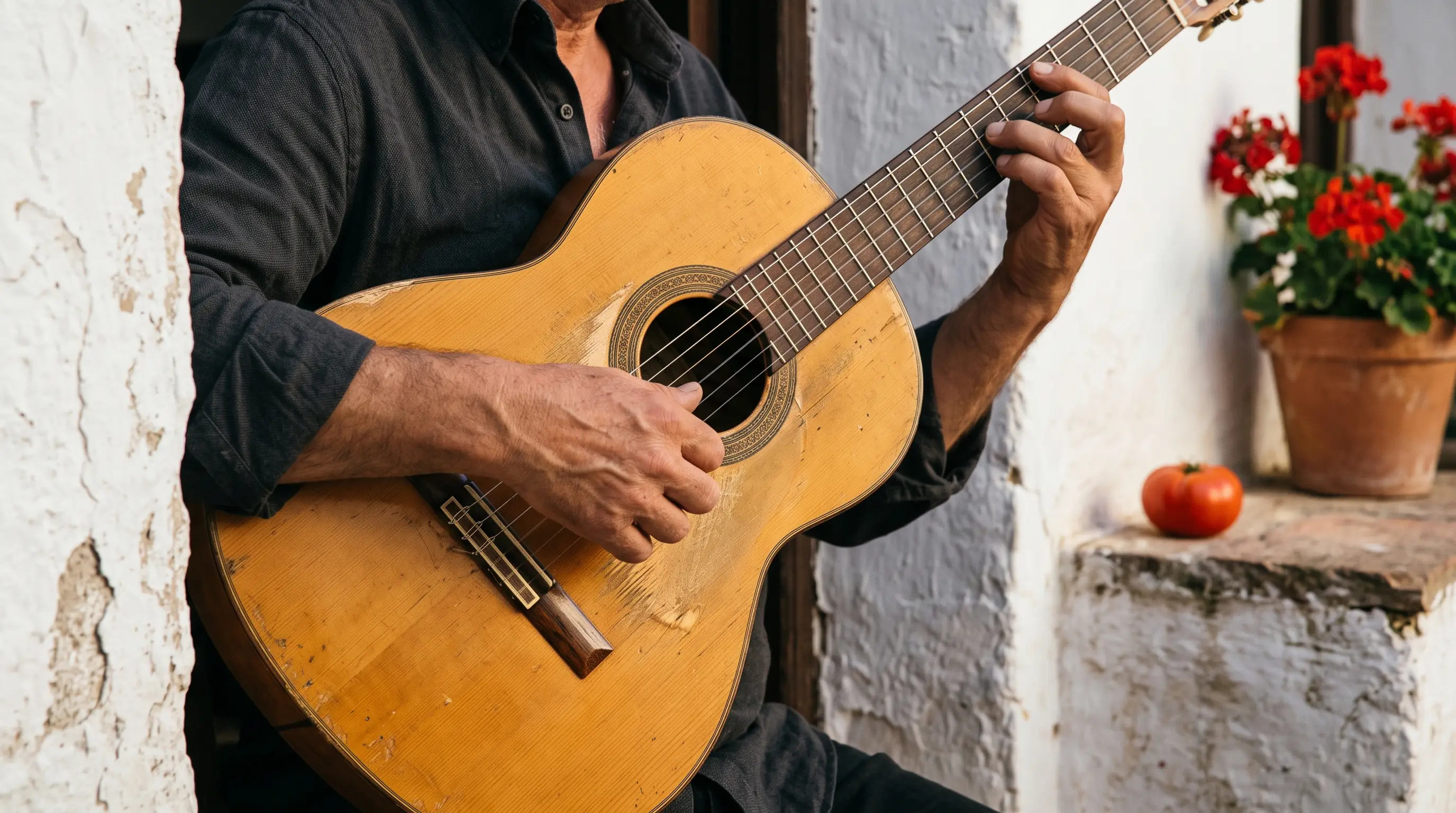
Aserejé meaning Las Ketchup: close-up of a man's hands playing a worn flamenco guitar in a whitewashed Córdoba courtyard doorway, a red tomato and a pot of red geraniums on the stone sill, warm late-afternoon light

Deep dive · Article

Aserejé Means Nothing. Three Córdoba Sisters Made It No. 1

Aserejé has no dictionary meaning. How three Córdoba sisters, a flamenco guitarist father and a small local label turned a rap-inspired chorus into a No. 1.

When he died, the city council's plenary session opened with a minute of silence for its adopted son.[40] He described himself in his own words as an old singer who had been lucky enough to do in life what he liked best.[41]

Frequently asked questions

Who was Fosforito, the flamenco singer from Puente Genil?

Antonio Fernández Díaz, known as Fosforito, was a self-taught cantaor born in Puente Genil, in the province of Córdoba, on 3 August 1932. He won every prize at the first Córdoba contest in 1956, became Córdoba's Hijo Adoptivo in 1981 and received the Llave de Oro del Cante in 2005. He died in Málaga on 13 November 2025, aged 93.

Why was he called Fosforito?

The nickname came from his father, who was called Fosforito for his resemblance to the Cádiz singer Francisco Lema, known as Fosforito el Viejo. The two singers were not related.

What happened at the 1956 Córdoba contest?

Fosforito entered the first Córdoba contest and took every prize, surprising listeners with his command of the styles. The contest was designed by Ricardo Molina and Anselmo González Climent to recover the traditional cante, and it appears in print under more than one name.

What is the Llave de Oro del Cante?

It is a flamenco honour with five holders, each of whom received it by a different route: El Nitri from aficionados in the 1860s, Vallejo in 1926, Mairena at Córdoba's contest in 1962, Camarón posthumously in 2000 and Fosforito from the Andalusian government on 11 October 2005 at the Teatro Cervantes in Málaga. He was its last holder.

Was Fosforito from Córdoba?

He was born in Puente Genil, a town in the province of Córdoba, not in the city. The city of Córdoba named him Hijo Adoptivo in 1981, and Puente Genil is also home to the statue of him by Jesús Gálvez.

When did Fosforito die?

He died on 13 November 2025 in Málaga, aged 93, as announced by his son Alejandro Fernández. Córdoba's city council opened its plenary session with a minute of silence.

Which flamenco styles is Fosforito associated with?

He stayed faithful to the deep cantes, among them seguiriyas, tonás and soleares. The styles tied to his revival include the polo, the zángano of Puente Genil, the debla and the taranto de Almería.

Why does Córdoba's flamenco centre carry his name?

The Centro Flamenco Fosforito is dedicated to the figure of the singer, and its Sala del Maestro holds much of the legacy he gave to the city of Córdoba. The centre sits in the former Posada del Potro on the Plaza del Potro.

Sources

41 references Show
  1. telemadrid.es (opens in a new tab)

    “ha fallecido en Málaga a los 93 años, ha informado su hijo, Alejandro Fernández.”

  2. artsandculture.google.com (opens in a new tab)

    “Fosforito, fallecido el 13 de noviembre de 2025, ha sido el último poseedor del galardón.”

  3. telemadrid.es (opens in a new tab)

    “el 11 de octubre de 2005 recibió de manos del gobierno andaluz en el Teatro Cervantes de Málaga la V Llave de Oro del Cante”

  4. Junta de Andalucía (opens in a new tab)

    “En 1981, Córdoba le nombró hijo adoptivo, celebrándose en su honor un homenaje organizado por el Ayuntamiento con la publicación de un libro, al cumplirse los veinticinco años de su triunfo en el concurso de Córdoba.”

  5. cordopolis.eldiario.es (opens in a new tab)

    “Nacido en Puente Genil (Córdoba) el 3 de agosto de 1932, Antonio Fernández Díaz fue autodidacta, criado en una familia de grandes aficionados.”

  6. cordopolis.eldiario.es (opens in a new tab)

    “Su apodo, “Fosforito”, lo heredó de su padre, llamado así por su parecido con el cantaor gaditano Francisco Lema “Fosforito el Viejo”, aunque entre ambos no existía parentesco.”

  7. andaluciainformacion.es (opens in a new tab)

    “Cuando apenas tenía diez años empezó a cantar por tabernas y colmados y a recorrer las ferias de ganado de los pueblos de Sevilla y de la Serranía de Málaga.”

  8. Junta de Andalucía (opens in a new tab)

    “En 1956 se presentó al I Concurso de Córdoba, obteniendo todos los premios y sorprendiendo por sus conocimientos de los estilos.”

  9. expoflamenco.com (opens in a new tab)

    “Diseñado por el poeta y flamencólogo pontanés Ricardo Molina y Anselmo González Climent, su objetivo fundamental fue el mismo que el del Concurso del 22 de Granada”

  10. expoflamenco.com (opens in a new tab)

    “España está hoy fosforizada, mucho más que los propios jurados que consagramos al cantaor de Puente-Genil”

  11. deflamenco.com (opens in a new tab)

    “Aquel año se llevó el Premio de Honor en siguiriyas, martinetes, carceleras y saetas; Primer Premio en soleares, caña, polo y serrana;”

  12. deflamenco.com (opens in a new tab)

    “Premio Absoluto en tonás, livianas, deblas y temporeras.”

  13. cordopolis.eldiario.es (opens in a new tab)

    “En los años más duros de la posguerra, cuando la Ópera Flamenca imponía un estilo más ligero y comercial, Fosforito se mantuvo fiel a la raíz jonda”

  14. expoflamenco.com (opens in a new tab)

    “pero que no era gitano ni pertenecía al famoso triángulo”

  15. artsandculture.google.com (opens in a new tab)

    “Esta publicación afirma que Mairena compitió con El Platero de Alcalá, Fosforito, Chocolate o Juan Varea”

  16. deflamenco.com (opens in a new tab)

    “Irónicamente, Fosforito fue uno de los promotores principales de la concesión de la Llave de Oro del Cante a Antonio Mairena en 1962.”

  17. elindependiente.com (opens in a new tab)

    “En 1964 recorrió toda la costa norteamericana con motivo de la Exposición Universal, en compañía de su amigo Juan Habichuela”

  18. andalucia.org (opens in a new tab)

    “Junto con Antonio Mairena ha sido cabeza de cartel en todos los festivales de España durante los 70. Rescató estilos de su tierra como el Zángano de Puente Genil.”

  19. cordopolis.eldiario.es (opens in a new tab)

    “Su colaboración con Paco de Lucía en la Antología del Cante Flamenco marcó un hito”

  20. deflamenco.com (opens in a new tab)

    “Entre 1968 y 1974 Fosforito y Paco de Lucía graban la «Selección antológica del cante flamenco» en cuatro Lps, en la casa barcelonesa Belter.”

  21. cordopolis.eldiario.es (opens in a new tab)

    “el crítico José Manuel Gamboa definió su discografía como “una escuela en sí misma”.”

  22. memoriaflamenca.blogspot.com (opens in a new tab)

    “En los estudios de ésta se realizaron las grabaciones a finales de 1953 y la antología se publicó en París, con sello Ducretet-Thomson en el año 1954.”

  23. Junta de Andalucía (opens in a new tab)

    “son el polo, que popularizó a partir de 1956, y el zángano, la debla, el taranto de Almería”

  24. deflamenco.com (opens in a new tab)

    “por incluir el taranto en sus recitales y contribuir a su divulgación entre los profesionales, por haberlo grabado en varias ocasiones asociándolo con Almería”

  25. telemadrid.es (opens in a new tab)

    “es autor de sus propias letras y compositor para otros muchos cantaores, como Camarón, que utilizó sus versos en el inicio de su carrera artística.”

  26. andaluciainformacion.es (opens in a new tab)

    “apostó decididamente por la celebración de un festival flamenco de relevancia en su villa natal, y así, en 1967 logró que arrancara”

  27. teatrocordoba.es — I 1 956 (opens in a new tab)

    “Premio Nacional del Cante de la Cátedra de Flamencología de Jerez (1968), II Compás del Cante (1985), Premio Pastora Pavón (1999)…”

  28. elindependiente.com (opens in a new tab)

    “Medalla de Andalucía en 2006; Medalla de Oro al Mérito en las Bellas Artes en 2007, y Medalla del Ateneo de Málaga en 2010”

  29. artsandculture.google.com (opens in a new tab)

    “concedida de manera espontánea por un grupo de aficionados a Tomás El Nitri, al considerarle el mejor cantaor de aquellos tiempos.”

  30. artsandculture.google.com (opens in a new tab)

    “La segunda Llave de Oro del Cante se le concedió a Manuel Vallejo en 1926, no sin polémica.”

  31. artsandculture.google.com (opens in a new tab)

    “todos ellos contratados de antemano, pues no existió concurrencia espontánea a la convocatoria realizada por el Ayuntamiento de Córdoba”

  32. teatrocordoba.es — Iii 1 962 (opens in a new tab)

    “Se establece conceder, en esta edición del Concurso Nacional, la LLAVE DE ORO DEL CANTE, valorando para el mencionado premio, además de la actuación pública, el historial flamenco de los concursantes.”

  33. artsandculture.google.com (opens in a new tab)

    “Se le dio en el año 2000 a Camarón de la Isla a título póstumo (había fallecido en 1992)”

  34. artsandculture.google.com (opens in a new tab)

    “por su labor en la dignificación y universalización del flamenco, la relevancia de sus aportaciones creativas y su contribución a la revitalización de estilos en desuso.”

  35. cordopolis.eldiario.es (opens in a new tab)

    ““A mí me dieron la llave del cante para que cerrara la puerta””

  36. centroflamencofosforito.cordoba.es — La posada (opens in a new tab)

    “Su sede está ubicada en la Plaza del Potro, concretamente en las dependencias de la antigua Posada del Potro, una casa de corrales del siglo XV declarada monumento artístico.”

  37. centroflamencofosforito.cordoba.es — Sala del maestro (opens in a new tab)

    “La Sala del Maestro contiene gran parte del legado que el cantaor Antonio Fernández Díaz ‘Fosforito’ ha cedido a la ciudad de Córdoba.”

  38. andaluciainformacion.es (opens in a new tab)

    “La estatua realizada por Jesús Gálvez, recrea a ‘Fosforito’ en su apogeo artístico, con la fuerza y vigorosidad que siempre le ha acompañado en los escenarios.”

  39. Junta de Andalucía (opens in a new tab)

    “desde el año 2001 el Concurso Nacional de Córdoba rotula con el nombre de Fosforito uno de sus premios”

  40. elindependiente.com (opens in a new tab)

    “En Córdoba, ciudad de la que era Hijo Adoptivo, el Pleno municipal ha arrancado con un minuto de silencio.”

  41. andaluciainformacion.es (opens in a new tab)

    ““Yo soy un viejo cantaor que ha tenido la fortuna de haber hecho en la vida lo que más le gustaba”