
The valley that traps heat: how Córdoba's geography creates extreme temperatures
Córdoba sits at 37.88° North in the Baetic Depression, the geological trough carved by the Guadalquivir River between the Sierra Morena mountains to the north and the Subbetic ranges to the south.[1] The valley is, in effect, a heat trap.
In summer, the Mediterranean subtropical high-pressure system parks itself over the Iberian Peninsula for weeks at a time. This anticyclone suppresses cloud formation and prevents any cooling rain. The sun beats down from a sky that stays blank blue from late June through September.
The valley walls concentrate that heat. Air descending from the surrounding ranges compresses and warms further as it drops in elevation. It arrives at the valley floor already hotter than it left. Then it stays there, trapped by the same ridges that channelled it down.
The Köppen climate classification labels this a Csa climate: hot-summer Mediterranean, where the hottest month averages above 22°C. Córdoba qualifies at the extreme end of the category. The Guadalquivir Valley has the hottest summer in Europe, and one of the hottest in the world outside semi-arid or arid zones. That last distinction matters: with annual rainfall of 605mm,[4] Córdoba is not a desert climate. The heat comes from valley geometry and atmospheric pressure, not aridity.
The numbers behind "hottest city": what the records actually say
The absolute temperature record for Córdoba is 46.9°C (116.4°F), set on 13 July 2017 and matched again on 14 August 2021.[2] Two separate readings, four years apart, at the same extreme.
The more revealing number is the July 2022 monthly average high: 40.4°C. That figure represents not a single afternoon but an entire month of heat, averaged across every day. That is among the highest monthly averages ever recorded for a European city with a population above 100,000.[3]
On a typical summer day, the average high sits at 37°C in July and August. That is the median, the ordinary. Sixteen days annually exceed 40°C. Sixty-eight days exceed 35°C. From mid-June through mid-September, temperatures above 35°C are the baseline, not a heatwave.
40.4°C
For comparison: Seville, also in the Guadalquivir Valley downstream from Córdoba, runs similarly hot but slightly lower on extreme highs. Athens, the other Mediterranean city visitors often cite, has average July highs around 34°C. The more useful comparison is with Seville's festival calendar. The Feria: Córdoba vs. Seville dynamic shows how both cities schedule public life around the same climatic reality, but the records consistently favour Córdoba.
One clarification matters: these records apply to the city proper and its surroundings. The historic centre, with its medieval streets, thick stone walls and patios, runs cooler than the exposed meteorological stations on the urban periphery, where tarmac and open ground absorb and radiate heat without the buffer of dense historic fabric.
Stone underfoot at 11 AM: the hour-by-hour reality of Córdoba's summer
The first thing most visitors notice is that the heat is dry. No humidity clings to the skin the way it does on the Mediterranean coast. At Seville or Málaga's beaches, 35°C can feel suffocating. In Córdoba's inland valley, 38°C with low humidity is uncomfortable but bearable in shade. The air does not feel wet. It feels like standing too close to an oven.
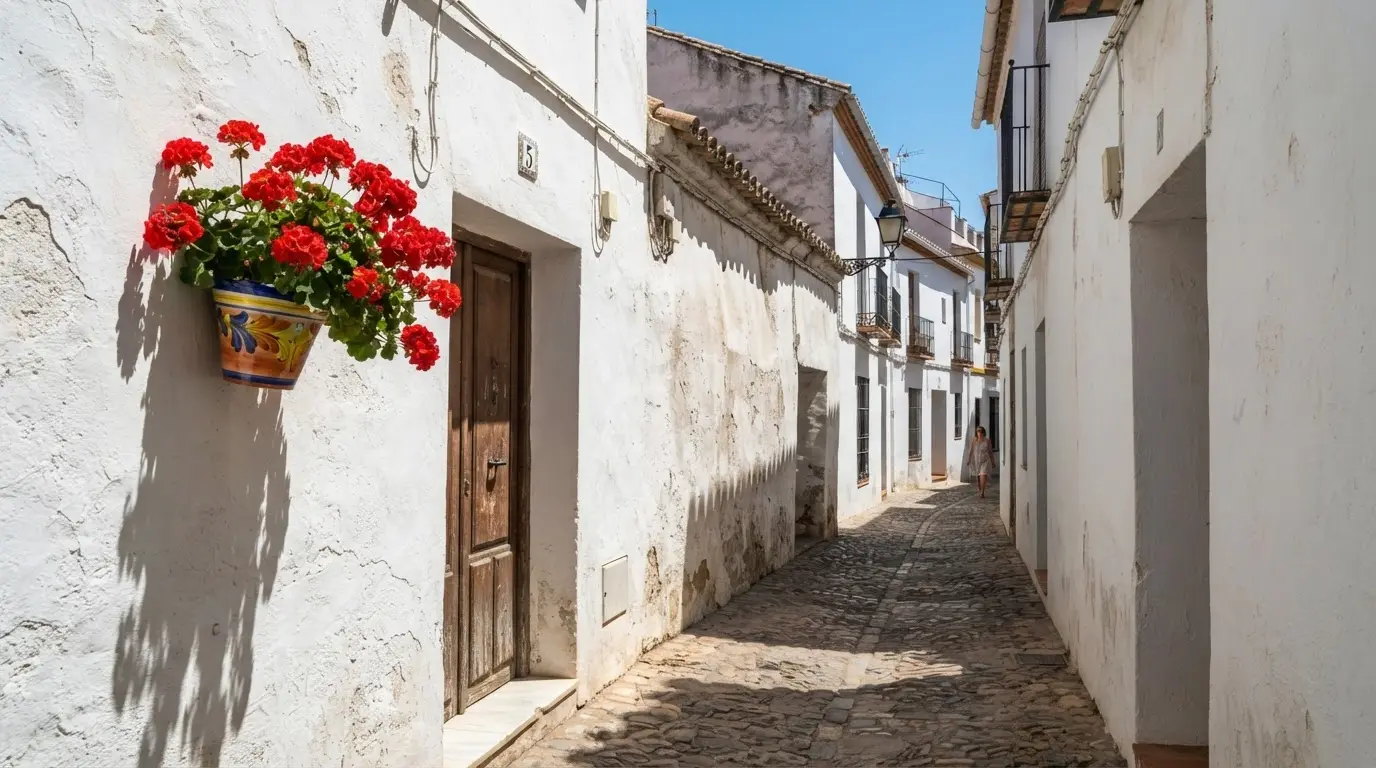
By 11 in the morning in July, the stone paving of the historic centre has been warm underfoot for three hours. By noon it radiates heat upward. The narrow streets of the old city channel any movement of air, but there is not much to channel: the subtropical high has stilled it. Light bounces off whitewashed walls at an angle that makes you squint even with sunglasses. The air above the open plazas shimmers.
Explore nearby · Monument
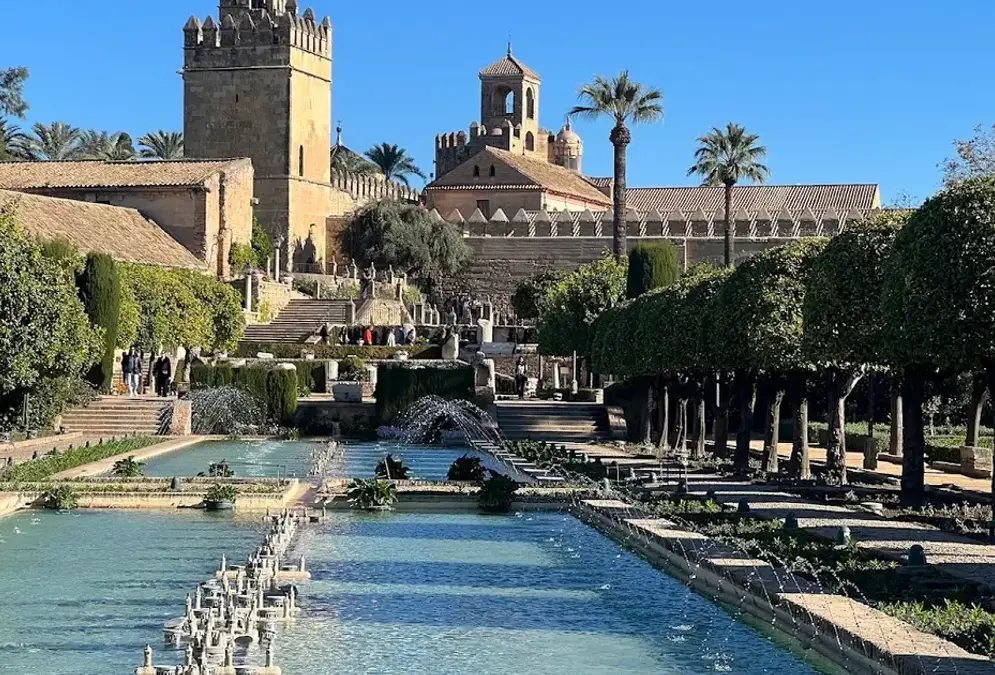
Alcázar de los Reyes Cristianos
Alcázar de los Reyes Cristianos, Córdoba: free entry on Tuesdays. A 14th-century fortress-palace with terraced Moorish-inspired gardens and Roman mosaics.
The heat index climbs well above the dry ambient reading during August afternoons once humidity is factored in. At dry ambient temperatures around 38°C, that combined effect is enough to cross the threshold where unprotected outdoor activity carries real health risk for people unacclimatised to it.
Between 2 and 6 PM, the streets empty. This is not cultural theatre. It is rational withdrawal from dangerous conditions. Tourists who stay out through the early afternoon run through water bottles at a rate that surprises them, and often feel the early symptoms of heat exhaustion before they connect it to the temperature: headache, light-headedness, fatigue.
Recommended tours
Tours are selected for quality, not commission. We earn a small fee if you book — at no extra cost to you.
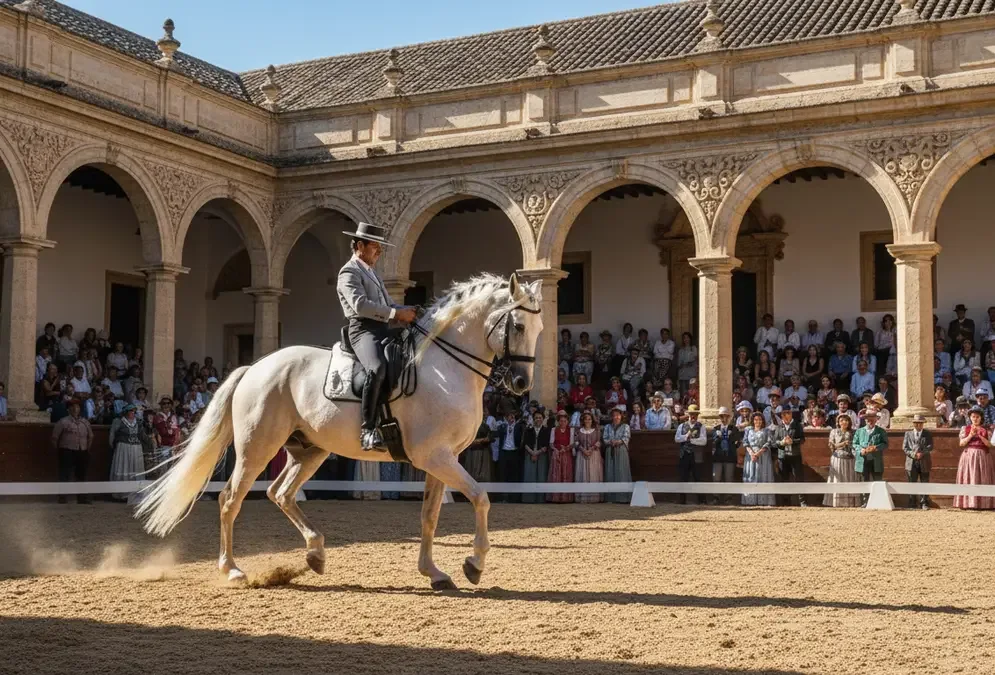
The saving grace is the night. August average lows drop to 19.4°C, a 17°C swing from the peak afternoon heat. By 10 PM the streets are busy again, restaurant terraces fill, and the city exhales. That diurnal drop makes Córdoba liveable in summer, and makes late dining at 9 or 10 PM something other than an affectation.
Two thousand years of passive cooling: how Córdoba built around the heat
A city that has endured two millennia of extreme summers eventually builds around them. Córdoba has been doing exactly that since Roman settlers founded Colonia Patricia on this valley floor.
The Roman atrium house, a design the settlers brought from the Mediterranean, organised domestic life around an internal courtyard with a central water basin. Shade, evaporation, and stone thermal mass were the tools. The Umayyad rulers who made Córdoba their western capital — emirs from 756 CE[1] and caliphs from 929 CE — deepened the tradition. The philosopher Maimonides, born here in 1138, and before him the Stoic philosopher exiled to Corsica, born in 4 BCE, lived and wrote in a city already shaped by the logic of courtyard cooling.
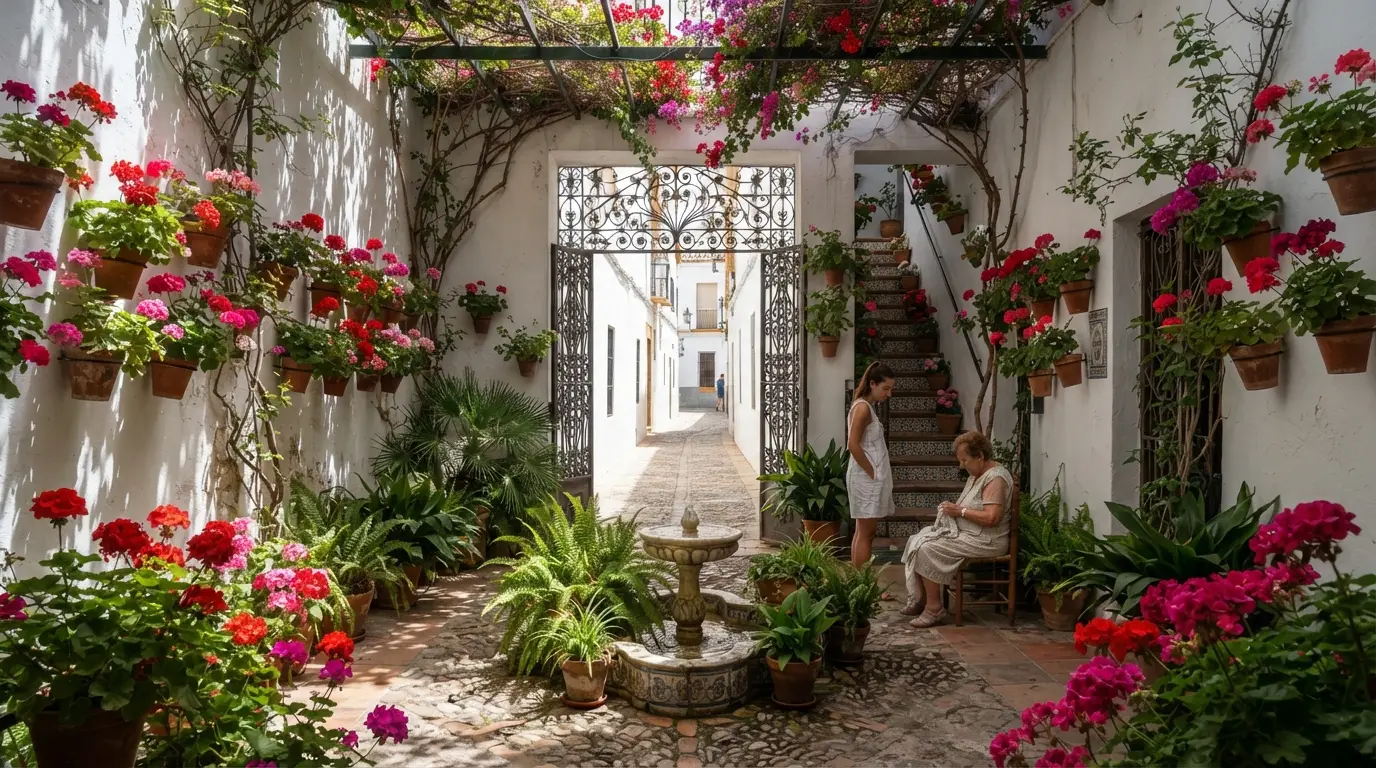
The Córdoba Patios number in the thousands across the historic centre, from tiny domestic courtyards barely wide enough for a chair to the twelve patios of the Palacio de Viana. Around 50 open to the public each May for the UNESCO-recognised Fiesta de los Patios. All of them work on the same four principles:
- Thick stone walls slow heat gain through the building envelope
- Whitewashed surfaces reflect solar radiation back into the sky
- Transpiring plants cool the enclosed air through evaporation
- Central fountains lower temperature as water disperses into the air
Measured consistently, patios run 10–15°C cooler than the street outside their walls. Our Córdoba Patio Festival guide covers the May festival routes, plus the few patios open outside that window.
The narrow medieval street plan of the Judería and the old medina serves the same purpose at a larger scale. Wide boulevards receive maximum solar radiation. Streets barely two metres across receive almost none at ground level during peak hours; the walls shade each other. Walk through the Axerquía quarter at noon in August and you cross light patches bright as a spotlight and shadow patches cool as a cellar every few steps. The alternation is the city's oldest air conditioning.
The shifted clock: morning sprints, afternoon retreats, late everything
The siesta exists in every Spanish city but operates with particular rigour in Córdoba because the need for it is genuine. Most shops and many restaurants close between 3 and 7 PM. The shutdown is not nostalgia; it is the rational response to a period when outdoor activity is genuinely hazardous.
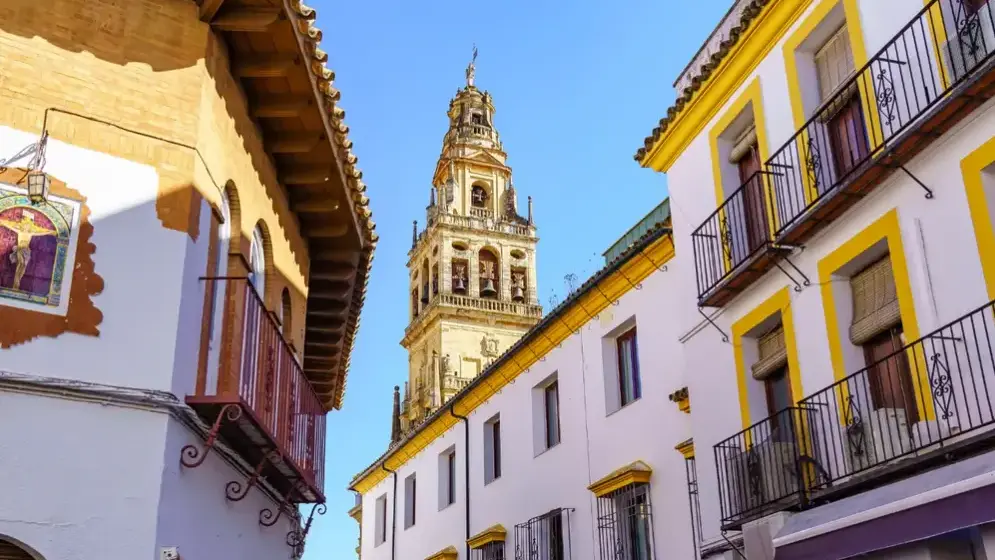
Local life runs on a timetable shifted toward cooler hours. Morning is the productive time. The mercado central opens early, museum crowds thin by 9 AM, and the streets near the Mezquita see serious foot traffic from 8 to 11 before the heat builds. Residents who need to be somewhere in the city arrange it before lunch.
Evening begins at 7 PM, when the temperature has dropped enough for people to emerge. The paseo fills the Paseo de la Victoria and the streets along the river. Outdoor café terraces, empty at 3 PM, overflow by 8. Dinner at 9 or 10 PM is standard. Cordobans are not night owls by nature; the evening hours are simply the most comfortable part of the day, and cooking in a hot kitchen at midday makes no sense.
Deep dive · Article
Córdoba Extreme Heat: How Europe's Hottest City Survives
Siesta hours, courtyard microclimates and Sierra swimming holes: how Córdoba turns extreme heat into a way of life, and how to visit comfortably in summer 2026.
The traveller who adapts finds that summer Córdoba has its own logic: a morning sprint, an afternoon retreat, then a long evening on a terrace with salmorejo and chilled fino.
When to come and what to do when the heat peaks: a visitor's field guide
The best months to visit Córdoba are April, May, September, and October. Spring and early autumn give average highs in the mid-20s, enough warmth to sit outside comfortably without the physiological stress of midsummer. May in particular combines bearable temperatures with the Fiesta de los Patios and the Cruces de Mayo festival, when the city is at its most visually spectacular.
| Season | Avg high | Conditions | Verdict |
|---|---|---|---|
| April–May | 22–28°C | Warm, patios in bloom, festival season | Best time to visit |
| June | 33–36°C | Heat building, crowds growing | Good if you adapt your schedule |
| July–August | 37–40°C | Extreme heat, 16 days above 40°C | Possible with preparation; avoid midday outdoors |
| September–October | 28–22°C | Cooling, quieter crowds, harvests | Second-best window |
| November–March | 15–18°C | Cool, some rain, very few tourists | Good for budget; some sites run reduced hours |
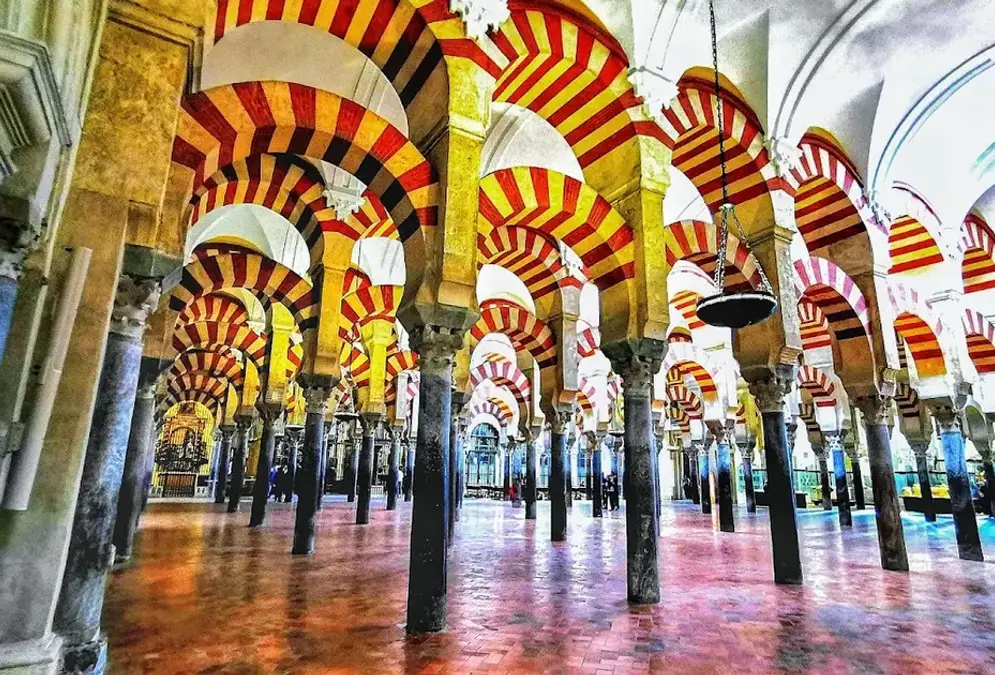
July and August are demanding but not impossible. The Mezquita-Cathedral opens at 8:30 AM: get there at opening, spend an hour inside the cool stone interior, and be out by 10. Book tickets in advance; queuing in open sun for 45 minutes is genuinely miserable. The Judería runs significantly cooler than the open streets near the river, owing to its narrow lane structure and the density of patio walls.
At 40°C with low humidity, the body loses water faster than thirst signals register. Carry at least a litre, refill at public fountains throughout the historic centre, and drink before you feel thirsty. A headache at 2 PM is usually dehydration, not the sun itself.
Wear light-coloured, loose linen or cotton. Dark colours absorb solar radiation that light colours reflect. A wide-brimmed hat provides genuine temperature relief.
The timing rule holds year after year: outdoors before 11 AM and after 7 PM. Between 2 and 6 PM, stay indoors in a patio-house hotel, a museum, or the Alcázar gardens where the water features work. Air conditioning in Córdoba is infrastructure, not a luxury.