Pet travel
Córdoba with your dog
Córdoba is navigable with a dog if you know where the limitations are. This guide covers verified hotels, the parks locals actually use, how terraces work with dogs, and what to do if your pet needs a vet.

Written by
María Fernanda González Ten years covering Córdoba's UNESCO heritage sites, sourcing from Junta de Andalucía documentation.
Updated Published
Travelling to Córdoba with a dog is entirely doable, though it requires more planning than most Spanish cities. The historic centre is compact and walkable, the riverside path along the Guadalquivir gives dogs real exercise, and several of the city's better hotels have proper pet policies rather than a vague "small pets considered" disclaimer. The monument circuit, on the other hand, is largely off-limits: the Mezquita-Catedral, the Alcázar interiors, and most museums do not admit dogs, so this is a city to explore in halves, one person with the dog in a park or a café terrace while the other goes inside.
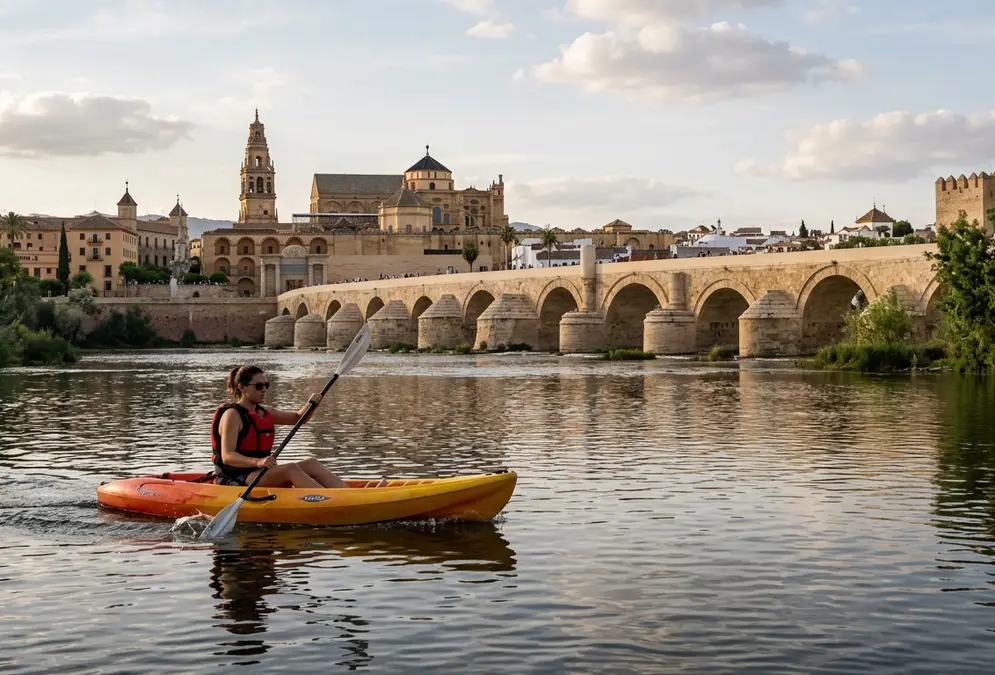
That division of labour works fine once you accept it. The Sotos de la Albolafia riverbank walk below the Roman Bridge takes about 45 minutes each way and gives dogs a shaded, unpaved route with good smells and water views. The Jardines de la Agricultura in the western centre is where you'll find locals walking dogs at 8 a.m. on summer days, large plane trees keeping the ground cool well after the pavements have begun to heat. These are real dog-walk destinations, not compromises.
The one thing that catches visitors off guard is the heat. Córdoba is one of the hottest cities in continental Europe: late June through August regularly reaches 42 °C, and stone pavements absorb enough heat to burn paw pads in seconds. Every practical decision in this guide for summer visits flows from that fact. In spring or autumn, most of the restrictions disappear.
Córdoba with your dog at a glance
- Leash law
- Max 1 m, non-extendable (Andalusia)
- Danger period
- Late June–August: pavement can exceed 60 °C
- Best season
- October–May for comfortable walks
- Verified pet hotels
- 2 confirmed + 1 check-ahead
- Parks with dogs
- 4 verified options, leash required in all
In this guide
Jump to a section
Why Córdoba works for pet travel
The city's layout suits dogs better than its reputation suggests. The Guadalquivir riverside path runs for several kilometres with no traffic, no cobblestones, and access to water, the kind of route dogs settle into. The historic centre itself is only about 1.5 km across, so there is no long slog between hotels and parks: most of the walking options in this guide are under 20 minutes from anywhere in the centre.
Córdoba also has a real dog-walking culture. Early mornings at the Jardines de la Agricultura or the Parque de la Asomadilla bring out dozens of local owners, which means your dog will have company and the parks are kept up accordingly. Bins are plentiful, water fountains are present at most green spaces, and locals generally respond well to leashed, well-behaved dogs.
The main constraint is monuments. The Mezquita-Catedral, Alcázar, Palacio de Viana, and virtually every museum require you to leave your dog outside. If your trip is monument-heavy, plan in advance: one person waits at a café terrace with the dog while the other goes in, then swap. Most visits to the Mezquita take about 90 minutes; the Alcázar gardens (outdoor) are dog-accessible, but the main palace interior is not.
What works well
- Riverside walks along the Guadalquivir (leashed)
- Several parks with long circuits and shade
- Wide terrace culture at cafés and casual restaurants
- Compact centre: parks, hotels, and terraces are close together
- Verified pet hotels with real amenities
What to plan around
- No dogs inside the Mezquita, Alcázar, or museums
- Extreme heat June–August: walks before 10 a.m. or after 7 p.m. only
- Cobblestoned streets in the Judería (uncomfortable for some dogs)
- Restaurant interiors: legally off-limits for dogs (guide dogs excepted)
- City buses: only small dogs in carriers are permitted
The summer heat reality
Córdoba regularly hits 42 °C from late June through August, and stone or asphalt pavements absorb far more than the air temperature: surface readings on Córdoba's streets and plazas frequently exceed 60 °C on hot afternoons. That is enough to burn a dog's paw pads within seconds of contact.
The 7-second test: use it every day
Rest the back of your hand flat on the pavement. If you cannot hold it there comfortably for 7 seconds, the surface is too hot for your dog's paws. Walk before 10 a.m. or after 7 p.m. between June and September. Carry a collapsible water bowl: park fountains are present but not guaranteed at every stop. On very hot days, stick to the shaded Jardines de la Agricultura or the riverbank, where tree cover and proximity to water keep ground temperatures lower.
Beyond paw burns, heatstroke in dogs is a real risk. Short-nosed breeds (bulldogs, pugs, boxers) and thick-coated dogs are particularly vulnerable. Even in the cooler months of May and September, afternoon temperatures can reach 30–35 °C, which is hot enough to warrant shorter outings. Bring more water than you think you need.
Spring (March to May) and autumn (October to November) are the most comfortable seasons for dog travel in Córdoba. October is especially good: the heat has broken, the crowds thin out, and the city takes on a calmer pace.
Pet-friendly hotels in Córdoba
The dog-friendly hotel market in Córdoba is small but real. Two properties have proper published policies and confirmed amenities. A third appears consistently on aggregator pet-friendly lists but does not publish a fee or weight limit; call ahead before booking. Several well-known properties in the city, including the Parador de Córdoba, are not pet-friendly, so do not assume based on category alone.
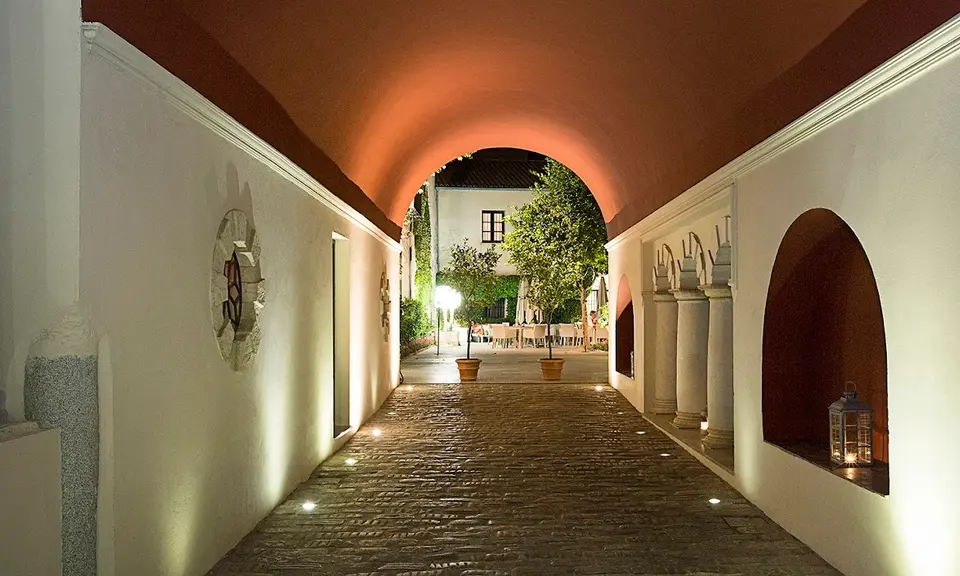
Hospes Palacio del Bailío
Verified pet-friendly5-star palace hotel, Centro near the Mezquita
A 16th-century palace with Roman mosaics under the restaurant floor. The pet policy here is explicit: dogs are welcomed with a dog cot, food and water bowls provided. The fee is €30 per night (VAT included), and dogs up to around 15–20 kg are accepted. No breed restrictions are listed. Request the pet room when booking, as not all rooms are designated.
- Pet fee: €30/night
- Max weight: approx. 15–20 kg (check with hotel)
- Amenities: Dog cot, food and water bowls
- Book as: Request pet room at time of booking
Las Casas de la Judería
Verified pet-friendly4-star boutique hotel, Judería
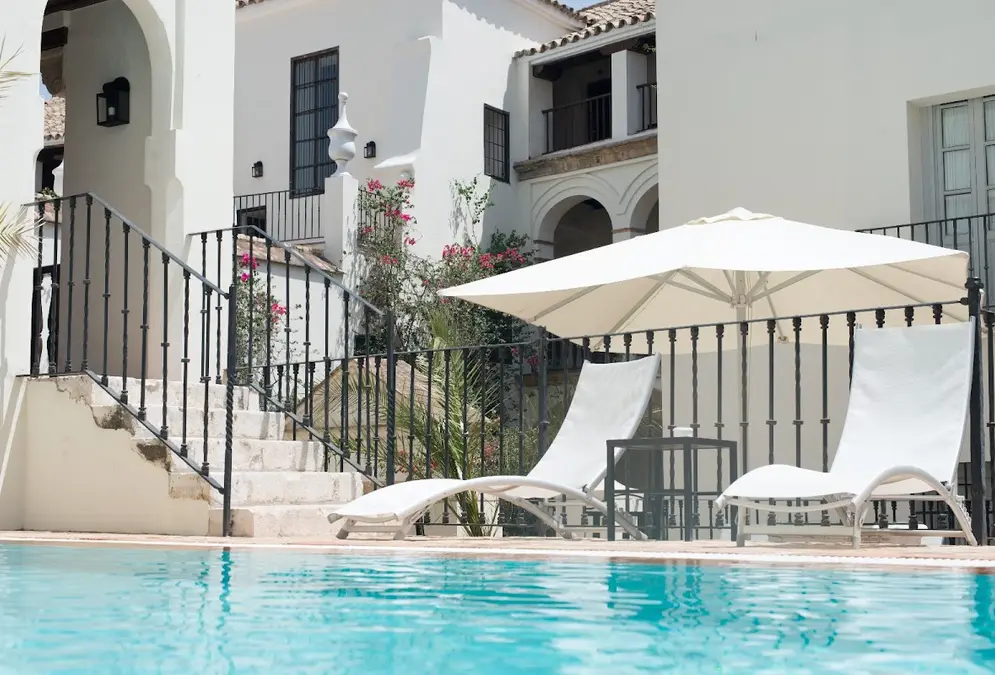
Five interconnected 15th-century palaces in the Jewish Quarter, with mosaic patios and a labyrinthine layout that dogs seem to find genuinely interesting. The policy covers up to two pets per room, with food and water bowls available. Fee is €30 per pet per night. No confirmed weight limit, but contact the property to request a designated pet room.
- Pet fee: €30/night per pet
- Max weight: Not confirmed; check directly with the property
- Pets allowed: Up to 2 per room
- Amenities: Food and water bowls

NH Collection Amistad Córdoba
Confirm directly4-star, two restored 18th-century mansions, Centro
Listed as pet-friendly on Booking.com and multiple aggregators, but the hotel's own website does not publish a fee, weight limit, or specific pet amenities. A solid option if you call ahead to confirm the current policy and fee before booking. The property itself is well-regarded: central, quiet, and set inside two historic mansions.
Call to confirm: policies and fees not published online. This is the right approach for any hotel not on the list above.
Hotel detailsA note on the Parador de Córdoba
The Parador de Córdoba is not pet-friendly. The Paradores chain maintains its own pet-friendly list; only the hotels explicitly named there accept dogs. Do not assume any Parador accepts pets without checking the official list.
How to check any hotel: Use the Booking.com pet-friendly filter and look for explicit weight limits and fees in the fine print, not just a "pets allowed" badge. For boutique hotels, a direct call takes two minutes and avoids surprises at check-in. Ask: "¿Aceptan perros? ¿Cuánto cobra por noche?" (Do you take dogs? How much per night?)
Dining on terraces with your dog
Spanish food-hygiene regulations prohibit dogs from restaurant interiors. That rule is enforced consistently. Covered or open outdoor terraces (terrazas) are a different matter: they sit outside the indoor food-hygiene restrictions, and a well-behaved, leashed dog is commonly tolerated at the establishment's discretion. Córdoba has an abundant terrace culture, so in practice most meals can happen outside.
The norm is tolerance rather than welcome. Staff at busy tourist terraces near the Mezquita may wave you off; staff at neighbourhood bars off the main circuit will usually not notice or mind. If your dog is calm and stays under or beside the table, you will have few problems. If the dog is restless or barking, expect to be asked to move on.
Useful Spanish for terrace dining with a dog
- Ask: "¿Aceptan perros en la terraza?" (Do you accept dogs on the terrace?)
- If uncertain: "¿Le importa si traigo el perro afuera?" (Do you mind if I bring the dog outside?)
- Request water: "¿Puede traernos un poco de agua para el perro?" (Could you bring some water for the dog?)
A verified option: El Caballo Rojo
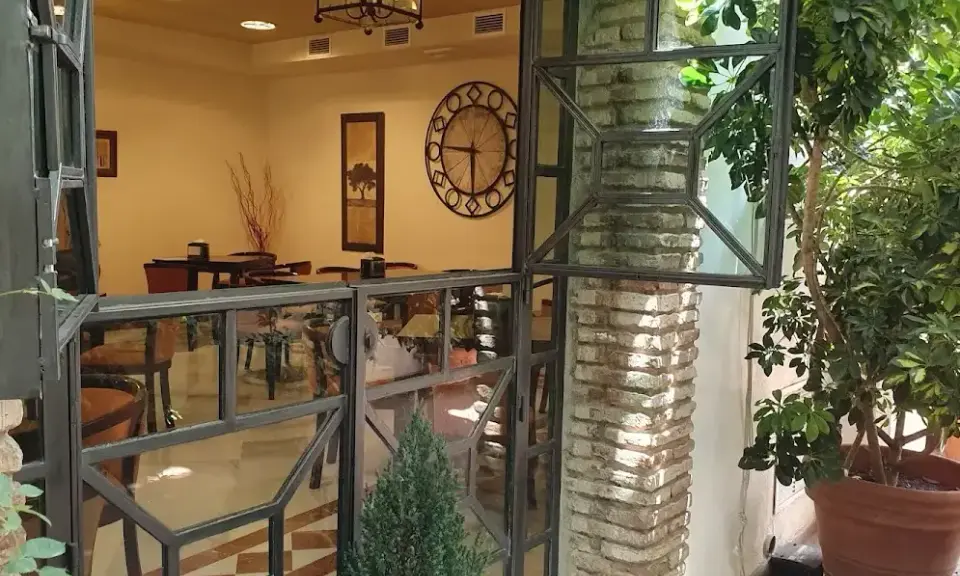
El Caballo Rojo (Calle Cardenal Herrero, 28, directly facing the Mezquita) is listed as dog-friendly on the terrace by English-language travel guides covering Córdoba. The restaurant is a Mozarabic cuisine institution open since 1978, with an 80-seat covered terrace. That said, the restaurant's own website does not confirm the policy, and it changes. Call ahead: +34 957 475 375. Dishes run €35–55; the honey-glazed lamb from a 10th-century recipe is the thing to order.
Beyond specific venues, your best strategy is the neighbourhood side streets. The terraces along Calle Encarnación, around Plaza de San Lorenzo, and the streets east of the Judería towards the Ribera neighbourhood are less tourist-pressured and more likely to accommodate dogs without a fuss.
“The riverside path runs for several kilometres with no traffic, no cobblestones, and access to water. It is the kind of route dogs settle into.”
Parks and walking routes
Leashes are mandatory in all Córdoba parks and public spaces. Four options give dogs the most useful combinations of shade, circuit length, and crowd levels. All require a non-extendable lead of 1 metre or less under Andalusian law.
Jardines de la Agricultura
Western Centro, between Ronda de los Tejares and Avenida de América
The central park locals use for morning dog walks. Large plane trees and orange groves shade the gravel paths from early morning, ornamental ponds give good sniff-stops, and the park is close enough to most hotels to cover before breakfast. Water fountains are present. Gets busier from 9 a.m. onwards; aim for 7–8 a.m. in summer.
Best time: before 10 a.m. or after 7 p.m. in summer
Sotos de la Albolafia (Riverbank)
Guadalquivir riverbank below the Roman Bridge
A protected riparian reserve with bird life and river views. The cooler microclimate from the water makes this the best late-afternoon walk in summer: river humidity lowers the effective temperature several degrees. Surface is partly unpaved, which dogs tend to prefer. Keep dogs on the marked path; this is a protected nature reserve. The views up to the Roman Bridge and the watermills are the best in the city.
Best time: late afternoon (cooler microclimate)
Parque de la Asomadilla
Northern Córdoba, Ciudad Jardín area
At 27 hectares, Andalusia's second-largest urban park. Walking circuits through native vegetation can fill 45–60 minutes without retracing. Large open areas mean limited shade at midday, so summer visits are strictly a morning proposition. Look for designated zona canina signage on arrival. Less crowded than central parks, which suits dogs that are unsettled by foot traffic.
Best time: early morning, especially in summer
Jardines del Duque de Rivas
Northern Centro, alongside Avenida del Gran Capitán
A smaller, quieter green space with statuary and scattered Roman fragments. The reduced footfall makes it a good choice for dogs that are nervous around crowds: fewer strollers and children than the Jardines de la Agricultura, and a more contemplative pace. Good for a short 20-minute circuit before or after a nearby café.
Best time: mornings or evenings in summer
Dog-friendly Córdoba activities
Leash laws and Andalusian rules
Andalusia applies stricter rules than Spain's national standard. The key differences:
Standard dog rules
- Leash: non-extendable, maximum 1 metre in public spaces (stricter than national 2-metre default)
- One dog per person: a single handler cannot walk two dogs off-leash
- Cleanup bags required and enforced
- Dogs banned from children's playgrounds regardless of behaviour
PPP breeds (additional rules)
- Muzzle required in all public spaces
- Liability insurance mandatory for the owner
- Cannot enter children's recreational areas even when muzzled
- Breeds covered: Pit Bull Terrier, Rottweiler, Staffordshire Bull Terrier, American Staffordshire Terrier, Dogo Argentino, Tosa Inu, Akita Inu, and crosses with these breeds
Enforcement is present but not aggressive for well-behaved dogs on leash. Police and municipal wardens do patrol the parks, particularly on weekends. A dog off-leash in a park draws attention quickly.
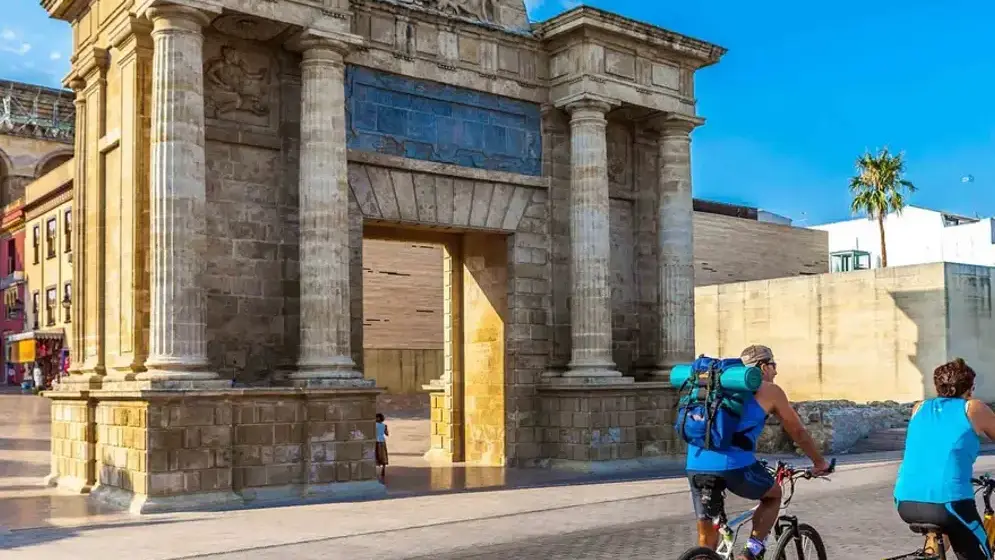
Monuments and tourist sites: most charge no extra fee if you park your dog with a companion outside rather than tying them to a post. Some cafés near the Mezquita have water bowls outside the door. Guide dogs are legally permitted everywhere in Spain with no restrictions.
Getting to and around Córdoba with a pet
Renfe AVE (high-speed train)
Córdoba is on the Madrid–Málaga AVE line, and Renfe's pet policy is well-defined:
- Small dogs (under 10 kg): travel in a carrier (max 60×35×35 cm) for a €35 surcharge; carrier stays on your lap or under the seat
- Larger dogs (10–40 kg): accepted on selected AVE long-distance routes for €35; must book online in advance, arrive 40 minutes early to sign a responsibility declaration
- Guide dogs: free, no restrictions
Check the current Renfe pet page before travel; policies update periodically.
City buses and getting around
AUCORSA city buses accept small dogs in a closed carrier only. Larger dogs are not permitted on city buses. In practice, the historic centre is compact enough that most visitors with dogs walk everywhere or take a taxi. Taxis have no legal obligation to accept pets, but most drivers are accommodating with smaller dogs; ask when hailing.
Driving in: if you arrive by car, parking near the historic centre requires one of the paid car parks on the perimeter. The NH Collection Amistad and Hospes Palacio del Bailío both have concierge services that can advise on the closest parking for guests with dogs.
Emergency vet contacts
Save these numbers before you leave the hotel
Three clinics in Córdoba offer 24-hour emergency veterinary care. Save the nearest number in your phone at check-in, not when you need it. Ask your hotel concierge to confirm the closest one and provide the address, as GPS sometimes misroutes to these clinics on first approach.
Animal24VET
24-hour emergency care and ICU hospitalisation
+34 957 434 651 / +34 638 840 088
animal24vet.esCentro Clínico Veterinario Victoria
24-hour emergency service with on-site hospital
clinicaveterinariavictoria.esHospital Veterinario Vetsicor
24/7 specialist hospital: surgery, ICU, neurology, exotic animals, internal medicine
vetsicor on mivet.comDay-trip ideas: dog beaches near Córdoba
Córdoba has no beach. The nearest dog-friendly coastline is in Cádiz province, about 200 km southwest, a 2.5–3 hour drive. If your itinerary has flexibility, two beaches on the Cádiz coast are consistently the best options for dogs:
Playa del Palmar
Vejer de la Frontera / Conil de la Frontera, Cádiz
The most popular dog beach on the Cádiz Atlantic coast: a long, open sandy shoreline with several dog-friendly beach bars (chiringuitos) that set out water bowls. Wide enough that a dog can run without crowding other bathers.
Playa de Castilobo
Conil de la Frontera, Cádiz
A quieter cove just south of Palmar, less busy and better for dogs that are easily distracted by crowds. Smaller car park; arrive early in the morning to secure a spot in summer.
Seasonal beach restrictions
From 1 June to 30 September, most Cádiz municipalities prohibit dogs on main beaches during core bathing hours. October through May is the safest window for a dog beach trip from Córdoba. Check the current rules for the specific beach before travelling: municipalities update their bylaws annually and restrictions vary by zone within a single beach.
The drive from Córdoba passes through olive oil country (the Sierra Sur de Jaén) and the white hill towns around Arcos de la Frontera. Stopping in Arcos adds 30–45 minutes but is worth it for the views. If you're travelling in August specifically, book chiringuito parking early: this stretch of coast is at its busiest, and dog-friendly car parks near Playa del Palmar fill by mid-morning.
What to carry on every dog walk in Córdoba
- Collapsible water bowl: park fountains exist but are not guaranteed at every stop
- Cleanup bags: bins are present but enforcement is real, particularly on weekends
- The 1-metre leash rule is stricter than the national standard: an extendable leash will attract attention from park wardens
- In summer: check the pavement with the back of your hand before crossing plazas or wide streets
- Save at least one emergency vet number before leaving the hotel
- Muzzle if your dog is a PPP breed: required by Andalusian law in all public spaces
Frequently asked questions
Are pet-friendly hotels in Córdoba actually pet-friendly?
The term covers a range of things. Hospes Palacio del Bailío and Las Casas de la Judería have confirmed policies with published fees (around €30 per night) and amenities such as dog bowls. NH Collection Amistad appears on aggregator pet-friendly lists but has no published fee or weight limit; call the hotel directly before booking. The Parador de Córdoba is not pet-friendly; check Paradores' own pet-hotel list before assuming any Parador accepts pets.
Can my dog visit the Mezquita-Catedral?
No. The Mezquita-Catedral and most major monuments in Córdoba do not admit dogs. The Alcázar gardens and the Patio de los Naranjos (Orange Tree Courtyard) adjacent to the Mezquita are outdoor spaces, but dogs are generally not permitted inside the monument perimeter. Guide dogs are legally permitted everywhere in Spain.
What are the leash rules for dogs in Córdoba?
Andalusia applies stricter rules than the national default: leash must be non-extendable and no longer than 1 metre in public spaces. One dog per person. Breeds classified as Potentially Dangerous (Perros Potencialmente Peligrosos, abbreviated PPP) must also wear a muzzle in public and cannot enter children's recreational areas. PPP breeds include Pit Bull Terrier, Rottweiler, Staffordshire Bull Terrier, American Staffordshire Terrier, Dogo Argentino, Tosa Inu, and Akita Inu.
When is the best time to visit Córdoba with a dog?
October through May. Summer (late June to August) brings pavement temperatures above 60 °C on stone and asphalt, which can cause pad burns in seconds. If you visit in summer, walk before 10 a.m. or after 7 p.m. and use the 7-second hand test: rest the back of your hand on the pavement; if you can't hold it for 7 seconds, it's too hot for paws.
Can my dog eat with me on terraces in Córdoba?
In practice, yes at many places. Spanish food-hygiene rules apply indoors, but covered or open terraces (terrazas) operate outside those restrictions. A well-behaved, leashed dog is widely tolerated on Córdoba's terraces at the establishment's discretion. The phrase to ask is: '¿Aceptan perros en la terraza?' (Do you accept dogs on the terrace?) Not every venue will say yes, particularly at busy tourist spots; having a backup option nearby saves arguments.
Where is the nearest emergency vet in Córdoba?
Three clinics offer 24-hour emergency care. Animal24VET operates around the clock at +34 957 434 651 / +34 638 840 088. Centro Clínico Veterinario Victoria has a 24-hour emergency service at +34 957 456 244. Hospital Veterinario Vetsicor provides specialist care including surgery, ICU, and neurology around the clock. Ask your hotel concierge on arrival to confirm the nearest clinic and save the address on your phone before heading out.
Plan your trip to Córdoba
See our full accommodation guide, seasonal itineraries, and transport options for Córdoba.
Further reading
Official sources
4 references Show Hide
- Renfe: Travelling with pets (opens in a new tab)
Official Renfe policy for pets on AVE and long-distance trains
- Animal24VET Córdoba (opens in a new tab)
24-hour emergency veterinary clinic in Córdoba
- Centro Clínico Veterinario Victoria (opens in a new tab)
24-hour emergency veterinary service with on-site hospital
- Hospes Palacio del Bailío: Pet Policy
Official pet policy and amenities at Hospes Palacio del Bailío