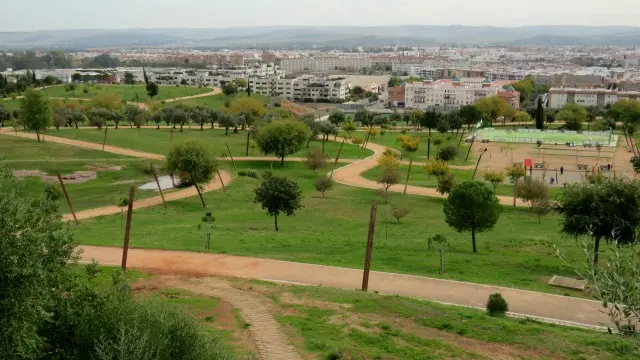

The Parque de la Asomadilla takes its name from the vantage point where travellers once first caught sight of Córdoba arriving from the north. This 27-hectare park covers the hills above the city and is the second-largest urban green space in Andalusia. A circular viewpoint at the summit takes in Córdoba and the Sierra Morena on a clear day.
When to Visit
Best season
March to May and September to November (late summer evenings also popular)
Quietest hours
Weekday mornings or early evening
Visit duration
1 – 2 hours (30-minute climb to summit viewpoint)
A Reconstructed Mediterranean Forest
The walk to the summit passes through a planted Mediterranean forest of more than 1,200 trees representing 18 local species — holm oaks, olive trees, stone pines, and carob trees. The park was developed in phases from the 1980s onward as part of a city commitment to reforesting degraded land on Córdoba's northern slopes. Today it feels established — the trees are mature enough to provide real shade, and the undergrowth has filled in with wild herbs.
The park has 13 entrances from the surrounding neighbourhoods, which makes it genuinely accessible on foot from much of the residential north of the city. Families are catered for with children's play areas for different ages, sports pitches (football, basketball), and paths wide enough for pushchairs.
Late afternoon for the viewpoint — the light on the city and Sierra is spectacular
The 20-30 minute climb to the summit viewpoint is worth timing for late afternoon when the lower sun catches Córdoba below and the Sierra Morena foothills behind. The Mezquita dome is visible on clear days. Summer evenings work too — the park stays open until 2 am.
Community Gardens
A section of the park contains community gardens where residents grow vegetables and fruit using organic methods. The initiative received an environmental excellence award in 2010 and has expanded since. An environmental education centre on site runs workshops on local wildlife and plants — school groups during the week, family sessions at weekends. The combination of working gardens and educational programming makes this different from a purely recreational park.