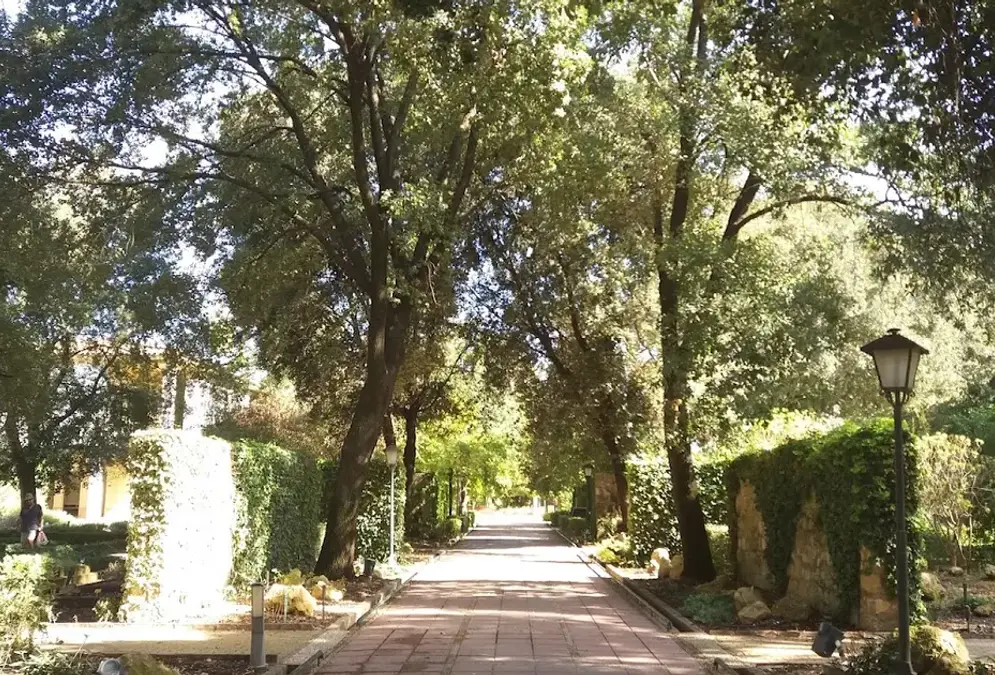

The Jardín Botánico de Córdoba (Royal Botanical Garden) covers 5.5 hectares on the banks of the Guadalquivir. The garden holds a Mediterranean arboretum, a rose garden, a tactile and olfactory garden for visually impaired visitors, and glasshouses with plants from the Canary Islands and the Americas. Two small museums — Ethnobotany and Palaeobotany — are on site. The garden runs educational workshops for children.
When to Visit
Best season
March to June (rose garden peaks in early May)
Quietest hours
Weekday mornings 10:00–12:00
Visit duration
2 hours (full visit including museums)
A Garden of Conservation and Research
Founded in 1980, the garden occupies a former olive mill beside the river. Its collections have grown to more than 1,500 plant species from five continents, organised by geography, ecology, and theme. The primary work of the garden is conservation of threatened Mediterranean plant species alongside environmental education — school programmes run during the week, family workshops at weekends.
The location beside the Guadalquivir is itself part of the experience. The riverside path that runs along the garden's southern edge offers views toward the Roman Bridge and is one of the more peaceful walks in the city during the morning hours. The garden is far enough from the old town that visitor numbers stay manageable.
Visit in early May when 100+ rose varieties peak alongside patio festival season
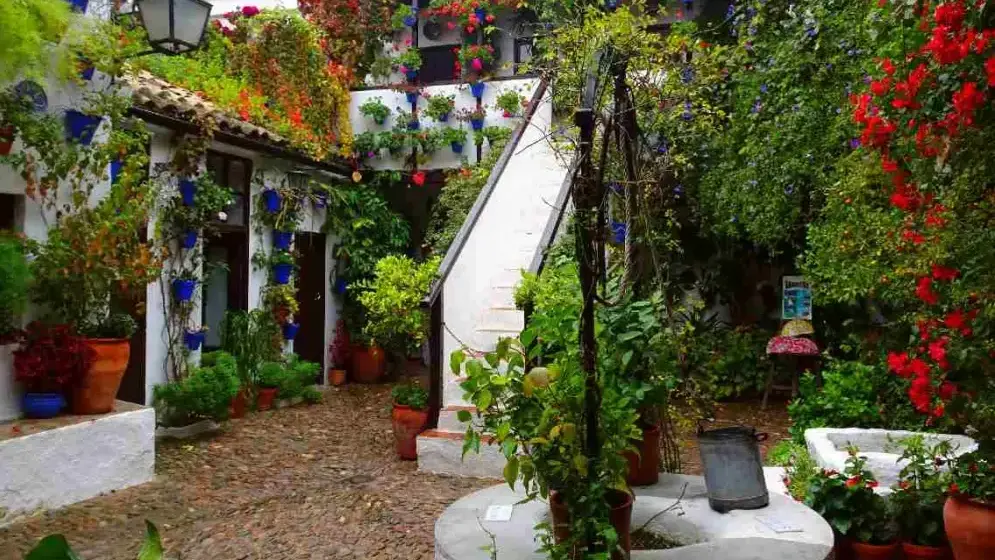
The rose garden reaches full bloom in early May, coinciding with Córdoba's patio season. The combination of the botanical garden in the morning and the patios in the afternoon makes the first two weeks of May the single best window for flower-lovers.
Exploring the Botanical Collections
The Mediterranean arboretum has holm oaks, centuries-old olive trees, and stone pines that provide genuine shade on hot days. The rose garden peaks from March to June with more than 100 varieties — early May is the best window, when the roses coincide with Córdoba's patio season. The tactile and olfactory garden uses aromatic and textured plants — lavender, thyme, rosemary — in a layout designed to be used without sight. The labels are in Braille alongside standard text.
The tropical glasshouses hold giant cacti, orchids, and plants from the Americas and Canary Islands. In winter, when outdoor gardens are sparse, these glasshouses offer a different kind of visit. The Palaeobotany Museum has plant fossils that cover the prehistory of local species — unusual content in an Andalusian tourism context. The Ethnobotany Museum connects plant knowledge to traditional uses: food, medicine, building materials.