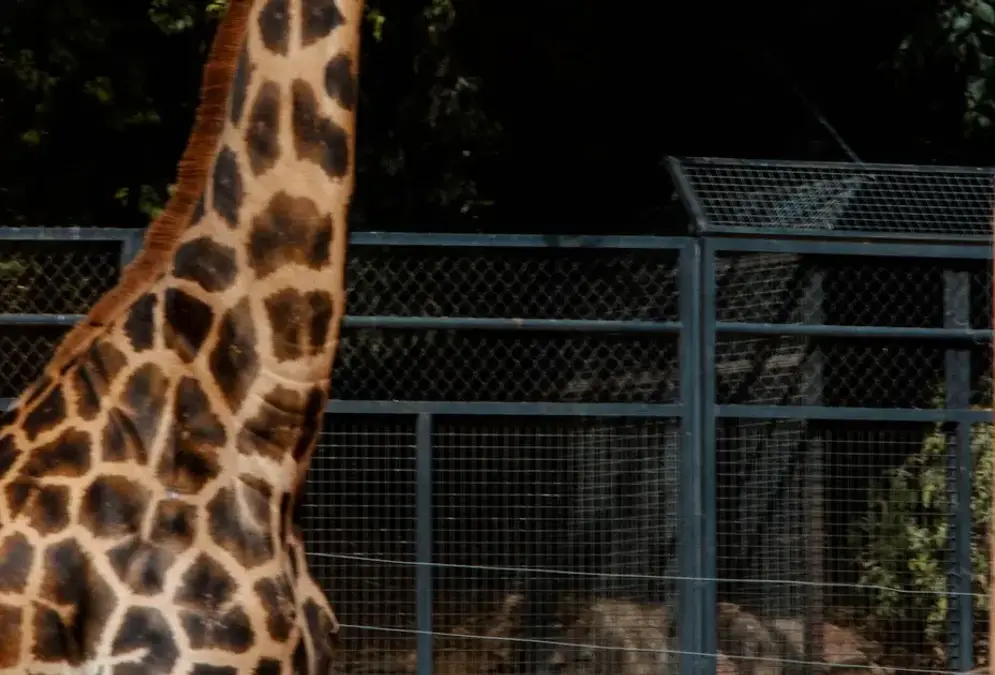

The Zoo de Córdoba (Centro de Conservación Zoo Córdoba) runs as a conservation centre as well as a zoo. Its ponds also give the surviving fragment in Hombre Río’s twenty-year afterlife a new public setting. On 4.5 hectares beside the Guadalquivir, it holds over 500 animals representing more than 100 species — bears, lions, zebras, ostriches, reptiles, exotic birds, and primates. In 2025, the zoo recorded 118,000 visitors.
When to Visit
Best season
October to May (morning visits essential in summer)
Quietest hours
Opening (9:30) on weekdays
Visit duration
2 – 3 hours
From Traditional Zoo to Conservation Centre
Founded in the 1970s, the zoo has shifted focus over the decades toward conservation and environmental education. It now participates in European Endangered Species Programmes (EEP) for several species, including Iberian lynx-related research partnerships. Enclosures have been rebuilt with larger spaces and environmental enrichment to improve animal welfare. The educational programmes, rather than entertainment, now drive the calendar.
The shift away from a conventional zoo model is visible in how the enclosures are presented. Signs focus on habitat threats, population data, and the zoo's specific breeding contributions rather than just species facts. Visitors who have been before will notice the changes.
Arrive at opening for the most active animals — they retreat in afternoon heat
Big cats, primates and birds are most active in the morning when keepers do their feeding rounds. By early afternoon in summer, most animals retreat to shade and the enclosures feel emptier. The keeper talks scheduled in the morning are worth timing your visit around.
What to See and Do
The main trail moves visitors through adapted enclosures with information panels on each species. The big cats enclosure and the primate section draw the most attention, but the bird collection — including flamingos, cranes, and raptors — is one of the most complete in Andalusia. The reptile house covers snakes, tortoises, and lizards from several continents.
Educational workshops run Tuesday to Friday (€2–3 per child), accessible to children with disabilities. Behind-the-scenes tours show the operational side — food preparation, veterinary care, and breeding records. The information throughout focuses on habitat loss and biodiversity. Keeper talks are scheduled throughout the day — the schedule is posted at the entrance.