
Heat is now part of choosing a destination
The numbers keep restating themselves. Spain's official national record of 47.6°C was set at La Rambla, a village in Córdoba province, in August 2021, and five summers later it has not been beaten.[4] June and July 2026 then delivered the warmest such two-month period in Spain since records began in 1961. In this city heat is not a spell of bad weather; it is the season's defining fact.
Travellers have adjusted faster than the guidebooks. Research released by Booking.com in April 2026 found that nearly three-quarters of people now weigh extreme weather, heat above all, when choosing where to go, and 55 percent said some destinations had become too hot to visit in the window they had planned.[5] The industry calls the resulting trips coolcations, and by that arithmetic Córdoba should be empty from June to September.
It is not, because the city has been running a heat-adaptation programme for two thousand years and the rest of the continent is only now catching up to the idea. Courtyards are planted for airflow. Streets run narrow enough to shade their own walls. The day splits into two shifts with a hard stop at midday. And when the valley floor becomes unbearable, relief waits uphill in the Sierra Morena, where residents of the hill villages report summer nights up to 13 degrees cooler than the city below.[6]
None of this asks heroics of a visitor. It asks only that you copy a system that already works, and the system is visible everywhere once you know what to look at: in the depth of a window reveal, in the direction a terrace faces, in the hour a kitchen lights its burners. Why this valley heats harder than anywhere else in Europe is physics; Why Is Córdoba So Hot covers that properly. What follows is the other half of the story: the accumulated human answer, from Roman courtyard engineering to a municipal shelter map.
Built for freshness: patios, whitewash and water
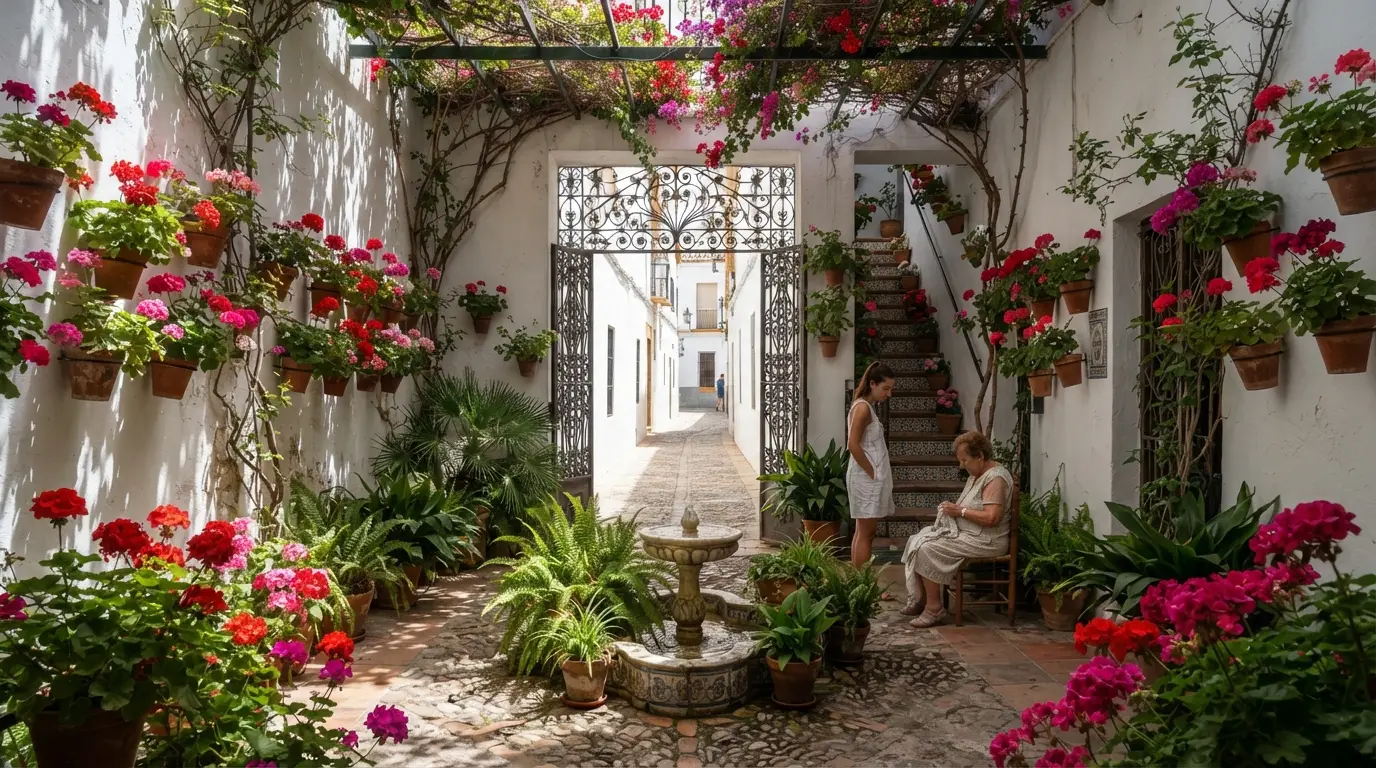
In 2012 UNESCO inscribed the Fiesta de los Patios on its Representative List of Intangible Cultural Heritage, describing Córdoba's patio houses as communal family dwellings in the historic quarter.[7] The May festival is the public display, but the architecture runs twelve months a year, and August is when you can feel it working. Step off a sun-struck street into almost any courtyard in San Basilio or Santa Marina and the air changes: cooler, damper, faintly green, with the sound of the fountain arriving a half-second after you notice the temperature. In April the same patios smell of orange blossom; in August they simply feel like the reason the city still functions. Our Córdoba Patio Festival guide maps the May festival routes, plus the handful of patios that open outside festival week.
The design logic is straightforward and very old. Because the climate is hot and dry, the city's builders, Roman first and later Islamic-era, re-centred the house on an inner patio, usually with a fountain at its heart and often a well to store rainwater.[8] Thick walls slow the heat down. Whitewash throws sunlight back at the sky. Plants transpire, fountains move water through the air, and the enclosed courtyard holds the result. No single trick amounts to much alone; together they keep a patio noticeably fresher than the street outside the gate, without a watt of electricity. The well matters as much as the fountain, incidentally: rainwater caught in winter is what keeps the plants alive and the evaporation running through a rainless August.
Explore nearby · Monument
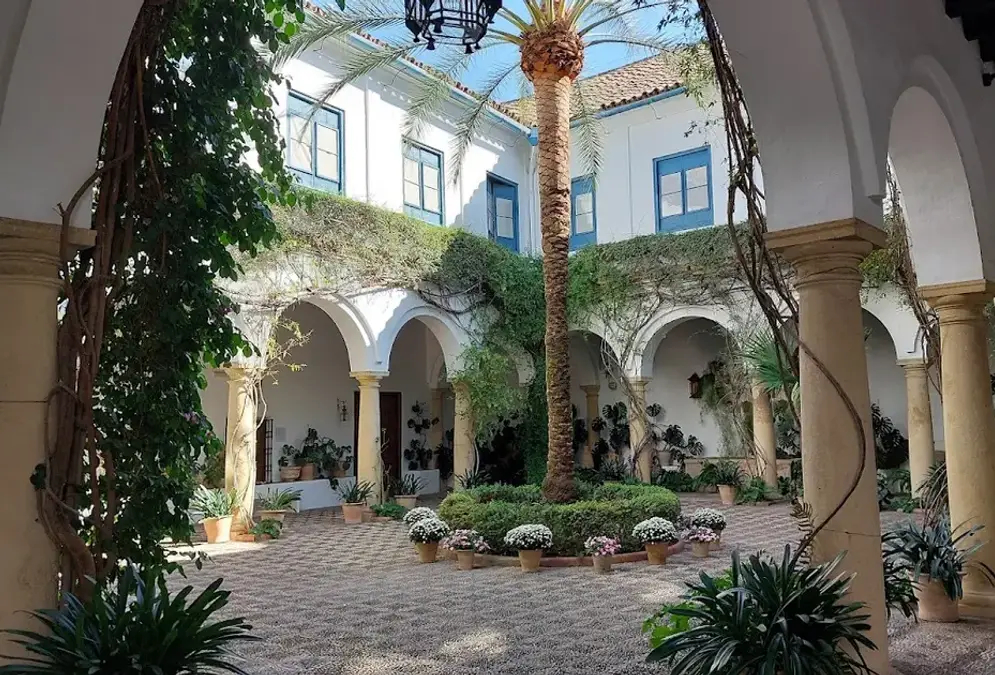
Palacio de Viana
Palacio de Viana, Córdoba: walk 12 Renaissance patios, a 7,000-volume library and Flemish tapestries. Tickets from €8.50, free entry Wednesdays 2 to 5pm.
Cordobans take this seriously enough to compete over it. The city formalised its courtyard competition in 1921 under mayor Francisco Fernández de Mesa, with prizes of 100, 75 and 50 pesetas,[9] and it still awards them every May. What began as civic pride doubles as shared engineering: every winning patio refines techniques the neighbours copy the following spring.
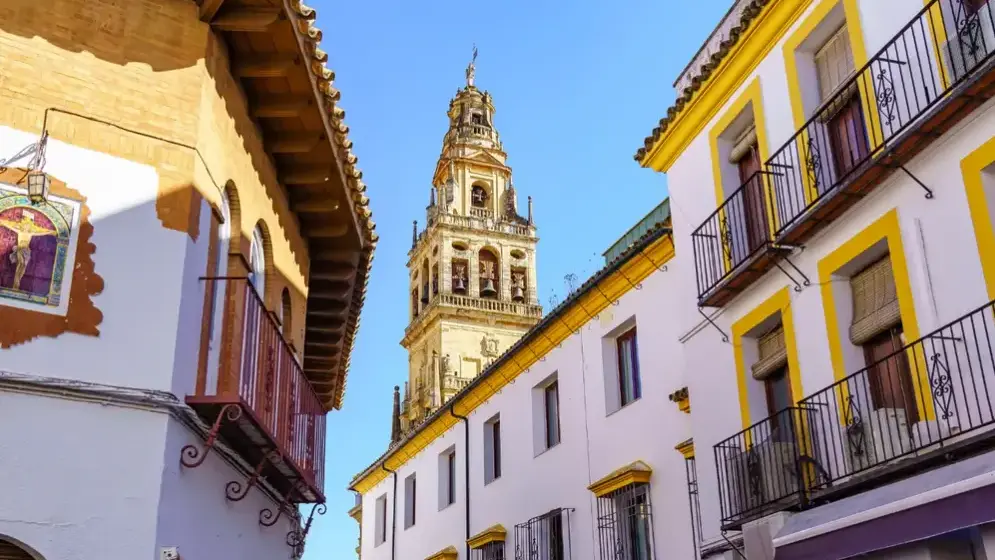
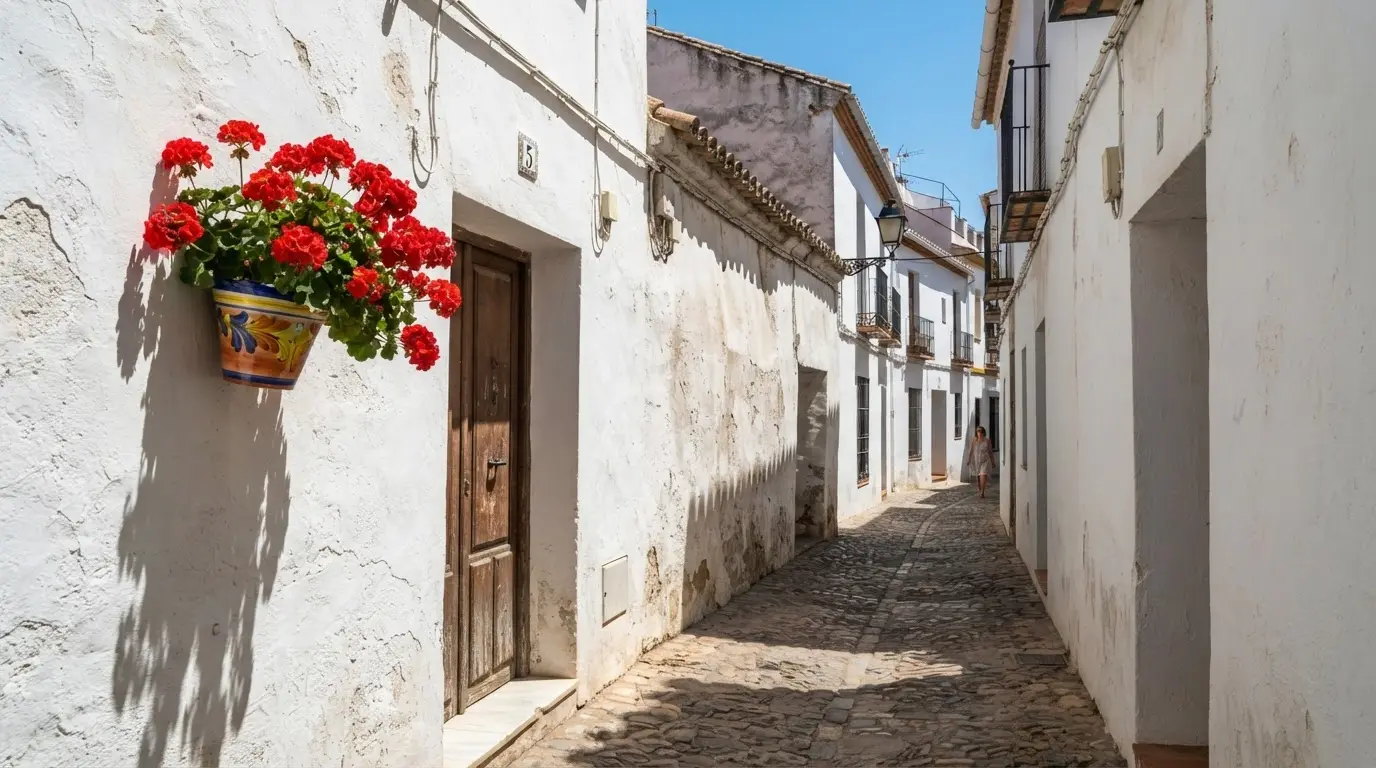
The street grid plays the same game one scale up. Lanes in the Judería and the old medina run barely wider than a cart, narrow enough that facing walls shade each other through the central hours. Walk there at noon in August and you move between patches of blinding light and shadow cool as a cellar every few steps. The whitewash is not only picturesque; a white wall reflects radiation that a dark one would store and hand back to you after sunset.
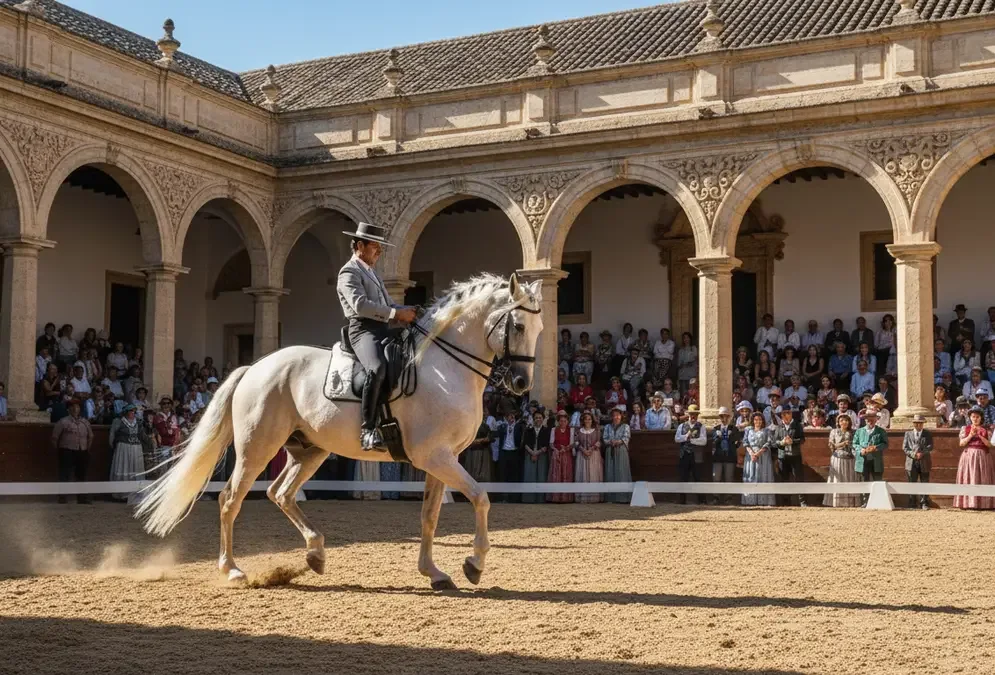
To see the system at monumental scale, walk to the Palacio de Viana, whose twelve courtyards descend from a stone Renaissance patio through flower-filled courts to a garden room of palms. Go before midday. Even Viana loses its argument with the sun by mid-afternoon.
The shifted clock: siesta hours and the two-shift day
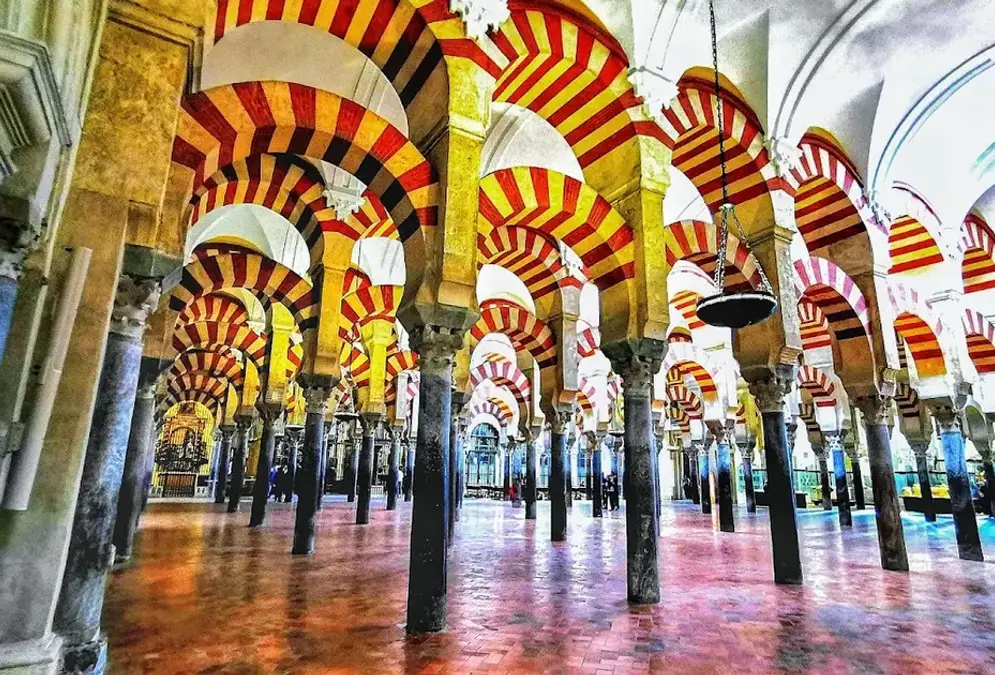
The siesta began life as scheduling rather than sleep: agrarian workers broke at the hottest hour so they could keep going into the evening, and Spanish timetables kept that shape long after the fields disappeared, with many afternoon shifts running until eight or nine at night.[10] For a visitor this translates into a morning-and-evening rhythm, and the city gives you precise coordinates. The Mezquita-Catedral is heaviest between 11:00 and 15:00, when the day-trip groups pour in; go at opening or wait for late afternoon.[11] The Andalusian heat-health protocol goes further and flags tourists themselves as a heat-vulnerable group, especially between 14:00 and 19:00, when unfamiliarity with a city compounds the risk of getting caught out.[12] Our guide to Córdoba in summer builds a whole day around that window.
One municipal answer aims directly at the stranded afternoon. This summer the Visitor Reception Centre again opens as a designated climate shelter, thought up chiefly for day visitors who find themselves with hours to fill at siesta time and no idea where to sit them out.[13] It is worth knowing it exists before you need it, because at 3 PM in August the options otherwise reduce to church interiors and whichever café has a free table in the shade.
Evenings repay the discipline. Terraces refill from nine, dinner is a 10 PM institution rather than an affectation, and the air that made noon hostile has dropped into something close to perfect. The residents you saw nowhere at 3 PM are all outside at 10, and the city finally looks like its postcards.
Refugios climáticos: the newest layer of shade
Institutional Córdoba now runs its own layer on top of the inherited one. A network of municipal refugios climáticos stands ready through the hottest weeks, opening on a fixed ladder of alerts: yellow from 38°C, orange from 40°C when the shelters open their doors, red from 44°C, which brings exceptional measures and extended opening hours built around the central siesta period.[14] A lighter version of that same institutional instinct is now running: Festival Córdoba Efímera builds temporary architecture across the historic centre using structures meant to vanish rather than endure.
By European requirement they are free to enter, fully accessible and equipped with drinking-water fountains. They are functional rooms, libraries and civic centres rather than attractions, and that is exactly the point: a shaded chair and a working fountain at 3 PM can rescue an afternoon you would otherwise write off. Refill your bottle while you are there, too. The public fountains of the historic centre are part of the same logic, and drinking before you feel thirsty is the single habit that separates comfortable summer visitors from miserable ones.
Deep dive · Article
Spain and Europe's Hottest City: Why Córdoba Is So Hot
Córdoba is the hottest major city in Spain and Europe by monthly average high: 46.9°C on record and 16 days a year above 40°C. Here's the science behind it.
Treat the map the way locals treat it, as infrastructure. If a red-alert day lands during your trip, the city is telling you plainly to spend the middle of the day indoors, and the refugios are where indoors officially lives. Fighting that instruction is how a well-planned trip turns into a cautionary tale.
Escaping upward: swimming holes and cooler nights
When even the patios feel warm, Cordobans go up. In the foothills of the Sierra Morena above the city, the pools of the Baños de Popea on the arroyo Molino near Santa María de Trassierra turn each summer into a natural version of the refugio network, some 15 kilometres from the centre and reachable only on foot.[15] Further options along the river and the reservoirs are mapped in our guide to natural swimming pools near Córdoba.
Set expectations before you set out. Sierra water runs cold enough to sting after the climb down, which is precisely the appeal in August, and the shade above the pools belongs to a different climate from the city you left an hour earlier. But flow depends entirely on the winter's rain, no swimming hole here is guaranteed, and the walk in is exposed enough that arriving at midday undoes most of what the trip was for.
Check the water before you commit
Sierra pools live and die by winter rain. Even after the exceptionally wet winter of 2025–26, visitors arriving at Baños de Popea in August found little more than stagnant water. Check recent reports for your exact week, wear shoes with grip for the descent, and carry more water than seems reasonable.
The shape of a good sierra day is fixed: leave the city by nine, reach the water before eleven, and be back down for lunch indoors and the evening paseo. Locals who make the trip regularly plan it around the same two facts that shape the city itself: altitude cools what stone cannot, and every hour outdoors has a right time. Combine the excursion with the timing rules above and you get the version of a Córdoba summer that residents quietly prefer, one spent entirely in the right place at the right hour.
Recommended tours
Tours are selected for quality, not commission. We earn a small fee if you book — at no extra cost to you.