
What Festival Córdoba Efímera actually is
Festival Córdoba Efímera's full name is the Festival Internacional de Arquitectura Efímera, Creación Contemporánea y Patrimonio (the International Festival of Ephemeral Architecture, Contemporary Creation and Heritage)[4]. Its official page is hosted by the Fundación Arquitectura Contemporánea, and the 2026 edition was announced by Fundación Artdecor together with the architecture practice MUDD Architects[5]. No source states an edition number, but the organisers' own language, a project meant to become an international reference point for contemporary intervention on historic heritage, reads as a debut rather than a returning fixture.
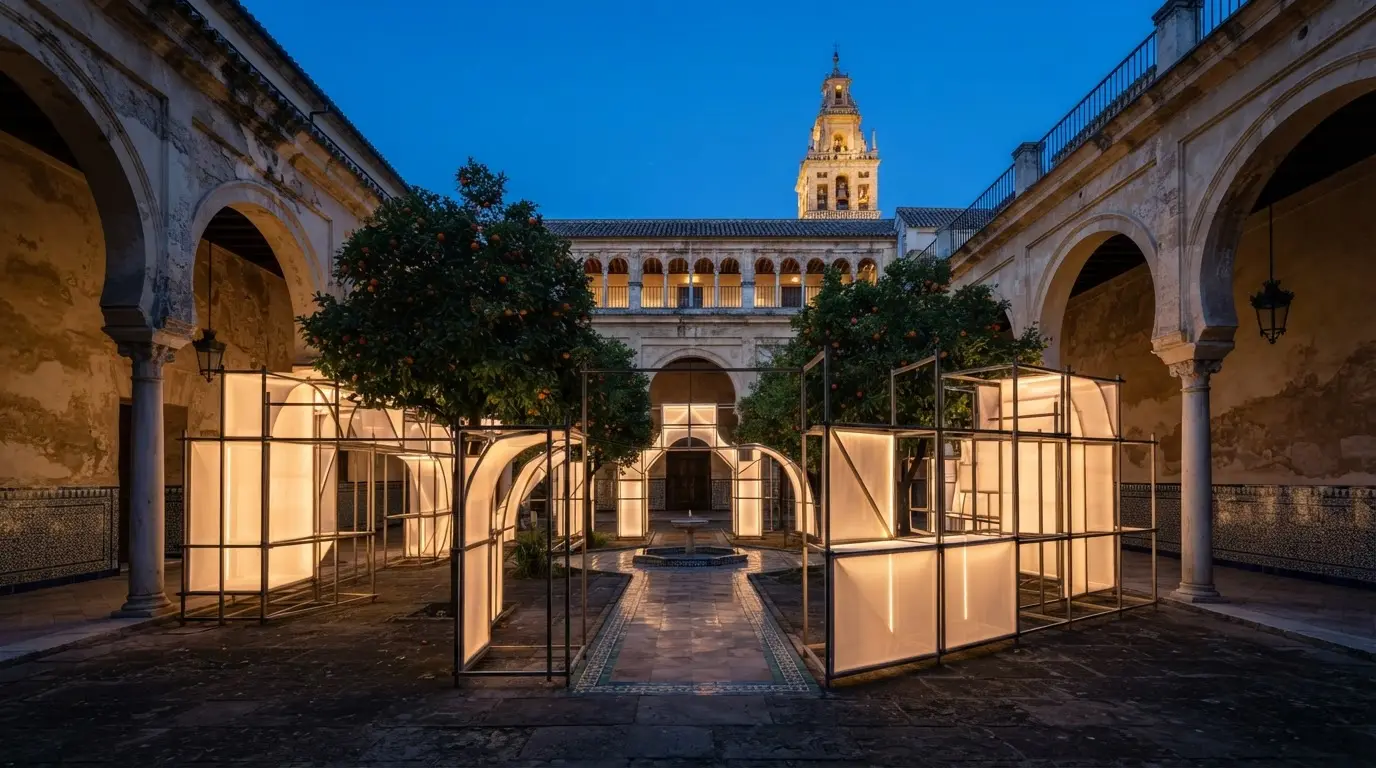
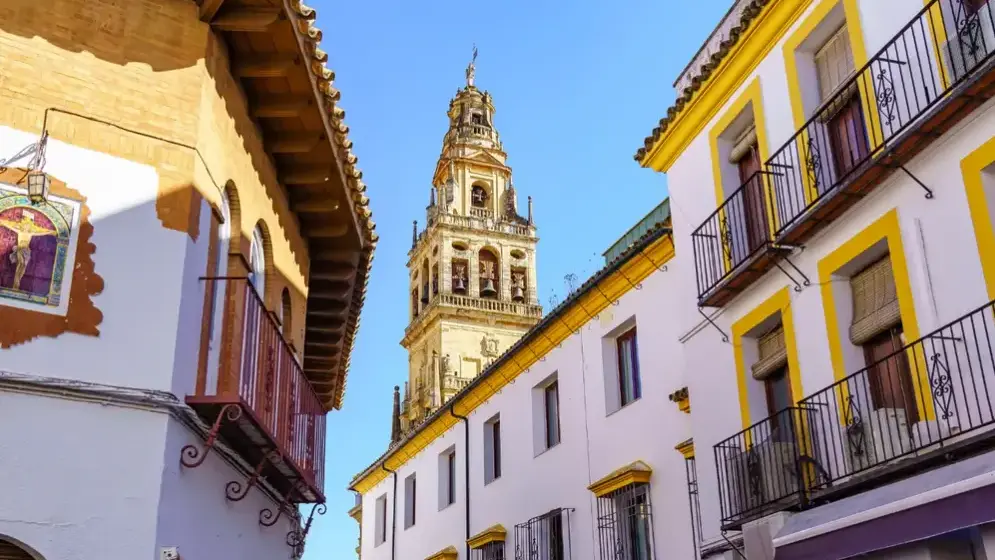
What makes Efímera unusual for Córdoba isn't the art itself so much as where it's allowed to happen. The city's older festivals work around fixed, familiar stages: a cathedral nave, a row of competition patios, a bullring. Efímera has no single venue at all. It treats the whole historic centre as raw material: a street corner, a courtyard, a chapel, each one rebuilt temporarily rather than restored permanently, then dismantled once that installation's run ends.
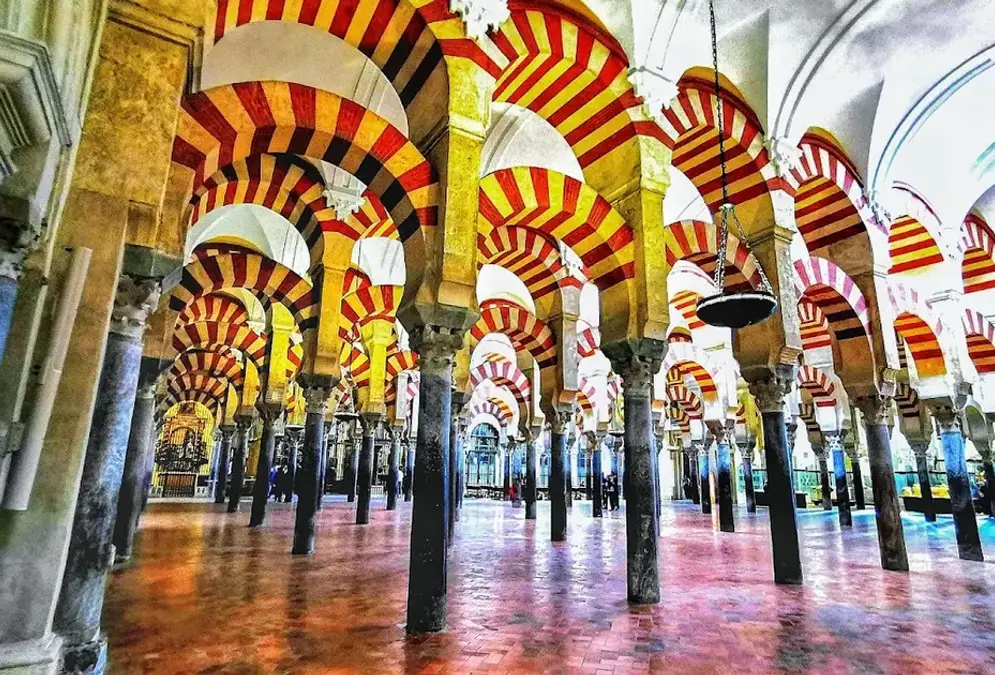
That approach draws on outside expertise as much as local knowledge. Workshop participants included students linked to London's Architectural Association School of Architecture, one of the field's most recognised academic institutions, alongside local and national talent[6]. The result sits inside a longer Córdoban habit of treating the city's architecture as something lived in and adapted, not simply preserved behind glass. It's the same instinct that keeps the Mezquita-Catedral's Renaissance nave inside a mosque instead of replacing one with the other.
Inside Efímera Lab, the ten-day workshop that builds it
The workshop at the centre of Festival Córdoba Efímera is called Efímera Lab. It ran for ten days, from 21 to 31 August 2026[7], during which multidisciplinary teams designed and built this year's interventions from scratch[1]. Participants split into groups of three to five people to reinterpret streets, patios, heritage corners and other overlooked spaces across Córdoba's historic fabric; each team chose its own site and built an installation from lightweight structures, lighting elements and 3D-printed components[8]. The brief given to every team was specific rather than open-ended: explore how structures that weigh almost nothing, combined with light and sound, can change how a city is inhabited and perceived[9].
Nothing built during Efímera Lab is meant to last, which makes the workshop's second output the more durable one. Every intervention is documented into a short film intended to circulate at festival and audiovisual showcases beyond Córdoba, so a ten-day build gets a life after the installation itself is gone[10]. That documentation step is built into the programme, not an afterthought: proof that the point of Efímera Lab was never really the object left standing in a patio, but the record of how it briefly changed that patio.
A place on the workshop wasn't free, and the organisers built funding directly into the programme. Fundación Artdecor covers three full scholarships, worth roughly €1,000 each, reserved for students living in Córdoba and its province[2], and a second, separate strand funds two production grants for emerging artists, professionals or creative collectives building work inside the official programme[11]. Applications for both strands ran from 1 to 15 July 2026[12], well before the workshop itself began, part of a funding model built to widen who gets to build inside Córdoba's protected historic centre, not just who gets to look at the result.
5
Choosing the sites: chapels, patios and overlooked corners
Efímera doesn't work from a shortlist of monuments. Its brief is to reinterpret streets, patios, heritage corners and other overlooked spaces across Córdoba's historic fabric[8], then hand the finished intervention over to the public once the workshop ends. For the 2026 edition, that handover happened on 1 September, framed by the organisers as a moment when climate-change stewardship was central to how the city was transforming itself[13]. Coverage of the opening describes the viewing period running through September and into its final week; read that as 'through the month' rather than a single hard closing date, since the one published end date doesn't correspond to a real day on the calendar.
The 2026 edition sited its interventions across six heritage spaces[3]:
- The Capilla Mudéjar
- The courtyard shared by the Museo de Bellas Artes and the Julio Romero de Torres museum
- The Palacio de los Ángulo
- The Patio de la Casa de las Tazas
- A street corner running from Calle Toril to Plaza de la Corredera
- The Patio de la Asociación de Patios de San Basilio, number 44
Between them, the six sites covered most of the registers Córdoba's historic centre offers: religious, civic, domestic and purely incidental, the kind of corner a visitor might otherwise walk past without a second look.
For the 2026 programme, the festival's guest artist was the Chinese artist Zhen Xiang, whose ephemeral architecture inside historic heritage settings is defined by sustainability and vegetation[14], and the 2026 programme was curated by Nina Chaltiel and Fernando Vacas[15]. Institutional backing ran wide for a first-year festival: Fundación Kutxabank, Grupo Keyter, Amaltea, the Universidad de Córdoba, Universidad Loyola, the C3A contemporary-creation centre run by the Junta de Andalucía, the Filmoteca de Andalucía, the Museo de Bellas Artes and the Palacio de Viana were all named collaborators[16] — a roster that read more like a founding coalition than a single event's sponsor list.
Explore nearby · Monument
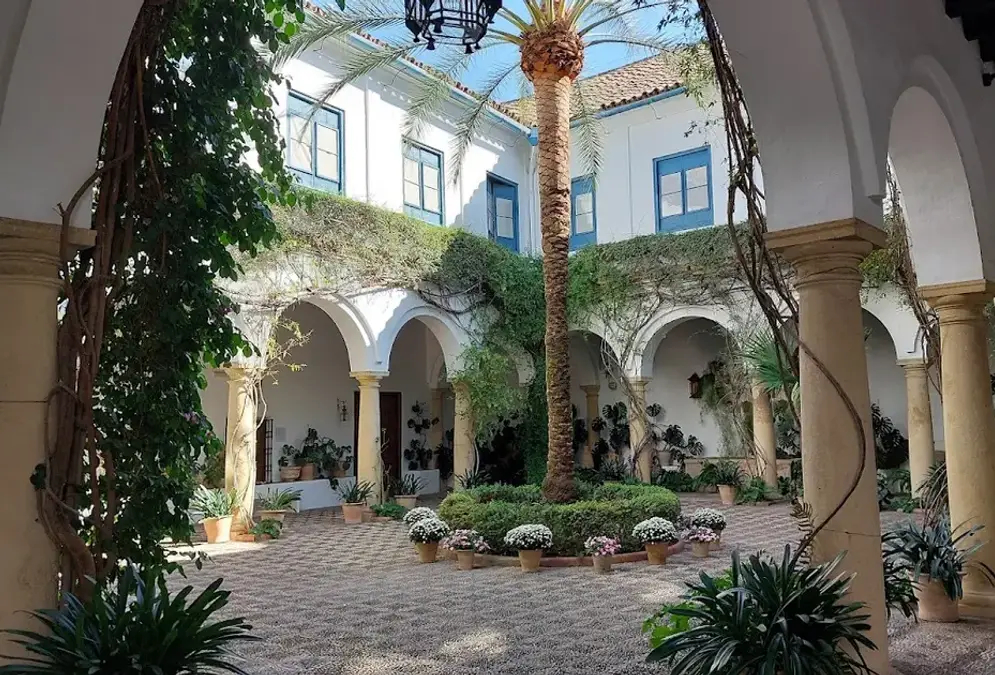
Palacio de Viana
Palacio de Viana, Córdoba: walk 12 Renaissance patios, a 7,000-volume library and Flemish tapestries. Tickets from €8.50, free entry Wednesdays 2 to 5pm.
Not the flower festival: Efímera Córdoba versus FLORA
Search 'ephemeral festival Córdoba' in autumn 2026 and two completely different events answer. Festival Córdoba Efímera is one. FLORA, the Festival Internacional de las Flores, is the other, and this year the confusion has a specific trigger: FLORA's ninth edition, running 12 to 22 October 2026, chose 'Efímero' (the ephemeral) as its own 2026 curatorial theme, a coincidence of naming rather than a shared programme[17].
FLORA stages floral-art installations, not architecture, across five named historic patios: the Patio de los Naranjos at the Mezquita, the courtyard of the Museo Arqueológico, the Palacio de Orive, a patio of the Palacio de Viana, and the Baroque patio of the Palacio de la Merced[18]. Entry is explicitly free[19] — a detail examined in FLORA's economic impact analysis — and the prize money dwarfs anything in its category: a €25,000 first prize and a €10,000 second prize, the two largest cash awards of any festival of its kind[20].
| Festival Córdoba Efímera | FLORA | |
|---|---|---|
| Medium | Architecture, light and urban intervention | Floral art installations |
| 2026 dates | From 1 September | 12–22 October |
| Venues | 6 heritage sites | 5 historic patios |
| Entry | Not published | Free |
| Top prize | Not applicable | €25,000 |
Efímera Córdoba runs on a different calendar, in different buildings, judged by different curators, funded and organised separately from FLORA. The two festivals share a season and a city; for one year only, they also share a word. They don't share a programme, a venue list, or an organiser, and treating one as a preview or a rebrand of the other is the single easiest mistake to make about either.
Why a UNESCO-protected city keeps building things meant to disappear
Córdoba's historic centre is one of the most heavily protected urban cores in Europe, and that protection cuts against permanent change: anything new built to last has to compete, legally and practically, with everything already standing on the same street. Efímera sidesteps that tension by design. Nothing it builds needs to survive a planning process built for permanence, because none of it is meant to survive at all — and that constraint is exactly what let the festival colonise a chapel courtyard, a palace patio and a street corner in the same season, spaces a permanent installation could never touch.
The organisers' own framing ties that lightness to a bigger, more practical local problem. The September opening was described explicitly as a moment when climate-change stewardship is central to how the city is transforming itself[13], and the workshop brief behind it was built entirely on lightweight structures, light and sound rather than heavy, permanent construction[9]. No source claims Efímera was created because of Córdoba's heat (that would overstate what's actually been said), but the material choice echoes something the city has practised for centuries with far less ceremony: patios cooled by water and shade rather than air conditioning, and awnings strung across streets every summer rather than permanent roofs. Readers curious about that older, harder-won relationship with Córdoba's extreme summer heat will recognise the same underlying logic at a different scale.
Deep dive · Article
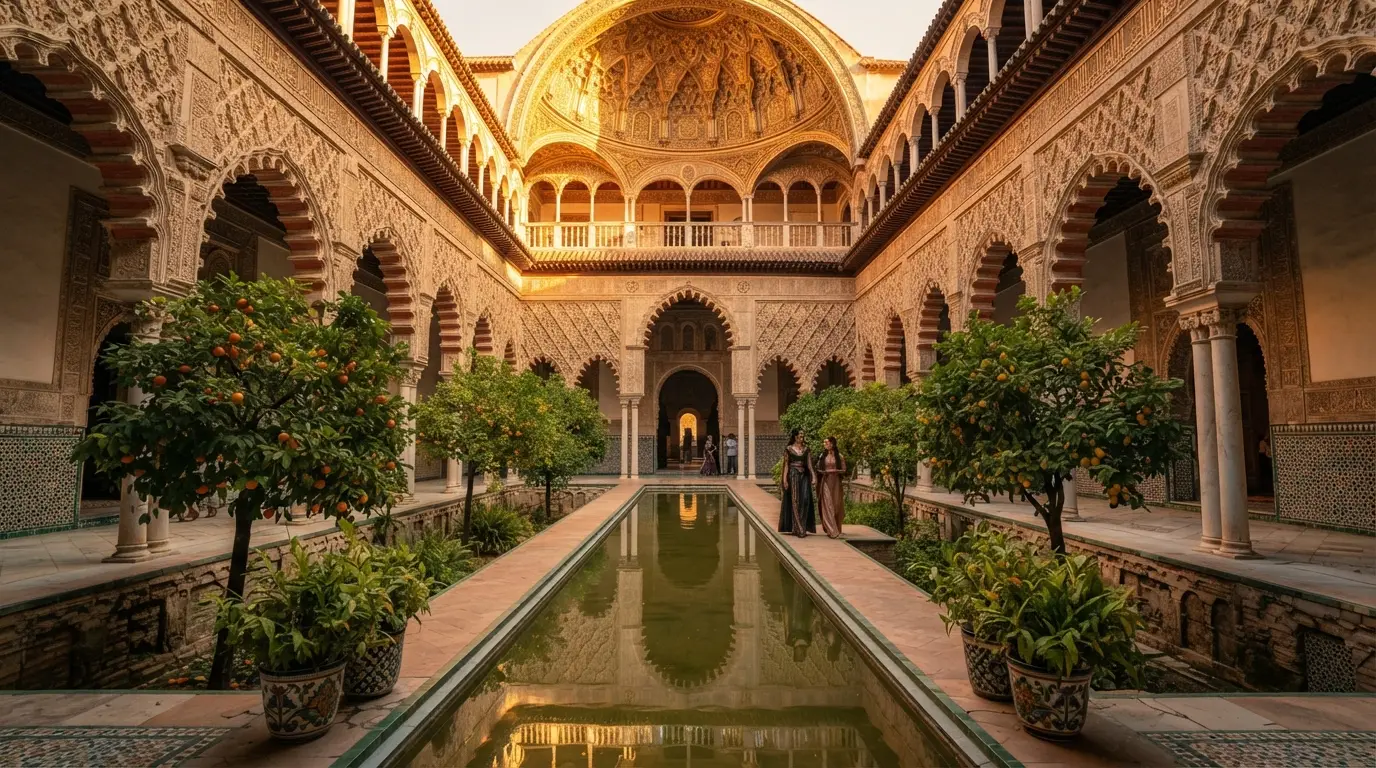
Game of Thrones' Dorne: Córdoba's Real Architecture
HBO's Game of Thrones built Dorne's look from medieval Córdoba's Umayyad architecture: horseshoe arches, muqarnas domes, though filming happened in Seville.
Recommended tours
Tours are selected for quality, not commission. We earn a small fee if you book — at no extra cost to you.
One detail the organisers haven't published: whether entry to the finished installations is free. FLORA's own page states plainly that its floral installations can be visited at no charge; nothing in Efímera's materials makes the same claim for its six sites. Until that changes, the safest plan is to check the festival's own channels before setting out. It's worth remembering, for anyone walking between the Capilla Mudéjar and a converted street corner, that the whole point is that none of it is meant to still be there once the festival's run ends.