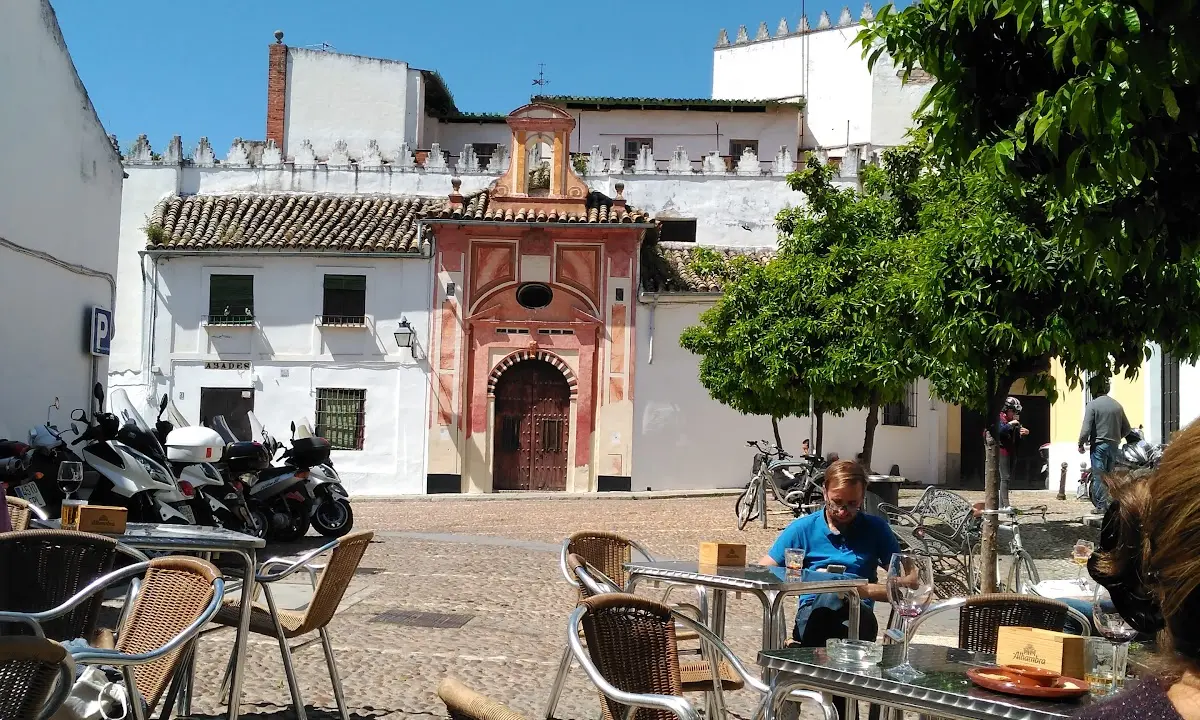

A wine bar in the heart of the Judería
Plaza de Abades is the kind of square that doesn't appear on most tourist itineraries: quiet, pedestrian, shaded by orange trees. Taberna El Barón has occupied it long enough that the terrace chairs feel like part of the furniture. The bar sits in the Judería and is a short walk from the Mosque-Cathedral, but the clientele is mostly local. Neighbors drop in for a glass after work. Families occupy the outdoor tables on Sunday afternoons.
What's in the glass
The wine list reads like a tour of Spain's better appellations, though El Barón keeps its focus local. Montilla-Moriles finos arrive cold in proper tulip glasses, the amontillado has real nuttiness without being cloyingly sweet, and the pedro ximénez is thick and dark and worth every sip if you can manage it after all that. The house vermouth, poured straight from the tap, is what most regulars order to start. Ask for it with olives. Budget €5–12 per person for a glass and a plate.
Tapas and the terrace
The food menu is intentionally short: artisan pâté, lomo en manteca (slow-cured pork loin), sheep's cheese. That is roughly it, and it is enough. Small plates of olives and chips arrive without prompting when you order a drink. A small library and free Wi-Fi suggest that lingering is encouraged.
The terrace is the main reason to come. Grab a table before 1 pm for lunch or after 9 pm for the evening session — the square fills up fast in the warm months. In winter, the interior is small and cosy, with the regulars at the bar and the wood fittings warmed up from years of use.
When to go and practical tips
Open from 12:30 pm through midnight, which makes El Barón one of the few wine bars in the Judería that works for a midday aperitif as well as an evening drink. No reservation needed. Cash accepted and preferred. The crowd is almost entirely local on weekday lunchtimes, the best time to find the bar at its least performed.
Understanding the wines
Montilla-Moriles produces wines in the same style as Jerez sherry but from the Pedro Ximénez grape grown inland, south of Córdoba. They carry a DO appellation and are worth understanding before you order. The progression at El Barón runs roughly as follows: start with the fino (pale, dry, best very cold, pairs with the olives that arrive automatically), move to the amontillado (oxidatively aged, nuttier, amber in the glass, good with the lomo en manteca), and finish with the pedro ximénez if you want something that functions more as dessert than wine. Dark, thick, smells of dried figs and molasses.
If that structure sounds like too much commitment for an afternoon stop, the house vermouth is a sharper, less demanding option. It comes from the tap, served over ice with a slice of orange, and arrives ready.
The square and its rhythms
Plaza de Abades is small enough that a single large group can shift its atmosphere entirely. On weekday mornings it is nearly empty, with the orange tree shadows crossing the stone in long diagonal lines. By 1 pm the terrace fills for lunch. After 4 pm it quiets again until the evening session from around 8 pm onward.
In spring, the orange trees flower and the square smells of blossom for several weeks in April. The terrace is at its best then: warm evenings, the scent in the air, the Judería's stone walls holding the heat from the afternoon. This part of the Judería has barely changed in centuries: the lanes are narrow, the architecture is Moorish-influenced behind Baroque facades, and the Mosque-Cathedral is less than three minutes' walk.
Few bars in Córdoba offer this combination of location, local crowd, and serious wine at honest prices. The tourist bars further into the Judería charge more for less.
For a wider wine selection, Vinoteca Ordóñez in the Judería stocks over 100 labels with Mezquita views, and VinumPlay near the Roman Temple pours from 300 bottles by the glass.
El Barón ranks in our Top 10 Bars in Córdoba guide.
How to order
You order at the bar, not at the table. Walk up, tell them what you want, and pay when the drinks arrive. Table service exists in a loose sense, but the bar counter is where the interaction actually happens: the staff are quicker there, and you get a better look at the bottle selection. Tipping is not expected, though rounding up to the next euro is common. Wine pours are generous: a standard glass of fino runs close to 150ml, which is more than you would get in a Madrid wine bar at the same price. Keep that in mind if you are planning a longer session.