Articles · Caliphate of Córdoba
The Caliphate of Córdoba: Articles on the Caliphal Age
An estimated half a million people, a new palace city, a mosque enlarged twice.
Here are the articles on the Córdoba of the caliphs: palaces, the enlarged Mezquita, the court's scholars and the city's daily routines. For readers who want the height of Andalusi Córdoba in depth.
42 articles · 929–1031
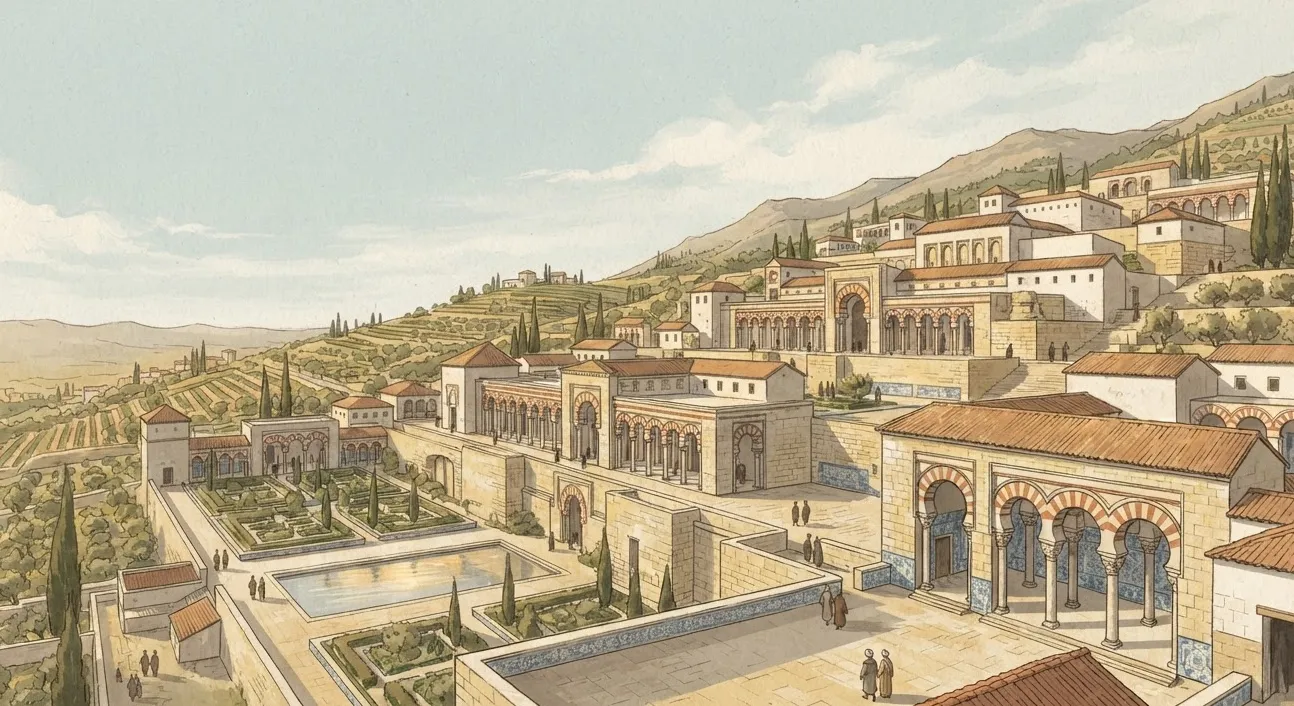
Articles on Caliphate of Córdoba
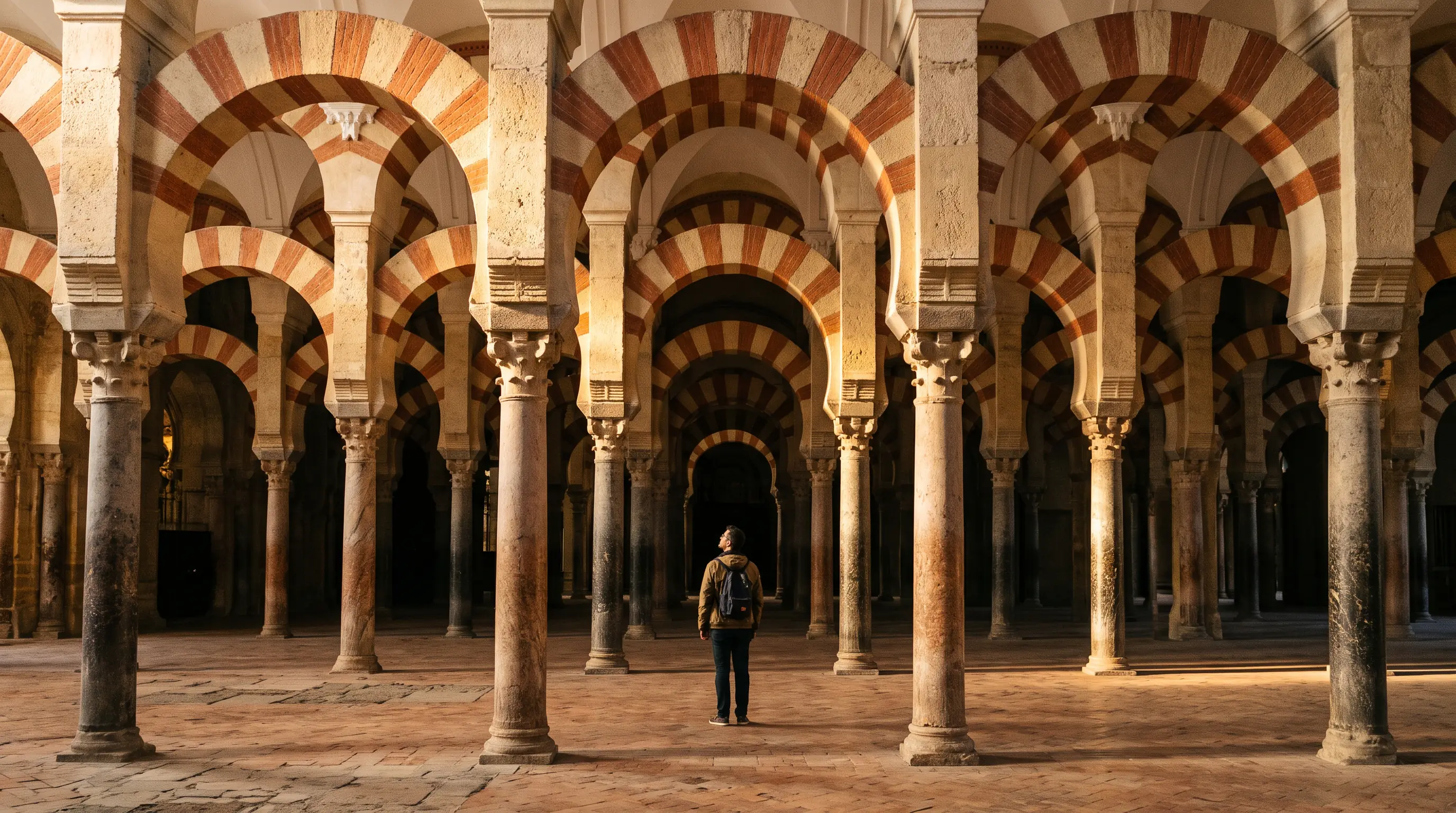
Who Were Córdoba's Scholars Beyond Averroes and Maimonides?
Sophie Marchand
Four Cordoban scholars beyond Averroes and Maimonides: poet Ibn Quzman, historian Ahmad al-Razi, judge Mundhir al-Balluti, exegete al-Qurtubi, and what to see.
Read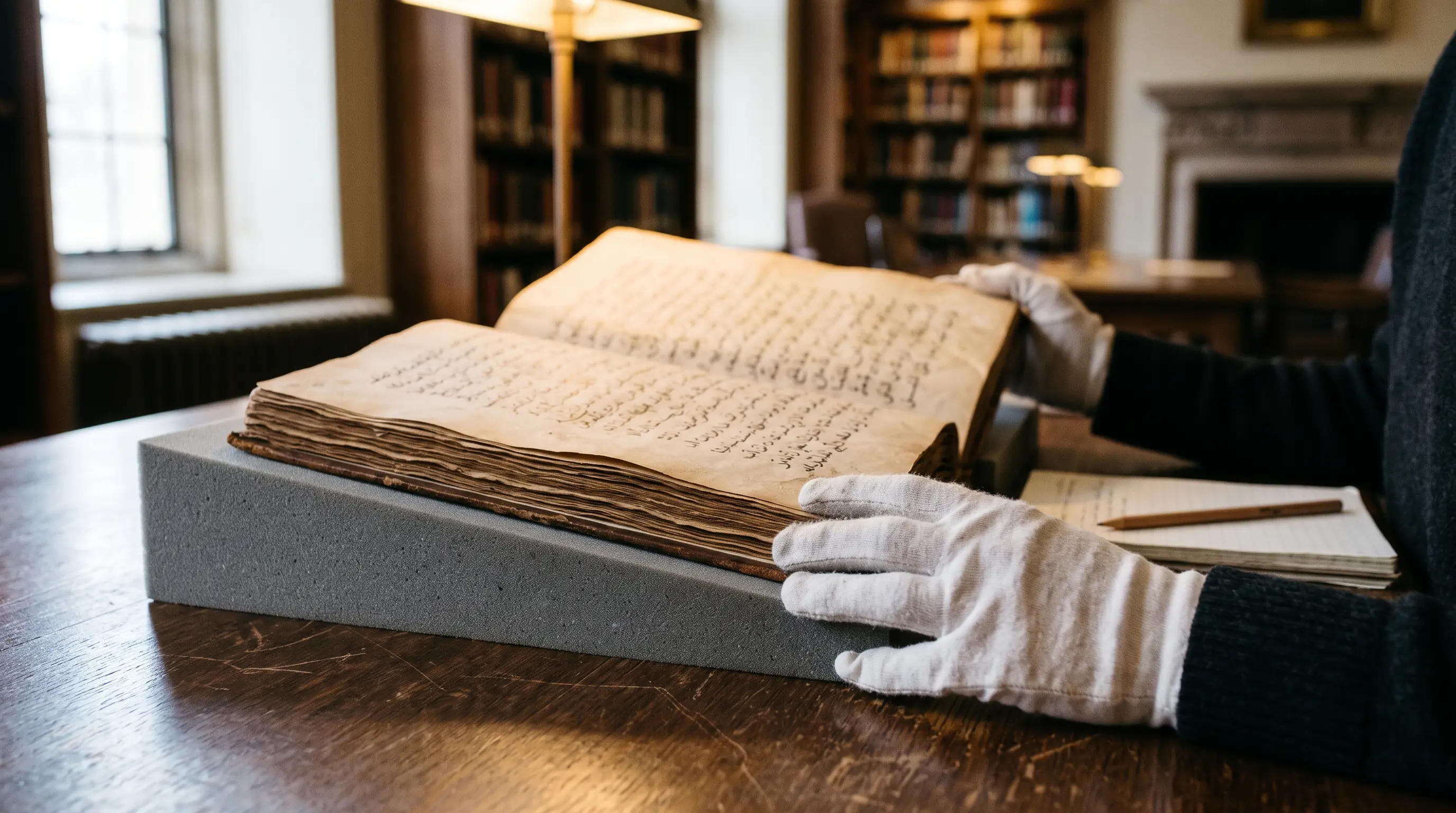
How Historians Reconstruct Caliphal Córdoba from the Muqtabis
Sophie Marchand
Ahmad al-Razi's chronicle is lost, Ibn al-Qutiyya survives in a single manuscript, and Ibn Hayyan's Muqtabis carries the rest. How Córdoba's story reached us.
Read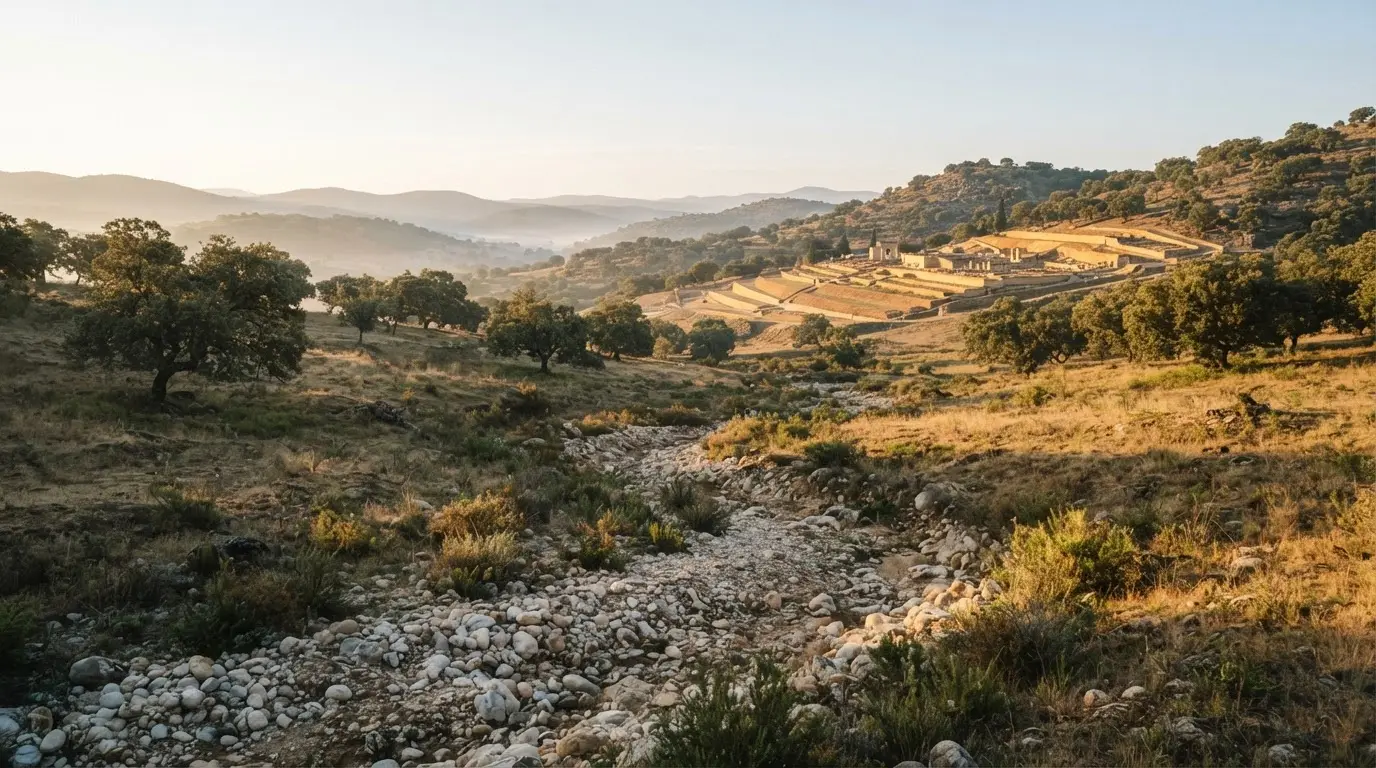
How the Valdepuentes Aqueduct Fed Medina Azahara
Sophie Marchand
Medina Azahara drank from a Roman channel. How the Valdepuentes aqueduct, a caliphal bridge and 1,800 m of sewers kept the palace-city supplied and drained.
Read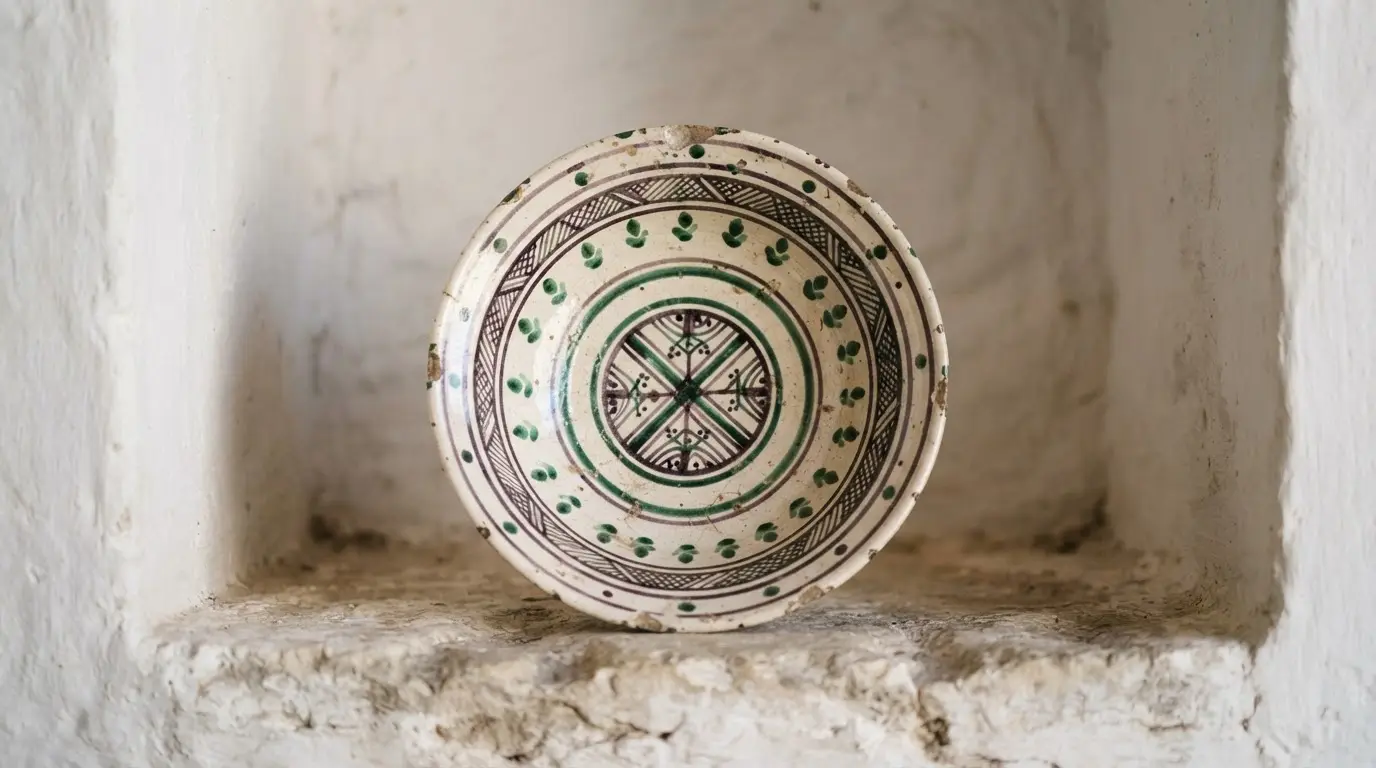
Green and Manganese Pottery of Caliphal Córdoba
Sophie Marchand
How verde y manganeso ceramics were made in caliphal Córdoba: a tin-lead white glaze, copper green, manganese black, two firings, and where the kilns stood.
Read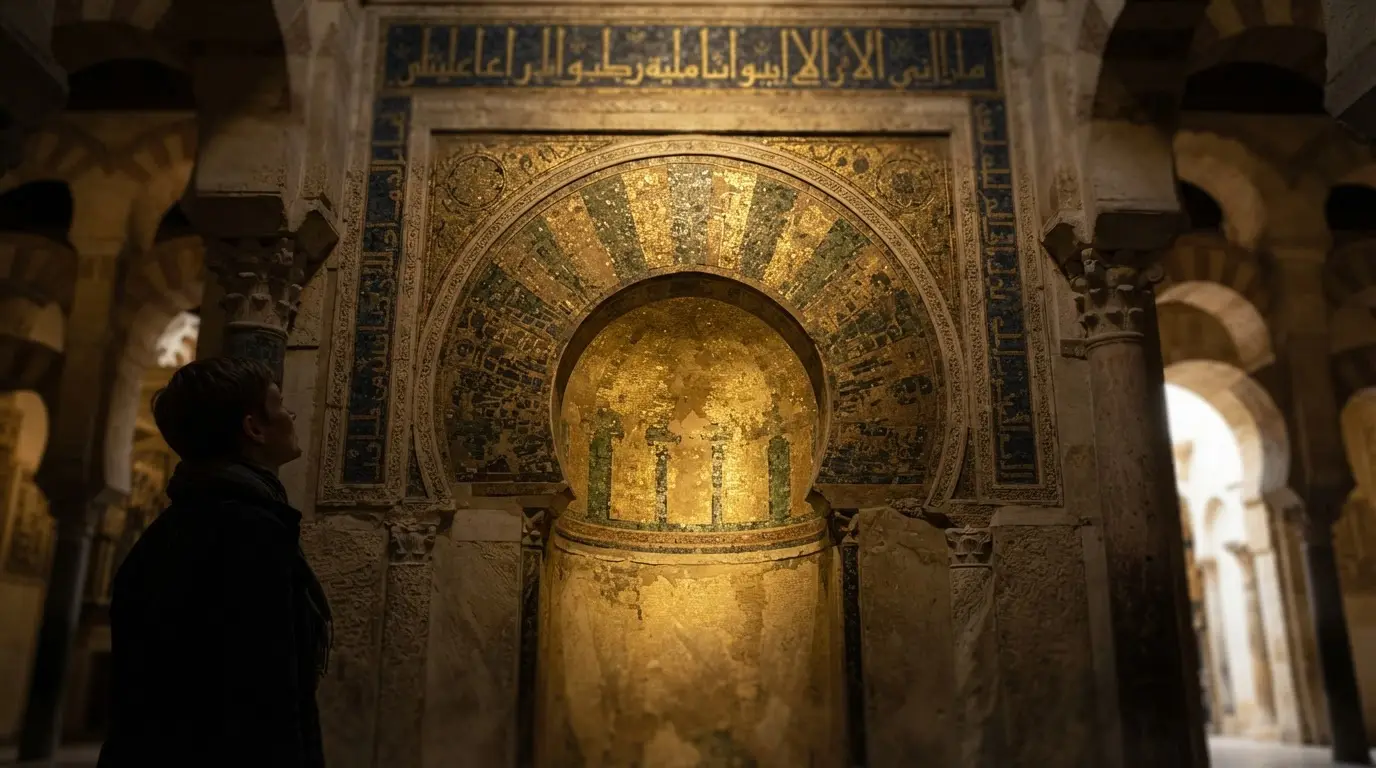
Who Sent the Mezquita Mihrab's Byzantine Mosaics?
Sophie Marchand
The Mezquita mihrab's Byzantine mosaics: what chronicles say about the emperor's gift, what glass analysis proves, and how repairs since 1771 changed them.
Read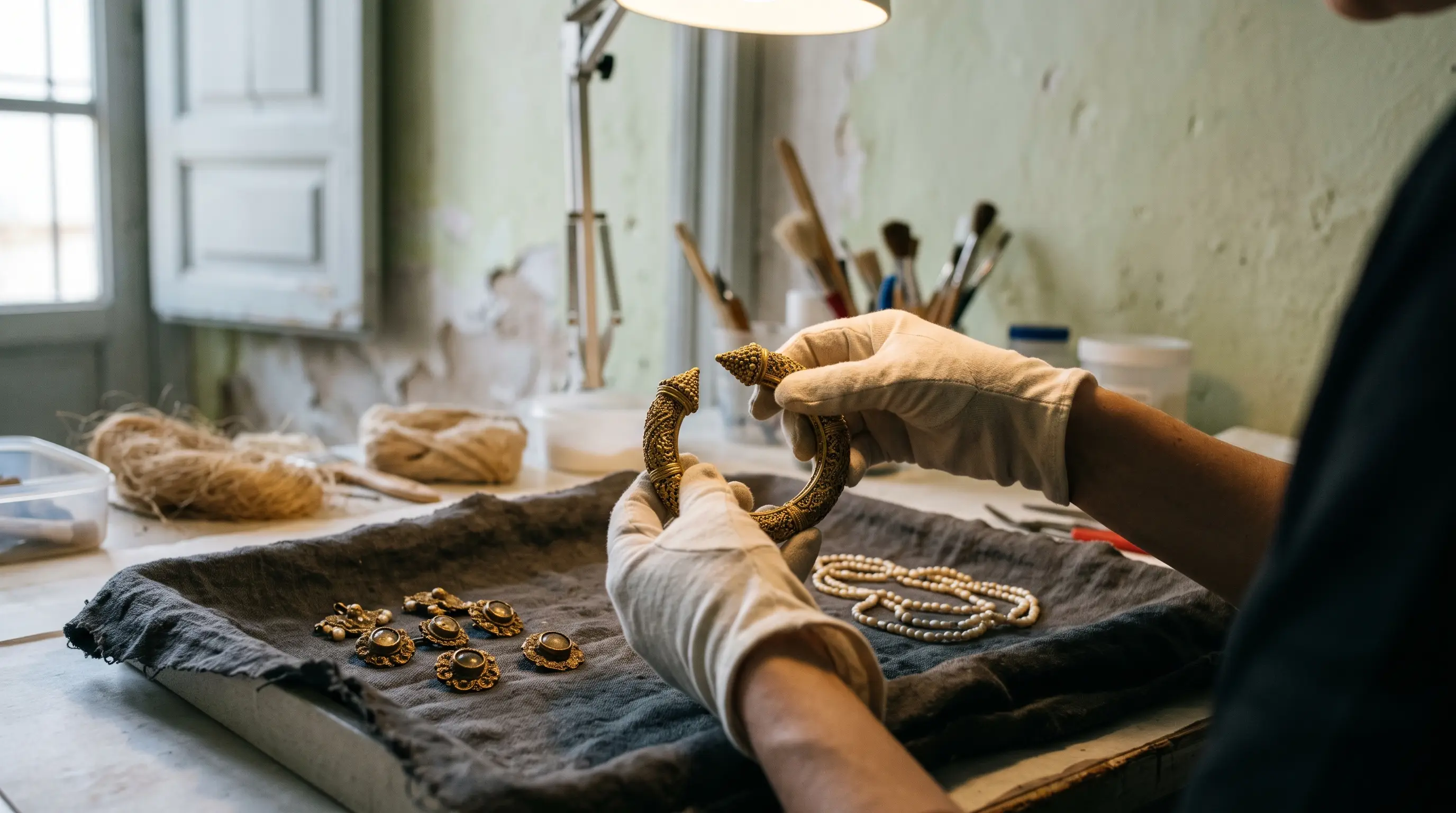
Who Buried the Amarguilla Jewels in Baena as Córdoba Fell?
Sophie Marchand Updated
The Tesorillo de la Amarguilla: 623 pieces of 11th-century Andalusi jewellery from Baena that surfaced on social media. What do they say about who buried them?
Read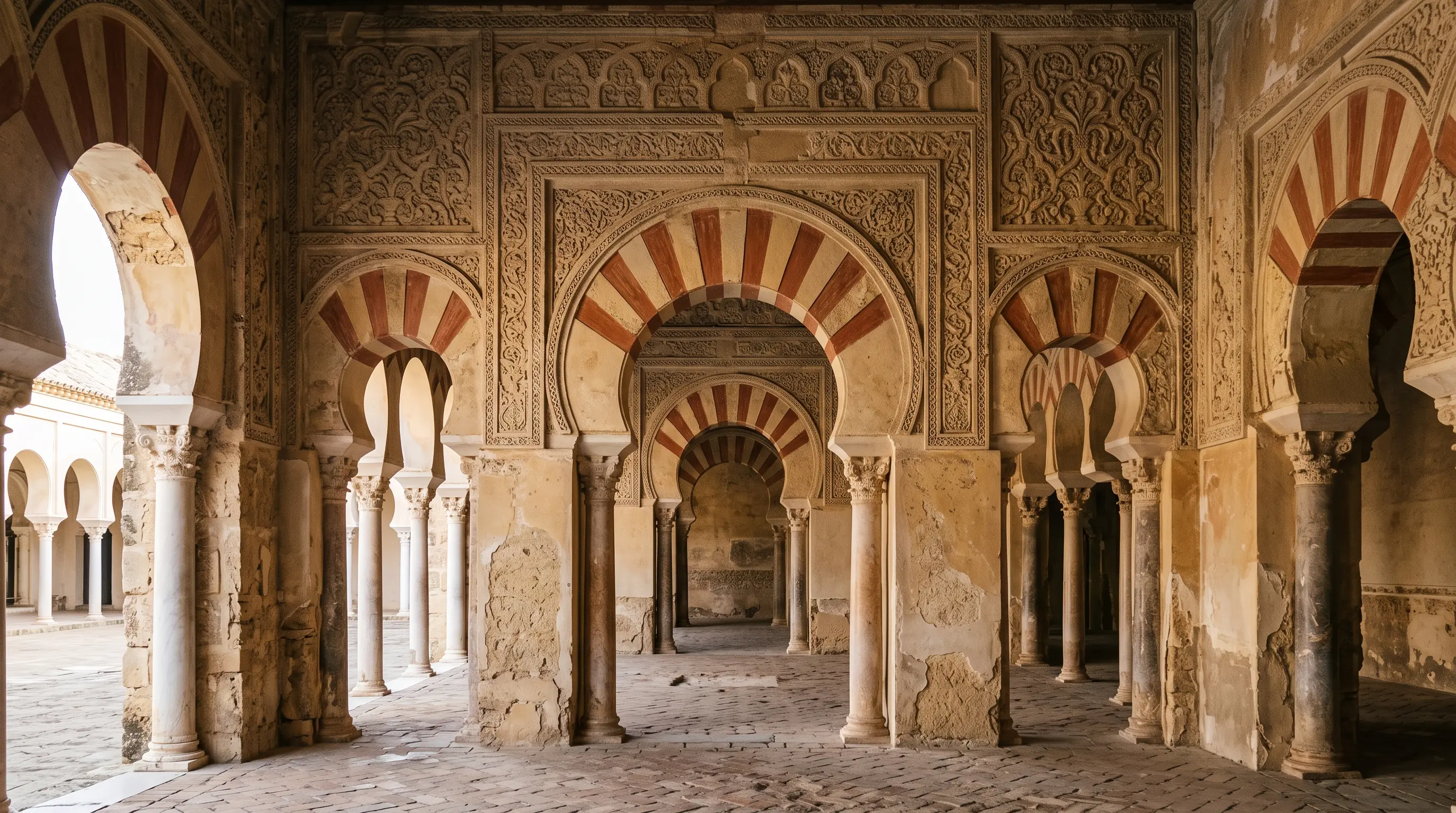
Annals of Al-Hakam II's Córdoba Court: What a Secretary Saw
Sophie Marchand Updated
Isa al-Razi's annals of Al-Hakam II's Córdoba court cover June 971 to July 975: embassies, ceremonial, Ibn Abi Amir's rise and what to see at Madinat al-Zahra.
Read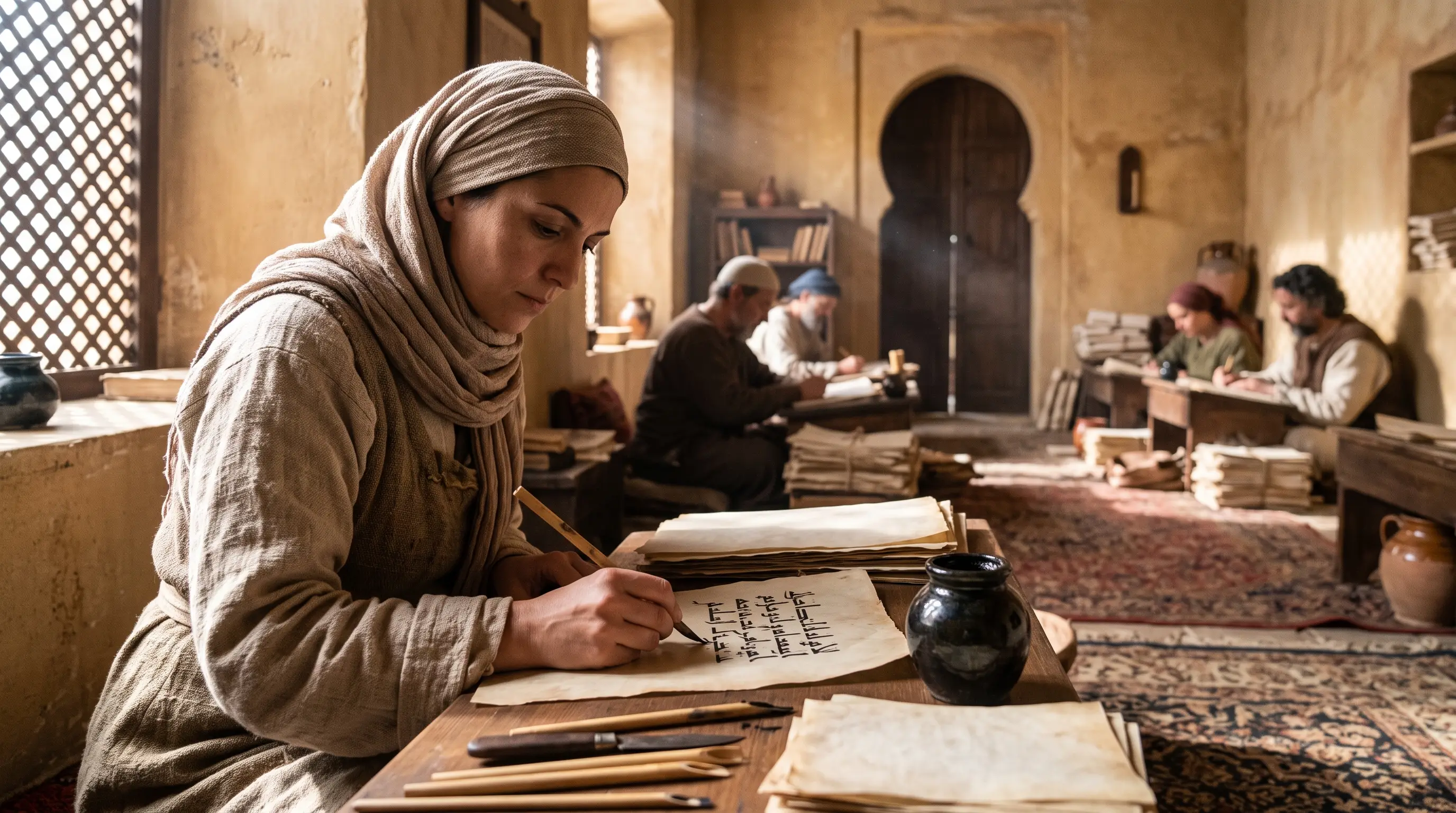
Córdoba's Eastern Suburb Had 170 Women Copying Qur'ans
Sophie Marchand
One chronicler reported 170 women copying Qur'ans in a single Córdoba suburb. Here is what the sources do and don't say about women in the city's book trade.
Read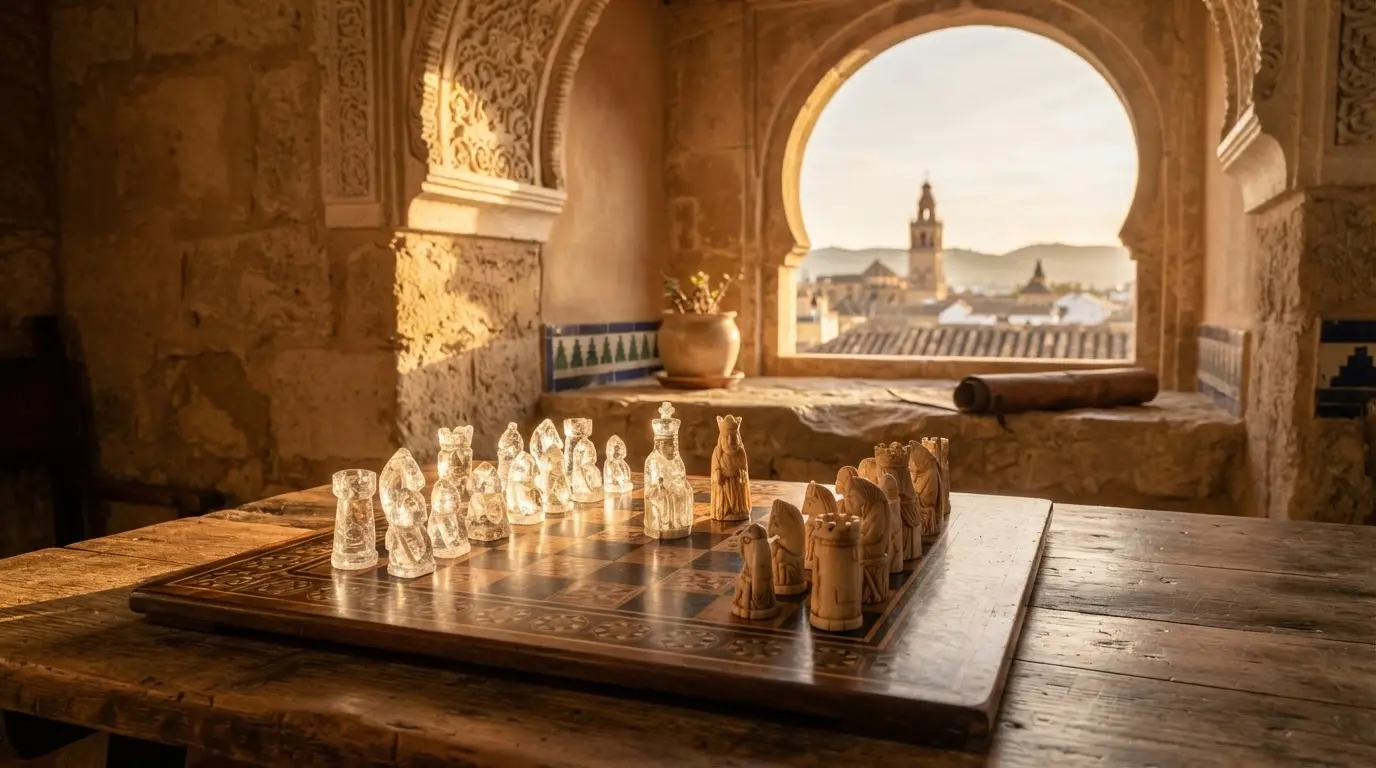
The Count Who Attacked Córdoba and Left Chess Pieces in His Will
Sophie Marchand
A Córdoba court did not smuggle chess into Europe, at least not on paper. The records point to Count Ermengol of Urgell, called el de Córdoba, and his will.
Read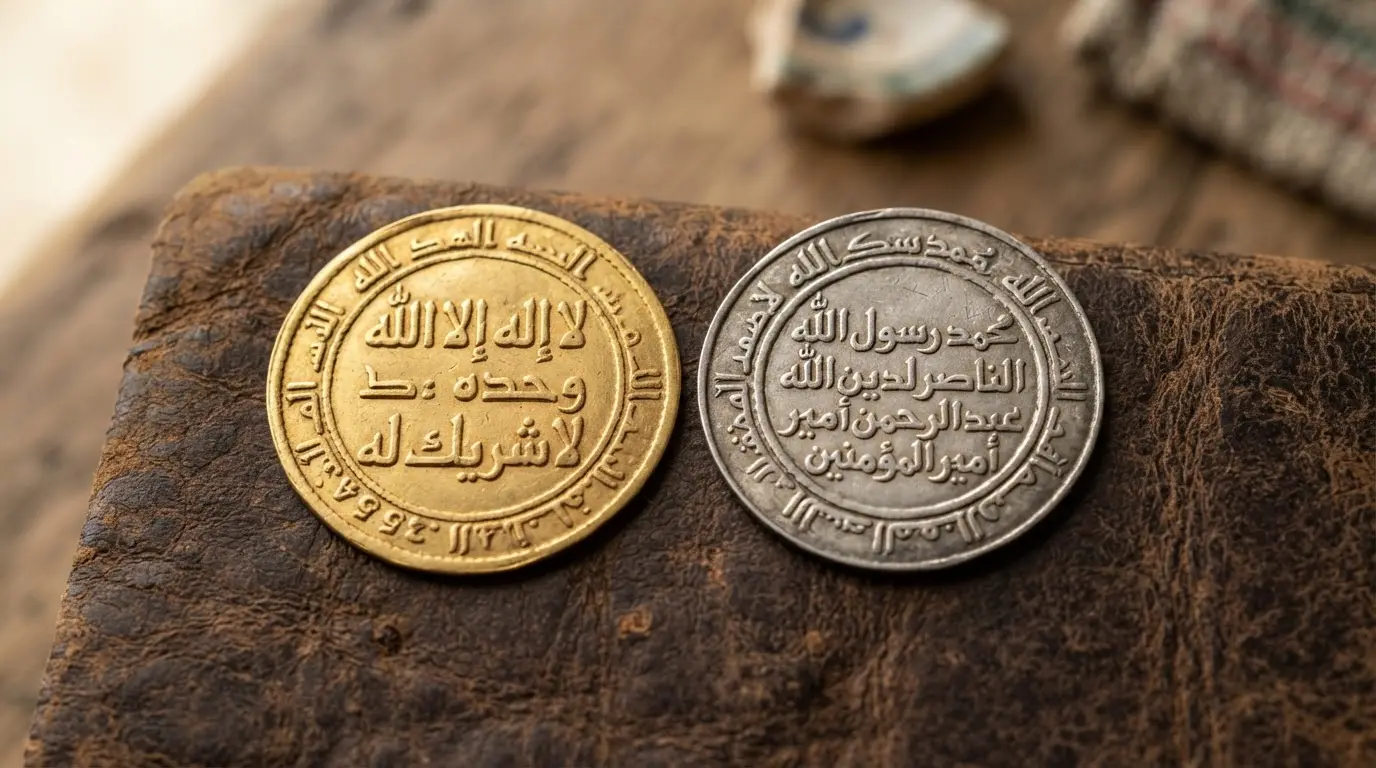
Córdoba's Umayyad Mint: How Coins Financed a Caliphate
Sophie Marchand
In 929 Abd al-Rahman III struck Córdoba's first caliphal gold dinar, part of the wider Islamic silver economy whose dirhams reached Viking-age Scandinavia.
Read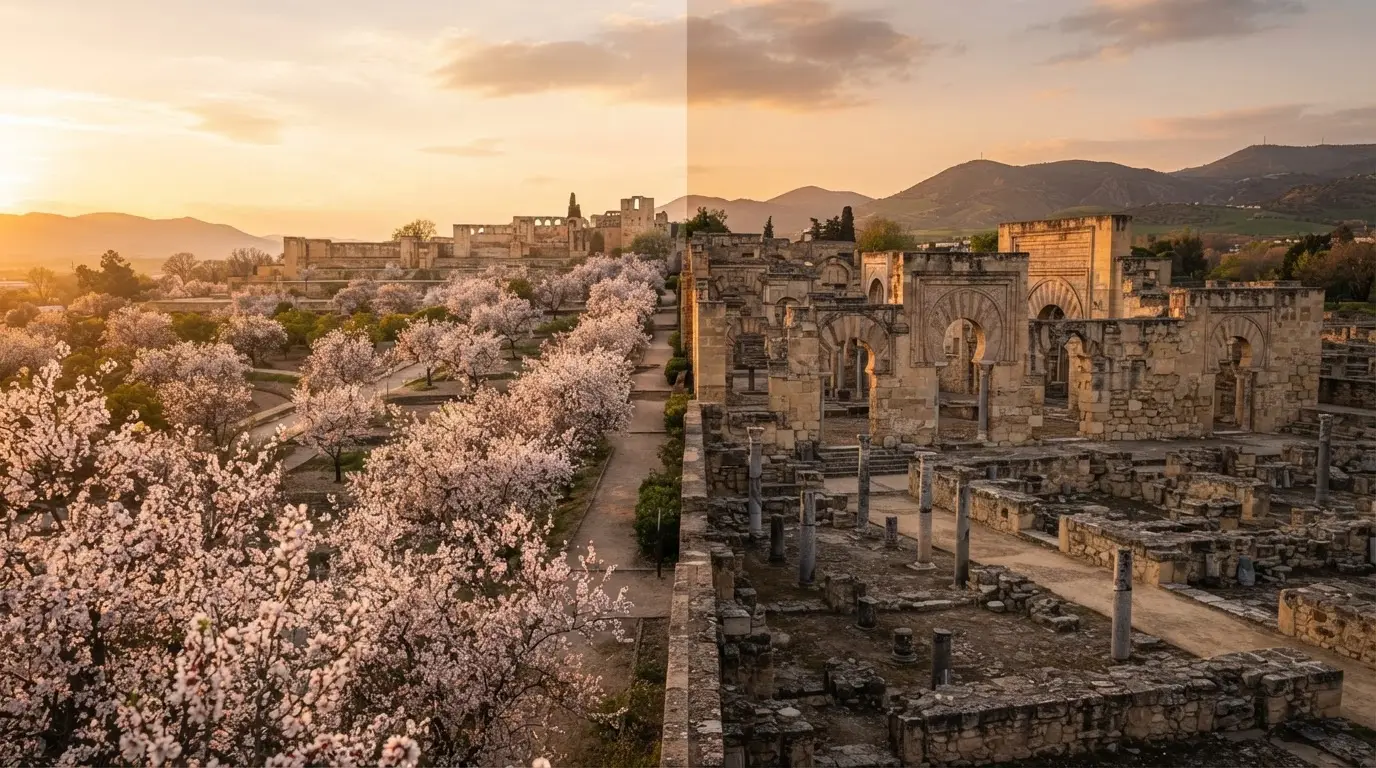
Medina Azahara's Name: Legend vs. What Scholars Say
Sophie Marchand
Legend says a homesick wife inspired Medina Azahara's name; historians read it as Umayyad political branding aimed squarely at rivals in Baghdad and Cairo.
Read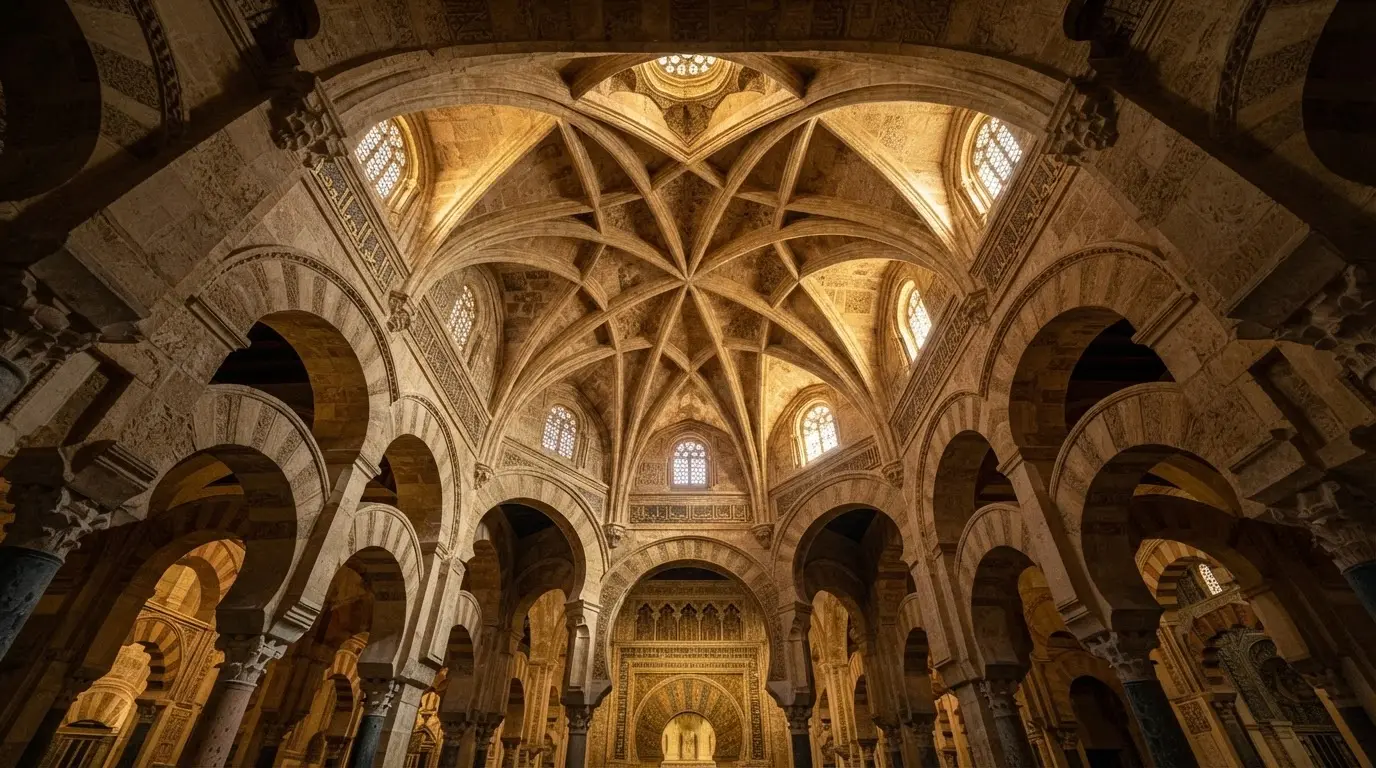
Mihrab Ribbed Dome: Córdoba's Gothic Vault Precursor
Sophie Marchand
Córdoba's mihrab dome used a crossed-arch vault, raised 961–965 CE, predating medieval Europe's rib vaults by a century and read by some as Gothic's precursor.
ReadSee Caliphate of Córdoba on the timeline, with its people and monuments
Go deeper
Frequently asked questions
Why is the Córdoba surgeon Al-Zahrawi important to medical history?
Born around 936 CE at Madinat al-Zahra, court physician Abu al-Qasim al-Zahrawi completed his 30-volume medical encyclopedia Al-Tasrif around 1000 CE. Its final volume was the first illustrated surgical manual in history, depicting over 200 instruments and documenting catgut sutures and obstetric forceps.
What were the almunias that surrounded Caliphal Córdoba?
Almunias were walled country estates around Córdoba that combined irrigated orchards and experimental farms with palatine halls and four-part riyad gardens. Documented estates include al-Rusafa with roughly 50 hectares of irrigated land and al-Rummaniyya, a 4-hectare estate founded in 965 or 966 by treasurer Durrī the Younger.
How do historians know the daily court routine of Caliph Al-Hakam II?
A surviving manuscript of over 135 folia by official chronicler Isa ibn Ahmad al-Razi records four years of Al-Hakam II's court between June 971 and July 975. Preserved in a 1249 copy from Ceuta, it details state ceremonial, the early career of Ibn Abi Amir, and 971 embassies from Christian rulers in Barcelona, Pamplona, León, and Castile.
What is the Tesorillo de la Amarguilla hoard found in Baena?
Recovered by police after photos surfaced on social media, the Tesorillo de la Amarguilla from Baena contains 623 pieces of early 11th-century Andalusi gold, silver, and gemstone jewellery. Buried during the Fitna civil war of 1009 to 1031, the restored hoard went on display at the Archaeological Museum of Córdoba in February 2021.