food-loverscouplessolo
Written by Pedro Del Pozo
  • 5 min
  • 29 sources

Fried Weever Fish in Córdoba: Would You Order Araña?

Araña is the weever fish beachgoers dread, yet Córdoba's tabernas fry it. What it is, how to treat a sting per the NHS, and where to try it, San Cristóbal.
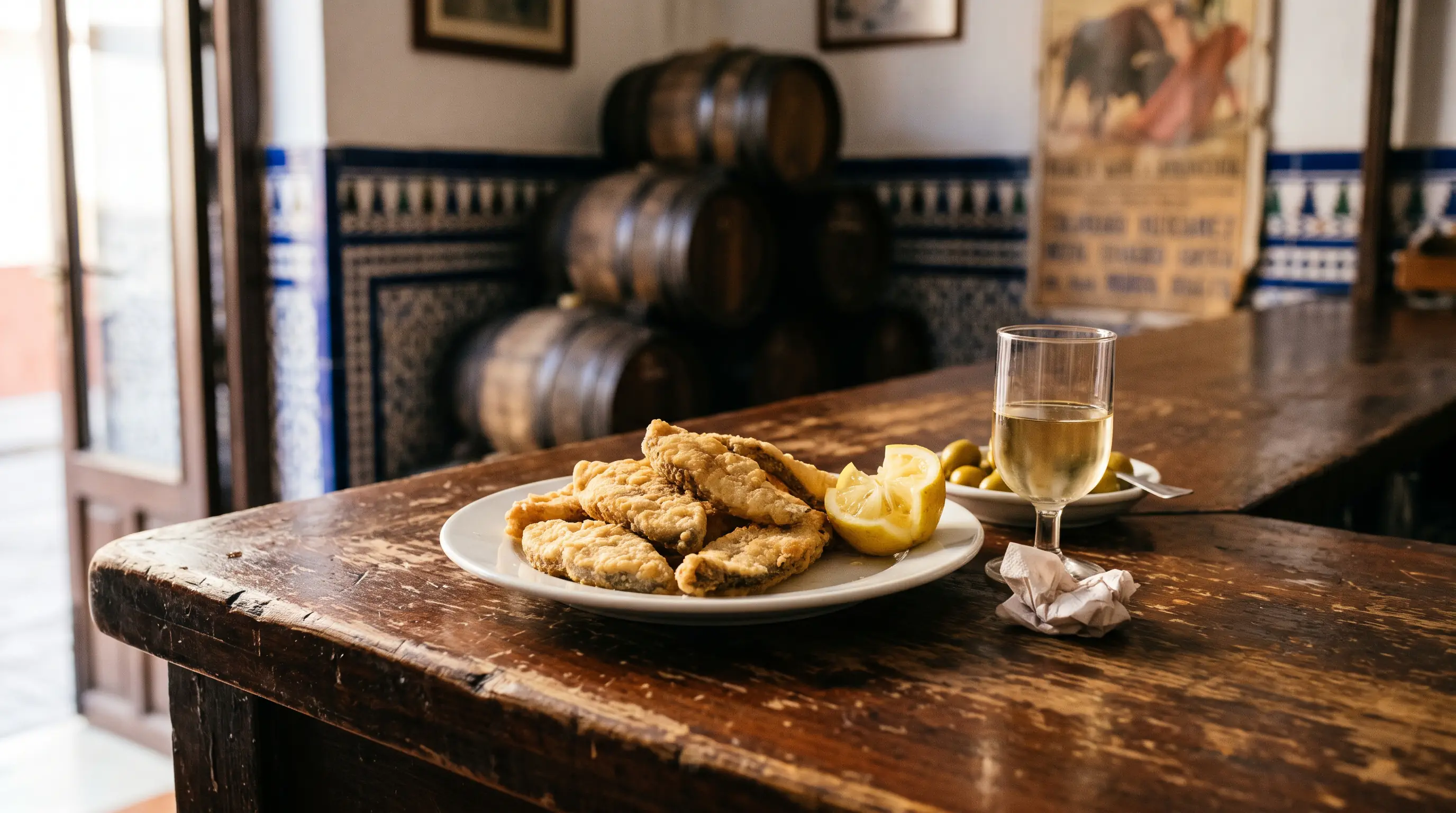
Fried weever fish in Córdoba: golden slices of araña frita on a white plate on a tiled taberna bar, a glass of fino and a lemon wedge beside it in warm afternoon light

Araña is landed at almost 80 tonnes a year in Andalusia, mostly between May and September.

Araña is the Spanish name for weever fish, including the greater weever (Trachinus draco), which Andalusian beachgoers are warned about because some rays of its first dorsal fin carry venom[4]. Córdoba has no coastline, yet Taberna San Cristóbal calls araña its famous fried fish[5]. Ordering it is a question for the kitchen; stepping on the live fish is a medical matter, and a sting needs proper treatment, not a tavern anecdote.
Andalusian araña landings
~80 t
Junta catalogue total for all araña species sold, not one species[1]
Main landing season
May-Sep
Peaks July to September, so fresh supply is seasonal[2]
Minimum hot-water soak
30 min
NHS first aid after a sea-creature sting; seek medical help[3]

What araña is and why beachgoers fear it
Araña is the Spanish name for the weever fish, and the Junta de Andalucía's fish catalogue is blunt about why people fear it: some rays of the first dorsal fin carry venom, which the fish uses when it feels harassed[4]. The animal lies buried in the sand waiting for prey, so most stings happen when a swimmer or diver steps on it[6]. That makes it a beach hazard first and an ingredient second.
The venom acts on nervous tissue, so the first signs are itching, tingling and severe pain at the wound[7]. Some patients go on to dizziness, sweating, headache, chest pain and a swollen limb[8], which is why a sting is treated as more than a nuisance.
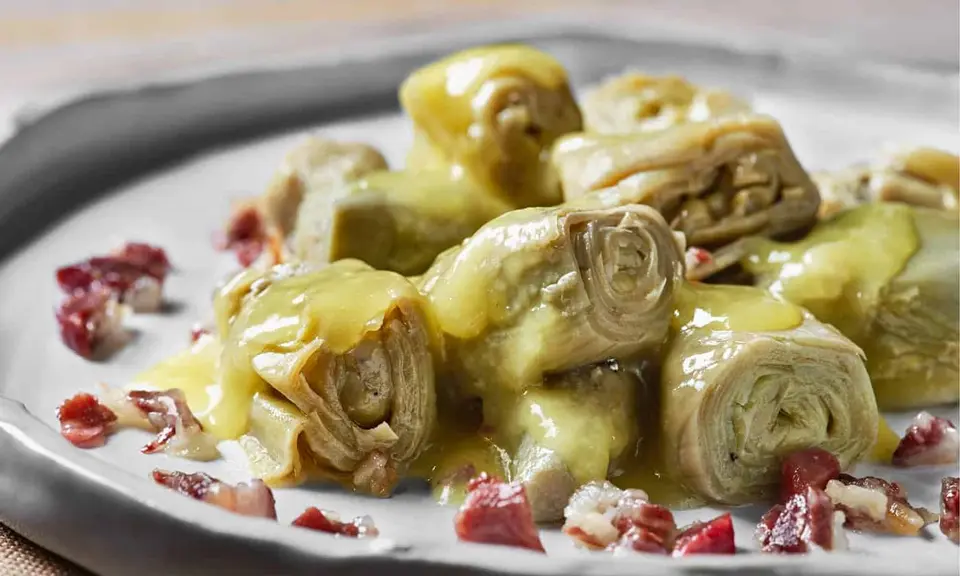
Plate of artichokes braised a la montillana with white wine and aromatic herbs

Taste of Córdoba · Dish

Alcachofas a la Montillana

Artichoke hearts braised in Montilla white wine with garlic and olive oil — a spring-only dish from Córdoba's countryside. Try them at Taberna Salinas.

Visitors who meet the name on a menu often assume a joke. It is a real commercial fish, landed regularly in almost every Andalusian fish auction[9].

If you are stung: what the NHS says to do

In a sting the clock matters more than the technique. Weever toxin is protein-based and readily broken down by heat[10], so the standard treatment is hot-water immersion as soon as possible and until the pain eases[11]. The UK poisons service logged 45 weever-sting enquiries between April 2004 and April 2011, a British dataset on the lesser weever rather than a Spanish figure[26]. 20 of them (44%) arrived more than a day after the sting[27], well after the effective treatment window and with the patient still in appreciable pain[12].
Spines are the other half of the job. A weever stepped on can leave them in the skin, and the NHS steps below name both spine removal and the hot-water soak. Treat them as first aid only and seek medical help.
The NHS first-aid steps for a spiny sea-creature sting are short:
  • Remove any spines from the skin with tweezers or the edge of a bank card[13]
  • Soak the area in very warm water for at least 30 minutes[3]
  • Do not apply ice or a cold pack[14]

First aid only, not treatment

Seek medical help after any weever sting. The poisons-service symptom list includes dizziness, sweating, chest pain and limb swelling[8], and none of them are worth waiting out on the sand.
None of this is a reason to stay out of the sea. It is a reason to know the steps before you wade in, because delay is the common mistake.

How Andalusia lands, cleans and cooks it

Andalusian ports land almost 80 tonnes of araña a year[1], mostly between May and September and above all in July to September[2]. That seasonality is worth remembering before you order it in the dead of winter.
The flesh is firm, tasty and strongly shellfish-like. Consumption is basically local, most abundant in the bars of the Málaga coast, where it arrives fried and in slices[15], and traditional Málaga cooking has long used it in frituras, soups and stews[16]. The nearest everyday comparison in Córdoba is chocos fritos, another fried seafood plate from the taberna repertoire. Frituras, soups and stews make a wider repertoire than the fried slice alone, which is worth knowing if a kitchen offers it any other way.
In Spain the fish is sold commercially, often mixed with other by-catch[17]. Córdoba is inland, so an araña on a taberna plate has travelled from the coast; Málaga's ports are the obvious guess, but that is inference, not a documented route.

Recommended tours

Tours are selected for quality, not commission. We earn a small fee if you book — at no extra cost to you.


Cleaning is the part that matters. Spanish fishermen cut off the head and the dorsal spines as a precaution before the fish is sent to market[28], and the venomous spines sit on the gill covers and the dorsal fin[29]. A food writer's verdict is that araña also works fried, but only bien limpio, well cleaned, and that its other job is stock for rice dishes[18]. Home fish-cleaners are a recognised, if small, group among sting victims[19], so the risk sits with whoever handles the whole fish. The hot-water finding describes how to treat a sting; it does not show that frying makes venom harmless, so leave the cleaning to a kitchen that handles it regularly.

Where to try araña frita in Córdoba

Taberna San Cristóbal in Ciudad Jardín is the address to give a taxi driver. Its owner, Rafael Salcedo, lists araña as the house's famous pescadito frito, beside rabo de toro, flamenquines, croquetas and salmorejo[5], and, by his own account, almost every customer orders it, along with the salmorejo, berenjenas and rabo de toro, every day[20]. The taberna goes back to 1967, when his father founded it[21]. Nearly six decades is a long run for a neighbourhood tavern to keep a fish on the menu that most visitors have never seen written down.
The family also runs Bodega San Cristóbal, opened in February 2026 on Calle Manuel de Sandoval 2, and araña stayed on its tapas list[22]. The bodega's own menu marks Araña frita o plancha (especialidad), so you can have it fried or grilled on the plancha[23].
That puts araña among the fried classics that tabernas are judged on. Córdoba has about fifty traditional tabernas, with tiled walls, bullfighting posters and Montilla-Moriles barrels[24]. At Taberna Santi the usual run includes flamenquín and crisp berenjenas con miel[25]. If araña is a leap too far, start with those.

How to order araña once you are at the table
Ask whether the araña comes fried or on the plancha, because Bodega San Cristóbal sells it both ways[23]. Fried in slices is the model the Málaga coast built its reputation on[15]; grilled is the better choice if you would rather taste the fish itself than the oil around it, and the menu treats both as the house speciality.
Build the rest of the table from what the two San Cristóbal venues actually list, and keep it short:
  • Salmorejo to start, the classic both lists carry[5][22]
  • Rabo de toro as the heavy plate, also on both lists
  • Berenjenas, which Salcedo says customers order daily alongside araña[20]
  • Mazamorra, callos or riñones en salsa if you want the bodega's fuller tapas run[22]
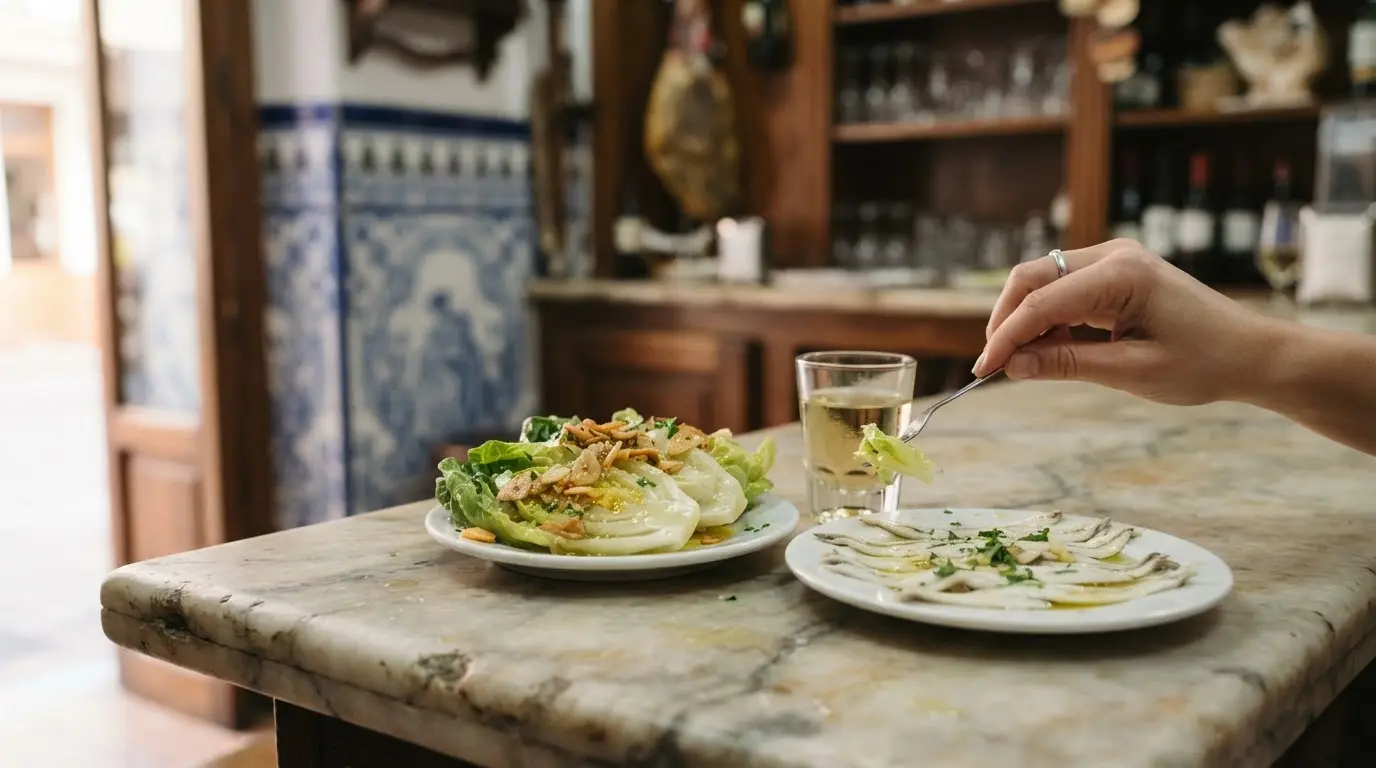
Lechuga al ajillo Córdoba style: crisp lettuce hearts with fried garlic slivers and olive oil on a zinc bar counter beside boquerones en vinagre and a glass of fino in warm afternoon light

Deep dive · Article

Lechuga al ajillo in Córdoba, and what else bars bring first

Lechuga al ajillo, boquerones en vinagre and pisto con huevo: what Córdoba bars bring first, plus tapa, media ración and ración sizes and what each costs.

Season matters more than most visitors expect. Landings peak from July to September[2], so summer is the likelier window for a fresh one, an inference worth testing with the waiter rather than a promise.
After seven years of eating through the city's tabernas, my rule for an unfamiliar fried fish is simple: ask what it is, ask whether it is in season, and order one ración to share rather than a plate each. Araña rewards that rule, because a fish nobody at the table has met is exactly what a shared plate is for.

Frequently asked questions

Is fried weever fish in Córdoba safe to eat?

Araña is a regular commercial fish in Andalusia[9] and Taberna San Cristóbal serves it fried[5]. The documented sting risk is for people who step on the live fish or clean it at home[6][19]. Cleaning is what you trust the kitchen with; the hot-water finding concerns stings, so do not read it as frying making the fish safe.

What does fried weever fish taste like?

The flesh is firm, tasty and strongly shellfish-like, which is why Málaga-coast bars serve it fried in slices[15].

What is araña frita?

It is fried weever fish. In Córdoba, Taberna San Cristóbal calls it its famous pescadito frito[5], and Bodega San Cristóbal's menu lists it fried or on the plancha as a speciality[23].

What should you do if a weever fish stings you in Spain?

The NHS advises removing any spines with tweezers or the edge of a bank card, soaking the area in very warm water for at least 30 minutes, and not applying ice[13][3][14]. Treat that as first aid only and seek medical help.

What is weever fish called in Spanish?

Araña. The greater weever, Trachinus draco, is among the species sold in Spain, often mixed with other by-catch[17], and the Junta de Andalucía's catalogue lists several Trachinus species sold under the name araña[1].

When is araña in season in Andalusia?

Most of the catch is landed from May to September, peaking in July to September[2].

Where can I eat fried fish in Córdoba?

Córdoba has about fifty traditional tabernas[24]. For araña specifically, Taberna San Cristóbal in Ciudad Jardín and the family's Bodega San Cristóbal in the centre list it[5][22].

Sources

29 references Show
  1. Junta de Andalucía (opens in a new tab)

    “Se capturan anualmente casi 80 toneladas de arañas”

  2. Junta de Andalucía (opens in a new tab)

    “La mayoría de la producción se obtiene de mayo a septiembre, con máximos en los meses de julio a septiembre.”

  3. nhs.uk (opens in a new tab)

    “soak the area in very warm water (as hot as can be tolerated) for at least 30 minutes – use hot flannels or towels if you cannot soak it”

  4. Junta de Andalucía (opens in a new tab)

    “En la primera dorsal algunos radios tienen veneno que utiliza cuando se siente acosado.”

  5. abc.es — Rafael salcedo taberna san cristobal 20240217132828 nts (opens in a new tab)

    “los clásicos de siempre no faltan: el rabo de toro, flamenquines, las croquetas, el salmorejo por supuesto, el pescadito frito nuestro famoso es la araña.”

  6. dan.org (opens in a new tab)

    “most stings occur when divers or swimmers step on the fish, which is typically buried in the sand awaiting prey.”

  7. dan.org (opens in a new tab)

    “Weeverfish venom is toxic to nervous tissue, so symptoms are primarily neurologic in nature; itching, tingling and severe pain at the wound site are common.”

  8. awttc.nhs.wales (opens in a new tab)

    “Symptoms can include severe pain at the puncture site, dizziness, sweating, headache, chest pain and swelling of the affected limb.”

  9. Junta de Andalucía (opens in a new tab)

    “apareciendo regularmente en casi todas las lonjas andaluzas”

  10. awttc.nhs.wales (opens in a new tab)

    “Weever fish toxin is protein-based and readily denatured by hot water.”

  11. awttc.nhs.wales (opens in a new tab)

    “The mainstay of treatment is to immerse the affected limb in hot water as soon as possible after envenomation and until the pain has eased.”

  12. awttc.nhs.wales (opens in a new tab)

    “The high proportion of patients (44%) presenting well after the effective treatment interval yet still with appreciable pain and discomfort”

  13. nhs.uk (opens in a new tab)

    “remove any spines from the skin using tweezers or the edge of a bank card”

  14. nhs.uk (opens in a new tab)

    “do not apply ice or a cold pack”

  15. Junta de Andalucía (opens in a new tab)

    “Su carne es muy consistente, sabrosa y con fuerte gusto a marisco. Su consumo es básicamente local, siendo muy abundante en los bares de la costa malagueña, donde lo sirven frito y en rodajas.”

  16. amigosjabega.org (opens in a new tab)

    “malagueña tradicional ha dado siempre buena cuanta de ello a través de frituras, sopas y cazuelas”

  17. Wikipedia (opens in a new tab)

    “It is also commercially available in Spain, where it is often mixed with other by-catch fish (such as gurnards and the annular seabream)”

  18. gastronosfera.com (opens in a new tab)

    “Se utiliza para caldo para arroces y calderos, pero también frito es una buena opción, eso sí, bien limpio.”

  19. amigosjabega.org (opens in a new tab)

    “personas que se dedican a la limpieza de pescado en su domicilio”

  20. abc.es — Rafael salcedo taberna san cristobal 20240217132828 nts (opens in a new tab)

    “El salmorejo, berenjenas, la araña y rabo de toro lo pide casi todo el mundo todos los días.”

  21. abc.es — Rafael salcedo taberna san cristobal 20240217132828 nts (opens in a new tab)

    “Rafael Salcedo asistió ya a su fundación en 1967, por parte de su padre, y lleva toda la vida en ella.”

  22. abc.es — Bodega san cristobal clasicismo taberna siempre llega 20260228131208 nts (opens in a new tab)

    “una carta de tapas con salmorejo, mazamorra, callos, sangre, riñones en salsa, araña, rabo de toro y miniflamenquín.”

  23. bodegasancristobal.es (opens in a new tab)

    “Araña frita o plancha (especialidad)”

  24. hola.com (opens in a new tab)

    “medio centenar largo de tabernas tradicionales, que suelen tener las paredes forradas de azulejos, carteles taurinos y cubas de Montilla-Moriles”

  25. hola.com (opens in a new tab)

    “se come lo mismo que en todas partes –salmorejo, flamenquín, carrillada ibérica…– y algo extraordinario: unas berenjenas con miel de caña crujientes como chips”

  26. awttc.nhs.wales (opens in a new tab)

    “Over this 7-year period, 45 enquiries were received with a high proportion, as expected, being stings to the feet.”

  27. awttc.nhs.wales (opens in a new tab)

    “Twenty enquiries (44%) were received more than one day following exposure, 9 of these within 5 days, a further 7 within 2 weeks and surprisingly 4 enquiries were received more than 3 weeks post exposure”

  28. consumer.es (opens in a new tab)

    “Como precaución, los pescadores cortan la cabeza y las espinas dorsales de las arañas de mar antes de enviarlas al mercado.”

  29. consumer.es (opens in a new tab)

    “En los opérculos y en la aleta dorsal se hallan localizadas las espinas que contienen una substancia rica en catecolaminas.”