history-buffs
  • 6 min
  • 22 sources

Why the Seven Infantes of Lara Legend Turns on Córdoba

The Seven Infantes of Lara legend sends seven heads to Córdoba and raises Mudarra at Almanzor's court. What chronicles say, how the Duque de Rivas retold it.
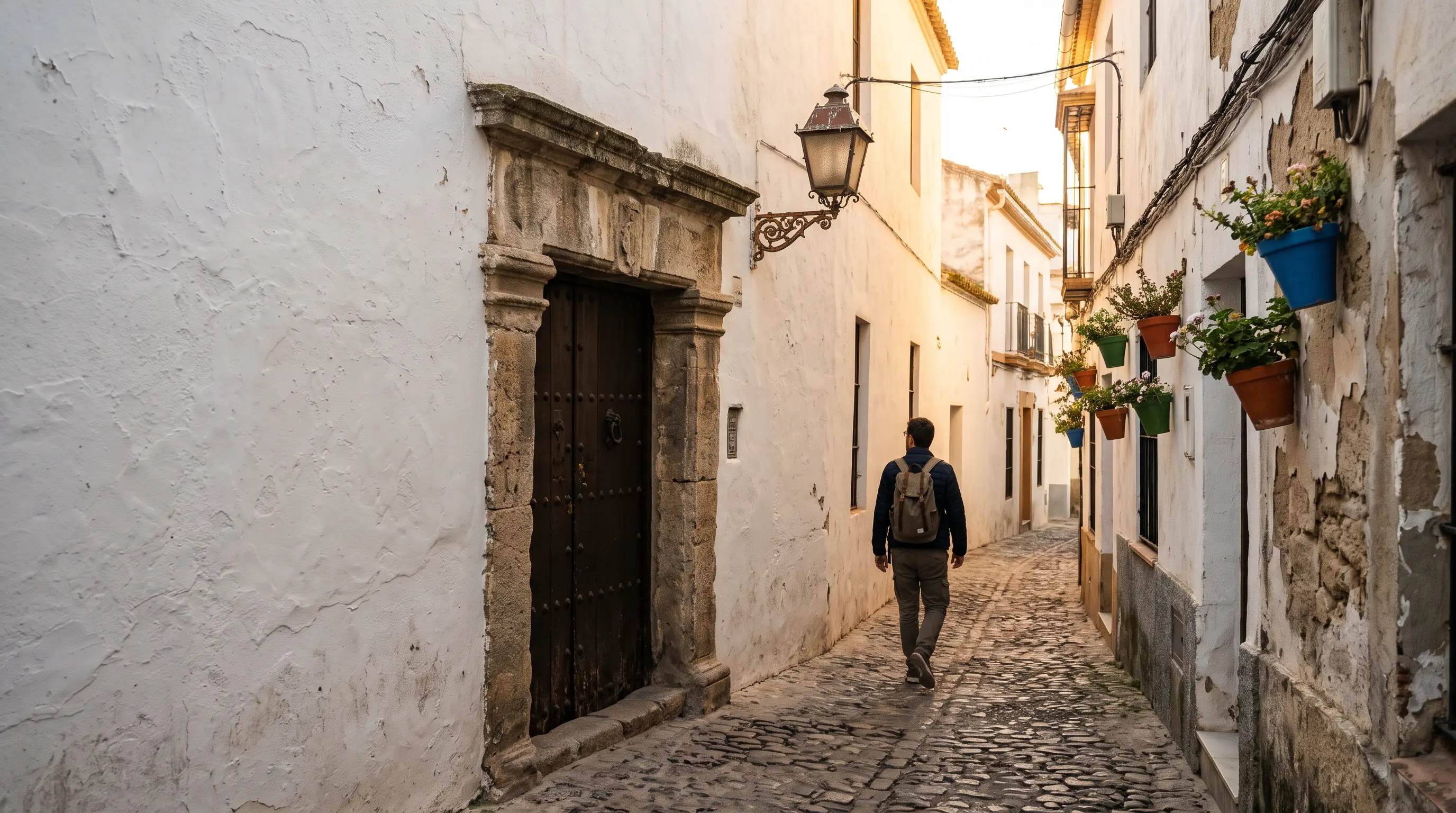
Seven Infantes of Lara legend Córdoba: a narrow whitewashed lane in the Judería with weathered stone walls and a wrought-iron lantern in late afternoon light
In the Seven Infantes of Lara legend, the brothers' severed heads are sent to Córdoba, where their father Gonzalo Gustioz learns of the killings[1] and where his son Mudarra is raised at the court of Almanzor[2]. The tale is legend, not record, and its Córdoba scenes change between the 13th-century chronicle and the Duque de Rivas's 1834 poem. Calle Cabezas is a street-name stop tied to local tradition, not a site that proves the legend, since its houses date from the 13th to the 16th centuries[3].
Calle Cabezas buildings
13th-16th c.
The houses along the street date from these centuries[3]
Earliest known prose version
13th century
The Estoria de España, commissioned by Alfonso X[4]
El moro expósito published
1834
Duque de Rivas's poem on the legend, issued in Paris[5]

How the legend reaches Córdoba

The legend reaches Córdoba in its second act, once a family quarrel in Castile has turned into a massacre. The trigger is a slight. Gonzalo González, the youngest brother, insults doña Lambra, who has just married their uncle, and her grievance hands Ruy Velázquez a motive: he betrays the family and has all seven nephews killed[6]. Everything that follows, in Castile and in Córdoba, is the aftermath of that one act.
Ruy's scheme also reaches the brothers' father. He packs Gonzalo Gustioz off to Muslim-ruled Spain, where the knight fathers an illegitimate son, Mudarra, with a Muslim noblewoman[7]. The seven heads travel the same road: they are sent to Córdoba, and it is there that Gonzalo learns of the deaths[1].
From here the story belongs to Almanzor, the Muslim ruler of the legend. Mudarra grows up at his court in Córdoba and later leaves it for Castile[2]. The legend runs on a loop between two courts, one where the crime is plotted and one where the avenger is made.

What the sources attest, and what they do not

The earliest known version of the Seven Infantes legend is a prose account in the 13th-century Estoria de España, the chronicle commissioned by Alfonso X[4]. Some scholars believe a lost song lay behind it, a cantar that circulated in verse before the chroniclers turned it into prose, though nobody has proved that it ever existed[8].
That chain of transmission matters for the Córdoba scenes. A prose chronicle built on a possible lost poem is a long way from an eyewitness record, and the scholar Peter Mahoney, in his introduction for modern readers, treats the whole story as fiction with a sprinkling of historical detail[9]. A real ruler in the cast does not turn the plot into history. The historical Almanzor and the host of the legend are two different figures.
Read the Córdoba scenes, then, as what Castilian storytellers imagined happening at a Muslim court, not as a report from inside it. That is no reason to dismiss them. A legend that survives in a chronicle, a possible lost song and a Romantic poem tells you what each age wanted from the figure of a generous enemy, and that is a perfectly good subject for a walk through the Judería.
The Crónica de 1344 takes the story further. It fleshes out Mudarra and narrates in detail how Ruy Velázquez is pursued, captured and punished[10]. The avenger who leaves Córdoba is, in this later chronicle, a more fully drawn character than the one the Estoria offers.

Where the versions part: prison, woman and ring

The versions disagree most about what happens to Gonzalo in Córdoba and who Mudarra's mother is. In the Estoria's telling, Almanzor takes pity on the captive and has him imprisoned rather than killed[11]. Mahoney reads that choice as part of a portrait of a generous and sympathetic ruler, who spares Gonzalo, pardons him twice and raises Mudarra as his own son[12].
The mother is where the later chronicle changes the mood. In the Crónica de 1344 she is a sister of Almanzor, offered to Gonzalo, who takes her by force[13]. The noblewoman of one telling and the coerced sister of another are not the same story, and any retelling that smooths them into a romance has quietly chosen a version.
VersionDateCórdoba episode
Estoria de España13th centuryEarliest known prose version; Almanzor spares Gonzalo and has him imprisoned.
Crónica de 13441344Mudarra and the punishment of Ruy Velázquez are expanded; the woman is Almanzor's sister, taken by force.
El moro expósito1834Rivas's poem makes Mudarra its chief protagonist and adds episodes of its own invention.
The ring is the legend's way of closing the gap between the two courts. Gonzalo breaks it in two, keeping one half and leaving the other for the child, so that father and son can recognise each other later by matching the pieces[14]. It ties the boy raised in Córdoba back to a family in Castile.
Taken together, the prison, the mother and the ring show how little of the Córdoba episode is fixed from one retelling to the next. A guide who gives you a single confident account of what Almanzor did with Gonzalo has picked one of several, and it is worth asking which.

The Duque de Rivas and El moro expósito
The Duque de Rivas turned the legend into a long narrative poem, El moro expósito (The Foundling Moor), published in Paris in 1834[5][15]. Ángel de Saavedra, Duke of Rivas, is remembered first as a Romantic dramatist, but the Real Academia Española also lists the poem among the verse legends he wrote, alongside the Romances históricos of 1841[16].
The poem does not copy the chronicles. It develops the legend with abundant variations, including episodes of Rivas's own invention, digressions and descriptive passages full of local colour, light and colour[17]. Its chief protagonist is Mudarra, which moves the boy raised at Almanzor's court from avenger-in-waiting to the centre of the story.
For a reader coming from the chronicles the difference is one of weight rather than plot. Where the medieval prose moves briskly from crime to revenge, Rivas lingers on setting, light and colour, and gives the foundling the room to be a character rather than a function.
Belalcázar Castle's granite torre del homenaje, the tallest castle keep in Spain by official listing, rising above the fortress walls in soft morning light

Deep dive · Article

47 Metres Tall and Almost Unknown: Spain's Tallest Keep

Belalcázar Castle's 47 m keep is listed by the Junta de Andalucía as Spain's tallest. How it grew, what to see inside and how to book the free guided visit.

That shift suits the age that produced it. A Romantic poet had every reason to like a hero caught between two worlds, and a Christian-born foundling brought up by a Muslim ruler is exactly that.
So a scene that appears only in the poem belongs to Rivas, not to the medieval legend. Treat each version on its own terms and the Córdoba episode stops contradicting itself.

Calle Cabezas: tradition, not evidence
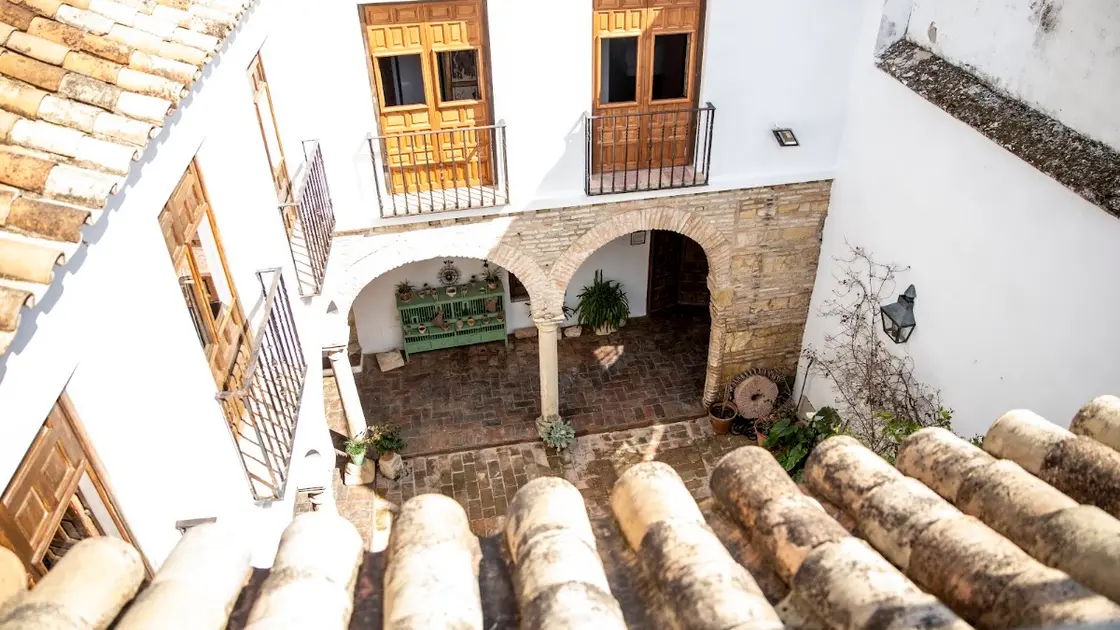
Local tradition names Calle Cabezas, Heads Street, in the Judería as the place where Gonzalo held a banquet and the seven heads of his sons were brought before him[18]. It is the one spot in the city where the legend is written into the map, and you reach it from the Portillo Arch, along a narrow street that runs past the fortress-tower of the House of the Marquises of El Carpio[19].
The house that shares the street's name, the Casa de las Cabezas, is accommodation rather than a sight. Andalusia's tourism board lists it as a tourist house for up to 12 people, a mansion with four courtyards and two terraces in the Jewish Quarter, about 300 m from the Mosque[20][21]. A 2022 Idealista article quoting the house's director links it to the local tradition that the infantes' father was held there[22], which is tradition, not history. No public entry or opening hours are established, so the house is something to pass in the lane, not to plan a visit around.
Narrow whitewashed lane of Calle Cabezas in Córdoba's Judería, with the stone facade and wooden door of the Casa de las Cabezas manor house in soft morning light

Explore nearby · Monument

Casa de las Cabezas

Casa de las Cabezas in Córdoba's Judería: the Infantes de Lara legend, a converso owner, a hidden mikvé and why you can't simply walk in. Visiting guide.

The street itself is a street-name story, and it should stay one. The houses along the street date from the 13th to the 16th centuries[3], so none of them can be the caliphal court of the legend, and no wall there can be called Gonzalo's prison. The gated Arquillos alley on the same street has its own claims and its own doubts.

Recommended tours

Tours are selected for quality, not commission. We earn a small fee if you book — at no extra cost to you.
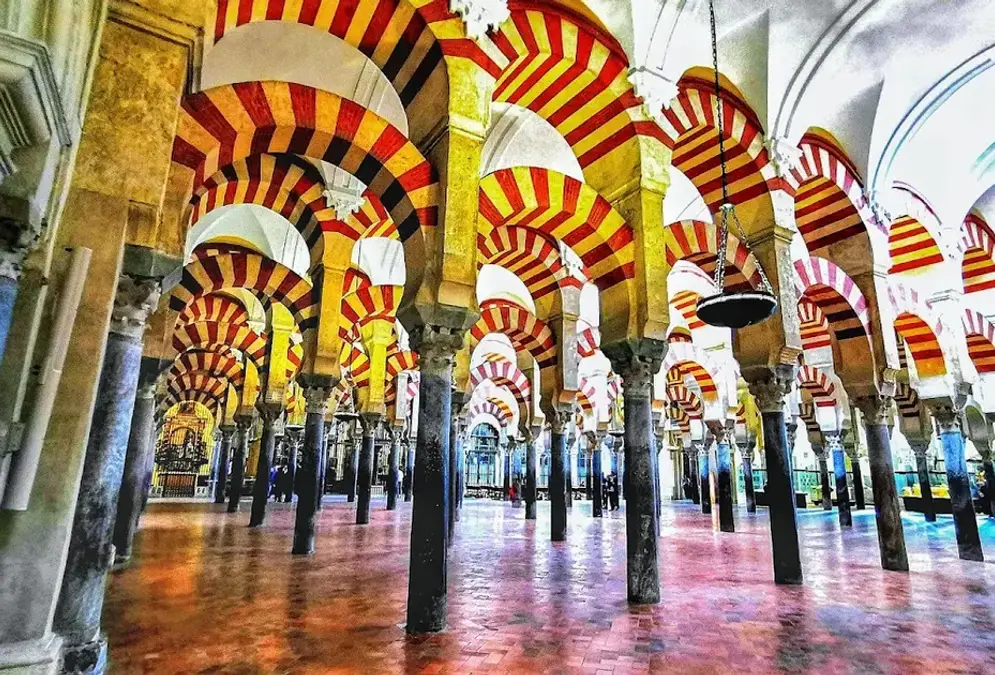
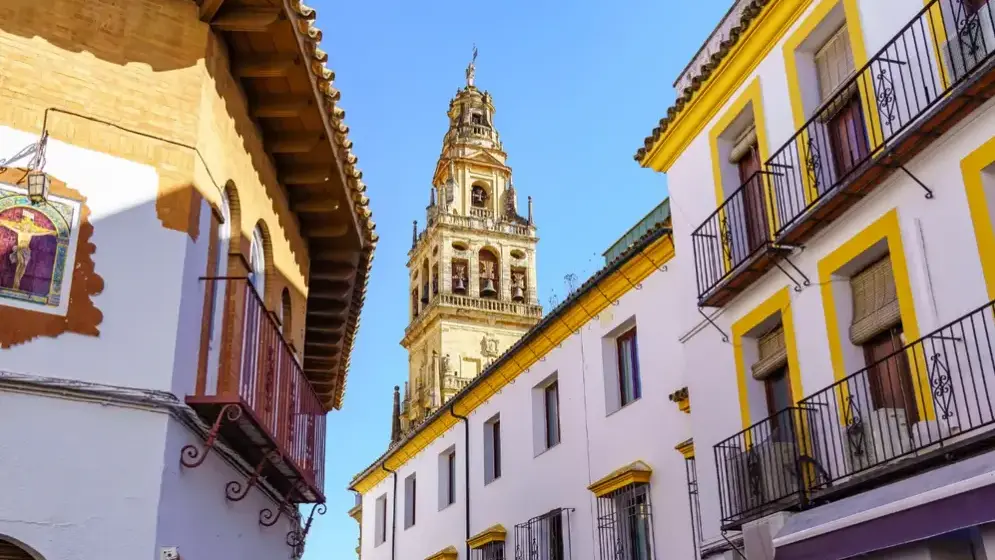
The useful way to stand on Calle Cabezas is to keep two questions apart. One is what the street itself shows, which is a quarter of narrow lanes and houses from the 13th to the 16th centuries[3]. The other is what the story asks you to imagine, a caliphal court with a banquet, a prisoner and seven severed heads, and the first question never answers the second.

Go for the setting and the name, and bring the right expectations:

  • The name: Calle Cabezas is where the legend is written into a street sign.
  • The setting: Judería lanes lined with buildings from the 13th to the 16th centuries[3].
  • The expectation: the Córdoba scenes survive in chronicles and in Rivas's poem, and no building on the street is evidence for them.

Frequently asked questions

What is the Seven Infantes of Lara legend in Córdoba?

It is a medieval Castilian legend in which seven brothers are betrayed and killed and their heads are sent to Córdoba, where their father Gonzalo Gustioz learns of the deaths[1]. His son Mudarra is raised at Almanzor's court in the city[2].

Is the Seven Infantes of Lara legend true?

No. Scholars describe it as a fictional account with a few historical details[9]. Its earliest known version is a prose telling in the 13th-century Estoria de España[4].

Who was Almanzor in the Seven Infantes of Lara legend?

A generous and sympathetic ruler in the story, who spares Gonzalo's life and raises Mudarra as his own son[12]. The legend's Almanzor is a literary figure, not a biography.

What is El moro expósito and who wrote it?

A long narrative poem by Ángel de Saavedra, Duque de Rivas, published in Paris in 1834[5]. Its English title is The Foundling Moor, and Mudarra is its chief protagonist[15].

Why is Calle Cabezas in Córdoba called Heads Street?

Local tradition ties the name to the legend: the seven heads of Gonzalo's sons were said to be brought to him there during a banquet[18]. It is tradition, not documented history.

Can you visit Gonzalo Gustioz's prison in Córdoba?

No building can be tied to it. The houses on Calle Cabezas date from the 13th to the 16th centuries[3], and the prison belongs to the legend, not to a documented site.

Do all versions of the Seven Infantes of Lara legend treat Mudarra's mother the same way?

No. In the later Crónica de 1344 she is Almanzor's sister and Gonzalo takes her by force[13], so the versions should not be merged into a single romance.

Sources

22 references Show
  1. scholarsbank.uoregon.edu (opens in a new tab)

    “he decapitates all seven of them, and he sends their heads to Cordoba where Gonzalo Gústioz learns of their tragic demise.”

  2. scholarsbank.uoregon.edu (opens in a new tab)

    “he abandons the caliphal court in Cordoba where he had been raised by the Muslim ruler, Almanzor, and makes his way to Castile.”

  3. Turismo de Córdoba (opens in a new tab)

    “Legends apart, the street is in the heart of the Jewish Quarter and its buildings date from the 13th to the 16th centuries.”

  4. scholarsbank.uoregon.edu (opens in a new tab)

    “The earliest known version of the legend is a prosified account included in the thirteenth-century Estoria de España (History of Spain ), a chronicle commissioned by King Alfonso X (1252-1284 CE)”

  5. cervantesvirtual.com (opens in a new tab)

    “A la vuelta del exilio publicó en París en 1834 dos volúmenes que contenían, además de El moro expósito, Florinda, varias poesías y cinco romances históricos.”

  6. scholarsbank.uoregon.edu (opens in a new tab)

    “After Gonzalo González, the youngest of the seven infantes , offends doña Lambra, his uncle’s new bride, she goads her husband, Ruy Velázquez, into betraying and murdering all seven of his nephews.”

  7. scholarsbank.uoregon.edu (opens in a new tab)

    “As part of his scheme to avenge his wife’s dishonor, Ruy Velázquez sends the knights’ father, Gonzalo Gústioz, to Muslim-occupied Spain; there, he sires an illegitimate son, Mudarra, with a Muslim noblewoman (a mora , or Moorish woman).”

  8. scholarsbank.uoregon.edu (opens in a new tab)

    “Despite lacking conclusive proof that it ever existed in poetic form, some scholars refer to it as a cantar (song) and believe that it circulated in verse before it was prosified and incorporated into the Estoria de España.”

  9. scholarsbank.uoregon.edu (opens in a new tab)

    “It becomes clear, then, that we are dealing with a fictional account peppered with a few historical details.”

  10. scholarsbank.uoregon.edu (opens in a new tab)

    “It fully fleshes out Mudarra’s character and narrates with gripping detail the pursuit, capture, and punishment of Ruy Velázquez.”

  11. Wikipedia (opens in a new tab)

    “Almanzor takes pity on him and merely has him imprisoned.”

  12. scholarsbank.uoregon.edu (opens in a new tab)

    “Almanzor is depicted as a generous and sympathetic figure: he refuses to kill Gonzalo Gústioz despite the benefits he would reap, pardons the Christian’s life twice, and raises Mudarra as if he were his own son.”

  13. Wikipedia (opens in a new tab)

    “In the later version of the Crónica de 1344, she is a sister of Almanzor himself and is offered up to Gonzalo, who takes her by force.”

  14. Wikipedia (opens in a new tab)

    “He takes a ring and breaks it in two, keeping one half and leaving the other to be given the child, so that later they will be able to recognize each other by matching the two sides.”

  15. scholarsbank.uoregon.edu (opens in a new tab)

    “a long narrative poem in which Mudarra is the story’s chief protagonist ( El moro expósito— in English, The Foundling Moor )”

  16. rae.es (opens in a new tab)

    “Además de su conocida labor como dramaturgo, el duque de Rivas cultivó también la poesía y escribió algunas leyendas, como _El moro expósito_(1834) o los _Romances históricos_ (1841).”

  17. cervantesvirtual.com (opens in a new tab)

    “En El moro expósito desarrolló la leyenda de los Infantes de Lara con abundantes variaciones que incluyen episodios de su invención, digresiones y abundantes descripciones llenas de elementos costumbristas, de luz y color.”

  18. Turismo de Córdoba (opens in a new tab)

    “According to this grim legend, it was here where, while he was holding a banquet, the seven heads of his sons were brought before him.”

  19. Turismo de Córdoba (opens in a new tab)

    “From the Portillo Arch, this narrow street leads past the fortress-tower of the House of the Marquises of El Carpio.”

  20. en.andalucia.org (opens in a new tab)

    “The Casa de las Cabezas Tourist House is located at the heart of the Jewish Quarter ofCórdoba, barely 300 metres from the Mosque. It offers exclusive luxury accommodation for up to 12 people.”

  21. en.andalucia.org (opens in a new tab)

    “Spread across 700 square metres, the Casa de las Cabezas Tourist House is a mansion with four courtyards, two terraces, four fully equipped suites with all the modern comforts”

  22. idealista.com (opens in a new tab)

    “La tradición de Córdoba habla de que era una propiedad de un Alcázar de Almanzor, donde la leyenda cuenta que estuvo preso el padre de los siete infantes de Lara”