Was Córdoba the Catholic Monarchs' Base in the War of Granada?
Art history background with eight years writing interpretive content on Córdoba's Caliphal heritage.
In this article
Jump to a section
Alhama, 1482: a reprisal and a supply line
- 27 Dec 1481
Granadan attack on Zahara
The raid that Castile answered at Alhama.
- 28 Feb 1482
Castile takes Alhama
Retaliation for the attack on Zahara.
- Apr 1487
Ferdinand leaves Córdoba
He sets out for Vélez-Málaga.
- 25 Nov 1491
Capitulations signed
The conditions of Granada's surrender are formalised.
- 2 Jan 1492
Monarchs enter Granada
The formal handover, weeks after the capitulations.
The Alcázar: a fortress and palace in one
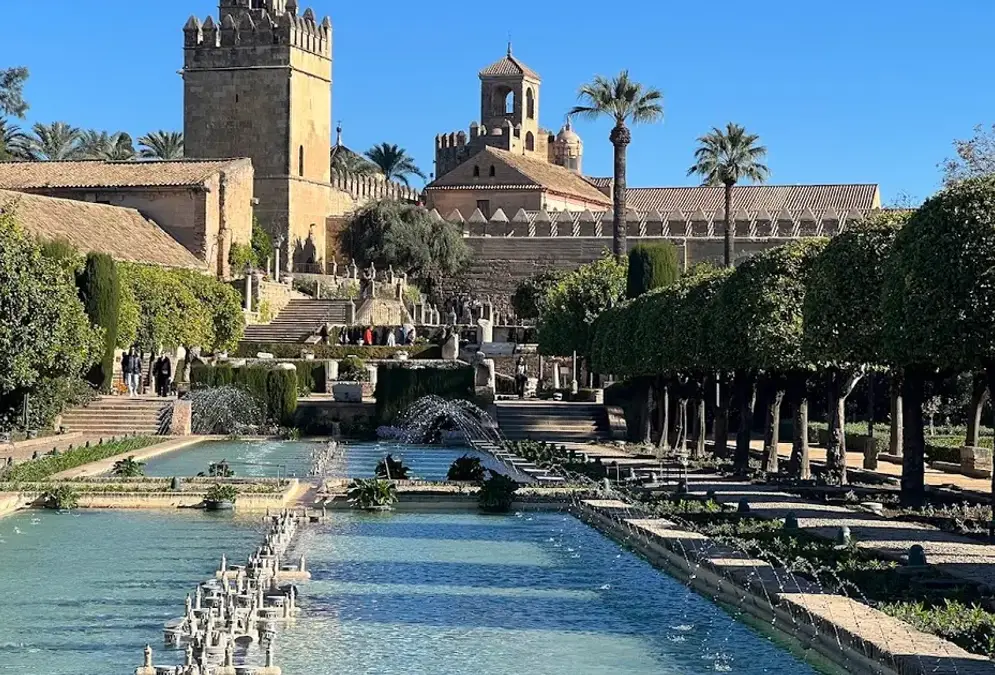
Explore nearby · Monument
Alcázar de los Reyes Cristianos
Alcázar de los Reyes Cristianos, Córdoba: free entry on Tuesdays. A 14th-century fortress-palace with terraced Moorish-inspired gardens and Roman mosaics.
Gonzalo Fernández de Córdoba's Granada apprenticeship
- Loja
- Tájara
- Íllora
- Montefrío
Recommended tours
Tours are selected for quality, not commission. We earn a small fee if you book — at no extra cost to you.
Boabdil, the Albaicín and the 1492 surrender
Visiting the Alcázar today
Deep dive · Article
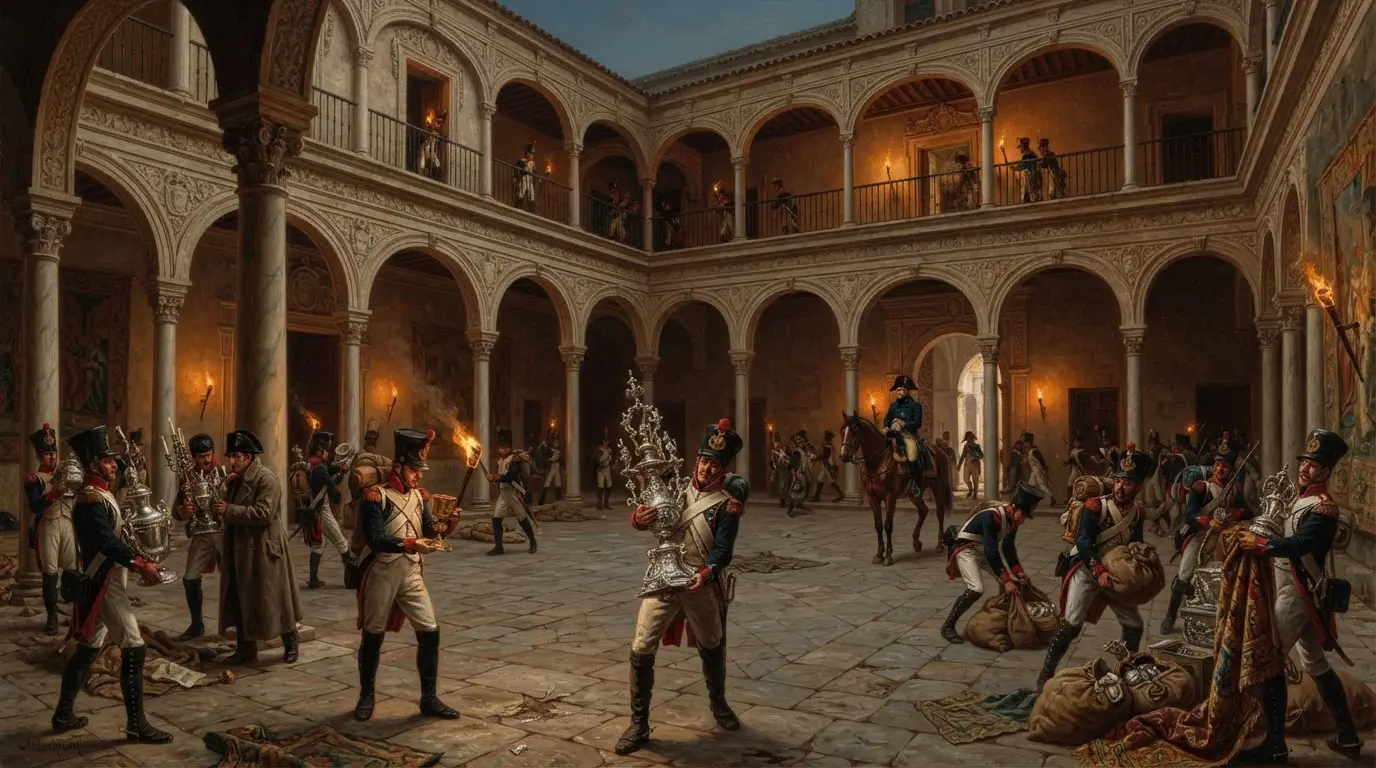
1808: The Sack of Córdoba That Broke a French Army at Bailén
In June 1808, French troops sacked Córdoba's churches and palaces on a flimsy pretext — and dragged the plunder into the disaster at Bailén weeks later.
Frequently asked questions
Was Córdoba the Catholic Monarchs' base in the War of Granada?
What role did the Alcázar play in the War of Granada?
Did Ferdinand and Isabella direct the whole war from Córdoba?
When did the War of Granada start and end?
How did the Granada war shape Gonzalo Fernández de Córdoba's early career?
Was the Great Captain born in Córdoba city?
Which Ferdinand took Córdoba in 1236?
Where is the Alcázar de los Reyes Cristianos?
Sources
31 references Show Hide
- Wikipedia — Alcázar de los Reyes Cristianos (opens in a new tab)
“as a headquarters for their campaign against the Nasrid dynasty in Granada, the last remaining Moorish kingdom in the Iberian Peninsula.”
- revistas-filologicas.unam.mx (opens in a new tab)
“Las luchas por los arrabales de Grana - da entre al-Zagal y Boabdil se prolongaron hasta abril de 1487, cuando Fernando partió de Córdoba hacia Vélez Málaga.”
- Wikipedia — Granada War (opens in a new tab)
“The Granada War was a series of military campaigns between 1482 and 1492”
- Britannica (opens in a new tab)
“He was one of the two commissioners who conducted the final negotiations for the surrender of Granada (1492).”
- Junta de Andalucía (opens in a new tab)
“El 28 de febrero de 1482 las tropas castellanas tomaban la ciudad de Alhama de Granada, en represalia por el ataque de los granadinos a Zahara el 27 de diciembre de 1481.”
- revistas-filologicas.unam.mx (opens in a new tab)
“A inicios de 1485, al-Zagal, tío de Boabdil, entró por sorpresa en Almería y echó de allí a su sobrino”
- revistas-filologicas.unam.mx (opens in a new tab)
“Al final, Málaga se rindió el 20 de agosto, y en un caso excepcional pero terrible en esta guerra,”
- cdn.juntadeandalucia.es (opens in a new tab)
“desde Córdoba los Reyes Católicos organizaron el abastecimiento de la guarnición castellana de Alhama y el ataque a Loja a fines del mes de junio de 1482.”
- Turismo de Córdoba (opens in a new tab)
“El Alcázar de los Reyes Cristianos, fortaleza y palacio de sólidos muros, encierra en su interior gran parte de la evolución arquitectónica de Córdoba.”
- Wikipedia — Alcázar de los Reyes Cristianos (opens in a new tab)
“The fortress served as one of the primary residences of Isabella I of Castile and Ferdinand II of Aragon.”
- Wikipedia — Alcázar de los Reyes Cristianos (opens in a new tab)
“In 1328, Alfonso XI of Castile began building the present day structure on part of the site for the old fortress.”
- buscabiografias.com (opens in a new tab)
“Nombre: Fernando V de Castilla”
- biografiasyvidas.com (opens in a new tab)
“y soberano de Castilla (1474-1504) junto con su esposa Isabel I de Castilla, también llamada Isabel la Católica.”
- revistas-filologicas.unam.mx (opens in a new tab)
“Écija, Sevilla, Córdoba, Úbeda y Baeza y Jerez, cuando sus apor - taciones se producían dentro de la Hermandad y no fuera de ella,”
- revistas-filologicas.unam.mx (opens in a new tab)
“sería más prudente reducirlas a la mitad, con ejércitos de unos 10,000 soldados para la mayoría de operaciones, y de unos 20,000 para los grandes asedios.”
- revistas-filologicas.unam.mx (opens in a new tab)
“Fernando, en abril, concentró su ejérci - to en Antequera y se aproximó a Málaga, tomando Benamaquiz, Coin y Cartama.”
- revistas-filologicas.unam.mx (opens in a new tab)
“Fernando partió desde Córdoba, y taló y saqueó entre mayo y septiembre toda la vega de Granada.”
- revistas.ucm.es (opens in a new tab)
“en el mes de abril de 1491, cuando el rey Fernan-do sale de Sevilla hacia el frente de la guerra con Boabdil”
- revistas.ucm.es (opens in a new tab)
“que serviría, por las circunstancias de la guerra, temporalmente de centro político de la Monarquía de Isabel y Fernando.”
- historia-hispanica.rah.es (opens in a new tab)
“Nació en el seno de una familia de la alta aristocracia andaluza, los Aguilar y Fernández de Córdoba”
- Wikipedia — Gonzalo Fernández de Córdoba (opens in a new tab)
“Gonzalo Fernández de Córdoba was born on 1 September 1453 at Montilla in the province of Córdoba.”
- Wikipedia — Gonzalo Fernández de Córdoba (opens in a new tab)
“Gonzalo fought for Isabella under Alonso de Cárdenas, grand master of the Order of Santiago.”
- Wikipedia — Gonzalo Fernández de Córdoba (opens in a new tab)
“He gained renown for participation in the sieges of several walled towns including Loja, Tajara, Illora, and Montefrío.”
- revistas-filologicas.unam.mx (opens in a new tab)
“Loja se rindió a finales de mayo”
- Wikipedia — Gonzalo Fernández de Córdoba (opens in a new tab)
“The skills of a military engineer and a guerilla fighter were equally useful.”
- Britannica (opens in a new tab)
“In 1495 Isabella gave him command of an expedition in support of the Aragonese king of Naples against the French”
- Wikipedia — Gonzalo Fernández de Córdoba (opens in a new tab)
“Because of his knowledge of Arabic and his familiarity with Boabdil, Gonzalo was chosen as one of the officers to arrange the surrender.”
- revistas-filologicas.unam.mx (opens in a new tab)
“dil una vez más pactó una alianza con Castilla y logró sublevar el Albaicín con ayuda de Gonzalo Fernán - dez de Córdoba.”
- historylab.es (opens in a new tab)
“on 25 November 1491, the capitulations formalising the conditions of surrender were signed.”
- historylab.es (opens in a new tab)
“On 2 January 1492, the Catholic Monarchs entered the city of Granada, thus completing the Reconquest.”
- Turismo de Córdoba (opens in a new tab)
“| UBICACIÓN: CAMPO SANTO DE LOS MÁRTIRES |”