history-buffs
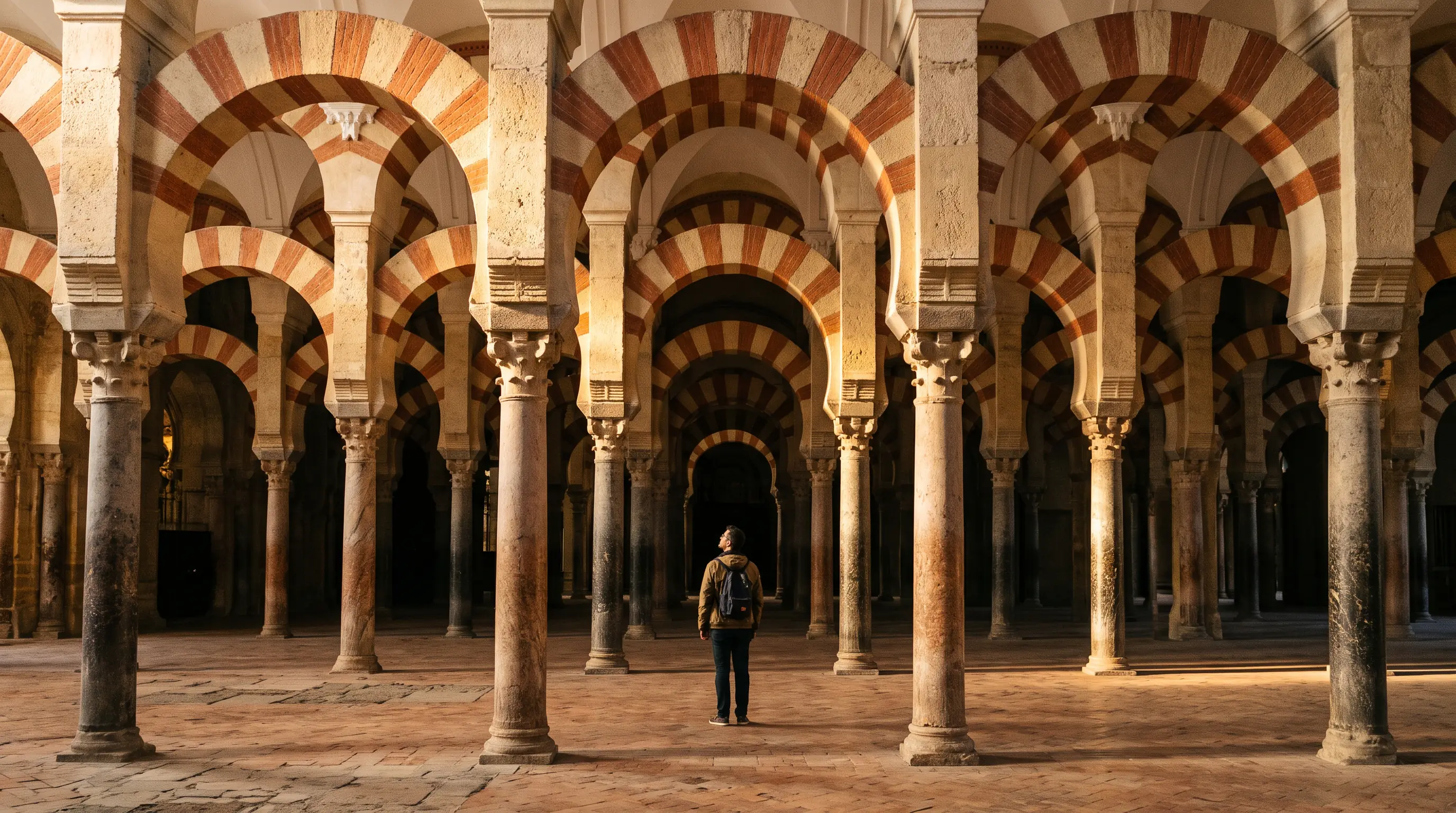
Horseshoe arches of the Mosque-Cathedral of Córdoba at golden hour, red-and-white voussoirs receding into shadow, the setting for the scholars of Córdoba, al-Andalus philosophers and scientists

Who Were Córdoba's Scholars Beyond Averroes and Maimonides?
Four Cordoban scholars beyond Averroes and Maimonides: poet Ibn Quzman, historian Ahmad al-Razi, judge Mundhir al-Balluti, exegete al-Qurtubi, and what to see.

Portrait of Sophie Marchand
Written by

Art history background with eight years writing interpretive content on Córdoba's Caliphal heritage.

Published
Caliphate of Córdoba929–1031
Beyond Averroes and Maimonides, four Cordobans carry the learning of al-Andalus: Ahmad al-Razi, whom later Muslim historians called the father of Islamic historiography in Spain,[1] the judge Mundhir al-Balluti, the zajal poet Ibn Quzman and the Quran commentator Muhammad al-Qurtubi. Two served the caliphs of the tenth century, one wrote under the Almoravids, and one was schooled in Córdoba until the city fell to Ferdinand III's army in 1236 and sent him to Alexandria.[2] The closing section turns to where that world survives in Córdoba today, with hours, prices and a workable order for the Mosque-Cathedral and Medina Azahara.
Ibn Quzman's diwan today
149 zajals
Zajals in the diwan available today[3]
Free schools in Córdoba
27 schools
Credited to al-Hakam II, who also drew eastern scholars[4]
Cathedral installed
1236
Christian cathedral set up inside the Great Mosque[5]

Why tenth-century Córdoba could train scholars

Córdoba produced scholars because its rulers paid for scholarship. Abd al-Rahman III made the city the seat of an independent caliphate in 929,[6] and his son al-Hakam II is credited with founding 27 free schools there and gathering a library of 400,000 catalogued volumes.[4] That last number has been claimed for his library, cannot be substantiated, and may be far greater than what the shelves really held.[7] The caliph's real contribution was protection. He is described as a lover of learning who sheltered writers and thinkers who were not strictly orthodox,[8] and he drew scholars from the east to teach in the university.[4]
Al-Andalus probably had the highest literacy rate in Europe in those centuries,[9] and Córdoba itself grew rapidly under Umayyad rule despite occasional revolt.[10] The four scholars here show how many different careers that reading public could support. Ahmad al-Razi and Mundhir al-Balluti belong to the caliphal court of the tenth century. Ibn Quzman and Muhammad al-Qurtubi came later, after the caliphate dissolved in civil war early in the eleventh and Córdoba became a prize among petty kingdoms.[11]
The test for inclusion is a Cordoban birth or formation and a full biography on this site. That leaves out Averroes and Maimonides, whose names already travel, and keeps four voices a visitor to the city rarely hears: a historian, a judge, a poet and an exegete.
ScholarRolePeriod
Ahmad al-RaziCourt historian10th century
Mundhir al-BallutiChief judge10th century
Ibn QuzmanZajal poet12th century
Muhammad al-QurtubiQuran commentator13th century

Ahmad al-Razi and Isa, the caliphs' chroniclers

Ahmad al-Razi was born in Córdoba into a Persian merchant family.[12] As a child he shared a tutor with the future caliph Abd al-Rahman III, which gave him his connection to the royal court,[13] and he went on to serve Abd al-Rahman III as official secretary, historian and court poet.[14] Secretary, historian and poet in one man shows how the court treated history: as a branch of its own service. He died in Córdoba on 1 November 955,[15] more than fifteen years before the period his son's annals cover.
Father and son are easy to confuse. Ahmad's own chronicle of the kings of al-Andalus, the Akhbar muluk al-Andalus, is a lost work,[16] and what remains of it lives in quotation and in a Castilian version, the Crónica del moro Rasis, which dates to about 1425 to 1430.[17] Later Muslim historians counted its author as the first to give the story of Islamic Spain a narrative framework rather than bare facts.[1] The court annals that do survive come from his son: Isa al-Razi, an official and chronicler of the caliph's court who noted its events great and small,[18] wrote up the reign of al-Hakam II, and a fragment of more than 135 folia covering June 971 to July 975 has reached us.[19] Credit those pages to Ahmad and you have the wrong generation.
The only known manuscript was copied at Ceuta in 1249,[20] nearly three centuries after the events it records and only 13 years after Córdoba fell to Ferdinand III's army in 1236,[2] so the annals survive in that single manuscript. Embassies and court ceremonial fill Isa's annals of al-Hakam II's court; Ahmad supplied the family trade.

Mundhir al-Balluti, the Zahiri who ruled by Maliki law
Mundhir al-Balluti was the caliphs' judge in Córdoba. He served Abd al-Rahman III as judge from 949 and kept the post until he died under al-Hakam II.[21] His birthplace is disputed, placed either in a suburb of Córdoba or in the hills of Los Pedroches to the north-west. His road to the capital ran through the provinces: he was appointed judge in Mérida, transferred to the Northern Frontiers and finally made chief justice of Córdoba.[22]
What makes him a scholar worth knowing is the gap between his convictions and his courtroom. He upheld the doctrines of Dawud, the Zahiri school that reads texts by their apparent meaning, yet in practice he administered justice according to the Maliki law of the land.[23] A judge who kept a minority school in his head and the majority school in his verdicts is a useful corrective to the idea that caliphal Córdoba spoke with one voice. On the bench the difference mattered, because the apparent-meaning reading he favoured was not the framework the country's judges worked in.
He was a contemporary of Ahmad al-Razi, and together they show Abd al-Rahman III's court from two desks: one man wrote its history, the other decided its disputes. Al-Hakam II later made him a professor as well,[24] and he is described as a man of letters, a poet, a theologian and an eloquent speaker.[25]
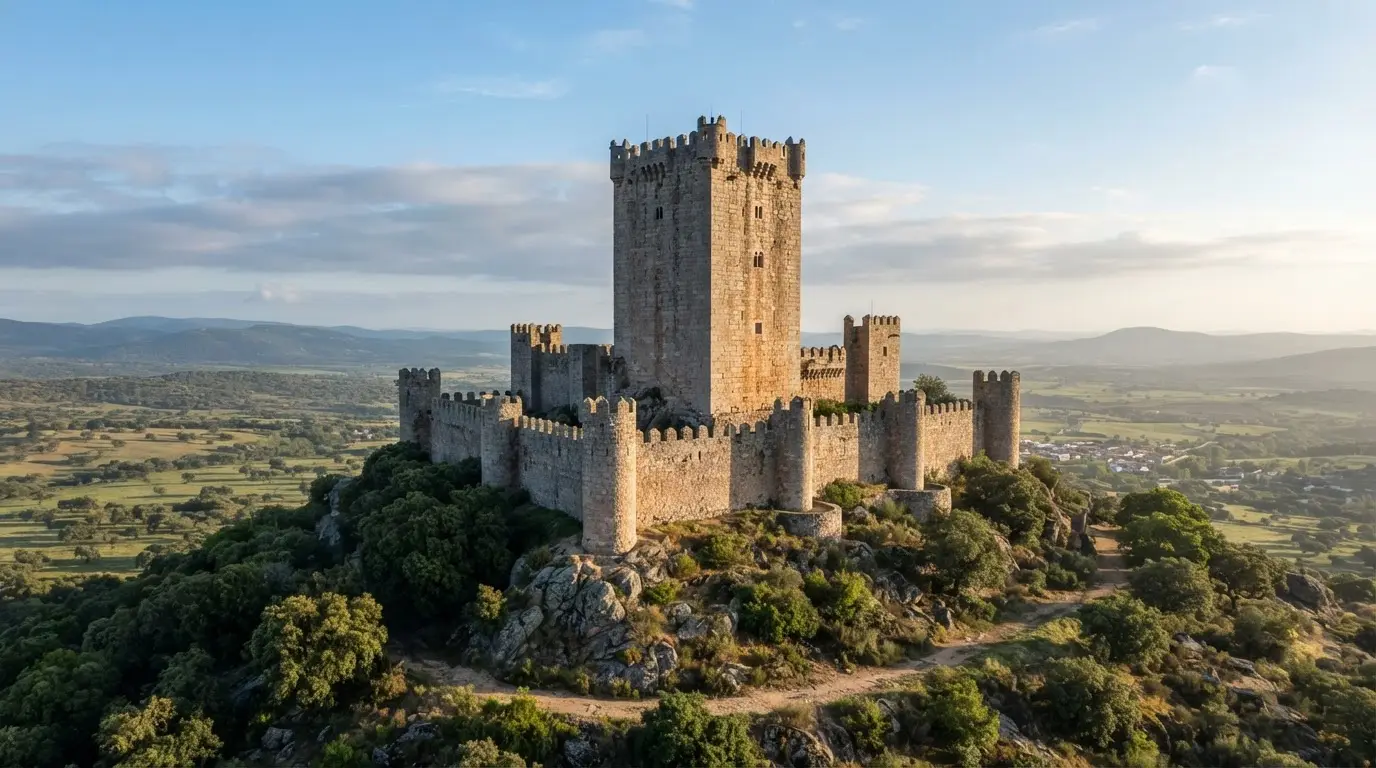
Belalcázar Castle's granite torre del homenaje, the tallest castle keep in Spain by official listing, rising above the fortress walls in soft morning light

Deep dive · Article

47 Metres Tall and Almost Unknown: Spain's Tallest Keep

Belalcázar Castle's 47 m keep is listed by the Junta de Andalucía as Spain's tallest. How it grew, what to see inside and how to book the free guided visit.

Speech was part of the job. One of his orations is still preserved as an accurate description of the caliph's court and palace at the time,[26] which makes the judge a witness to the setting as well as to the law.

Ibn Quzman, the street poet of the outer quarters

Ibn Quzman wrote the Córdoba that the chronicles leave out. He was born in Córdoba in the Almoravid period and died there in 1160 under Almohad rule,[27] and his zajals, poems in popular speech rather than the classical Arabic of formal verse, are full of the plain, coarse and at times obscene words of people living in the outlying quarters of Córdoba.[28] The diwan available today holds 149 of them.[3]
The slang was a choice. His diwan shows he had read al-Kindi, al-Ghazali, Ibn Bajja and Averroes,[29] so the street voice belongs to a man who knew the library as well as the lane. Later tradition named him the imam of the zajal poets,[30] though medieval critics in al-Andalus and North Africa, while unable to deny his achievement, tended to downplay it.[31] His birth year is unsettled, with dates from about 1078 into the late 1080s in circulation and one reference placing it after 1086,[32] and he died on 2 October 1160, in misery, while Ibn Mardanish's forces besieged the city.[33]
He covers the stretch between the caliphal court and the Christian conquest, a period in which Córdoba is usually told through its rulers and its philosophers. A poet writing in the speech of the back streets adds the other half. That reading list also puts a slang poet in the same intellectual world as the philosophers the city is famous for, which is why he belongs in this roundup and not in a collection of folk verse.

Al-Qurtubi the exegete, schooled in Córdoba before the exile

Muhammad al-Qurtubi is the scholar the city made and then lost. He was born in Córdoba and died in 1273,[34] and the birth year in between is the soft spot: 1214 is a commonly given date, though the evidence points only to the end of the twelfth century or the start of the thirteenth. Records of his life are very limited, so what is known of his early years is drawn from his own works.[35]
Two details of a hard youth survive in his own works. His Tafsir records his father's death in a Christian raid on Córdoba in July 1230,[36] and his al-Tadhkira has the boy carrying clay for pottery from the area outside the city known as the Jewish Cemetery, to help the family make a living.[37] He went on studying in Córdoba until the city was occupied.[38]

Recommended tours

Tours are selected for quality, not commission. We earn a small fee if you book — at no extra cost to you.
Prominent Cordoban scholars taught him, and he became known for the classical Quran commentary that carries his name, the Tafsir al-Qurtubi.[39] One modern scholar ranks him among the greatest Quranic commentators and remembers him as a Maliki scholar and hadith specialist who lived as an ascetic.[40] The label Al-Qurtubi the exegete is worth keeping, because the name only means "the Cordoban" and other scholars carried it too.
Córdoba's fall to Ferdinand III's army in 1236 ended his schooling in the city and sent him to Alexandria, his first stop before Cairo and Munyat Banu Khasib in Upper Egypt, where he died in 1273. What he built there belongs to Egypt; what he carried from Córdoba was the training.

Where their world survives in Córdoba today
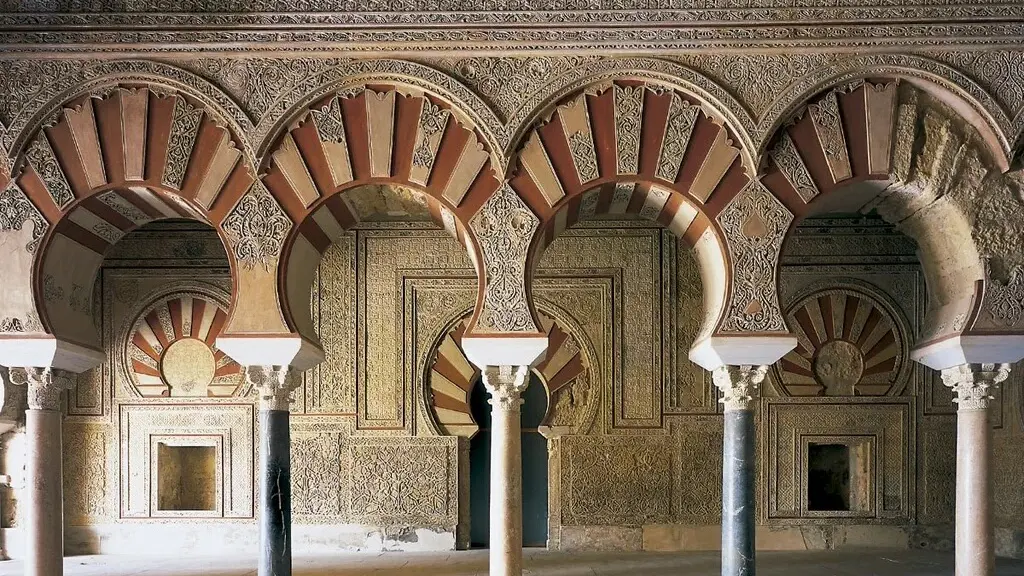
Medina Azahara is where the tenth-century caliphal court survives best, in ruins. The Umayyad dynasty built it in the mid-10th century as the seat of the Caliphate of Córdoba, and it is now an archaeological site just outside the city.[41]
One anecdote places Mundhir inside a particular building. When Abd al-Rahman III tried to cover a ceiling at Medina Azahara in gold and silver, the extravagance was more than the judge could accept.[42] Treat it as an anecdote, not a documented event, but it ties him to a site you can visit.
Ruins of Medina Azahara with arches and columns of the Salon Rico

Explore nearby · Monument

Medina Azahara

Medina Azahara is Córdoba's UNESCO listed Caliphate City: a 10th century palace 8 km from town, with the Salón Rico and award-winning museum. Plan your visit.

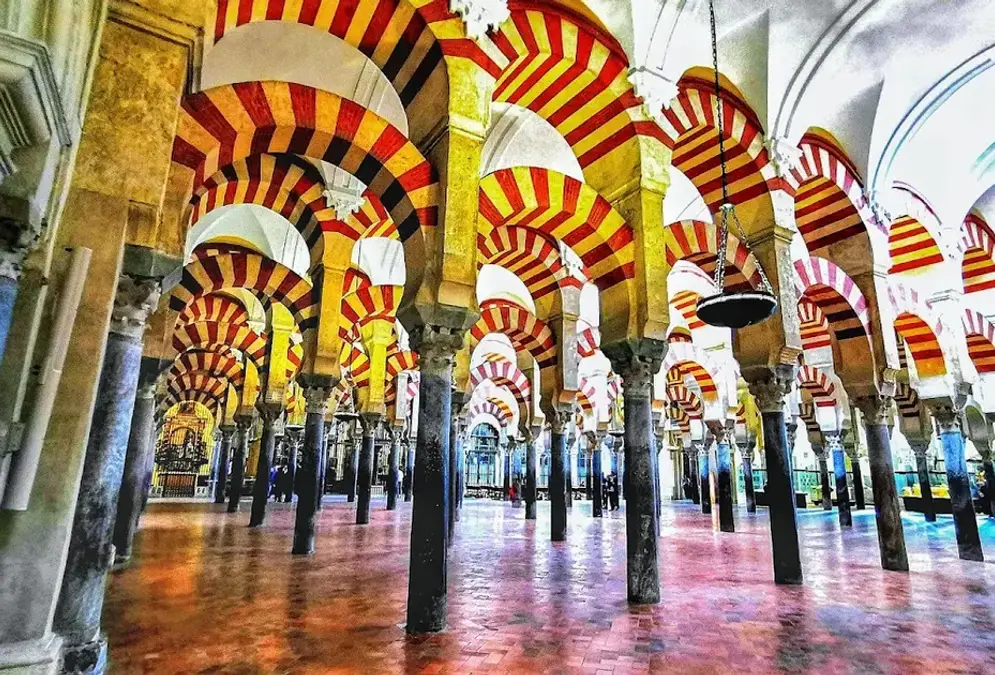
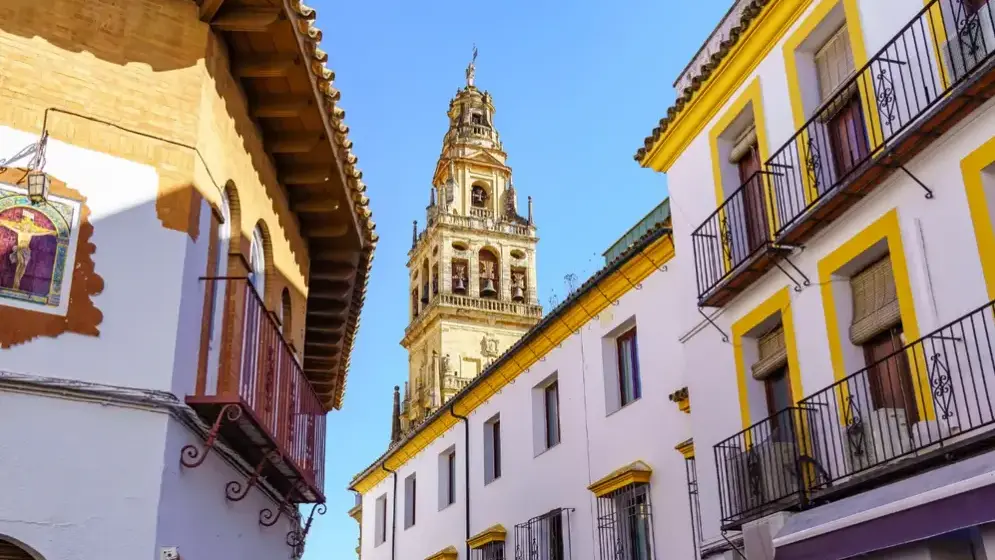
The Mosque-Cathedral is the other fixed point. A Christian cathedral was installed in the Great Mosque in 1236,[5] the year Córdoba changed hands and Muhammad al-Qurtubi's schooling in the city ended. Ibn Quzman's twelfth century sits between the two sites, in the outer quarters rather than in either building.
Neither building is devoted to the four, so a visitor meets their world through the caliphal sites. Use the two sites as the stage of their world and match each stop to a scholar:
  • Medina Azahara: the caliphal seat of Abd al-Rahman III, Isa al-Razi's annals of al-Hakam II and the ceiling story about Mundhir al-Balluti.
  • Mosque-Cathedral: the caliphal Great Mosque turned cathedral in 1236, the year Muhammad al-Qurtubi's Córdoba ended.
  • Outer quarters of the old city: the ground of Ibn Quzman's zajals, a walk rather than a monument.

Before you go

  • Check the Medina Azahara bus times with the tourism board before you plan the day.
  • Be at the return stop on time: it is the only way back to the city.
  • Treat the outer quarters as a walk: read the streets, not a monument.

Getting to Medina Azahara, and what it costs

The ruins lie outside the city, and the usual way up is the tourist bus from Paseo de la Victoria, at the Cruz Roja roundabout and opposite Mercado Victoria. The transfer takes about 20 minutes, and missing the return bus leaves no other way back.[43]
In winter (21 September to 20 March) the site opens Tuesday to Saturday from 09:00 to 18:00 and on Sundays and holidays from 09:00 to 15:00, and it is closed on Mondays. In summer (21 June to 20 September) it opens Tuesday to Saturday from 09:00 to 15:00 and again from 20:00 to midnight. Entry is free for accredited EU citizens and €1.50 for everyone else.[44]
Once there, a shuttle links the museum and the excavated site every 15 to 20 minutes, and the last one up leaves 60 minutes before closing. Allow 1h15 to 2h for the site and 45 minutes to 1h15 for the museum.[45]

The Mosque-Cathedral: the free early visit

Monday to Saturday, the Mosque-Cathedral offers a free visit from 08:30 to 09:30, except on days of extraordinary celebration.[46] Outside that hour the adult ticket is €15.[47] Last entry is half an hour before closing, and no tickets are sold after that.[46]

A workable order for the day

Take the Mosque-Cathedral in the free early hour, then give the rest of the day to Medina Azahara. With the 20-minute bus each way and the site and museum together running to about two to three and a quarter hours,[43][45] it is a half-day outing, and the outer quarters of Ibn Quzman fit whatever time is left on foot.

Frequently asked questions

Who were the scholars of Córdoba in al-Andalus, besides the philosophers and scientists everyone knows?

Beyond Averroes and Maimonides, four stand out: the zajal poet Ibn Quzman, the historian Ahmad al-Razi, the chief judge Mundhir al-Balluti and the Quran commentator Muhammad al-Qurtubi. Two served the caliphs of the tenth century; the other two belong to the twelfth and thirteenth.

Who was Ibn Quzman?

A poet born in Córdoba in the Almoravid period who died there under Almohad rule, best known for zajals written in popular speech. His birth year is placed anywhere from about 1078 into the late 1080s, and he died in 1160 while Ibn Mardanish's forces besieged the city.

Did Ahmad al-Razi write the annals of al-Hakam II's court?

No. The surviving annals, covering June 971 to July 975, are by his son Isa al-Razi. Ahmad served Abd al-Rahman III as secretary, historian and court poet, but his own chronicle survives only in quotation and a later Castilian version.

What did Mundhir al-Balluti do in Córdoba?

He was the caliphs' judge, serving Abd al-Rahman III and remaining on the bench under al-Hakam II. He held Zahiri doctrines but applied Maliki law in court, and al-Hakam II also made him a professor.

Why is al-Qurtubi linked to Córdoba if he worked in Egypt?

He was born and schooled in Córdoba and taught by prominent Cordoban scholars. The city's fall to Ferdinand III's army in 1236 ended his schooling there, and he spent the rest of his life in Egypt.

Was al-Hakam II's library really 400,000 books?

The figure has been claimed for his library, but it cannot be substantiated; it may well be far greater than what the library actually held. He is also credited with founding 27 free schools in the city.

Sources

47 references Show
  1. Wikipedia — Ahmad ibn Muhammad ibn Musa al Razi (opens in a new tab)

    “Later Muslim historians considered him the father of Islamic historiography in Spain and the first to provide a narrative framework rather than bare facts.”

  2. dergipark.org.tr (opens in a new tab)

    “Kurtuba’nın 633/1236 yılında Kastilya-Leon Kralı III. Fernando ordusunun işgalinden sonra Mısır’ın İskenderiye şehrine geçmiş”

  3. islamansiklopedisi.org.tr (opens in a new tab)

    “Bugün elde mevcut divanında 149 zecel bulunmaktadır.”

  4. Britannica — Al Hakam II (opens in a new tab)

    “who gathered a library of 400,000 catalogued volumes, founded 27 free schools in Córdoba, and attracted scholars from the east to teach in the university.”

  5. UNESCO World Heritage — 313 (opens in a new tab)

    “There were consecutive extensions carried out over three centuries, and in 1236 the Christian Cathedral was installed.”

  6. UNESCO World Heritage — 313 (opens in a new tab)

    “In 929, Abderraman III established it as the headquarters of the independent Caliphate.”

  7. historyofinformation.com (opens in a new tab)

    “though this number cannot be substantiated, and may well be far greater than what was actually held in the library.”

  8. Britannica — Al Hakam II (opens in a new tab)

    “a lover of learning who gave protection to writers and thinkers who were not strictly orthodox”

  9. archive.aramcoworld.com (opens in a new tab)

    “when Al-Andalus probably boasted the highest literacy rate in Europe.”

  10. Britannica — Cordoba Spain (opens in a new tab)

    “Though troubled by occasional revolt, Córdoba grew rapidly under Umayyad rule”

  11. Britannica — Cordoba Spain (opens in a new tab)

    “When the caliphate was dismembered by civil war early in the 11th century, Córdoba became the centre of a contest for power among the petty Muslim kingdoms of Spain.”

  12. Wikipedia — Ahmad ibn Muhammad ibn Musa al Razi (opens in a new tab)

    “A native of Córdoba, he came from a Persian merchant family.”

  13. Wikipedia — Ahmad ibn Muhammad ibn Musa al Razi (opens in a new tab)

    “As a child he had the same tutor as the future caliph, ʿAbd al-Raḥmān III, which provided him with a connection to the royal court.”

  14. europenowjournal.org (opens in a new tab)

    “Aḥmad al-Rāzī, had served as an official secretary, historian, and court poet for ‘Abd al-Rahmān III”

  15. Wikipedia — Ahmad ibn Muhammad ibn Musa al Razi (opens in a new tab)

    “The Akhbār mulūk, including its continuation, is a lost work.”

  16. Wikipedia — Ahmad ibn Muhammad ibn Musa al Razi (opens in a new tab)

    “The Castilian version of the Akhbār mulūk, called the Crónica del moro Rasis (Chronicle of the Moor al-Rāzī), dates to about 1425/1430.”

  17. degruyterbrill.com (opens in a new tab)

    “the annals written by an official and chronicler of the caliph’s court, ‘Īsà b. Aḥmad al-Rāzī, who carefully annotated the big and small events of the court”

  18. degruyterbrill.com (opens in a new tab)

    “these ‘annals’ have come to us in a substantial fragment of more than 135 folia that cover the period from June 971 to July 975 CE”

  19. ifao.egnet.net (opens in a new tab)

    “il a été copié à Ceuta en 1249 dans un manuscrit qui est le seul à nous être parvenu”

  20. Wikipedia — Mundhir ibn Sa'īd al Ballūṭī (opens in a new tab)

    “Later, he served as the judge of the Umayyad Caliph of Cordoba Abd-ar-Rahman III from 949 until his death under the reign of Al-Hakam II.”

  21. muslimphilosophy.net (opens in a new tab)

    “he was appointed as judge (Qadi) in the city of Merida, then transferred to the Northern Frontiers and finally made the Chief Justice of Cordova”

  22. muslimphilosophy.net (opens in a new tab)

    “He upheld Dawud’s doctrines and defended his views, though, in practice, he administered justice according to the established law of the country based on the Malikite school of jurisprudence.”

  23. Wikipedia — Mundhir ibn Sa'īd al Ballūṭī (opens in a new tab)

    “In addition to his position on the judge's bench, Al-Hakam II also appointed him as a professor.”

  24. muslimphilosophy.net (opens in a new tab)

    “He was also a man of letters, poet, theologian, physiographer, and eloquent speaker.”

  25. Wikipedia — Mundhir ibn Sa'īd al Ballūṭī (opens in a new tab)

    “Balluti's speech is still preserved as an accurate description of the caliph's court and palace at the time.”

  26. islamansiklopedisi.org.tr (opens in a new tab)

    “Murâbıt Hükümdarı Tâşfîn’in 539’da (1145) öldürülmesinden sonra Muvahhidler devleti ele geçirerek 543’te (1148) Kurtuba’yı başşehir yaptılar.”

  27. islamansiklopedisi.org.tr (opens in a new tab)

    “Şiirlerinde Kurtuba’nın kenar mahallelerinde oturan insanların kullandığı basit kelimeler, kaba ve müstehcen ifadeler dikkat çekmektedir.”

  28. islamansiklopedisi.org.tr (opens in a new tab)

    “Kindî, Gazzâlî, İbn Bâcce ve İbn Rüşd gibi filozofların eserlerini”

  29. islamansiklopedisi.org.tr (opens in a new tab)

    “Zecel türü halk şiirinde zirveye yükselen İbn Kuzmân “zecel şairlerinin imamı” olarak anılmıştır.”

  30. Wikipedia — Ibn Quzman (opens in a new tab)

    “Andalusi and North African scholars and critics, while they could not categorically deny that poet’s remarkable literary achievements, all tended to downplay them”

  31. islamansiklopedisi.org.tr (opens in a new tab)

    “479 (1086) yılından sonra Kurtuba’da (Córdoba) doğdu.”

  32. islamansiklopedisi.org.tr (opens in a new tab)

    “İbn Merdenîş’in Kurtuba’yı muhasara ettiği sırada 29 Ramazan 555 (2 Ekim 1160) tarihinde sefalet içinde öldü.”

  33. dergipark.org.tr (opens in a new tab)

    “Kurtubî (ö. 671/1273), Endülüs’ün Kurtuba şehrinde doğmuştur.”

  34. dergipark.org.tr (opens in a new tab)

    “Kaynaklarda Kurtubî’nin biyografisine dair çok sınırlı malumat bulunması sebebiyle, bu bilgiler müfessirin eserlerinden elde edilmiştir.”

  35. dergipark.org.tr (opens in a new tab)

    “Hıristiyan İspanyalılar’ın 3 Ramazan 627/16 Temmuz 1230 tarihinde Kurtuba’da gerçekleştirdikleri bir baskında”

  36. dergipark.org.tr (opens in a new tab)

    “Yahudi Mezarlığı olarak bilinen bölgeden çömlek yapımında kullanılan toprak taşımacılığı yapıp ailesinin geçimine yardımcı olduğunu”

  37. dergipark.org.tr (opens in a new tab)

    “al-Qurtubi continued his science education here until the occupation of Qurtuba.”

  38. Wikipedia — Al Qurtubi (opens in a new tab)

    “Prominent scholars of Córdoba, Spain, taught him, and he is well known for his classical commentary of the Quran named Tafsir al-Qurtubi.”

  39. Wikipedia — Al Qurtubi (opens in a new tab)

    “A Maliki scholar and hadith specialist, he was one of the greatest Imams of Koranic exegesis, an ascetic who divided his days between worship and writing.”

  40. UNESCO World Heritage — 1560 (opens in a new tab)

    “The Caliphate city of Medina Azahara is an archaeological site of a city built in the mid-10th century CE by the Umayyad dynasty as the seat of the Caliphate of Cordoba.”

  41. Wikipedia — Mundhir ibn Sa'īd al Ballūṭī (opens in a new tab)

    “When Abd-ar-Rahman III attempted to cover the ceiling of his palace Medina Azahara in gold and silver, the extravagance was too excessive for Balluti to accept”

  42. Turismo de Córdoba — Bus diario a medina azahara.cfm (opens in a new tab)

    “PUNTO DE SALIDA: Parada Bus en Paseo de la Victoria (Glorieta Hospital Cruz Roja) y Paseo de la Victoria (frente al Mercado Victoria).”

  43. Junta de Andalucía — Conjunto arqueologico de madinat al zahra (opens in a new tab)

    “Martes a sábado de 09:00 a 18:00. Domingos, festivos y lunes víspera de festivos, de 9:00 a 15:00 horas. Lunes cerrado (excepto víspera de festivo).”

  44. Junta de Andalucía — Folleto ma.pdf (opens in a new tab)

    “El último autobús que traslada visitantes al yacimiento parte del aparcamiento del museo 60 minutos antes de la hora de cierre.”

  45. mezquita-catedraldecordoba.es (opens in a new tab)

    “Monday to Saturday: 8:30 to 9:30 hrs free visit. Except on day of extraordinary celebration.”