The Córdoba Romana Exhibition Brings Roman Corduba Home
Córdoba Romana at Sala Vimcorsa runs to 7 February 2027: loans from the Louvre, British Museum and Munich, ten rooms, and Roman sites to see afterwards.
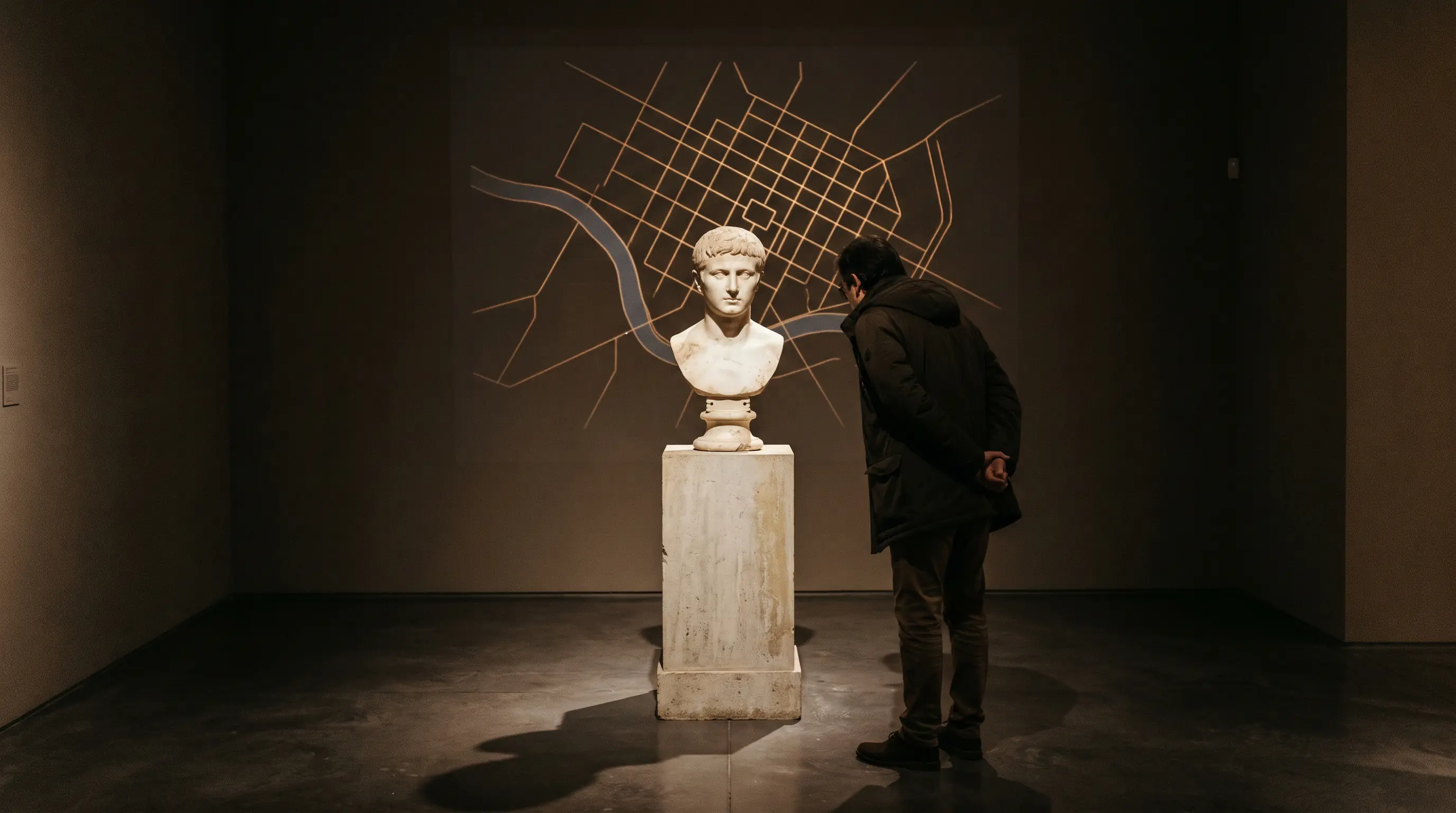
Almost a hundred pieces are on show until 7 February 2027, with loans from the Louvre, the British Museum and Munich.
In this article
Jump to a section
Why so little of Roman Córdoba shows
The loans that came back to Córdoba
The star loans are Córdoba finds that left long ago and are back for one winter. The Louvre's bust of Germanicus was found in the city and now belongs to the Louvre[11]; it travels with a Heracles sculpture from the same collections[12]. The other headline lenders:
- The British Museum sends the Tesorillo del Marrubial[4].
- The Glyptothek in Munich sends a head of Caligula[4].
- The Museo Arqueológico Nacional in Madrid sends 33 pieces, many of them found in Córdoba and returning, if only temporarily, to their place of origin[13].
Explore nearby · Museum
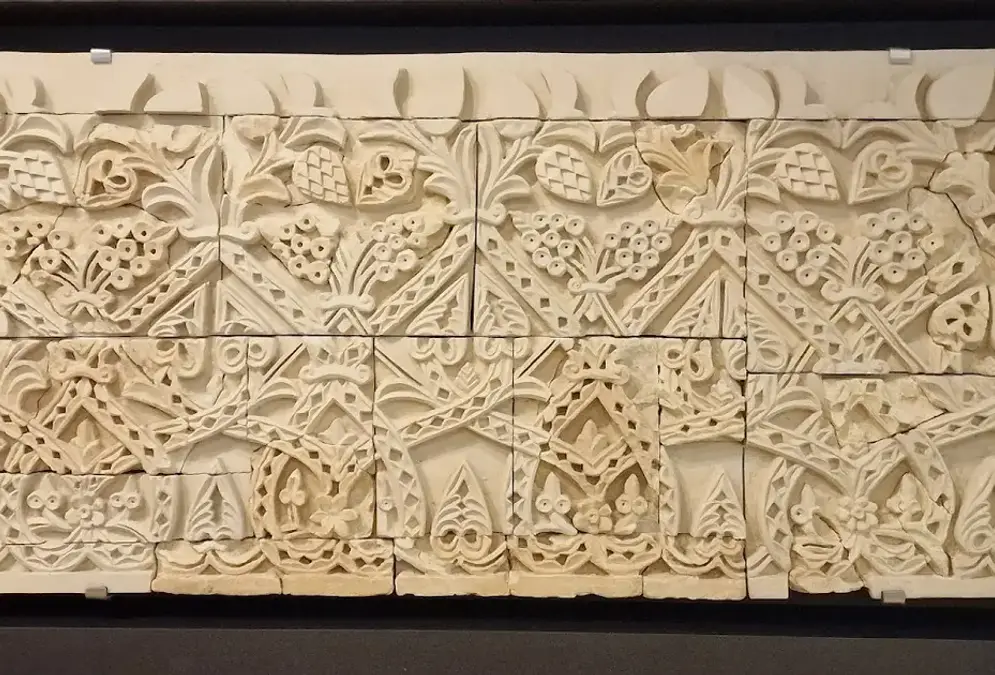
Museo Arqueológico de Córdoba
33,500 pieces in a Renaissance palace built over a Roman theatre: mosaics, Iberian sculpture, Caliphal ceramics. Free for EU citizens. Closed Mondays.
What the ten rooms cover
The ten rooms draw on the Archaeological Museum of Córdoba, Madrid, London, Paris, Munich and Málaga[17]. The first nine take the Roman city theme by theme; the tenth is an audiovisual. The first nine, by theme:
- Room I, geography: Corduba began as a "bridge-city", connecting two worlds the river kept apart[18].
- Room II, origins: from the pre-Roman settlement to the Republican city, including the annexation the room presents as following the battle of Ilipa in 206 BC[8].
- Room III, the consolidated city: Baetica, a province the room calls one of the richest and most loyal of the Empire[19].
- Room IV, buildings for spectacle: the theatre, amphitheatre and circus, given over to the performing arts, to bloodshed and executions, and to chariot races[20].
- Room V, imperial cult: images of the Roman temple after its musealisation and opening to the public in 2025[21].
- Room VI, domestic life: the Domus del Bailío, a peristyle house now inside the Hospes Palacio del Bailío hotel[22].
- Room VII, water: the aqueducts that fed the city.
- Room VIII, leisure: the baths, with archaeological evidence for about fifteen complexes across the city[23].
- Room IX, the dead: the funerary monuments of Puerta de Gallegos, built flanking the Corduba-Hispalis road[24].
50,000+ m³
Room X: the audiovisual walk through Corduba
Deep dive · Article
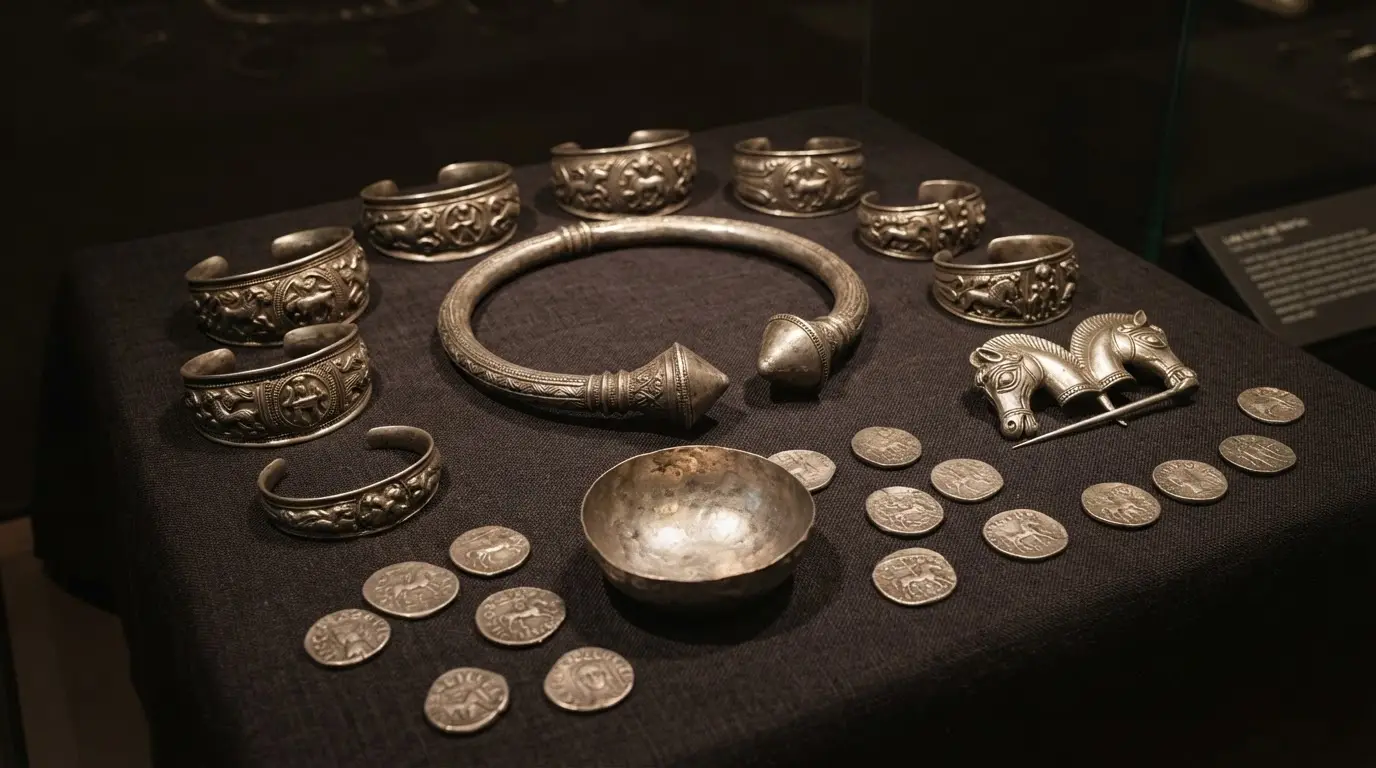
An Andalusian Treasure Has Sat in the British Museum Since 1932
A silver hoard dug up in Córdoba in 1915 left Spain against the law and has been in the British Museum since 1932. Here is how, and what a 2026 study found.
Visiting the exhibition, and the Roman sites that stay
Guided routes need booking
Once the objects are back in their cases, the places they came from are still there:
- The Olive Press dated the Roman temple's reopening to visitors to 19 June 2025[32]; it was begun under Claudius and finished some forty years later under Domitian[33]. Check current hours before you go.
- Cercadilla holds the remains of the palace of the emperor Maximian Herculius, in a Junta de Andalucía archaeological enclave[34].
- The mausoleums at Puerta de Gallegos, the Roman bridge with the Puerta del Puente, and the Archaeological Museum complete the set.
Recommended tours
Tours are selected for quality, not commission. We earn a small fee if you book — at no extra cost to you.
Frequently asked questions
Is the Córdoba Romana exhibition free?
Until when can you see the Córdoba Romana exhibition?
What can you see at the Córdoba Romana exhibition?
Which museums lent pieces to the Córdoba Romana exhibition?
Who curated Córdoba Romana. La ciudad oculta?
Where was the Roman amphitheatre of Córdoba?
Which Roman sites can you visit in Córdoba after the exhibition?
Sources
39 references Show Hide
- eldebate.com — Desiderio vaquerizo llena salon actos rectorado conferencia sobre gladiadores cordoba romana 228927 (opens in a new tab)
“hasta el año 2002 se desconocía sensu stricto la ubicación de dicho edificio, que finalmente fue identificado bajo el actual Rectorado de la Universidad de Córdoba”
- eldebate.com — Cordoba recupera orgullo pasado romano exposicion 483275 (opens in a new tab)
“ha señalado el comisario y catedrático de Arqueología, Desiderio Vaquerizo, en la inauguración de la muestra 'Córdoba romana. La ciudad oculta' que hasta el 7 de febrero se puede visitar en la Sala Vimcorsa.”
- eldebate.com — Cordoba recupera orgullo pasado romano exposicion 483275 (opens in a new tab)
“no sólo ofrece el disfrute de casi un centenar de piezas, algunas llegadas de importantes museos europeos”
- eldebate.com — Cordoba recupera orgullo pasado romano exposicion 483275 (opens in a new tab)
“El comisario destaca la presencia de dos cabezas cedidas por el Museo del Louvre, el Tesorillo del Marrubial del British Museum o la cabeza de Calígula de la Gliptoteca de Munich.”
- eldebate.com — Puerto fluvial anfiteatro asi sera paseo virtual exposicion sobre cordoba romana 437090 (opens in a new tab)
“anfiteatro, situado en la parte occidental extramuros de la ciudad, donde ahora se ubica el Rectorado de la Universidad de Córdoba”
- Wikipedia — Corduba (opens in a new tab)
“It became the capital of Baetica, with a forum and numerous temples, and was the main center of Roman intellectual life in Hispania Ulterior.”
- eldiadecordoba.es (opens in a new tab)
“desde sus orígenes turdetanos en la Colina de los Quemados -el actual Parque Figueroa-”
- exposicioncordobaromana.es — Sala ii (opens in a new tab)
“su anexión habría tenido lugar tras la batalla de Ilipa (año 206 a.C.) mediante una deditio, o rendición sin condiciones al legado de Escipión, Caius Lucius Marcius.”
- cordopolis.eldiario.es — Exposicion cordoba romana ciudad oculta llegara 2026 presupuesto superior 400 000 euros 1 13093328 (opens in a new tab)
“del profesor Desiderio Vaquerizo, del Departamento de Historia del Arte y Arqueología de la Universidad de Córdoba”
- eldebate.com — Cordoba recupera orgullo pasado romano exposicion 483275 (opens in a new tab)
“Todo ello se completa con gráficos, proyecciones, fotografías y demás elementos que contribuyen a facilitar la comprensión.”
- eldebate.com — Ayuntamiento solicita dos piezas louvre exposicion sobre pasado romano cordoba 408781 (opens in a new tab)
“un busto del emperador Germánico que fue encontrado en Córdoba, adquirida por el Museo del Louvre en 1912 procedente de la colección Anet”
- eldiadecordoba.es (opens in a new tab)
“un busto de Germánico y una estatua de Heracles, dos esculturas de época romana pertenecientes a las colecciones del museo parisino”
- eldebate.com — Puerto fluvial anfiteatro asi sera paseo virtual exposicion sobre cordoba romana 437090 (opens in a new tab)
“El Museo Arqueológico Nacional participará con 33 piezas, muchas de ellas encontradas en Córdoba y que volverán, aunque sea temporalmente, a su lugar de origen.”
- eldebate.com — Museo arqueologico nacional cedera 33 piezas exposicion cordoba romana 428924 (opens in a new tab)
“destaca el busto de Antonino Pío, encontrado al abrir unos cimientos para una edificación en la calle del Alcayde en Puente Genil, o el torque de oro macizo hallado en 1936 en la localidad de El Viso.”
- cordopolis.eldiario.es — Exposicion cordoba romana ciudad oculta llegara 2026 presupuesto superior 400 000 euros 1 13093328 (opens in a new tab)
“el seguro denominado como 'clavo a clavo' de las piezas alcanza un valor estimado de 8.346.500 euros”
- cordopolis.eldiario.es — Exposicion cordoba romana ciudad oculta contara sala inmersiva 1 13352215 (opens in a new tab)
“presupuesto total de 428.454,08 euros -impuestos incluidos-”
- eldebate.com — Puerto fluvial anfiteatro asi sera paseo virtual exposicion sobre cordoba romana 437090 (opens in a new tab)
“se dividirá en diez secciones, donde se mostrarán piezas del Museo Arqueológico de Córdoba, Museo Arqueológico Nacional, British Museum, Museo del Louvre, Gliptoteca de Munich, Museo de Málaga”
- exposicioncordobaromana.es — Sala i (opens in a new tab)
“Corduba nació así como paradigma de ‘ciudad-puente’; conectaba dos mundos que el río separaba.”
- exposicioncordobaromana.es — Sala iii (opens in a new tab)
“una de las más ricas y fieles del Imperio y la única que permanece en poder del Senado”
- exposicioncordobaromana.es — Sala iv (opens in a new tab)
“Colonia Patricia Corduba se dotara de los más importantes: teatro, anfiteatro y circo, dedicados, respectivamente, a las artes escénicas, los espectáculos de sangre y las ejecuciones, y las carreras de carros.”
- exposicioncordobaromana.es — Sala v (opens in a new tab)
“Imágenes del conjunto tras su musealización y apertura al público en 2025”
- exposicioncordobaromana.es — Sala vi (opens in a new tab)
“Domus del Bailío, ejemplo paradigmático de una casa de peristilo, integrada hoy bajo el hotel Hospes Palacio del Bailío”
- exposicioncordobaromana.es — Sala viii (opens in a new tab)
“Hasta la fecha existe constancia arqueológica de una quincena de conjuntos termales repartidos por toda la ciudad”
- exposicioncordobaromana.es — Sala ix (opens in a new tab)
“Monumentos funerarios de Puerta de Gallegos. Fueron construidos flanqueando la via Corduba-Hispalis”
- exposicioncordobaromana.es — Sala vii (opens in a new tab)
“aportaban a la ciudad más de 50.000 m3 de agua diarios”
- eldebate.com — Puerto fluvial anfiteatro asi sera paseo virtual exposicion sobre cordoba romana 437090 (opens in a new tab)
“lo primero que conocen es el río, el puente, el puerto fluvial, la puerta del puente y la gran plaza pública que bulle en actividad comercial”
- exposicioncordobaromana.es — Sala x (opens in a new tab)
“a una representación en el teatro de la colonia, a carreras en el circo o a una lucha de gladiadores (un murmillo frente a un retiarius) en la arena de su anfiteatro”
- cordopolis.eldiario.es — Exposicion cordoba romana ciudad oculta contara sala inmersiva 1 13352215 (opens in a new tab)
“cuenta con una inversión específica de 175.205 euros”
- eldebate.com — Cordoba recupera orgullo pasado romano exposicion 483275 (opens in a new tab)
“además, es totalmente gratuita desde el principio de «cultura para todos»”
- eldebate.com — Arranca ciclo conferencias muestra cordoba romana ciudad oculta 474217 (opens in a new tab)
“Todas las conferencias son de acceso libre hasta completar aforo”
- exposicioncordobaromana.es — Actividades (opens in a new tab)
“Reserva previa en cordobaromana@uco.es. Inscripción limitada a un máximo de 3 rutas por persona.”
- theolivepress.es (opens in a new tab)
“Since June 19, both locals and visitors have been able to ascend and walk among the towering columns”
- Wikipedia — Roman temple of Córdoba (opens in a new tab)
“Its construction began during the reign of Emperor Claudius (41–54 AD) and ended some forty years later, during the reign of Emperor Domitian (81–96 CE).”
- Junta de Andalucía (opens in a new tab)
“se descubren los vestigios de lo que fue el palacio del emperador romano Maximiano Hercúleo”
- eldiadecordoba.es (opens in a new tab)
“la exposición Córdoba, reflejo de Roma, celebrada en 2012, recibió 16.926 visitantes, mientras que Cambio de Era, Córdoba y el Mediterráneo Cristiano, organizada en 2022, alcanzó las 18.840 visitas”
- cordopolis.eldiario.es — Exposicion cordoba romana ciudad oculta contara sala inmersiva 1 13352215 (opens in a new tab)
“los trabajos de montaje en la sede de la calle Ángel Saavedra comenzarán el 19 de octubre”
- exposicioncordobaromana.es — Folleto.pdf (opens in a new tab)
“Martes a sábado, de 10:30 a 13:30 y de 17:30 a 20:30 h Domingos y festivos, de 10:00 a 14:00 h Cerrado: 25/12/2026 y 1/01/2027”
- exposicioncordobaromana.es — Folleto.pdf (opens in a new tab)
“27/10/26, 19:00h. Conferencia de Apertura: “El papel de Córdoba y su territorio en el comercio del aceite de oliva a Roma durante los siglos iniciales del Imperio”, por José Remesal Rodríguez”
- exposicioncordobaromana.es — Folleto.pdf (opens in a new tab)
“03/02/27, 19:00h. Conferencia de Clausura: “Arqueología y divulgación: en busca de un imaginario común”, por Manuel Pimentel Siles (Editorial Almuzara).”