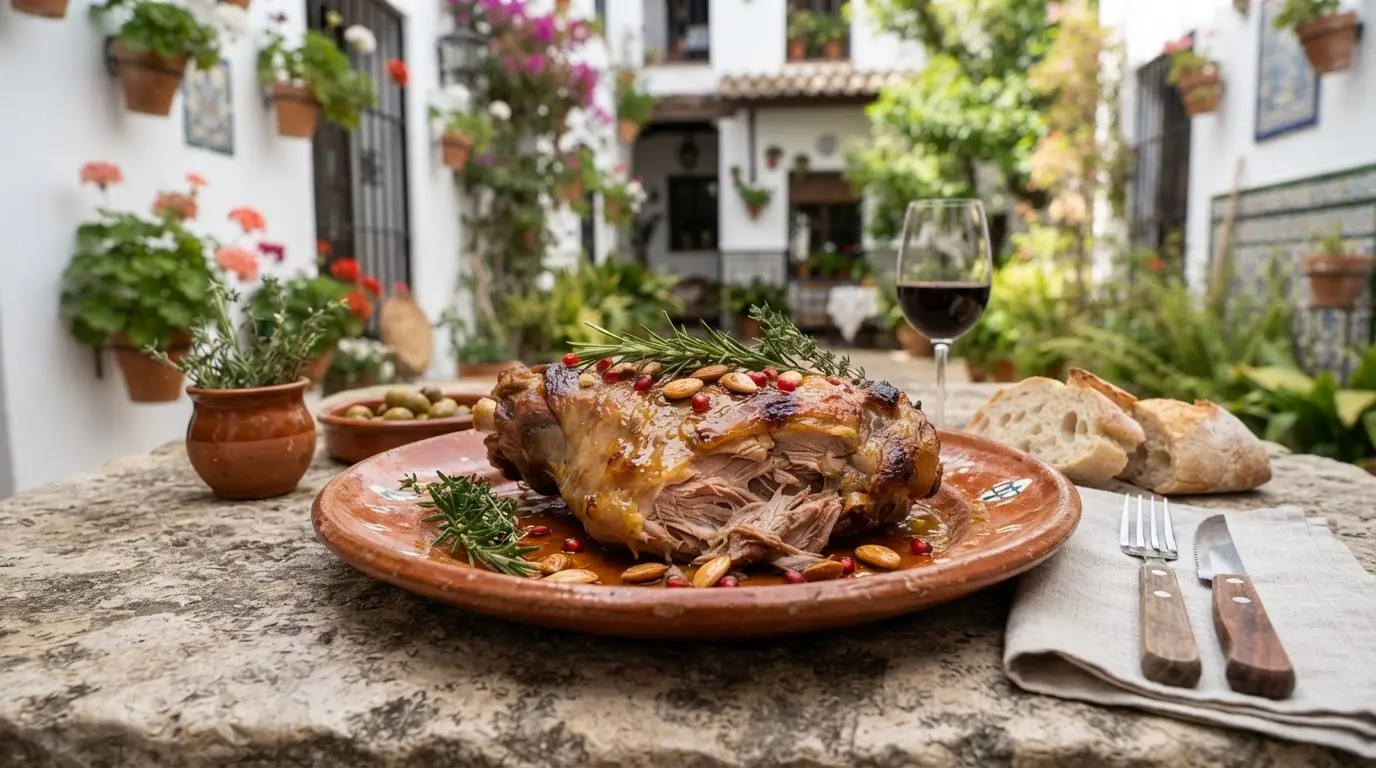
Cordero a la Miel: Córdoba's 10th-Century Lamb Recipe
Seven years covering Córdoba's gastronomy, taberna culture, and the Montilla-Moriles DO.
In this article
Jump to a section
What the dish is today, and why the history matters
929 CE
The caliphal table — lamb, honey, and the golden age
Explore nearby · Monument
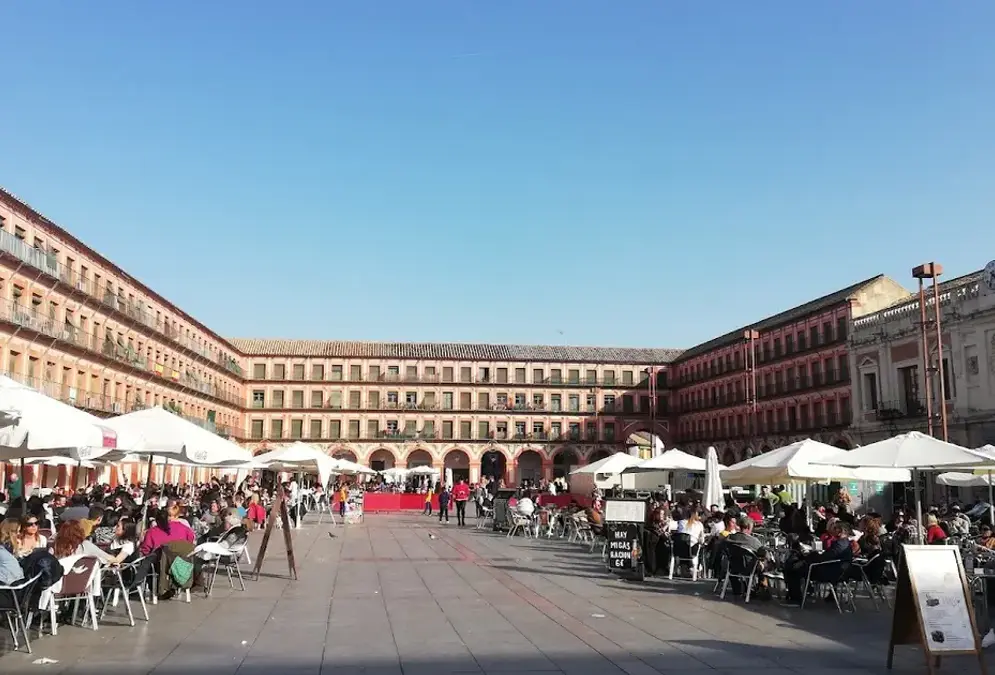
Plaza de la Corredera
Andalusia's only Castilian arcaded square, built in 1683 over a Roman forum. Once a bullfighting ring, now lined with bar terraces and a Sunday flea market.
What the manuscripts actually record
- Lamb with honey and vinegar (the agridulce core)
- Lamb with dried fruits and almonds
- Lamb with saffron (azafrán), cinnamon, and cumin
Recommended tours
Tours are selected for quality, not commission. We earn a small fee if you book — at no extra cost to you.
After 1236 — wine enters the pot
- 822 CE
Ziryab arrives in Córdoba
Ali ibn Nafi ("Ziryab"), exiled from the Abbasid court, arrives in Córdoba during the emirate and transforms court dining. His influence on sweet-savoury lamb preparations is preserved in the 13th-century Anonymous Andalusian Cookbook.
- 929 CE
Abd al-Rahman III proclaims the Caliphate
Córdoba becomes the largest city in Western Europe. The caliphal court is the apex of al-Andalus culinary culture: lamb is the favoured meat, honey a prestige sweetener, the agridulce tradition fully established. No cookbook survives from this specific period.
- c. 1260 CE
The 13th-century cookbooks are written
Ibn Razīn al-Tujībī completes the Fuḍālat al-khiwān around 1260 CE in Tunis. The Anonymous Kitāb al-ṭabīj fī l-Maghrib wa-l-Andalus is compiled in the same broad era. Both document the sweet-savoury lamb tradition that had been practised in al-Andalus for centuries.
- 1236 CE
Reconquista — Ferdinand III takes Córdoba
Christian kitchens inherit the al-Andalus flavour vocabulary. Wine, previously restricted under Islamic law, enters the lamb-and-honey recipe. No single moment is documented; the evolution is gradual and cumulative.
- 20th century onwards
Restoration and revival
El Caballo Rojo and later Noor research and serve cordero a la miel as an ancestral recipe, explicitly connecting it to the Mozarabic-influenced culinary heritage of caliphal Córdoba. The dish enters gastronomic discussion as a Three Cultures document.
The Three Cultures on the plate
Deep dive · Article
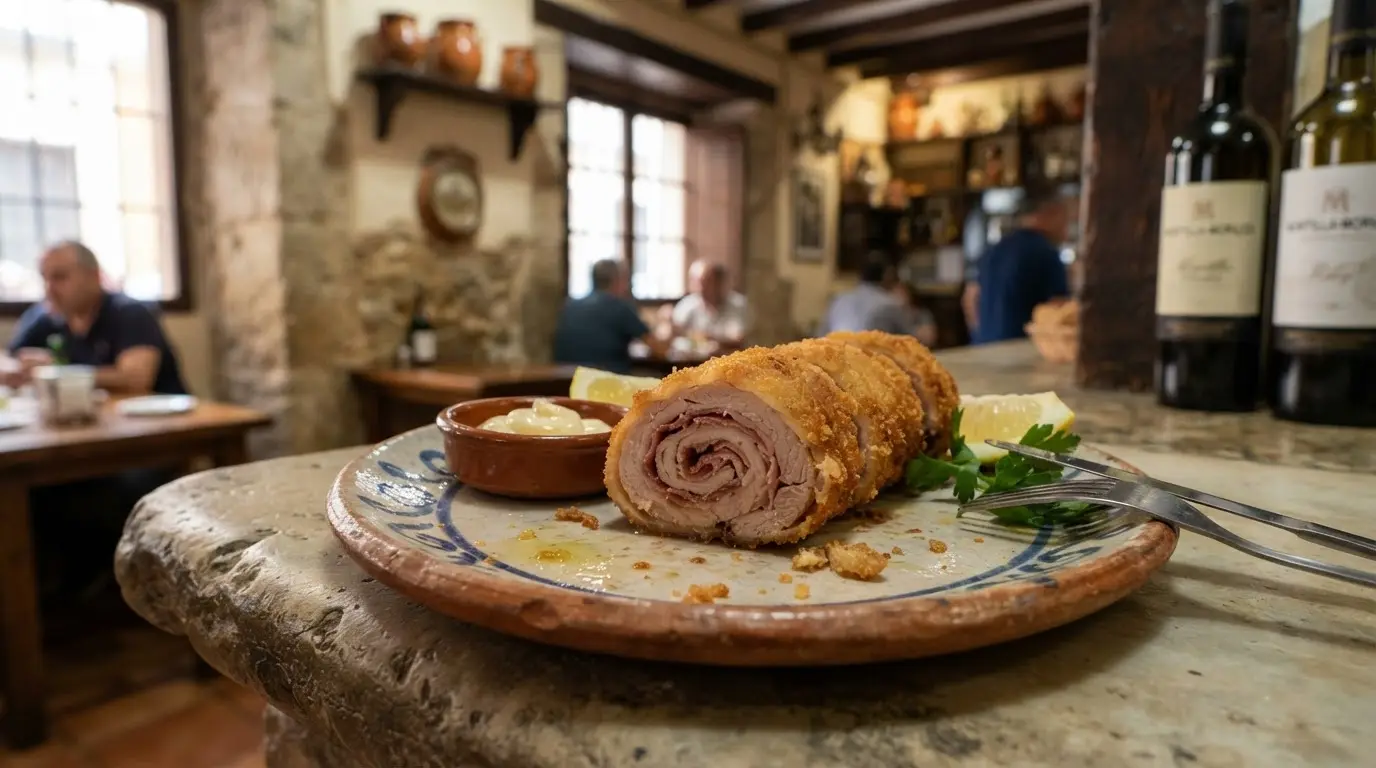
A 1908 Córdoba Ad Offered Flamenquín. Is It the Dish We Eat Now?
The word flamenquín appears in a Córdoba newspaper in 1908; the only dated recipe story is Andújar 1939. What the record proves, and why both towns claim it.
Where the history lives today
Frequently asked questions
Is there a surviving 10th-century recipe for cordero a la miel?
Is cordero a la miel a Moorish dish or a Spanish dish?
What does agridulce mean in the context of Andalusian cooking?
What spices belong in a traditional cordero a la miel?
What is the difference between Mozarabic cuisine and Islamic Andalusian cuisine?
Where can you eat cordero a la miel in Córdoba?
What is the palimpsest thesis about Córdoban cuisine?
Why did Córdoba's Three Cultures heritage produce such distinctive food?
Sources
9 references Show Hide
- Wikipedia — Caliphate of Córdoba (opens in a new tab)
“most likely surpassed 100,000”