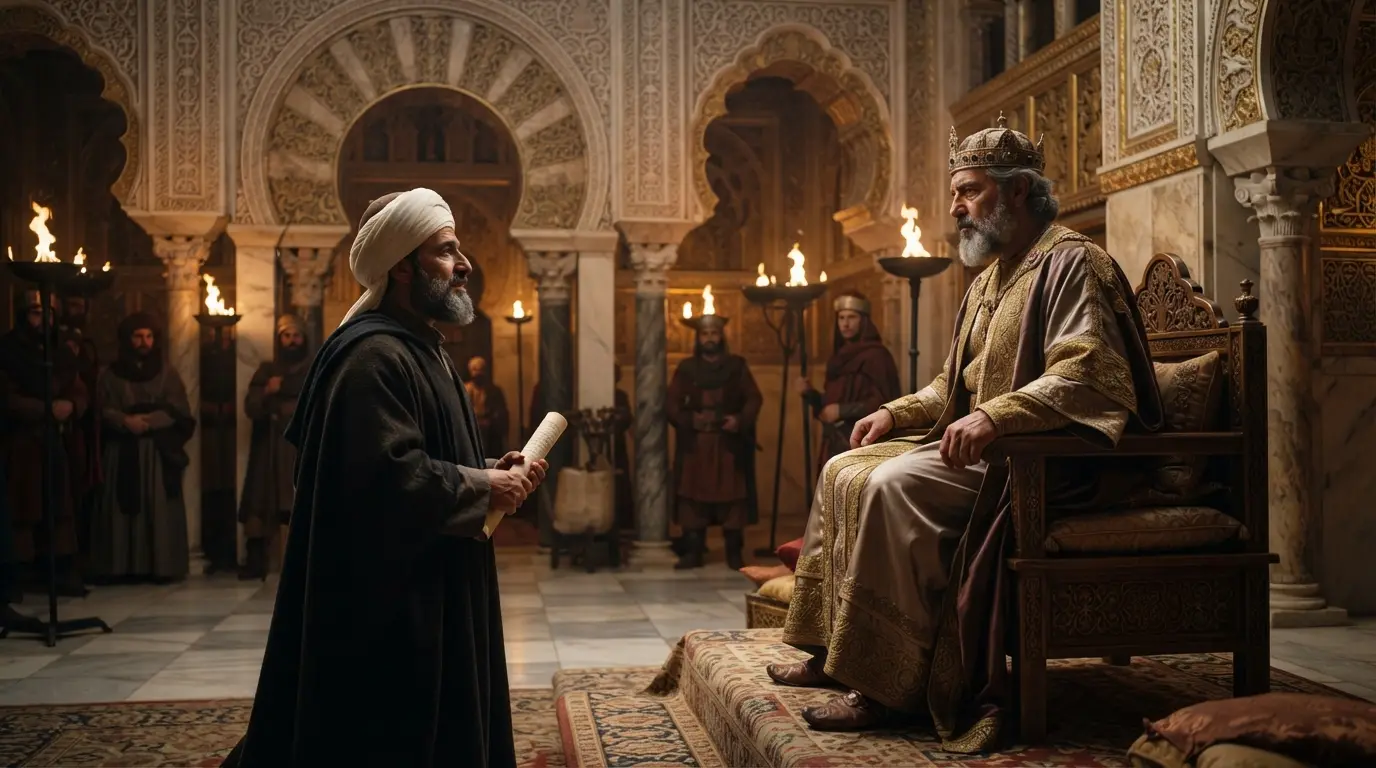
Mundhir al-Ballūṭī: The Judge Who Scolded a Caliph
Mundhir al-Ballūṭī became Córdoba's chief judge in 949 after one oration, then spent decades enforcing Maliki law and once stopped a caliph gilding a ceiling.
Read the full story
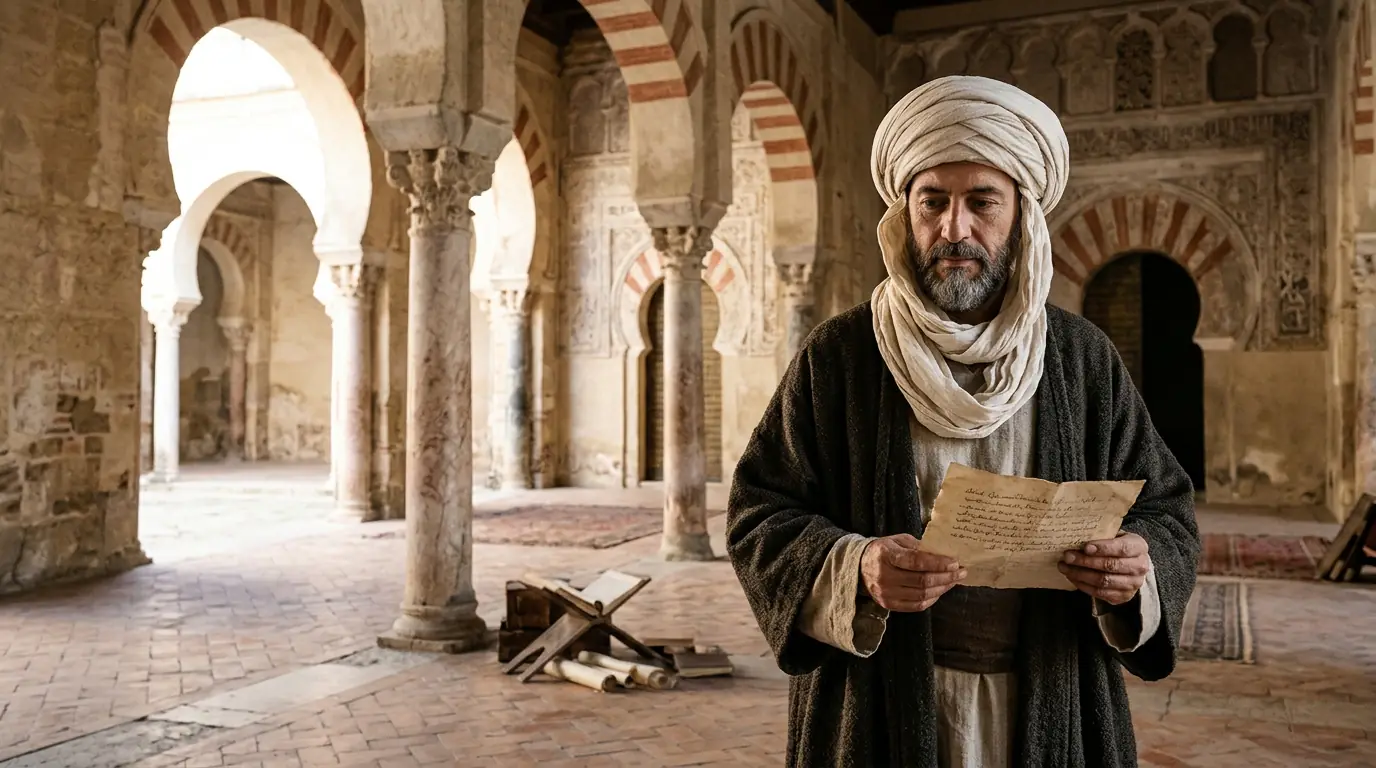
Mundhir al-Balluti (Mundhir ibn Said al-Ballūṭī) was a scholar, poet and the chief judge of caliphal Córdoba. His dates are uncertain: historians give his birth as 886 or 887, and he died in Córdoba in 966, though an older reference says 965.
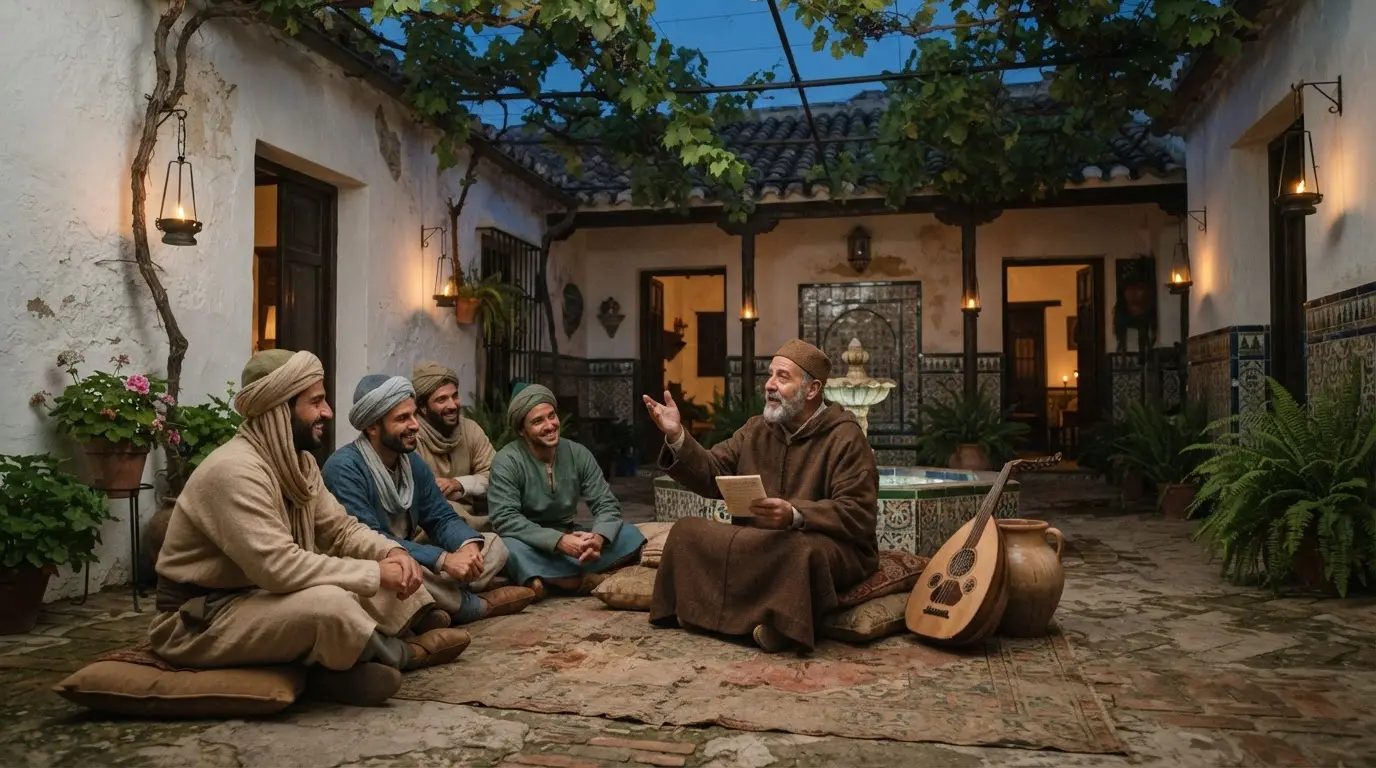
He defended the Zahiri school of jurisprudence yet administered justice under the Maliki law that governed the country. No authenticated likeness was identified in the sources consulted, so any image of him is an interpretation.
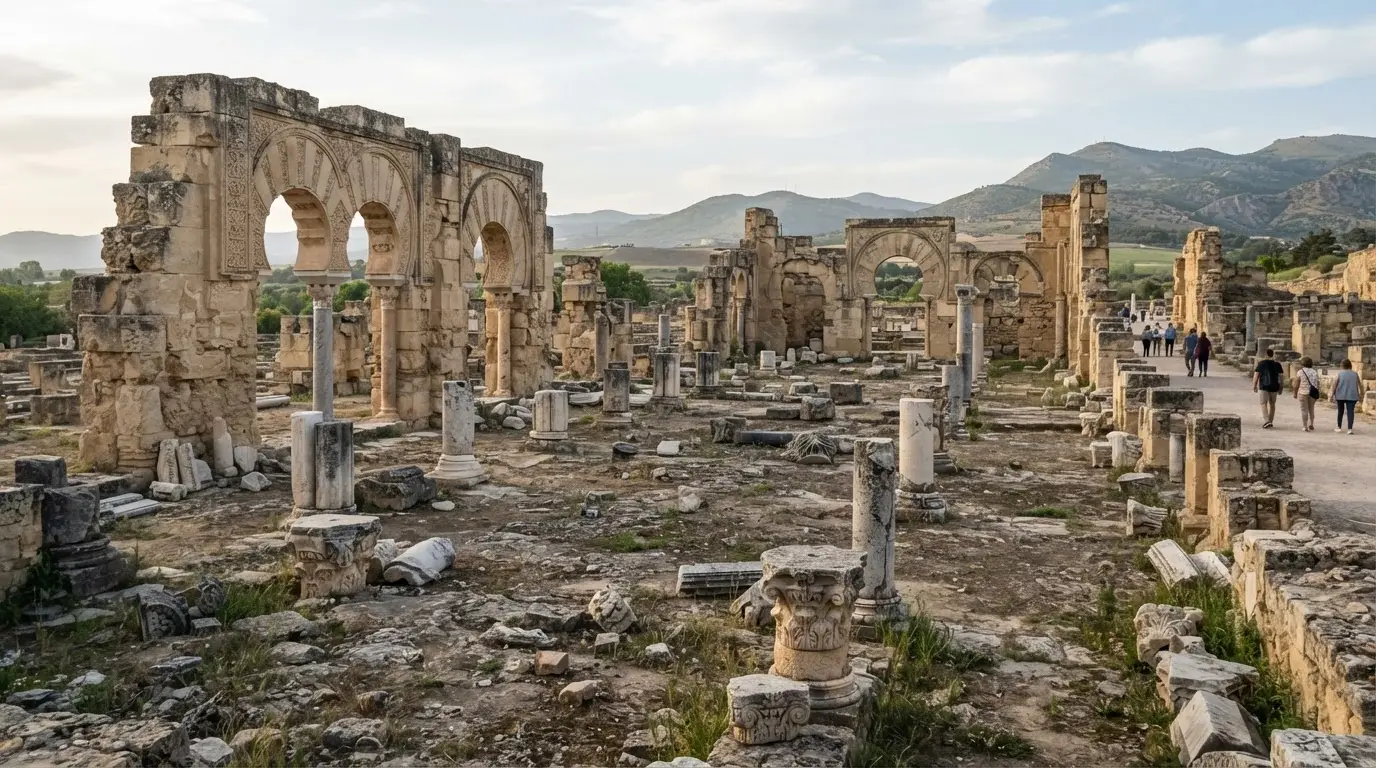
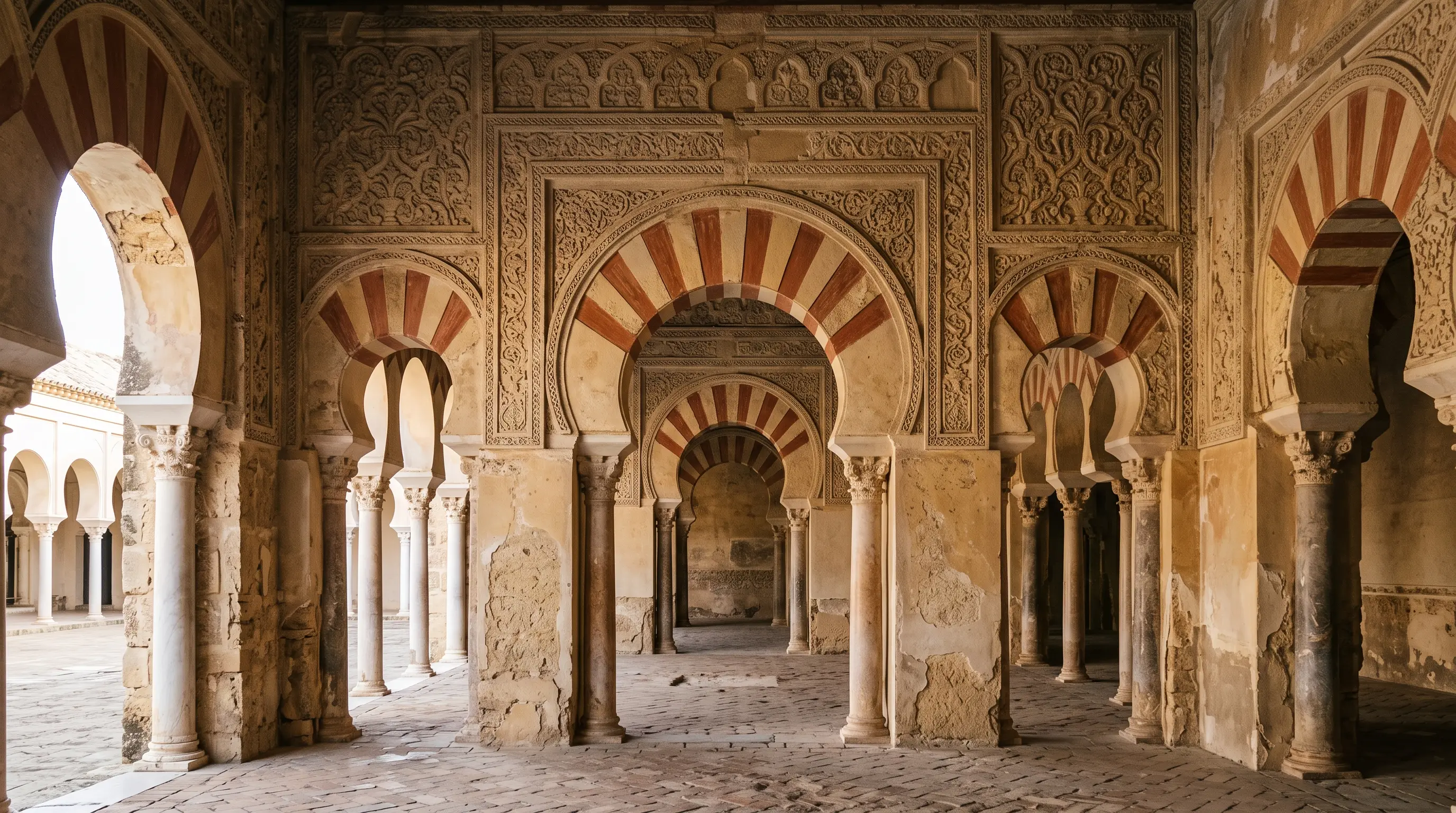
The place to visit is Medina Azahara, the tenth-century caliphal palace city, now an archaeological site, and the setting of the episode told in the full story. No personal relic of his was identified in the sources consulted. For the setting, see Medina Azahara, the lost palace city and Abd al-Rahman III and the caliphate. Read the full story.
929–1031
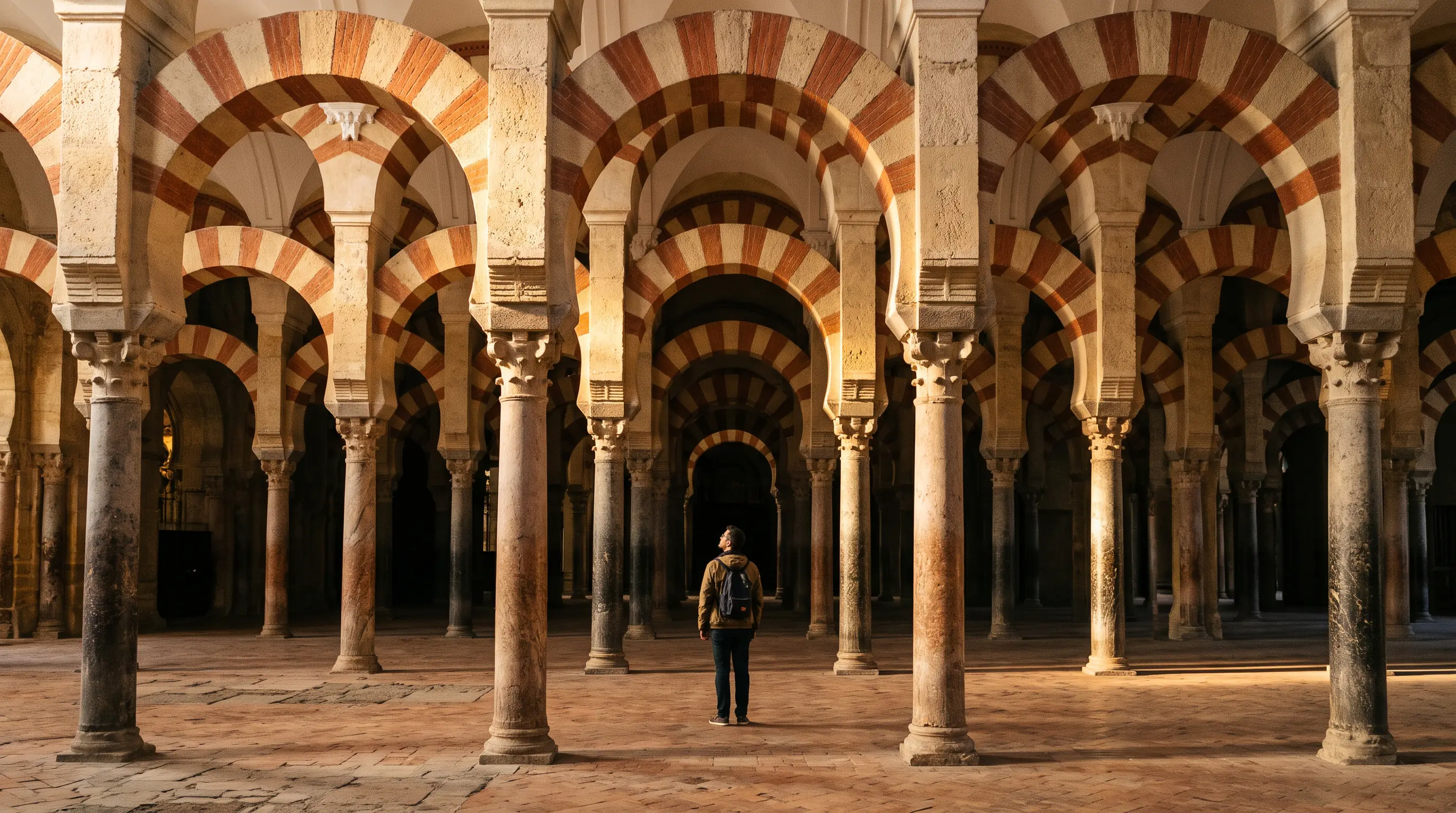
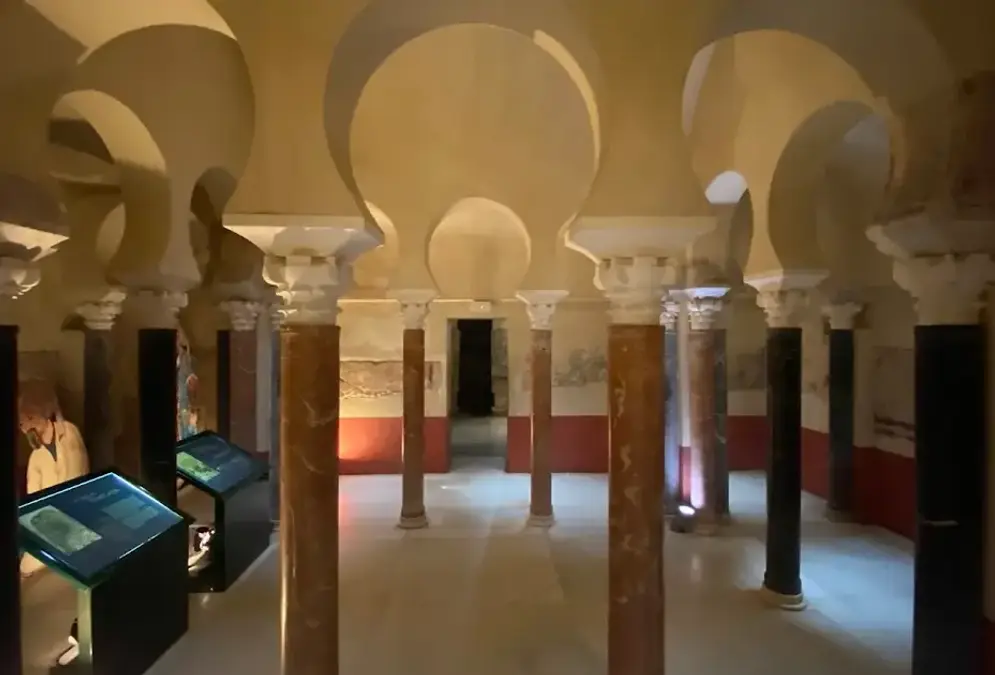
Abd al-Rahman III proclaimed the caliphate in 929, and Córdoba grew to an estimated 500,000 people. Medina Azahara was begun in 936, and the Mezquita was enlarged in 961 and 987. Under Al-Hakam II the city also built the Caliphal Baths, around 961 to 976, whose star-shaped skylights survive.
936 Monument
Medina Azahara is Córdoba's UNESCO listed Caliphate City: a 10th century palace 8 km from town, with the Salón Rico and award-winning museum. Plan your visit.
951–958 Monument
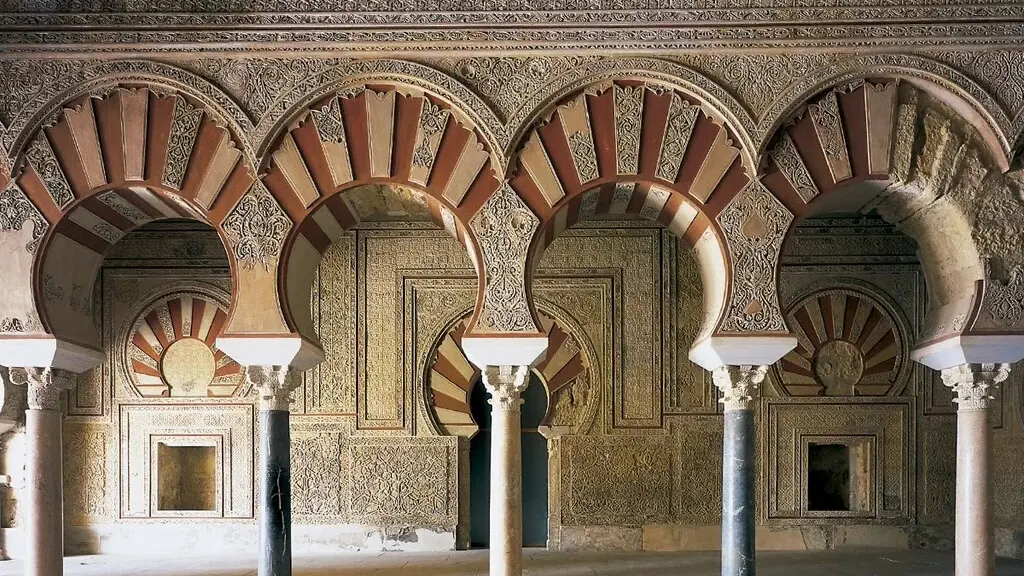
Climb 150 steps up the Mezquita-Catedral's 10th-century minaret-turned-bell-tower for 360-degree views over Córdoba's rooftops, Roman Bridge and Alcázar.
961–976 Monument
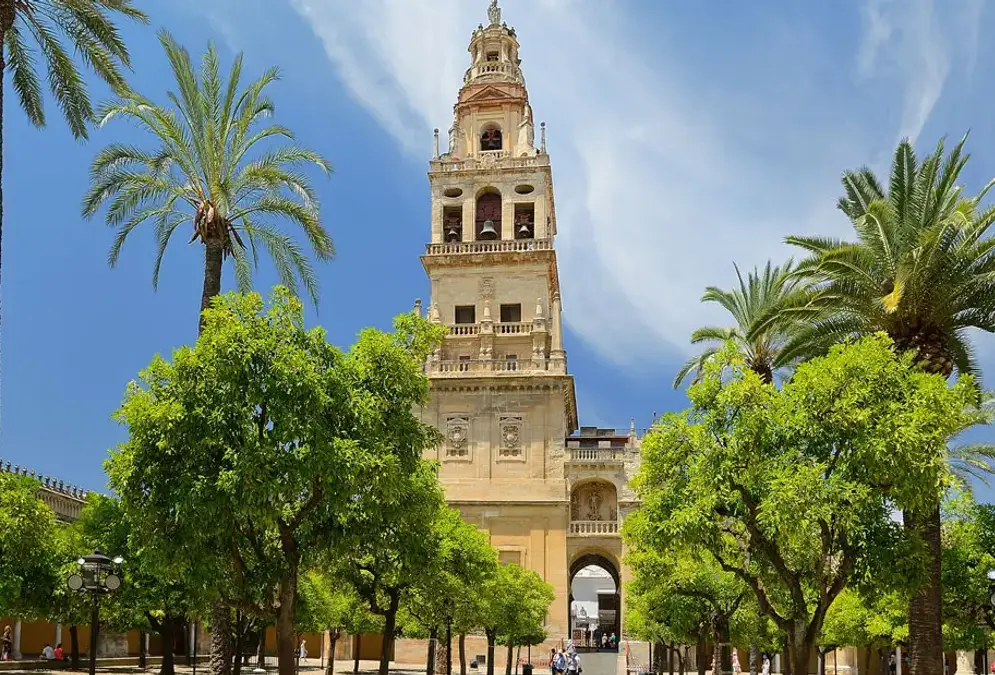
Underground 10th-century Islamic hammam beneath Córdoba's Campo Santo square, with star skylights, marble pillars and intact cold, warm and hot rooms.
976–1256 Monument
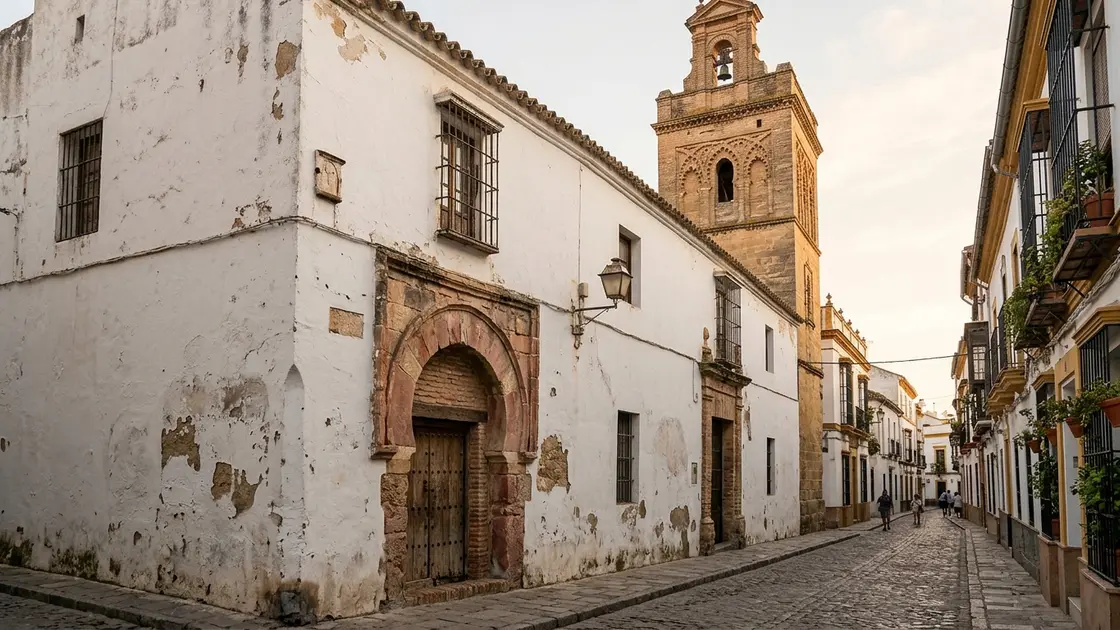
Convento de Santa Clara in Córdoba: a defunct Poor Clares convent built on a 976 mosque, with minaret and horseshoe arch. Under restoration, hours unpublished.
c. 890–961 Historical figure
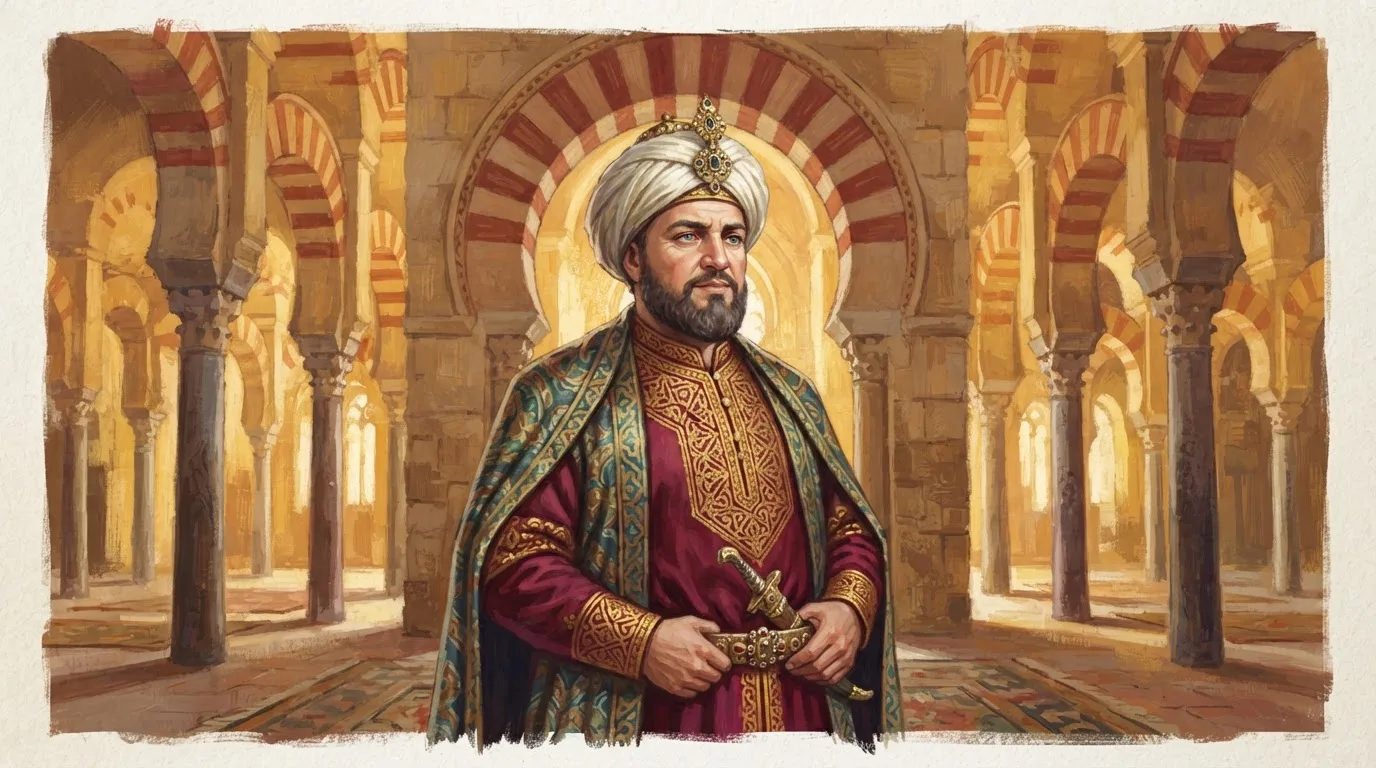
Abd al-Rahman III (890-961), caliph of Córdoba, had Medina Azahara built and enlarged the Great Mosque. See where his trace survives and read his full story.
915–976 Historical figure
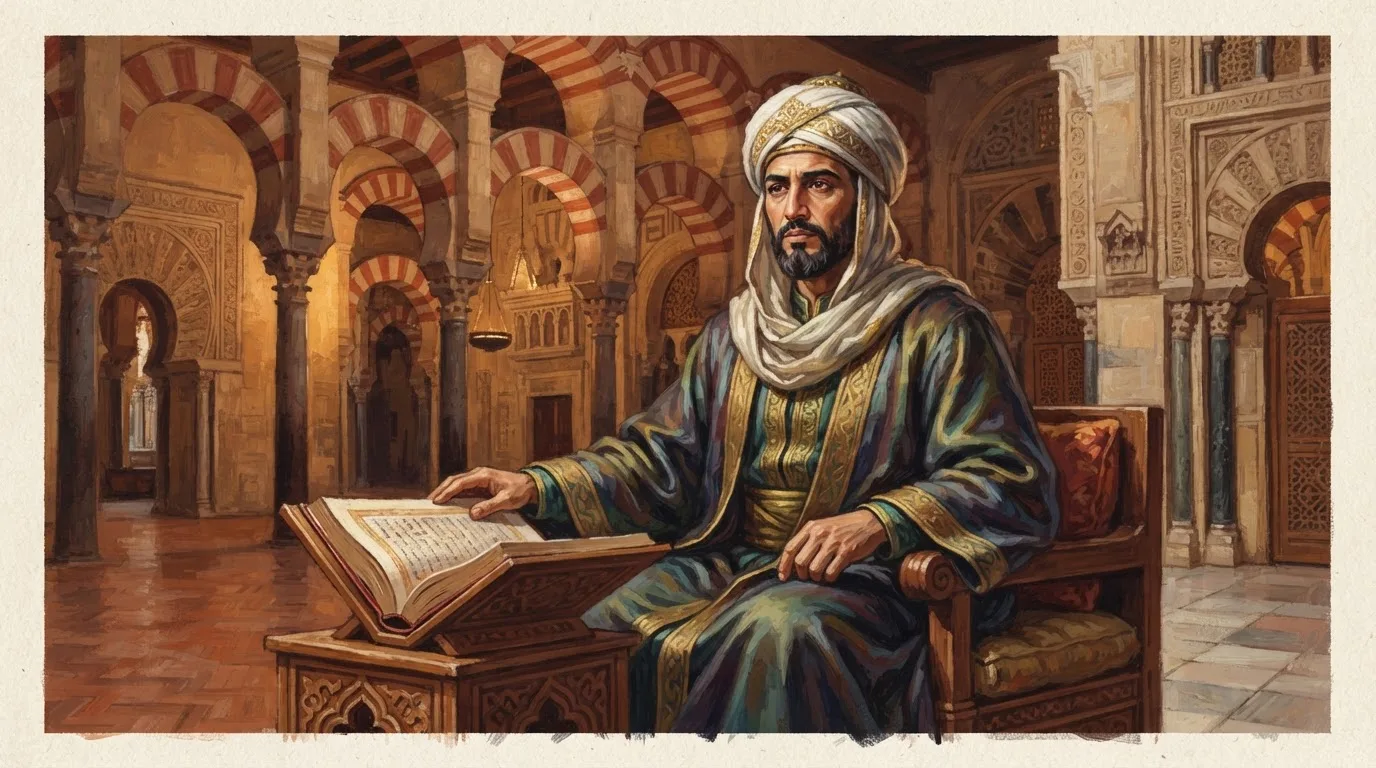
Al-Hakam II (915-976), caliph of Córdoba from 961, expanded the Great Mosque and its mihrab. See where his trace survives in the city and read his full story.
c. 915–970 Historical figure
Hasdai ibn Shaprut (c. 915-970) was physician and diplomat to Córdoba's caliphs. Visit the Judería and the Jewish sites that hold the city's later story.
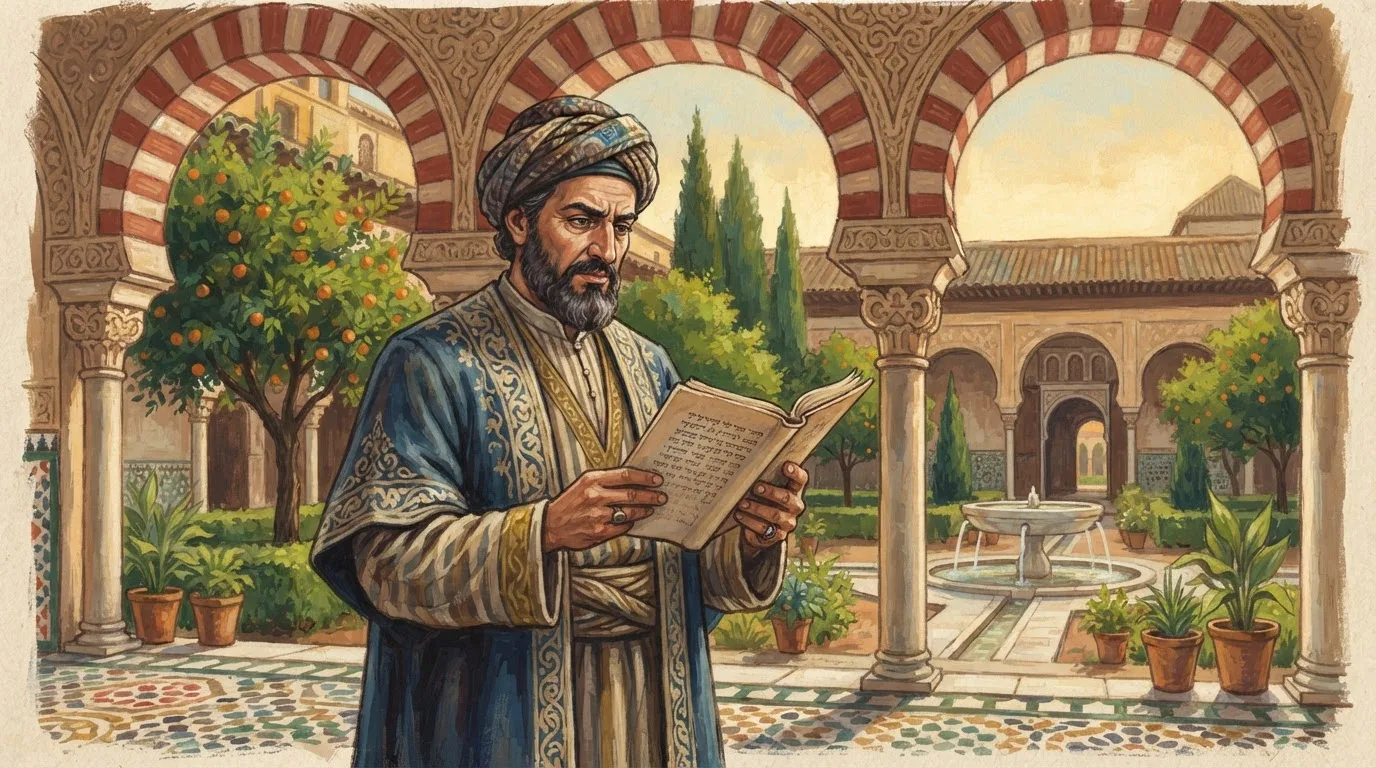
c. 936–1013 Historical figure
Al-Zahrawi (Abulcasis, c. 936–1013), Córdoba surgeon and author of the Kitab al-Tasrif. Find his trace at the Medina Azahara ruins and read the full story.
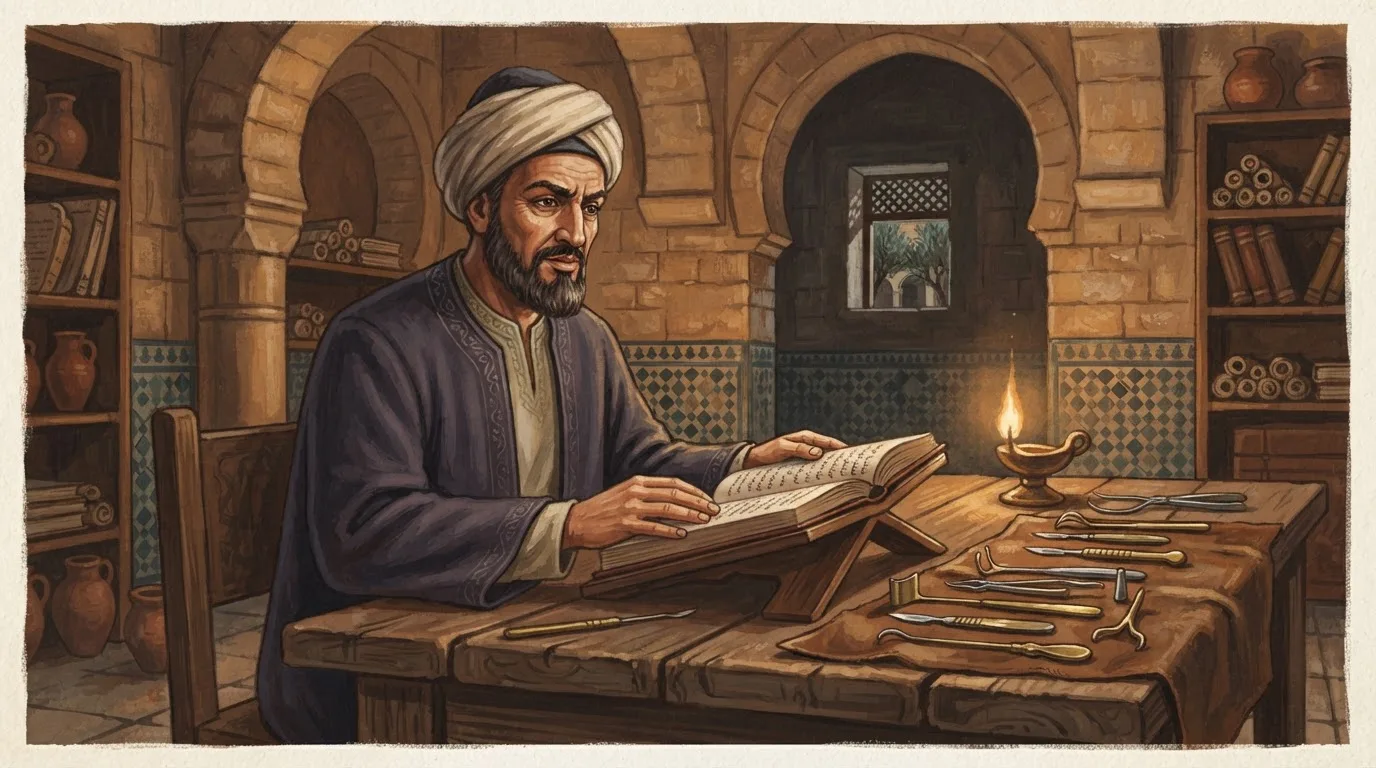
c. 938–1002 Historical figure
Almanzor (c. 938-1002) ruled Córdoba as chamberlain under a puppet caliph. See what remains of his eastern extension of the Mezquita and read his story.
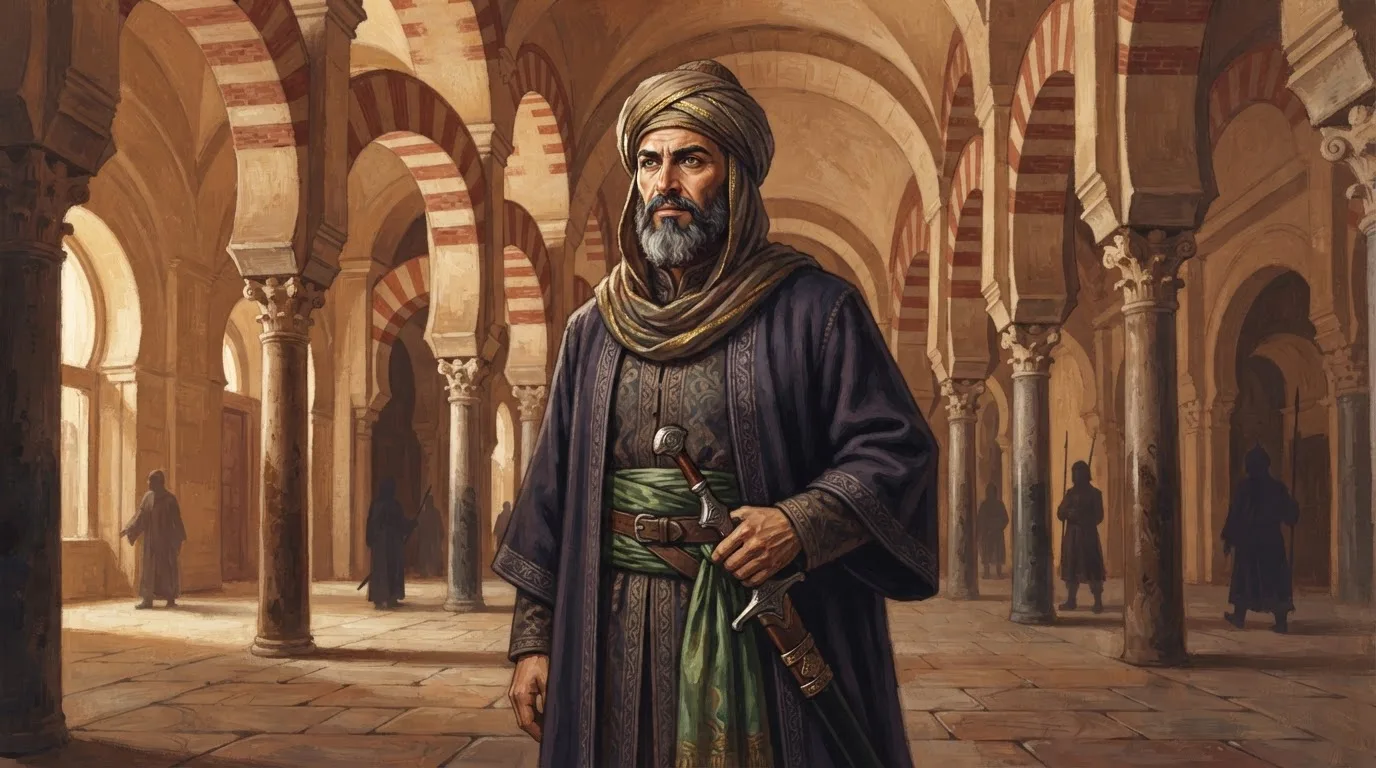
Undated
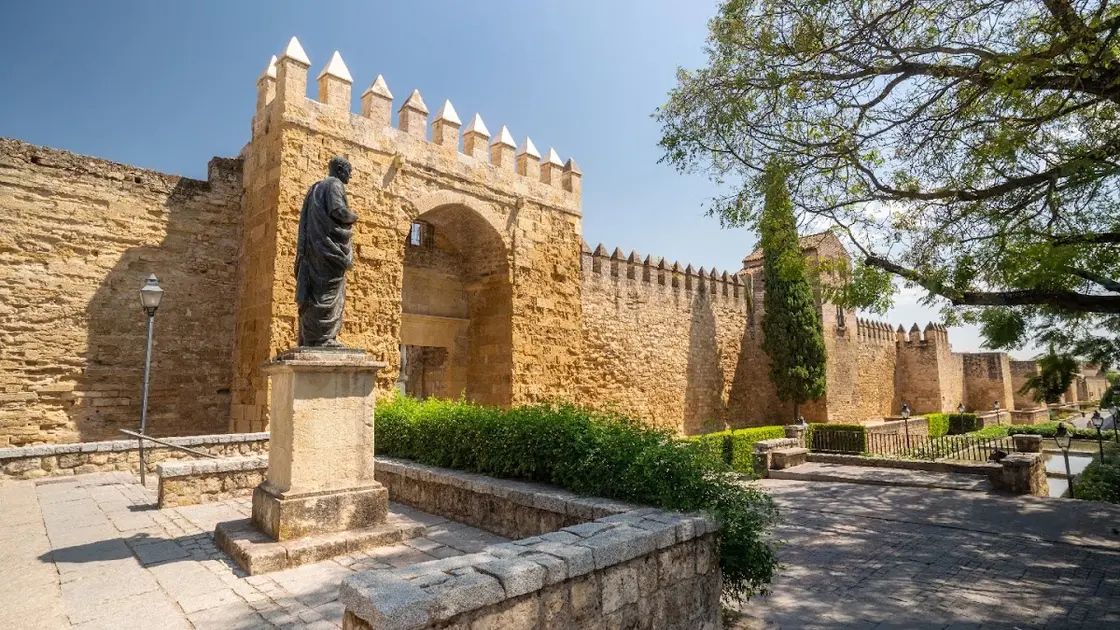
Monument
Puerta de Almodóvar in Córdoba: one of three surviving medieval gates, with 10th-century origins, full crenellation and Seneca's statue nearby. Visitor guide.
Go deeper