Craft History
Caliphal Crafts of Córdoba
In the 10th century, the Umayyad caliphate turned Córdoba into western Europe's luxury workshop — a city of gilded leather, state silk, carved ivory and filigreed silver whose products still carry its name.

Written by
Sophie Marchand Art history background with eight years writing interpretive content on Córdoba's Caliphal heritage.
Published
When Abd al-Rahman III proclaimed the caliphate of Córdoba in 929, he ruled the largest city in western Europe — and its most demanding customer. A court of that scale needed wall hangings, robes of honour, carved gifts and ceremonial silver, and it had the wealth to commission the best versions of everything. Out of that demand grew craft industries so distinctive that their products took the city's name abroad: cordwain entered English around 1100 for the leather of Moorish Córdoba, and French speakers still called embossed gilt leather cuir de Cordoue.
This guide follows six of those traditions from their caliphal heyday to the present: guadamecí embossed leather, silver filigree, the state-run tiraz silk workshops, caliphal ivory carving crowned by the Pyxis of al-Mughira, and the arrival of rag papermaking, which fed the greatest library of its age.
Each section below links to a full-length article in our Caliphal Crafts series, where every craft gets its own deep dive.
At a glance
- Golden age
- 10th-century Umayyad Caliphate of Córdoba (929–1031)
- Signature craft
- Guadamecí — embossed, gilded leather
- Royal workshops
- Madinat al-Zahra, the palatine city
- Masterpiece
- Pyxis of al-Mughira, carved 968, now in the Louvre
- Word legacy
- "Cordwainer", the English word for a shoemaker
- Today
- Historic quarter, "Area of Craft Interest" since 2014
In this guide
Jump to a section
The caliphal court workshops
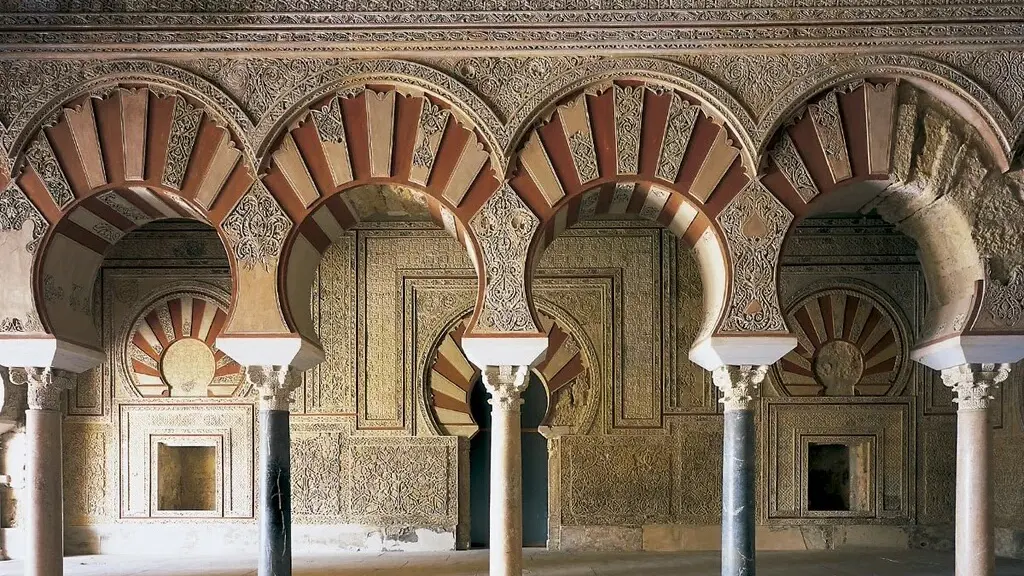
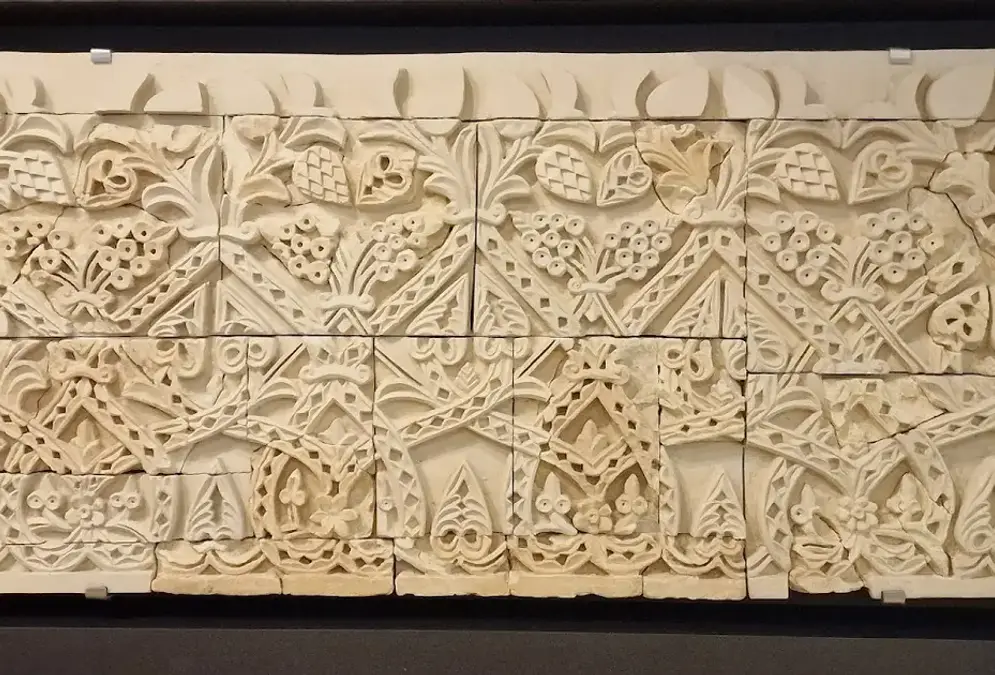
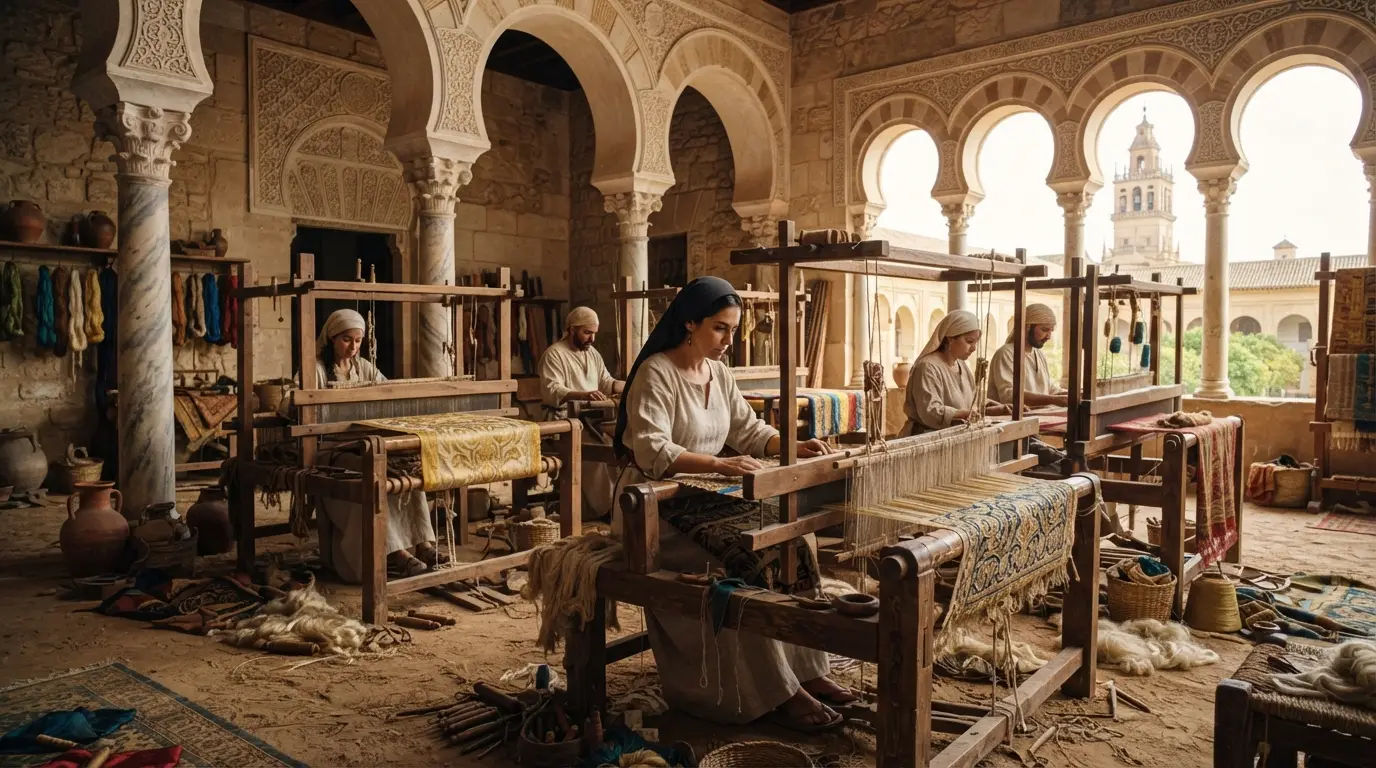
Córdoba earned its rank as a craft capital because the caliphal state organised production itself. The palace-city of Madinat al-Zahra, built by Abd al-Rahman III from 936 onward, housed royal workshops where ivory carvers, weavers and metalworkers produced objects for the court, for diplomacy and for gift-giving. Textile manufacture went further: the dar al-tiraz, state-owned workshops named after the inscribed fabrics they wove, answered directly to the palace.
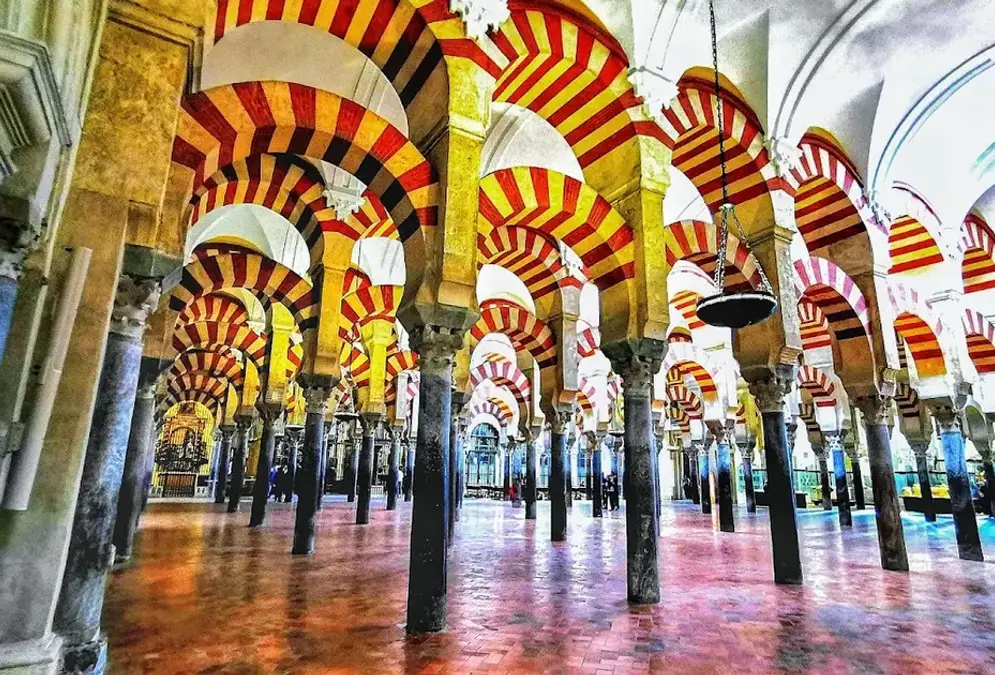
Private industry grew up alongside it. By the 10th century the city supported tanners, dyers, goldsmiths and booksellers in specialised districts, many clustered near the Mezquita and along the Guadalquivir, whose waters served the tanneries. When the caliphate collapsed in the early 11th century, its artisans scattered — and carried Cordoban technique with them across al-Andalus and the Maghreb.
Guadamecí: the leather that taught English a word
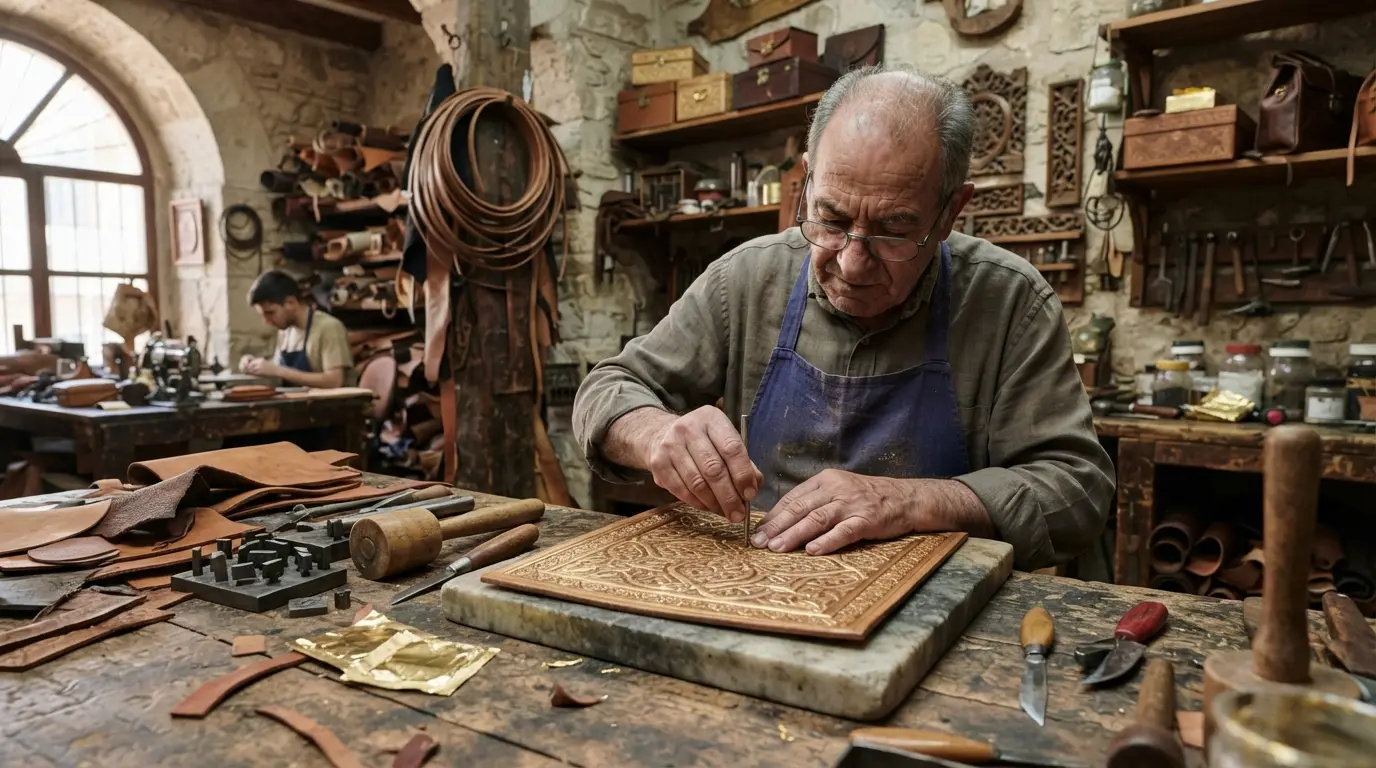
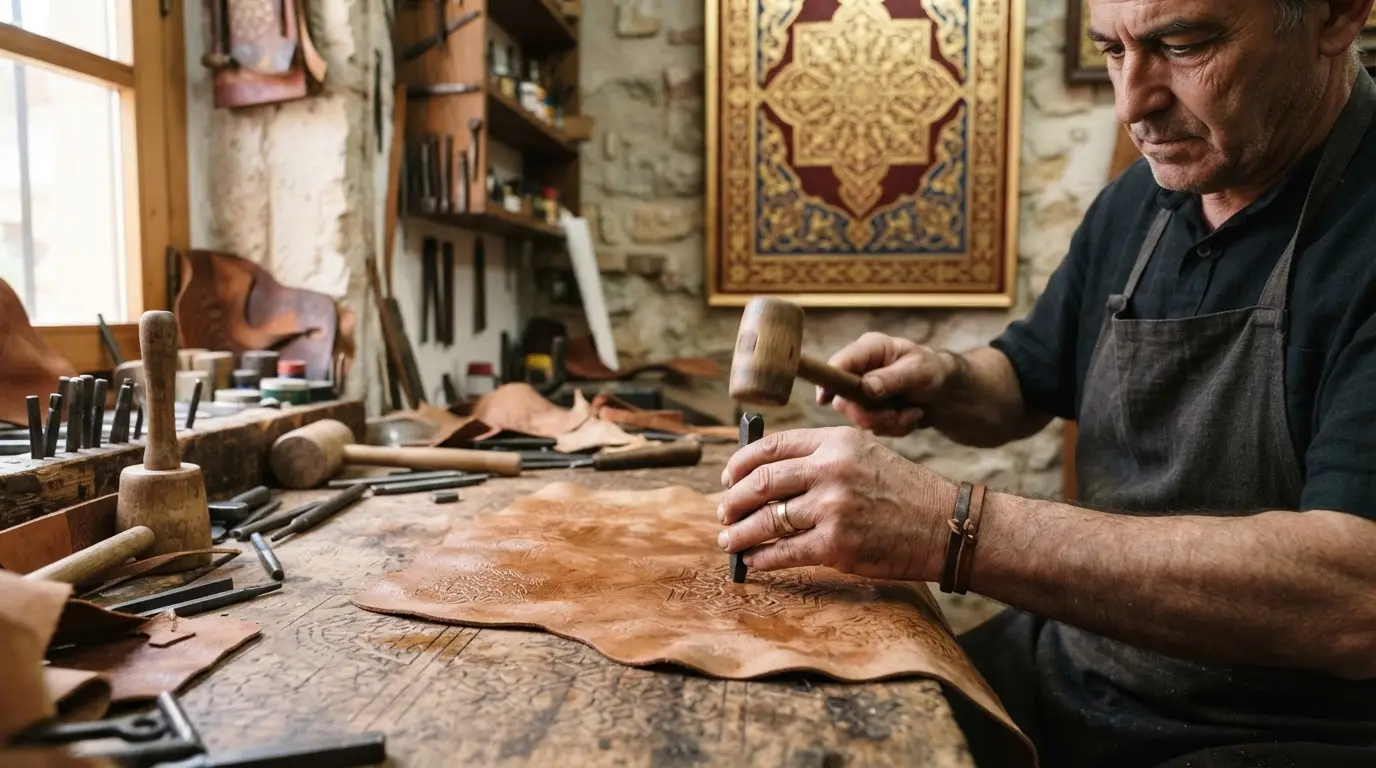
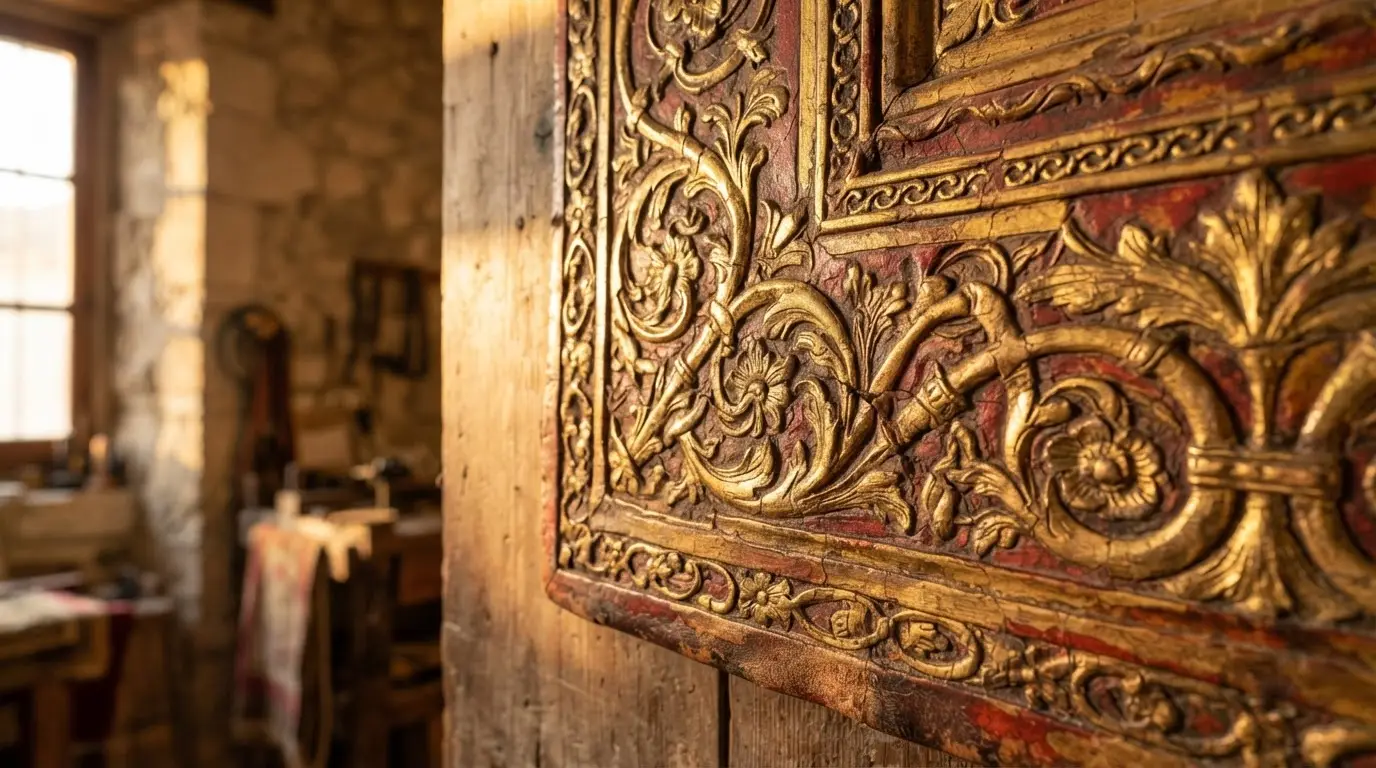
Guadamecí is embossed, painted and gilded leather, and it reached Spain from North Africa as early as the ninth century. The technique shaped panels of wet leather over carved wooden moulds, then painted them, oil-gilded and lacquered them into relief scenes bright enough to hang where wealthy households elsewhere would have needed tapestry. The name comes from Ghadames in Libya; in Spain, guadamecí came to mean these embossed hangings, while cordobanes — the origin of English "cordovan" — signified soft goat leather.
The trade left its mark on the English language. Cordwainer, the historic term for a shoemaker, derives from cordwain — the leather historically produced in Moorish Córdoba — and appears in English records from about 1100. In 1395 the Mayor of London drew a legal line that still echoes in the trade: cobblers were forbidden to work new leather, cordwainers forbidden to meddle with old shoes. The technique itself proved durable too — a gilt-leather guild existed in Barcelona by 1316 — and Córdoba's official tourism board notes that a few family workshops still produce the famous Cordobanes and Guadamecies today.
Read the full stories: guadamecí, the gilded leather of Córdoba and cordobán leather and the cordwainer tradition.
Tiraz: silk worn as a political statement
Tiraz were medieval Islamic textiles carrying Arabic calligraphy — usually a band sewn onto the arm of a robe, naming the ruling caliph alongside pious formulas, and often embroidered with threads of precious metal. The word covers three things at once: the textiles themselves, the inscribed band, and the dar al-tiraz, the state factories that alone were allowed to weave them. The founding of Córdoba's first tiraz workshop is traditionally credited to the emir Abd al-Rahman II in the 9th century.
Wearing the caliph's name on your sleeve was closer to displaying minted coinage than to fashion: scholars compare the inscription directly to the sikka, the ruler's name on coins, as a public declaration of loyalty. Bands were bestowed on high officials in the formal khil'a robe-of-honour ceremony. A rare survival shows the system working: a tiraz woven for Caliph Abd al-Rahman III in Córdoba in 941–42, recovered from a cathedral reliquary in Sigüenza, is held today by the Cleveland Museum of Art.
Read the full story: how Córdoba became a medieval silk superpower.
Silver filigree: threads from al-Andalus
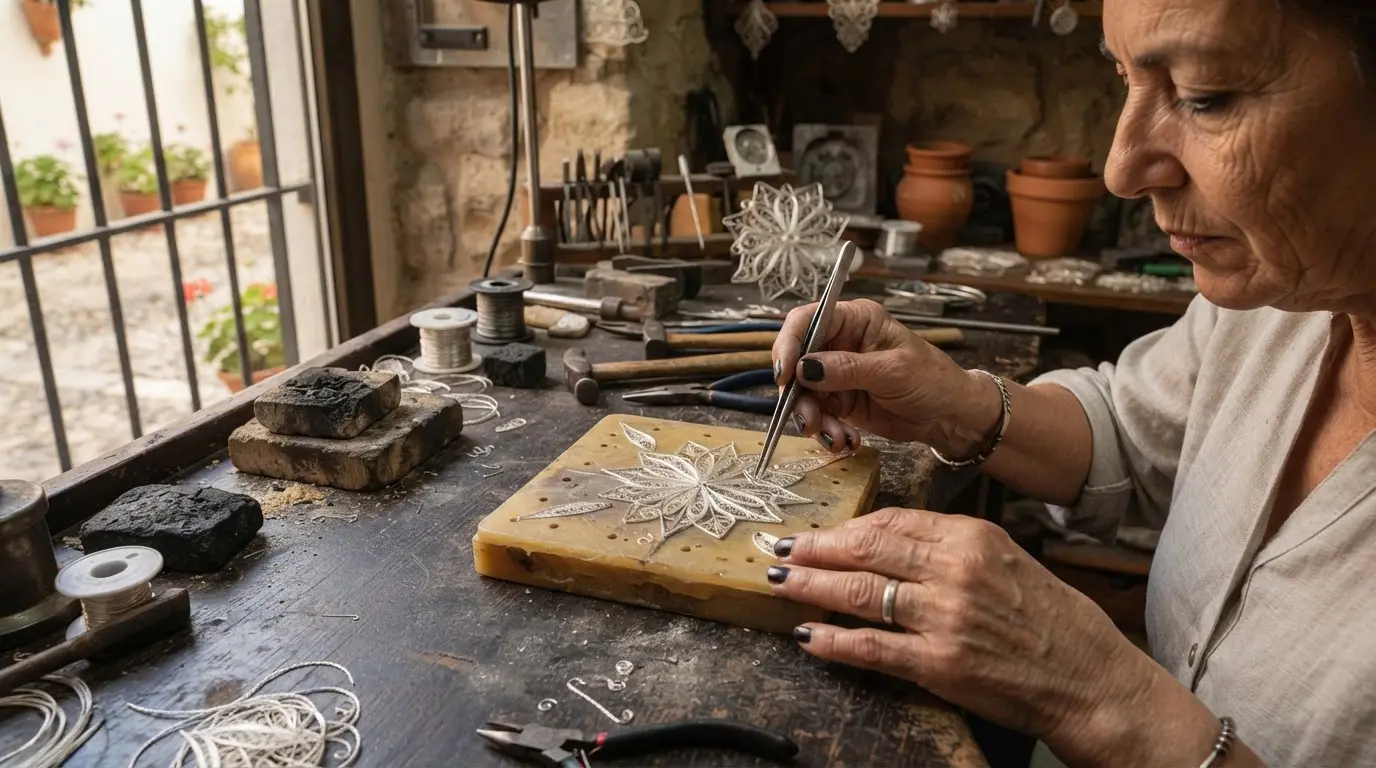
Filigrana cordobesa is made by twisting hair-fine threads of silver or gold and soldering them onto a metal structure until they form lace-like flowers, arabesques and geometric figures. Córdoba's official tourism board ranks gold and silverwork among the main driving forces of the city's economy and names Cordoban filigree as one of its best-known techniques. The origins of the tradition reach back to the era of al-Andalus, when Arab, Jewish and Christian artisans worked side by side and their influences merged into the designs seen today.
What distinguishes Córdoba now is continuity: filigree here is still crafted entirely by hand, piece by piece, a chain of hands running unbroken from the medieval workshops to the silversmiths working in the historic quarter today.
Read the full story: the art of Córdoba silver filigree.
The Pyxis of al-Mughira: ivory at its most refined
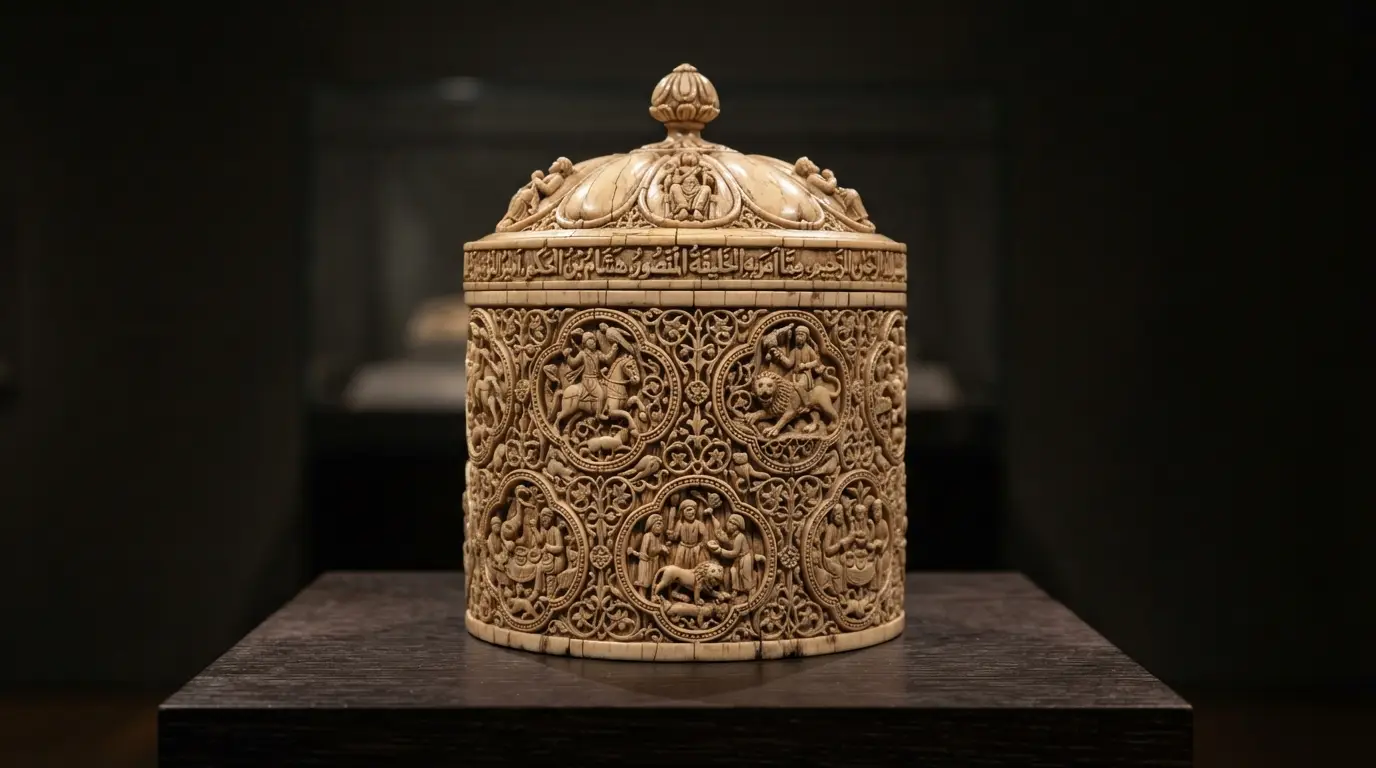
The Pyxis of al-Mughira is the supreme survivor of caliphal ivory carving: a cylindrical box, 18 cm tall, carved from elephant ivory with walls just 0.4 cm thick, and dated by its own Kufic inscription to 968 CE — year 357 of the Hegira. The inscription blesses al-Mughira, "son of the Commander of the Faithful", and the container was made in one of the Madinat al-Zahra workshops near Córdoba, probably as a coming-of-age present for the son of Caliph Abd al-Rahman III. Its actual use remains unknown; no trace of any substance survives on the interior.
Around its body run four eight-lobed medallions of courtly and hunting scenes, read by scholars as statements of Umayyad power. Carving of this precision demanded imported raw material, master cutters and unlimited court patience — conditions only the caliphal workshops could offer. Since 1898 the pyxis has belonged to the Louvre.
Read the full story: the ivory box that reveals a Córdoba succession plot.
“A city of gilded leather, state silk, carved ivory and filigreed silver, whose products still carry its name abroad.”
Paper, printing presses of the mind, and the workshops of today
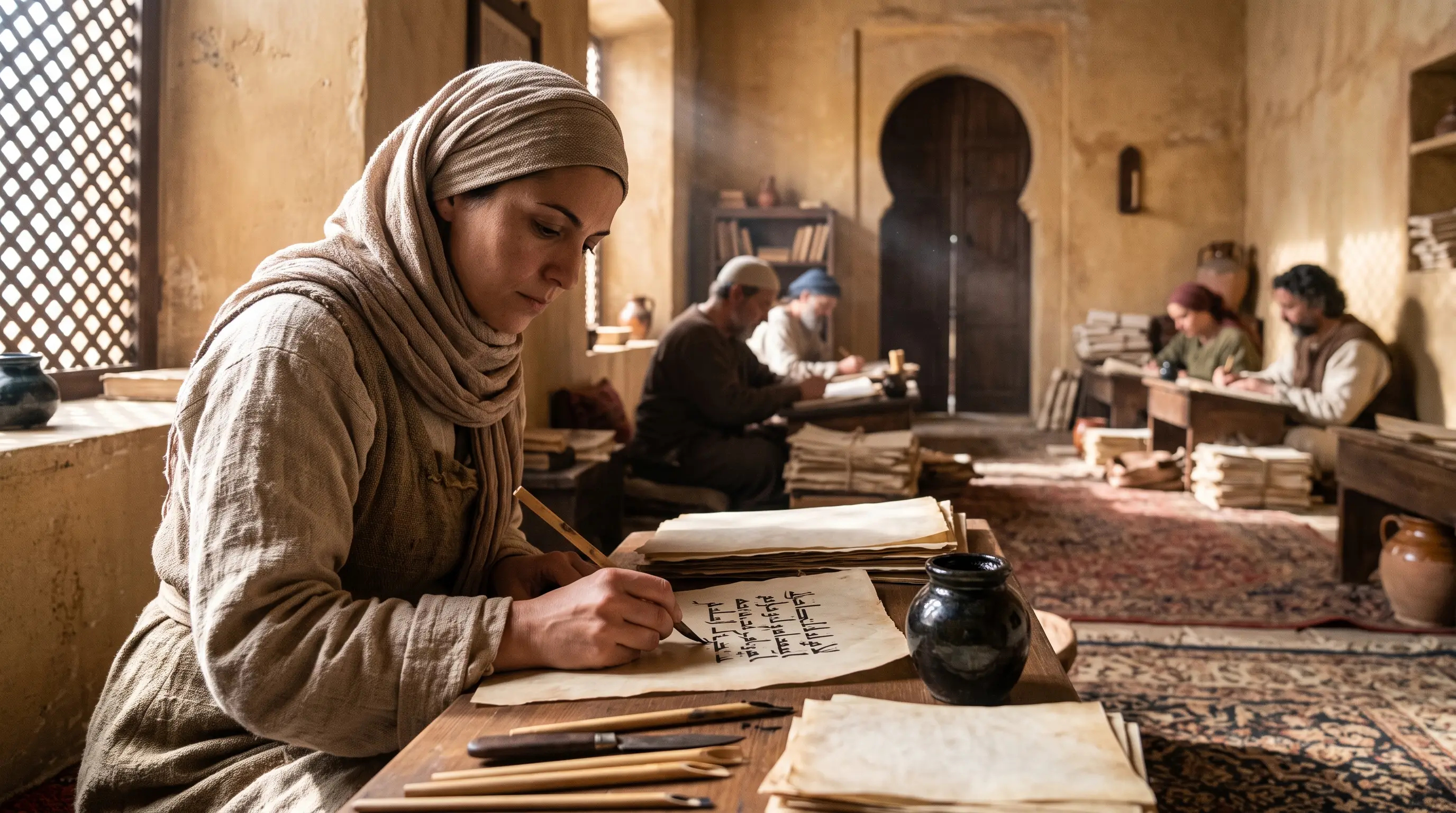
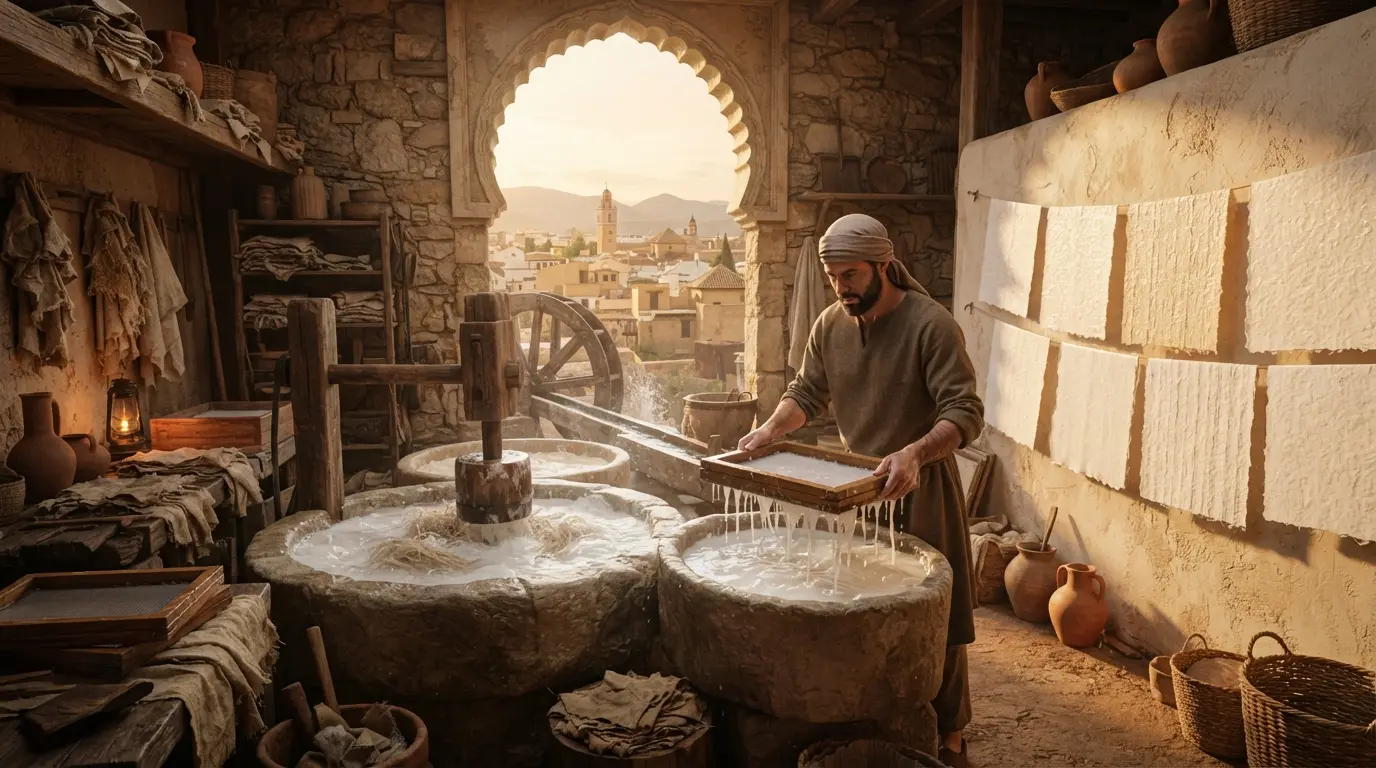
The quietest revolution in Cordoban craft was made of rags. Paper technology travelled from China through Samarkand to Abbasid Baghdad — where scholars identify mills by 794–795 — and then via North Africa into al-Andalus, where rag paper spread by the mid-10th century. The raw materials were humble: bast fibres of hemp and flax, cotton, and old rags and ropes beaten into pulp. What they fed was spectacular — the library of Caliph al-Hakam II, whose catalogue was itself compiled on paper notebooks of twenty sheets each. The Cordoban writer Ibn Abd Rabbihi (860–940) already described paper and its use in the peninsula; the first formally documented mill followed at Xàtiva in 1056.
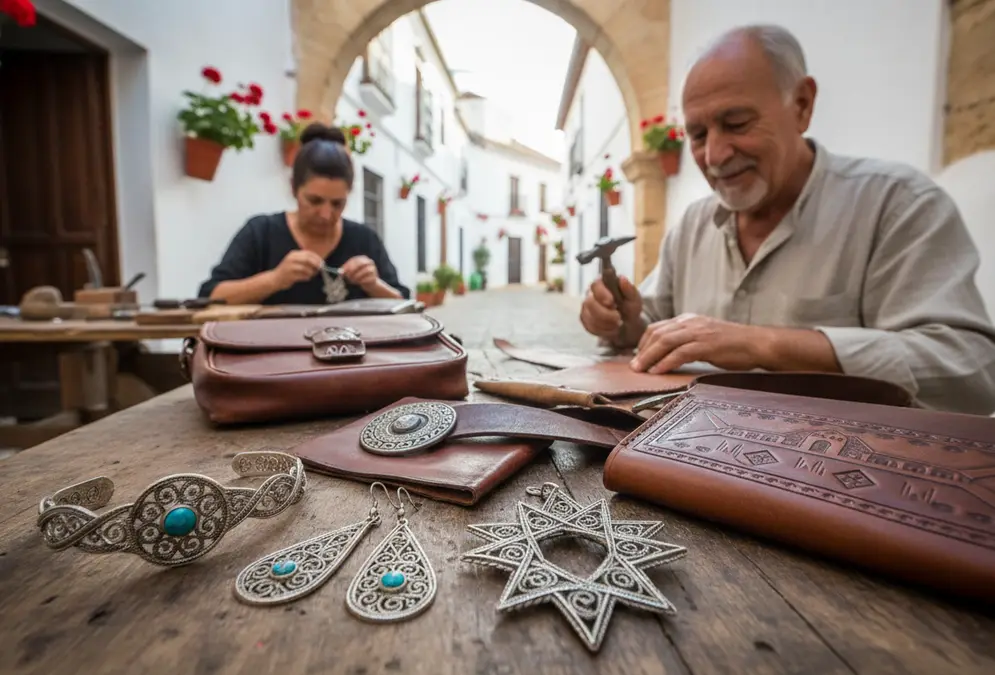
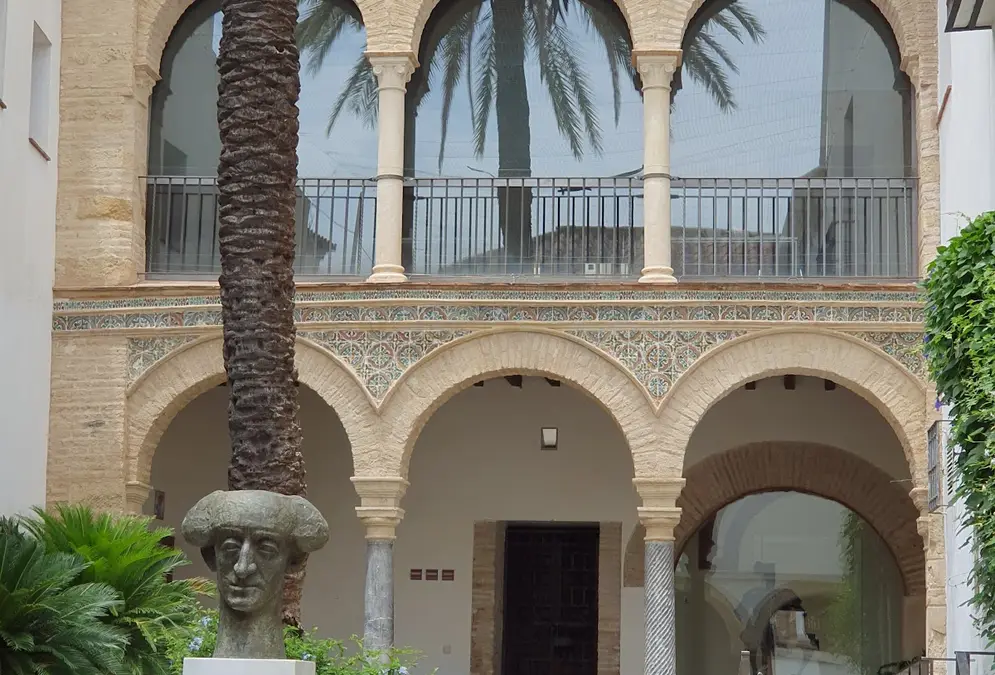
The trades did not all vanish with the caliphate. In July 2014 the Andalusian Regional Government declared Córdoba's historic quarter an "Area of Craft Interest", a recognition of the working pottery studios, leather-embossing ateliers, guitar-makers and silversmiths that still occupy the lanes of the Judería — heirs, however changed, of the caliphal craft districts.
Read the full story: how papermaking arrived in Córdoba.
Go deeper into caliphal Córdoba
The crafts were the output of a civilisation. Trace the whole arc of al-Andalus, from the palace-city of Madinat al-Zahra to the streets that survive above its workshops.
More context: Madinat al-Zahra Guide · Three Cultures · Jewish Heritage
Ready to see these crafts being made — and take a piece of Córdoba home? The practical guide has the addresses.
Where the workshops stood
See caliphal craft up close
The full story: Caliphal Crafts of Córdoba
One hub page cannot hold ten centuries of making, so the full series lives below: the gilded hides of guadamecí, the cordwainer's English afterlife, the state silk looms, the filigree still wound by hand, the Pyxis of al-Mughira and the succession intrigue carved into it, and the rag-paper revolution that stocked al-Hakam II's shelves.
History
Frequently Asked Questions
What is guadamecí leather?
Guadamecí is embossed, painted and gilded leather — the craft the French called cuir de Cordoue and the English called cordwain. Panels of wet leather were shaped over carved wooden moulds, then painted, oil-gilded and lacquered into relief decoration. The name comes from Ghadames in Libya; the technique reached Spain from North Africa by the ninth century and flourished in Muslim-ruled Córdoba, where embossed hangings replaced costly tapestries.
What is the difference between cordobanes and guadamecí?
Both are traditional Córdoban leatherworks, but in Spain the word guadamecí designated embossed, gilded leather hangings, while cordobanes (the origin of "cordovan") signified soft goat leather. Both techniques arrived via North Africa and were perfected in Córdoba under Muslim rule. Today only a handful of family workshops still practise them, according to the city's official tourism board.
Why is a shoemaker called a cordwainer?
Because medieval shoemakers worked in cordwain, the prized leather historically produced in Moorish Córdoba. The word entered English from Anglo-Norman around 1100 — the earliest recorded bearer of the name is one Randolf se cordewanere — and London's cordwainers were legally separated from cobblers in 1395, when the Mayor forbade cobblers from working new leather. The guild name preserves the Córdoban origin to this day.
What was tiraz and who was allowed to wear it?
Tiraz were medieval Islamic textiles — usually embroidered armbands sewn onto robes — inscribed with the ruling caliph's name in Arabic calligraphy and often worked with threads of precious metal. They were bestowed on high-ranking loyal officials in the khil'a robe-of-honour ceremony and functioned much like minted coinage: a wearable public declaration of allegiance, produced only in strictly state-regulated dar al-tiraz workshops.
What is the Pyxis of al-Mughira?
The Pyxis of al-Mughira is a carved ivory container dated by its own Kufic inscription to 968 CE (year 357 of the Hegira). It was made in the royal workshops of Madinat al-Zahra near Córdoba, probably as a coming-of-age gift for al-Mughira, son of Caliph Abd al-Rahman III. About 18 cm tall and cut from elephant ivory with walls just 0.4 cm thick, it carries four medallions of court and hunting scenes and is held by the Louvre.
Where does Córdoba filigree come from?
Córdoba's filigree tradition dates back to the era of al-Andalus, when the city was a flourishing cultural and artistic centre and Arab, Jewish and Christian influences merged into the designs seen today. The technique — twisting and soldering hair-fine threads of gold or silver into lace-like patterns — passed down through generations of artisans and is still crafted entirely by hand in the city's workshops.
How did papermaking reach Córdoba?
Paper technology moved from China through Samarkand to Abbasid Baghdad, where scholars identify mills by 794–795, then travelled via North Africa into the Iberian Peninsula. Rag paper spread through al-Andalus by the mid-10th century, made from hemp, flax, cotton and old rags. Even the catalogue of Caliph al-Hakam II's great Córdoban library was compiled on paper notebooks; the first documented peninsular mill opened at Xàtiva in 1056.
Further reading
Official sources
4 references Show Hide
- Córdoba Tourism Office – Craftwork in Córdoba (opens in a new tab)
Official overview of Cordobanes, guadamecí, filigree and the city's craft traditions
- Louvre – Pyxis of al-Mughira (opens in a new tab)
Museum object record: dating, material, dimensions and Kufic dedication
- Cleveland Museum of Art – Tiraz of Caliph Abd al-Rahman III (opens in a new tab)
Surviving caliphal tiraz woven in Córdoba, 941–42
- Visit Andalucía – The Andalusian Heritage of Paper (opens in a new tab)
Regional heritage resource on papermaking in al-Andalus