The City That Sent Three Minds to Limbo
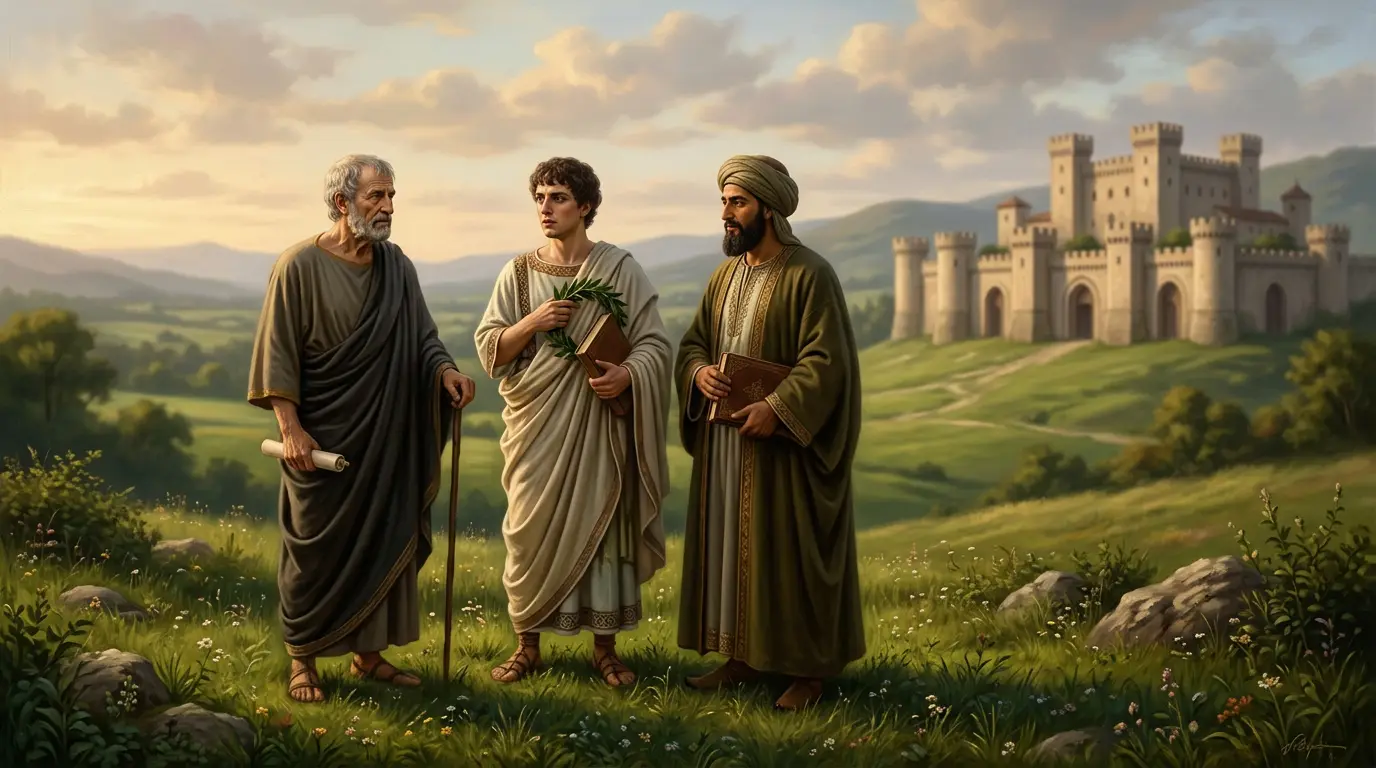
When Dante Alighieri began composing the Divine Comedy around 1308[1], he confronted a problem every medieval Christian theologian faced: what to do with the virtuous dead who had no access to baptism. His solution was Limbo, the first circle of Hell; not a place of torment, but a green meadow where the unbaptised lived in eternal, hopeless desire. Into that meadow he placed three men born in the same city: Córdoba.
Seneca (c. 4 BCE – 65 CE), the Stoic philosopher who tutored Nero and wrote the letters that taught Europe to think in essays, was born in Roman Corduba[2]. Lucan (39–65 CE), his nephew and author of the epic Pharsalia, was born in the same provincial capital of Hispania Baetica[3]. Averroes, Ibn Rushd (1126–1198), the Islamic jurist and physician whose commentaries on Aristotle earned him the title "The Commentator" in the Latin West, was born in Islamic Qurtuba[4], the caliphal capital that rose on the same Guadalquivir bend.
No other city on earth supplied three intellects to a single canto of the Divine Comedy. The explanation is not a coincidence of Dante's reading list. It is the result of a fifteen-century pipeline: a provincial Roman family that produced two of the empire's most widely read Latin authors, and an Andalusian intellectual culture whose Arabic texts, translated in Toledo, reached the desks of Parisian scholastics and Florentine poets. What makes the grouping remarkable is not simply that three Cordobans appear in Hell; it is that all three appear in the same circle, treated with the same cautious respect, the same green-meadow proximity.
What makes the grouping remarkable is not simply that three Cordobans appear in Hell; it is that all three appear in the same circle, treated with the same cautious respect, the same green-meadow proximity.
Limbo: The Green Meadow Where Hope Never Arrives
Dante's Hell has nine concentric circles, each punishing a specific category of sin according to the principle of contrapasso. The first circle, described in Canto IV of the Inferno, is not a place of fire or ice. It is a green meadow with a noble castle ringed by seven walls and entered through seven gates[5]. The inhabitants are not tortured. They sigh.
The theological category is Limbo, and Dante inherited it from medieval scholasticism, which distinguished between the Limbo of the Infants (unbaptised children) and the Limbo of the Patriarchs (virtuous figures of the Old Testament). By Dante's era, the concept had expanded to accommodate a third group: the virtuous pagans: moral, accomplished, sometimes brilliant individuals who lived either before Christ or outside Christian culture and therefore died without baptism. Their fault was not sin but timing.
Explore nearby · Monument
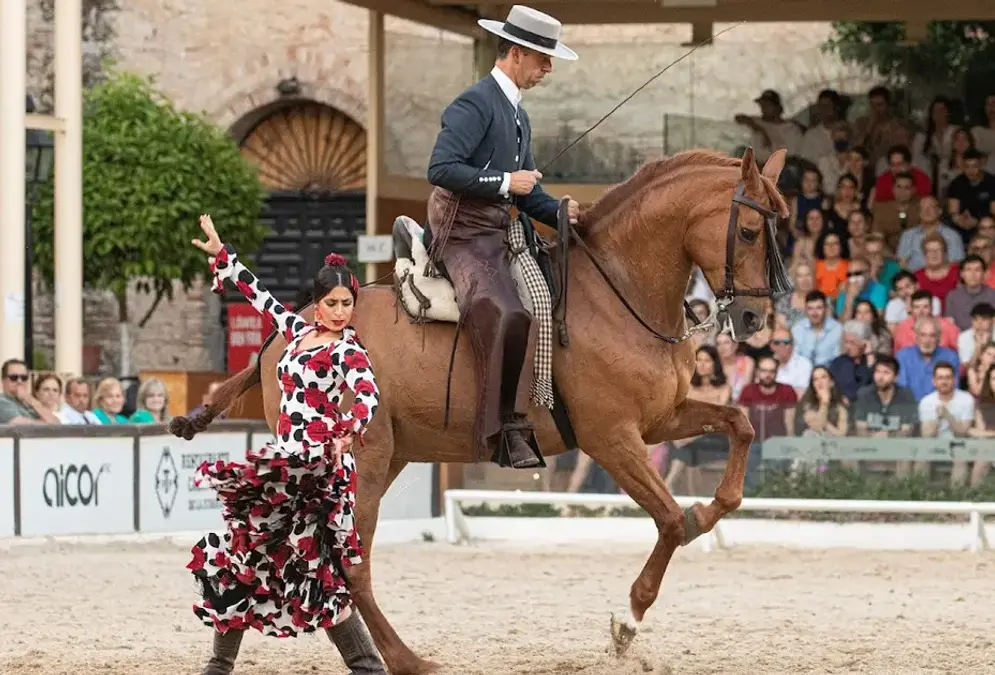
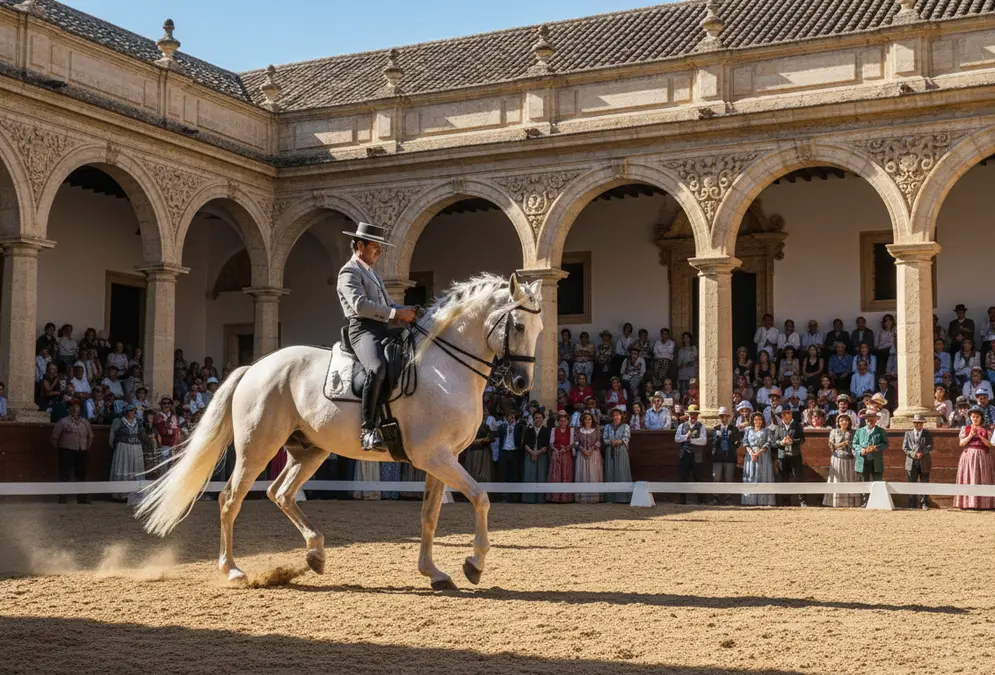
Caballerizas Reales de Córdoba
Philip II's 1568 Royal Stables, birthplace of the Andalusian horse. Evening show combining classical dressage, vaquera riding and flamenco. UNESCO heritage.
Dante's Virgil, who guides the pilgrim through Hell, explains the geography with a mixture of theological precision and personal regret. Virgil himself resides in Limbo[5]. When Dante asks whether anyone has ever escaped, Virgil recounts the Harrowing of Hell: Christ's descent after the Crucifixion to retrieve Adam, Abel, Noah, Moses, Abraham, David, and the other Hebrew patriarchs. These were the only souls ever permitted to leave. For everyone else, Virgil, Homer, Plato, Seneca; the meadow is permanent.
What is distinctive about Dante's Limbo is its hierarchy of intellect. Inside the castle, the poets and philosophers gather by category: Homer leads the epic poets, Aristotle presides over the natural philosophers, Cicero and Seneca stand among the statesmen. Dante does not flatten his virtuous pagans into an anonymous crowd. He names them, groups them, and, in the case of the poets, even joins them, a moment in which the pilgrim himself is welcomed as "sixth in that high company"[6]. It is the most honour Dante's theology allowed him to bestow, and the most painful.
Seneca: The Stoic Rome Could Not Ignore
Dante places Lucius Annaeus Seneca alongside Cicero among the Roman statesmen of Limbo. The pairing is precise: Cicero represented the Republic's rhetorical ideal, Seneca the Empire's moral conscience, or at least the version of that conscience that survived his proximity to power.
Seneca was born in Corduba around 4 BCE, into an equestrian family wealthy enough to educate its sons in Rome. He became Nero's tutor, co-governed the empire during Nero's first five years, the quinquennium Neronis that later Romans remembered as a lost golden age, and accumulated vast personal wealth while writing treatises on the indifference of money. When Nero ordered his death in 65 CE following the Pisonian conspiracy, Seneca opened his veins, dictated philosophy to his secretaries, and drank hemlock in the manner of Socrates[7]. Tacitus recorded the scene in Annals 15.60–64 with the attention to detail of a man who understood he was writing a template for philosophical death.
3
Why did Dante respect him? Seneca's Stoic moral philosophy (his emphasis on conscience, the brotherhood of mankind, the futility of anger, the discipline of self-examination) reads as proto-Christian in ways Aristotle's ethics do not. Medieval readers noticed. An apocryphal correspondence between Seneca and Saint Paul, circulated from the fourth century onward, lent weight to the idea that Seneca might have converted had he lived later. Aquinas cited him alongside Aristotle on practical ethics. Petrarch made him a moral hero. By the fourteenth century, Seneca was the pagan philosopher a Christian could most comfortably admire, and the one Dante could most comfortably damn.
Recommended tours
Tours are selected for quality, not commission. We earn a small fee if you book — at no extra cost to you.
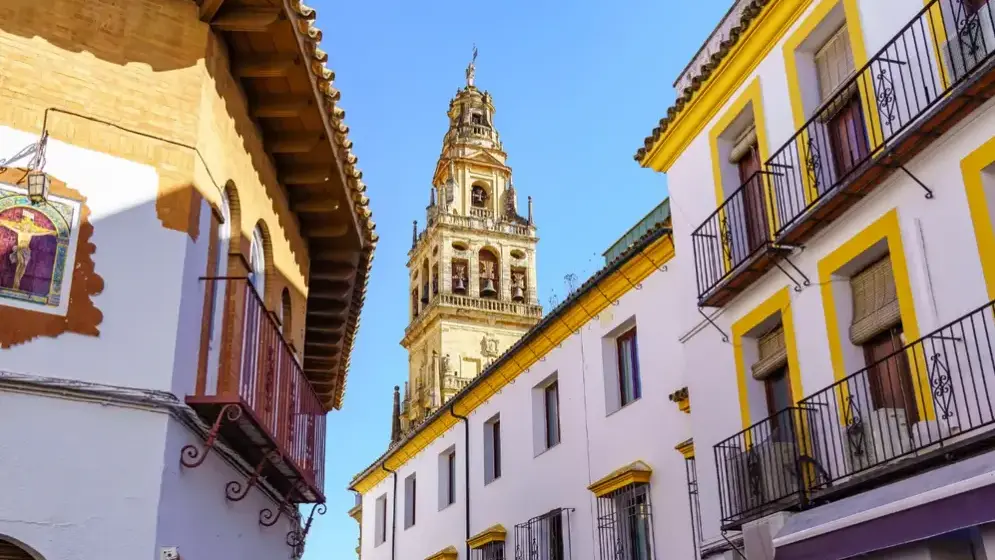
In Córdoba today, a bronze statue by Amadeo Ruiz Olmos, cast in 1965 and funded by the bullfighter El Cordobés, stands beside the Puerta de Almodóvar, a fourteenth-century gate built on Roman walls contemporary with Seneca's family. The Nero's tutor and eventual victim who gazes from that pedestal is the one Dante read: a moralist in marble, simplified, monumental. The real Seneca was more complicated, and Dante knew it.
Lucan: The Poet Made Sixth Among the Greats
If Seneca appears in Dante's Limbo as a respected statesman, Lucan receives a more intimate honour. In Canto IV, the pilgrim meets five great poets: Homer, Horace, Ovid, Virgil, and Lucan. The four, Virgil included, welcome Dante as their equal and make him "sixth in that high company"[6]. Lucan's presence in this group is not decorative: Dante was drawing on his work.
Marcus Annaeus Lucanus was born on 3 November 39 CE in Corduba[3]. He was Seneca's nephew, the son of the philosopher's younger brother Marcus Annaeus Mela. Taken to Rome as an infant, he received a rigorous rhetorical education and began publishing poetry by his early twenties. His surviving work, the Pharsalia (also known as De Bello Civili), is an epic in ten books recounting the civil war between Julius Caesar and Pompey. It is a poem about a republic destroying itself, a subject that spoke directly to Dante's own experience of Florentine factional violence.
Dante used Lucan extensively. The Pharsalia supplied characters and images that appear throughout the Inferno: the witch Erichtho, who in Lucan's poem reanimates a corpse to prophesy the outcome of the civil war, becomes, in Dante's hands, the figure who sent Virgil down to the lowest circle of Hell on an earlier errand. The snakes that attack the thieves in Canto XXIV and XXV draw directly from Lucan's catalogue of Libyan serpents in Pharsalia Book IX. Dante was not simply naming a precursor; he was repurposing his material, line by line.
Lucan's own life ended the same way his uncle's did. Implicated alongside Seneca in the Pisonian conspiracy of 65 CE, Nero ordered him to die. He was twenty-five. His widow, Polla Argentaria, preserved his work and commissioned a statue. The Lucan that Dante read, and the one Córdoba claims, is a poet who never reached thirty and still supplied an epic that outlasted the dynasty that killed him.
Averroes: The Commentator Who Crossed the Mediterranean
Of the three Cordobans in Canto IV, Averroes is the one whose presence in Limbo requires the longest explanation. Dante names him among the philosophers, alongside Avicenna, and honours him in the Italian as "Averrois che 'l gran comento feo"[8], Averroes who made the great commentary. The line is famous, and its placement in Limbo, rather than in a lower circle reserved for heretics, says something about Dante's relationship with Islamic philosophy that is easy to misunderstand.
Ibn Rushd was born on 14 April 1126 in Córdoba[4], then the capital of the Almoravid Empire in Al-Andalus. His family were jurists; his grandfather had been chief judge of the city. Averroes himself served as qadi (judge) of Seville and Córdoba before becoming court physician to the Almohad caliph Abu Yaqub Yusuf, who commissioned him to write the commentaries on Aristotle that would define his legacy[11].
The route by which Averroes reached Dante's desk is a piece of intellectual infrastructure: the Toledo School of Translators. During the twelfth and thirteenth centuries, teams of scholars in Toledo, often a Christian, a Jew, and a Muslim working in sequence, translated Arabic philosophical and scientific manuscripts into Latin[9]. Averroes' commentaries on Aristotle were among the most consequential texts to pass through this pipeline. They reached the University of Paris and the University of Padua, where they fuelled the movement known as Latin Averroism, whose adherents argued, controversially, that philosophical truth and theological truth could contradict each other without either being false.
Deep dive · Article
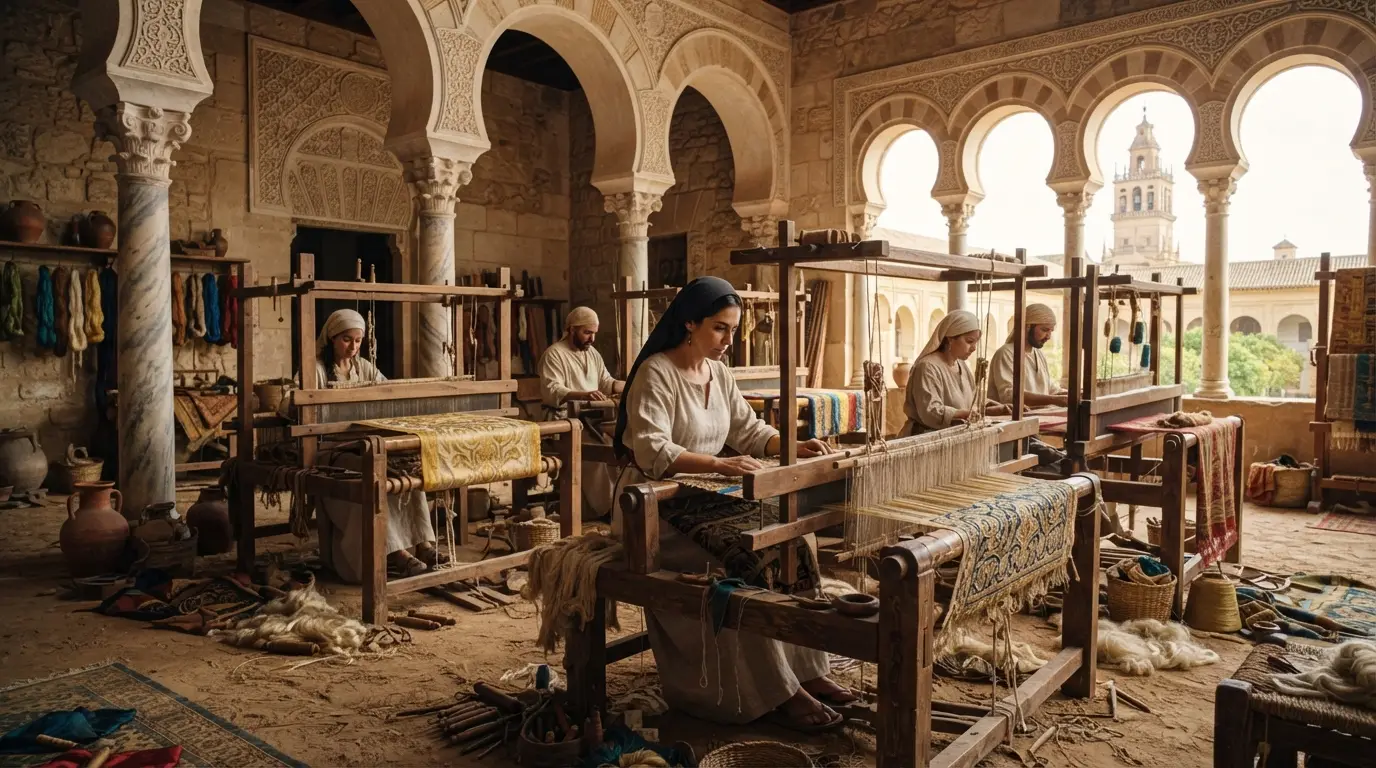
Córdoba Silk Industry History: The Rise of Tiraz
Córdoba ran al-Andalus's first state silk workshop, the dar al-tiraz, weaving robes of caliphal power before the industry shifted to Almería after 1031.
The Church noticed. In 1270 and again in 1277, the Bishop of Paris, Étienne Tempier, issued formal condemnations of Averroist propositions, 219 of them in the 1277 list[10]. Averroes' ideas were declared heretical. Thomas Aquinas, who died in 1274, had already spent years writing against the Averroists while simultaneously depending on Averroes' Aristotle commentaries for his own work. The intellectual climate in which Dante wrote the Comedy was one in which Averroes was simultaneously indispensable and condemned.
Dante's decision to place him in Limbo rather than in the sixth circle with the heretics (or worse, in the ninth with the schismatics) is therefore a deliberate theological statement. It aligns Averroes not with those who knowingly rejected Christian truth, but with those who, through no fault of their own, never encountered it. The Averroes Dante placed beside Avicenna and Saladin in Limbo is the Averroes of the Latin universities: a mind too vast to burn.
The Irony: Córdoba's Largest Export Is to Hell
There is an argument, made with varying degrees of seriousness in Spanish-language blogs and forums, that appearing in Dante's Inferno is Córdoba's most durable cultural export. The Spanish phrase "Cordobeses en el Infierno" has circulated online since the mid-2010s, usually in posts that treat the fact as a curiosity, a pub-quiz answer about a provincial city that somehow supplied three names to the most famous list of the damned in Western literature.
The irony runs deeper than the blog posts. Dante clearly admired all three. Seneca's moral philosophy shaped his ethics; Lucan's epic gave him a vocabulary for political violence; Averroes' Aristotle commentaries reached him through the scholastic network he navigated daily. If Dante had been free to place unbaptised genius in Paradise, these three would have had strong claims. His theology did not permit it.
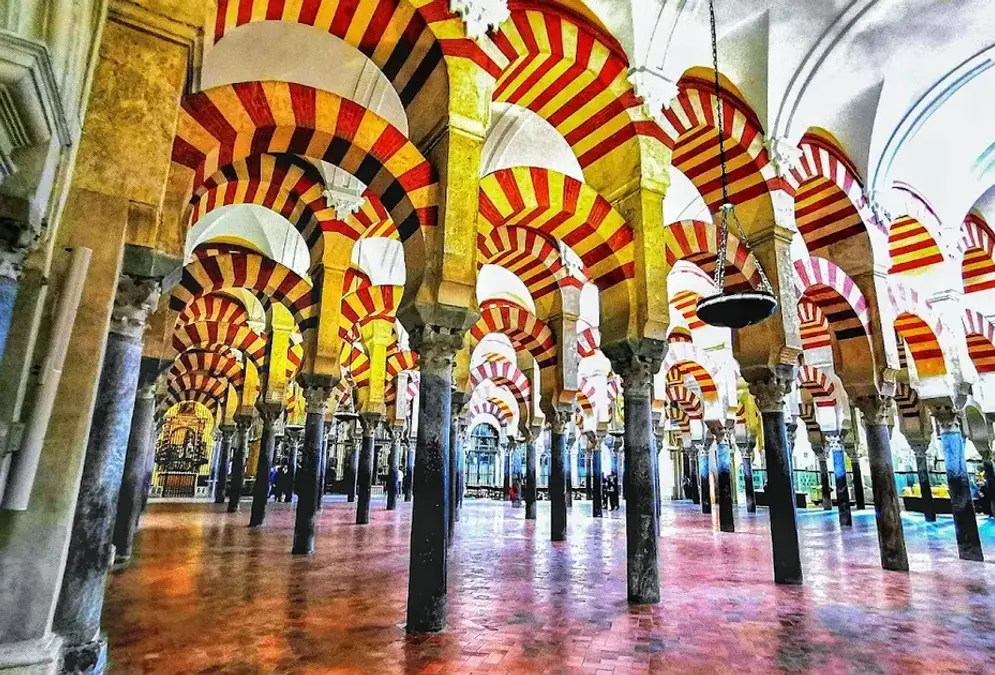
What makes the grouping specifically Cordoban, rather than merely Roman or Andalusian, is geography. Seneca and Lucan were born in the same neighbourhood of the same provincial capital in Roman Hispania. Averroes was born in the same city, a millennium later, when it was the most populous and learned city in Europe west of Constantinople. The Roman bridge that Seneca knew as a child, and the Mezquita whose library Averroes used, stand within walking distance of each other. The three figures Dante placed side by side in Limbo correspond to three physical layers of Córdoba that a visitor can still walk through in a single afternoon.
There is no single monument to this literary coincidence. No plaque marking the house where the Annaei lived, no museum tracing the three-thread connection. What exists instead is the city itself: the Puerta de Almodóvar with its Roman foundations, the statue of Averroes a few hundred metres away by the same sculptor who cast Seneca, the Judería streets that Maimonides walked while Averroes was still alive. Córdoba does not shout about its Inferno connection. It trusts the visitor to do the arithmetic.