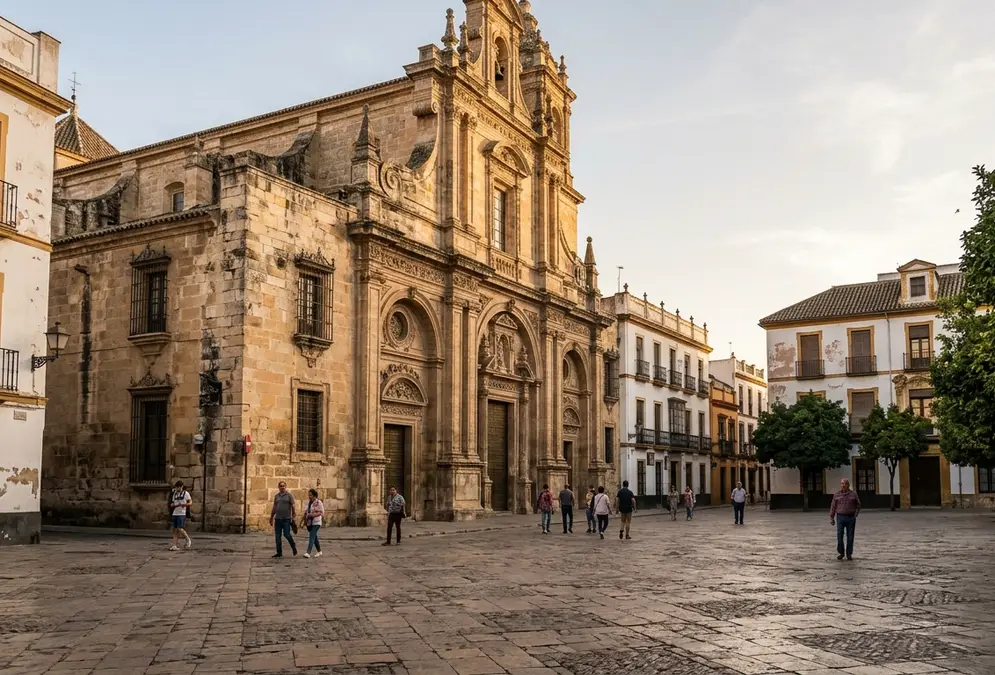

The Iglesia de la Compañía is the old Jesuit church of Córdoba, a Mannerist building begun in 1555 and finished in 1567 on the Plaza de la Compañía. Its formal name is the church of San Salvador y Santo Domingo de Silos, and it still works as a parish church. Come for the story of the Jesuit college it was built beside, not for a ticketed visit.
What the Iglesia de la Compañía is
The parish of San Salvador y Santo Domingo de Silos is popularly known as La Compañía because the building was the seat of the Córdoba Jesuits, the Compañía de Jesús.
The church stands at Plaza de la Compañía, numbers 6 and 7, inside the historic centro of the city. It is not the Santo Ángel church of the Capuchins, which is a different building with a different history.
The heritage record describes it as an important example of Andalusian Mannerism, with a Latin-cross plan and a single nave. It has been a Bien de Interés Cultural, in the category of monument, since a decree of 9 January 2001.
Confirm access with the parish first
Opening and Mass times are not published in the official heritage records, so check with the parish before building a plan around going inside.
From Jesuit college to parish church
The Jesuits founded the church and the Colegio de Santa Catalina in the sixteenth century and conceived the two as a single entity. Construction ran from 1555 to 1567, a span of twelve years in which the college and its church took shape side by side.
The college stayed open until 1767, the year the Jesuits were expelled from Spain. The church today serves as the parish of San Salvador y Santo Domingo de Silos.
The poet Luis de Góngora is said to have studied at the college until the age of 14, a link worth knowing if you are tracing his Córdoba. The claim comes from a single art-history source, so treat it as tradition rather than a plaque-ready fact.
Who designed it
Authorship is contested. The 2001 heritage decree attributes the design to Hernán Ruiz II. A separate art-history account credits its construction to Bartolomé de Bustamante.
Both names appear in the literature, which is why the guide you pick up on the street may tell you something different from the one in the bookshop.