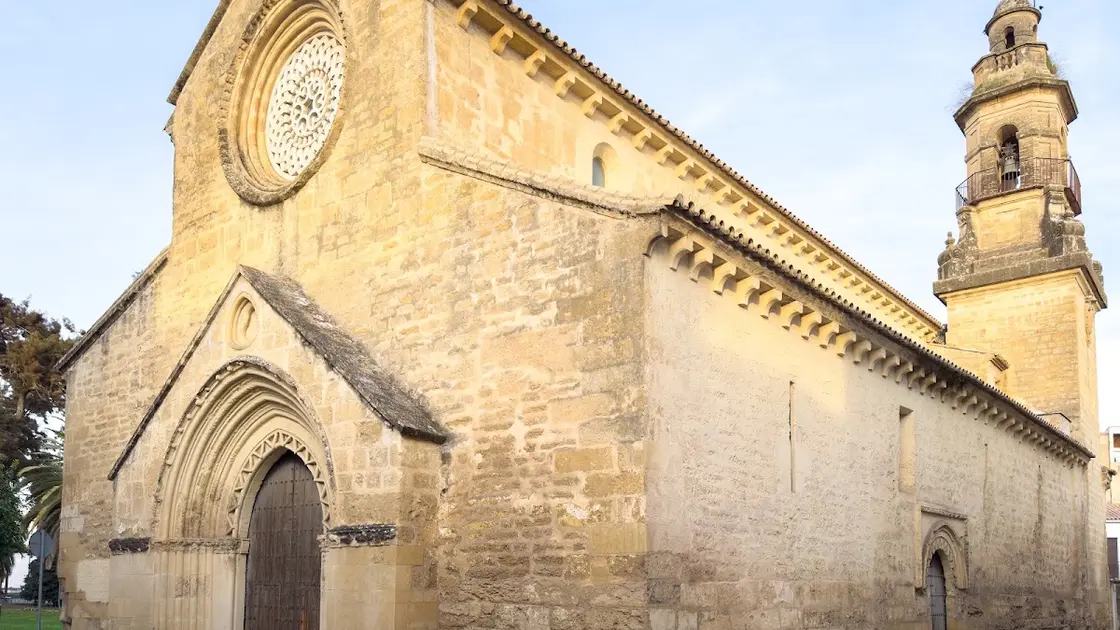
The Iglesia de la Magdalena is a deconsecrated Fernandine church on the Plaza de la Magdalena that gives its name to the surrounding Barrio de la Magdalena. It is a Mudéjar building with Gothic touches, and its side doorway is the oldest of any church in the city. It is no longer a place of worship, so go for the architecture and for whatever exhibition or concert is on, not for a service.
What the building is
La Magdalena is one of the churches raised after the Christian conquest of Córdoba, which is what "Fernandine" means: built in the wake of Ferdinand III's campaign. The Junta de Andalucía's tourism portal describes the style as Mudéjar combined with Gothic elements, replacing the late Romanesque that had earlier prevailed in Castile. Set it beside Santa Marina and San Lorenzo and you are looking at the same family of churches, now with very different uses.
The Epístola doorway
Start outside, at the Epístola doorway. The official listing calls it the oldest of all the churches in the city. It is strongly Mudéjar: a pointed arch with several archivolts on slender columns, framed by an alfiz, the rectangular moulding around an arch, decorated with diamond points. You can study it from the plaza without going in.
The tower and the vaults
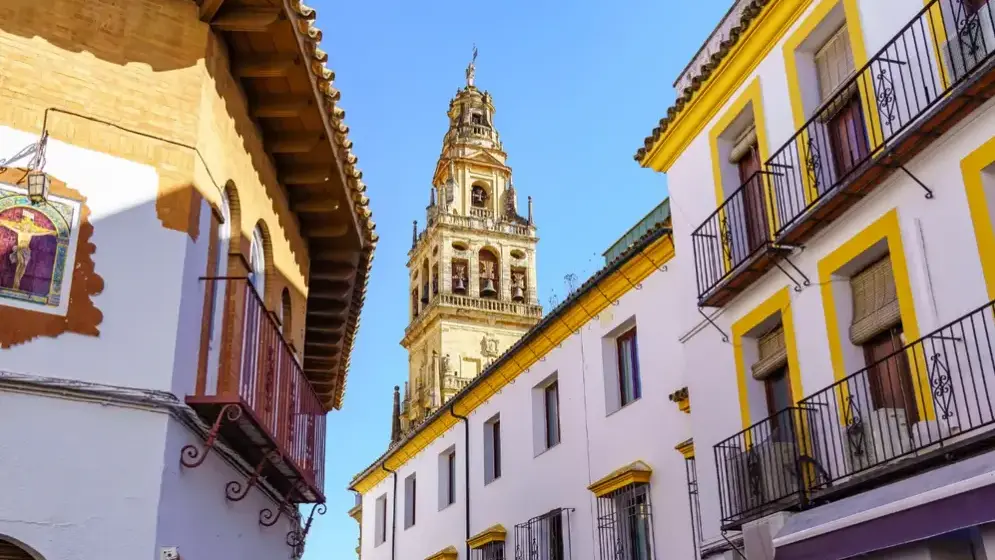
The tower belongs to a different century. Ignacio Tomás, an academic architect working for Bishop Antonio Caballero y Góngora, designed it, and a peer-reviewed study in the Boletín de Arte calls it a paradigmatic work of architectural academicism in Córdoba. The Spanish-language record dates the tower to 1791 and adds plasterwork vaults over the naves in 1729. Its classical lines sit oddly against the medieval walls, and that contrast is worth a minute of your time.
Check the programme before you cross town
No standing hours are published, and the church opens around exhibitions and concerts. Look up what is on first, rather than arriving at a closed door.
From parish church to venue
The church closed definitively as a place of worship in 1956, and its Cristo was moved to the basilica of San Pedro. A fire in September 1990 ruined the interior, including the Mudéjar coffered ceiling. The church reopened in 1999 after a restoration by the Junta de Andalucía, CajaSur and the cathedral chapter that reproduced the lost ceiling, so the timber ceiling you see is a reconstruction. The building has been a Bien de Interés Cultural, monument category, since 17 March 1982.
Today the Junta's portal says the church is used as a venue for exhibitions and concerts.