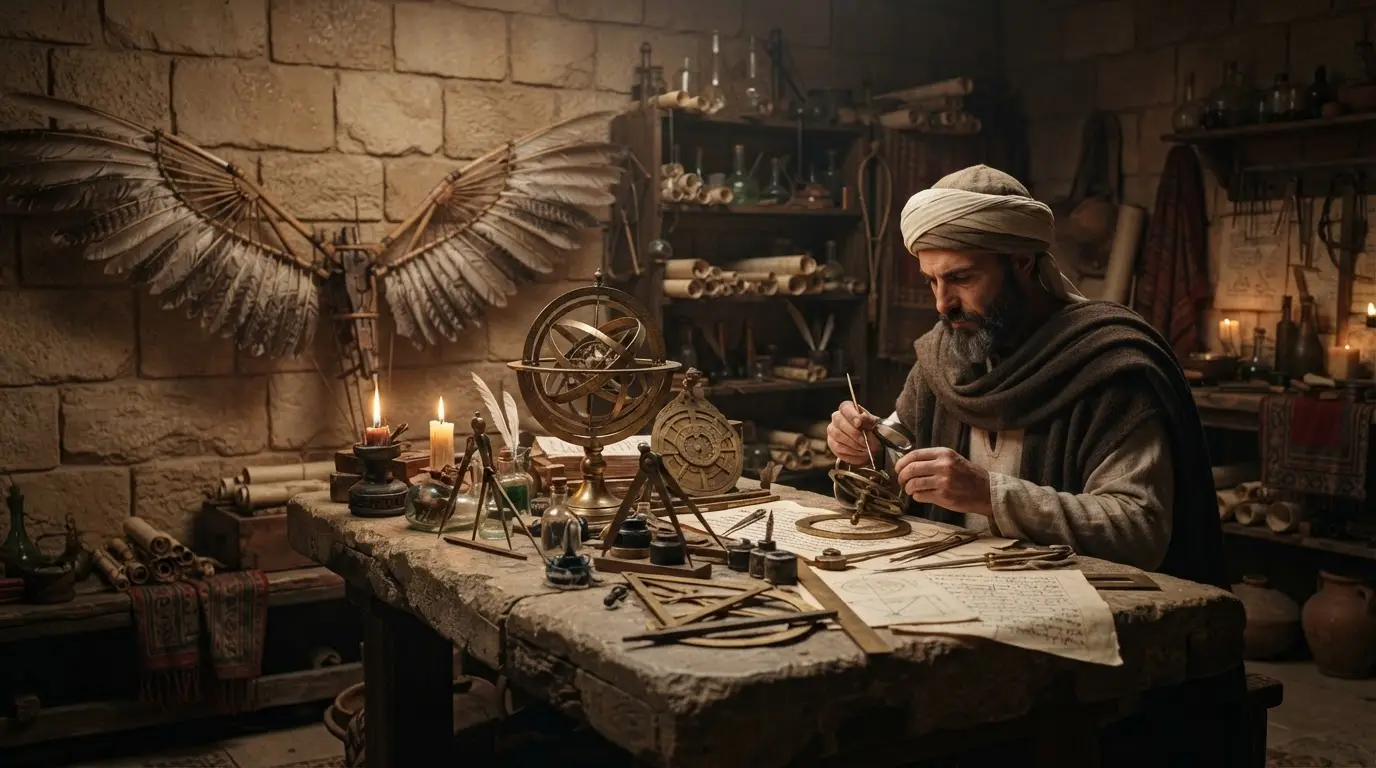
Abbas Ibn Firnas: Córdoba's Polymath Who Dreamed of Flight
Abbas Ibn Firnas's flight is tradition, not fact: the earliest account dates about two centuries after his death. Crystal work, a water clock, a weather room.
Read the full story
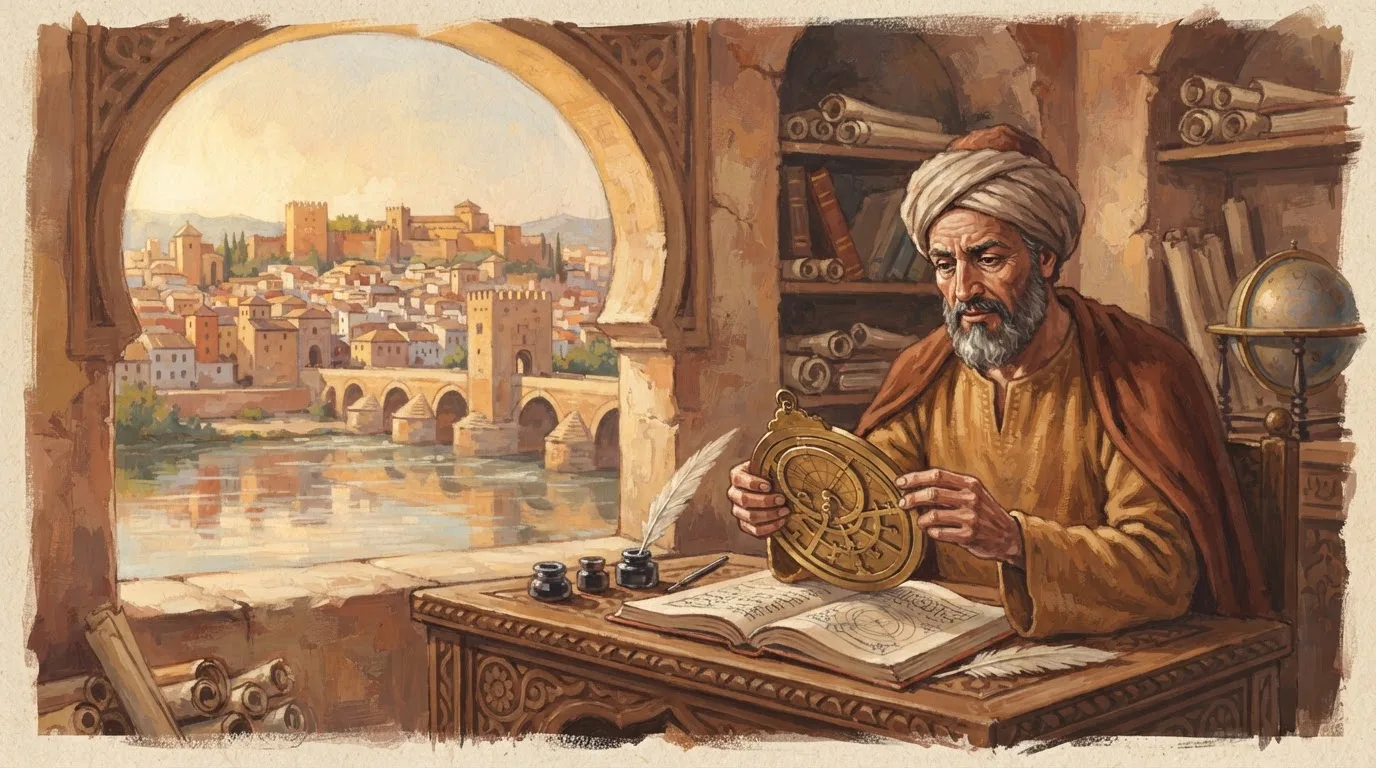
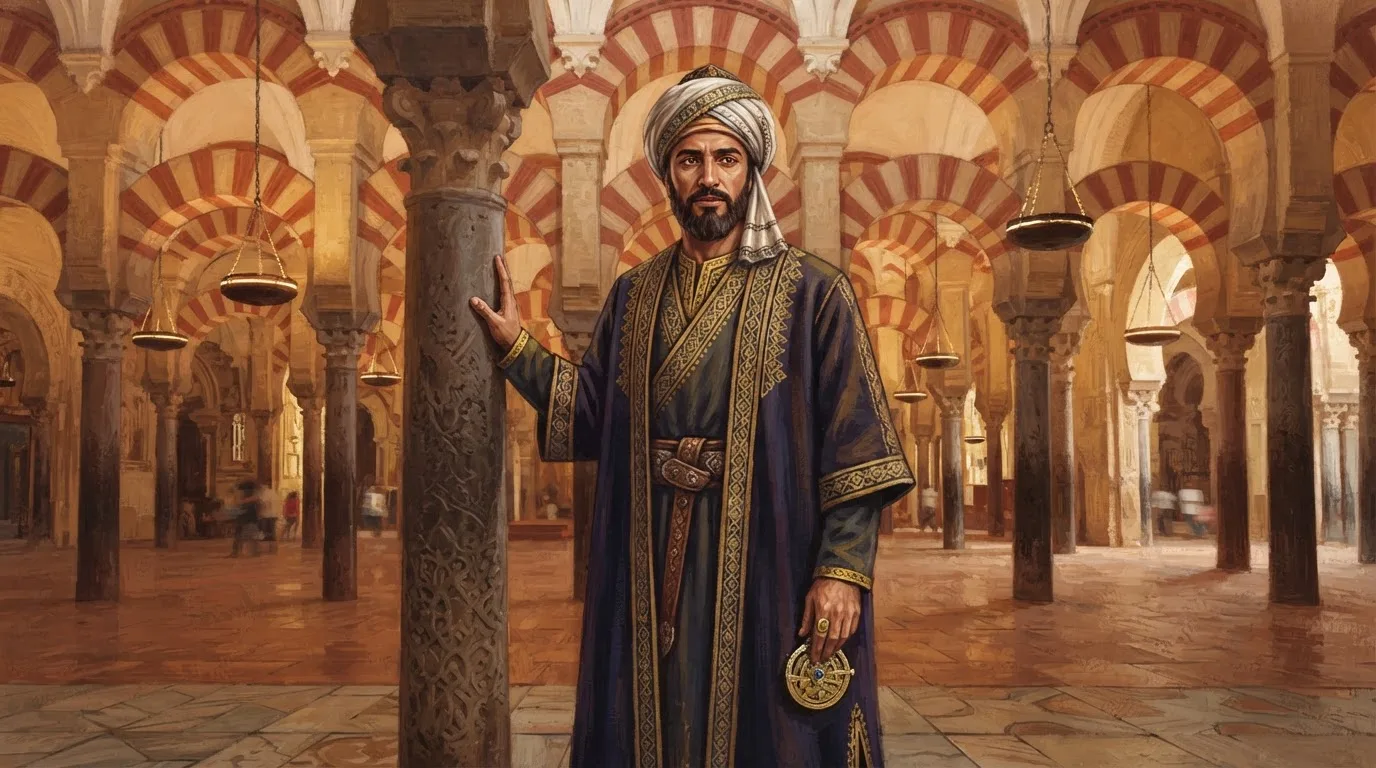
Ibn Firnas was an Andalusi polymath: inventor, astronomer, physician, chemist, engineer, musician and poet. He was probably born around 810 in Ronda, lived in Córdoba and died in 887. Among his inventions was a water clock, the al-Maqata.
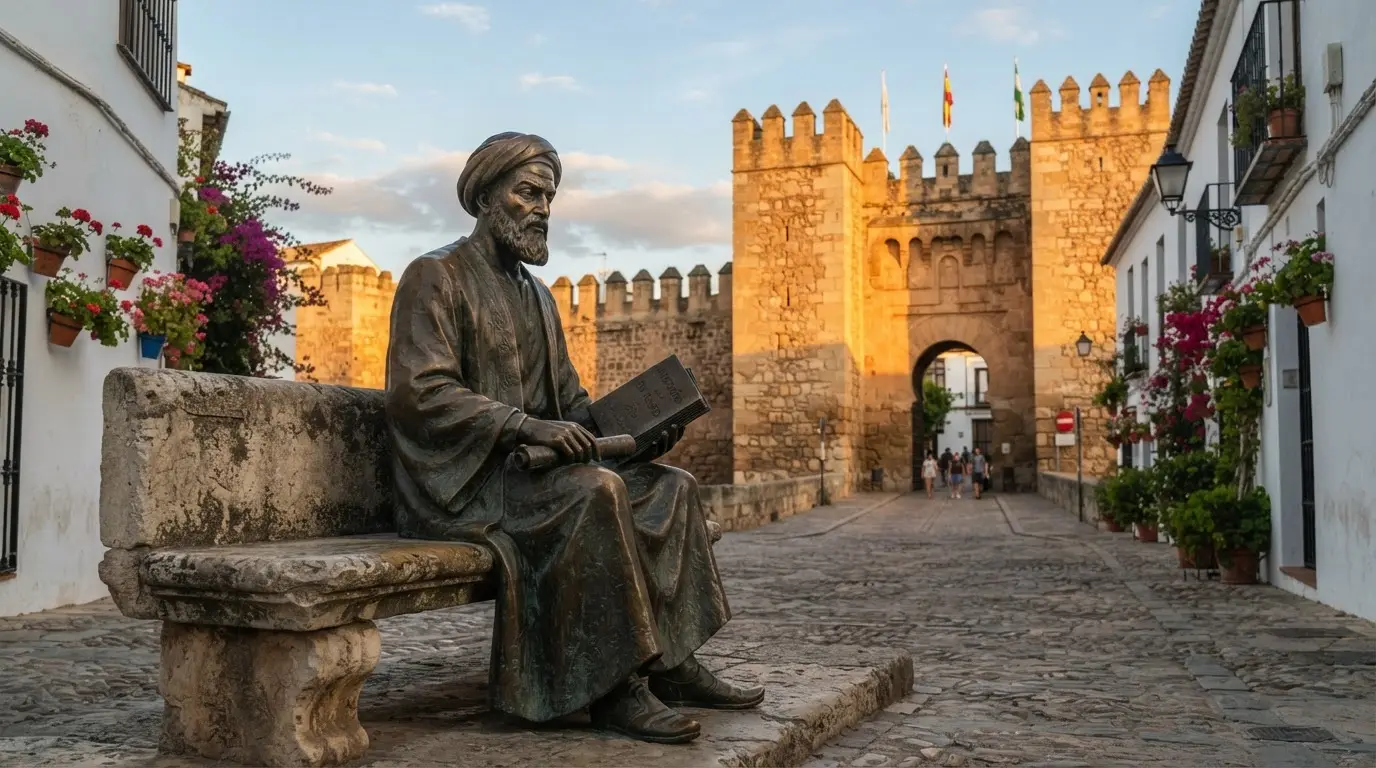
His trace in Córdoba is a modern one. The bridge over the Guadalquivir that carries his name, opened in the 21st century, hangs an abstract metal sculpture representing him from its central counter-arch. It is a nod to the flight he is famous for, not a likeness. A statue of him, installed in 1973, stands at Baghdad International Airport.
For an emir of his era, see Abd al-Rahman II. For another scientist of the same city, see Maslama al-Majriti, Córdoba's astronomer. What is known and what is legend about his flight is laid out in Abbas Ibn Firnas: Córdoba's Polymath Who Dreamed of Flight: read the full story there.
711–929
Muslim forces took Córdoba in 711, and governors ruled al-Andalus from it until Abd al-Rahman I declared an independent emirate in 756. He began the Mezquita in the 780s.
785 Monument
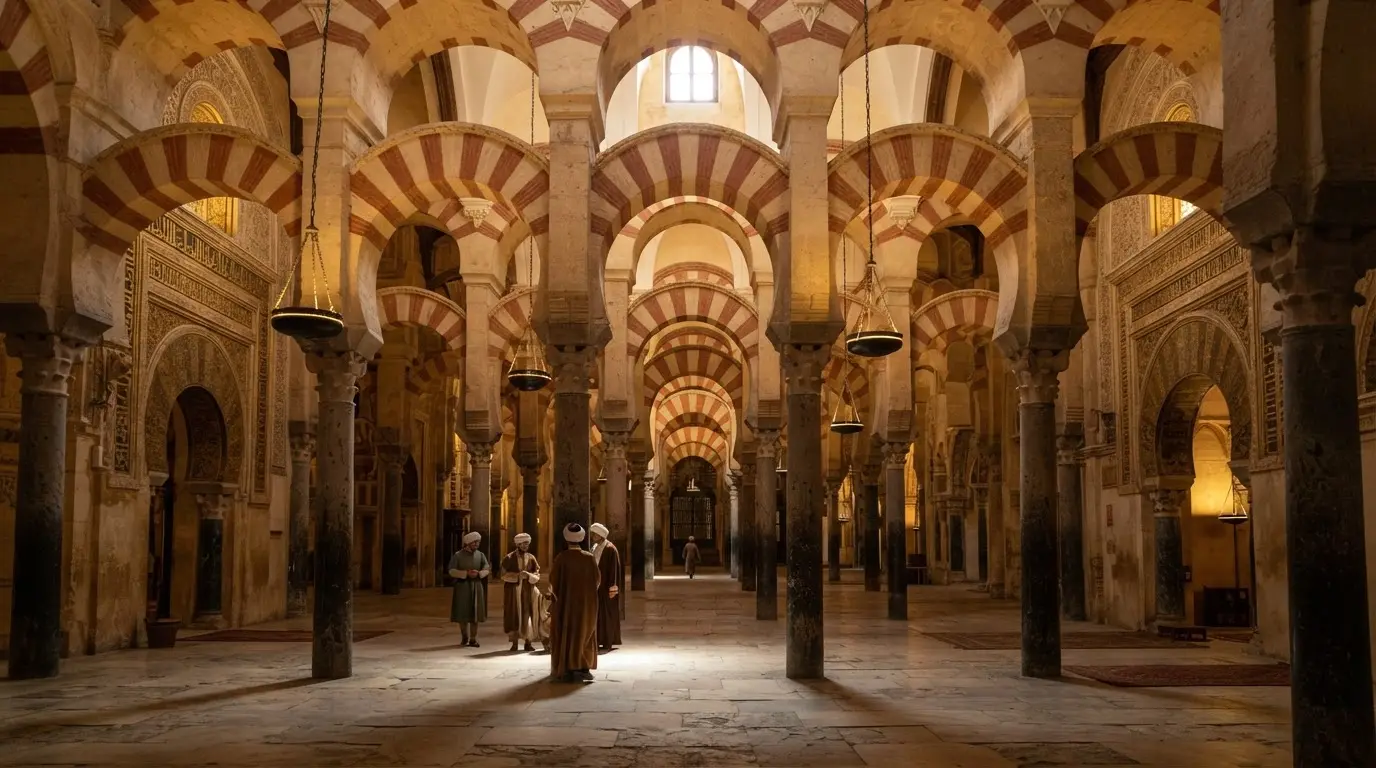
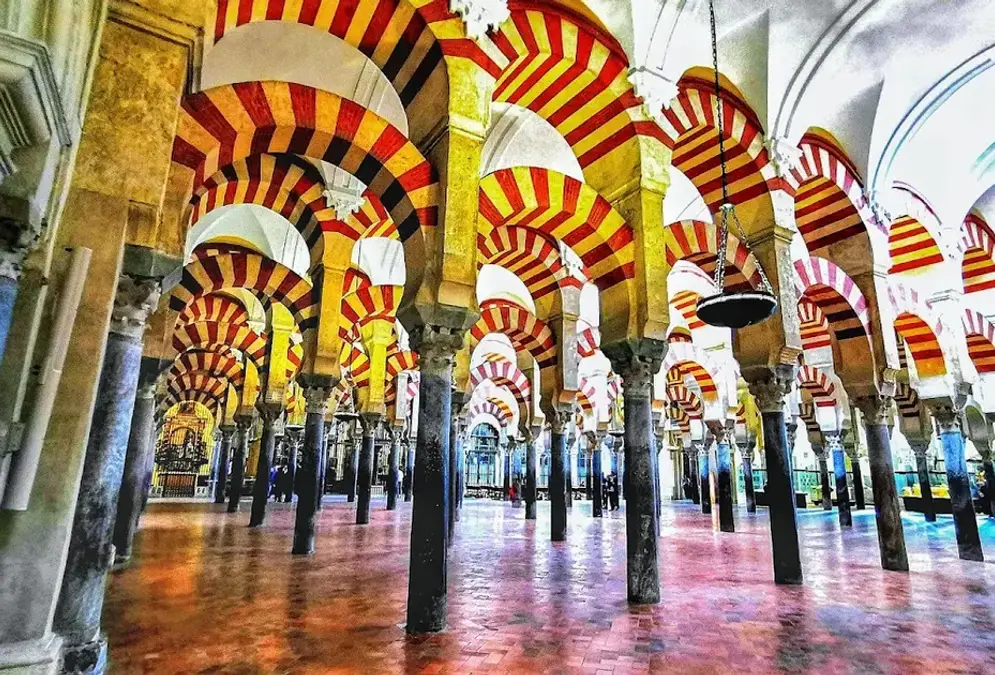
856 columns, 1,300 years of Islamic and Christian history. UNESCO monument in Córdoba, Andalusia. Red-and-white arches, Byzantine mosaics, a Renaissance nave.
731–788 Historical figure
Abd al-Rahman I (731-788) founded the Emirate of Córdoba in 756 and began the Great Mosque. Where his trace remains in Córdoba today, and where to read more.
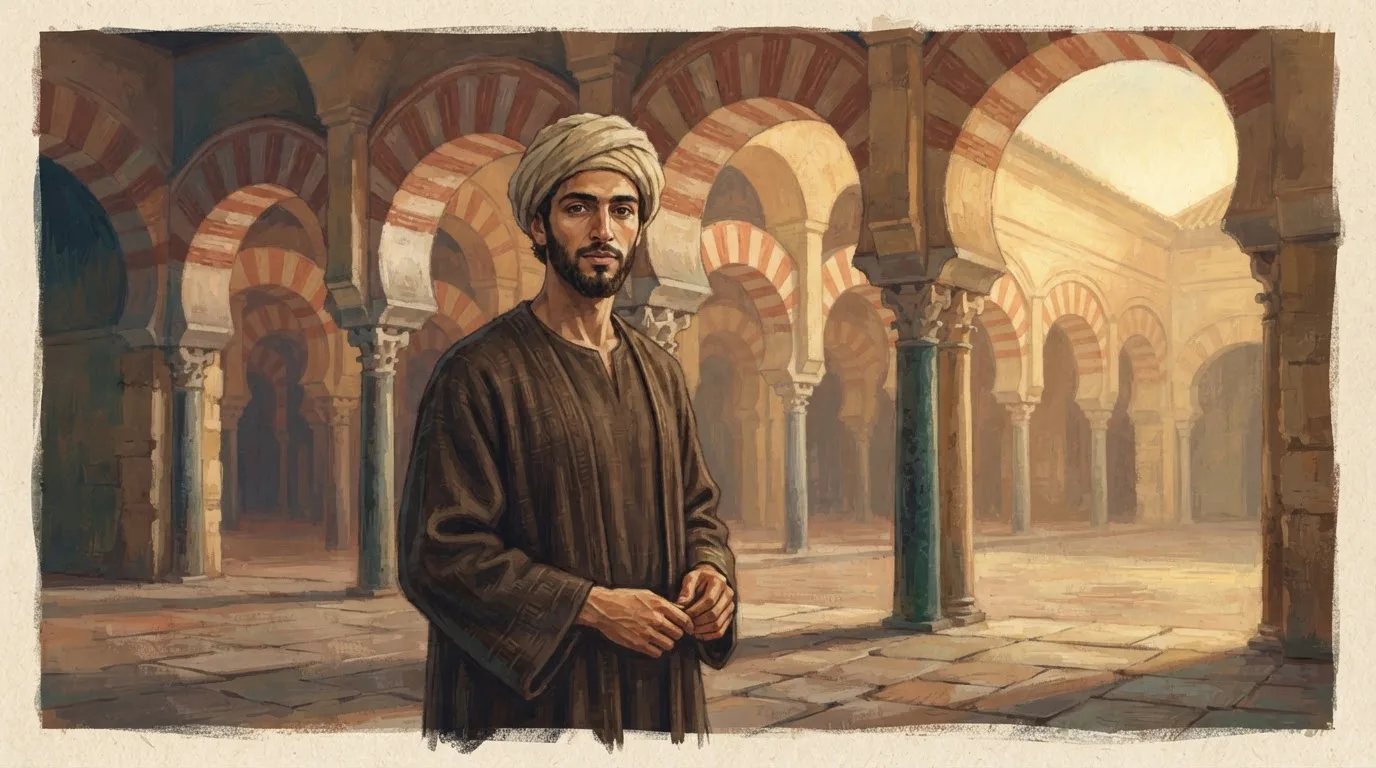
c. 771–822 Historical figure
Al-Hakam I (c. 771-822), Umayyad emir of Córdoba from 796, crushed the 818 suburb revolt. See where his trace lies near the Roman Bridge and read his story.
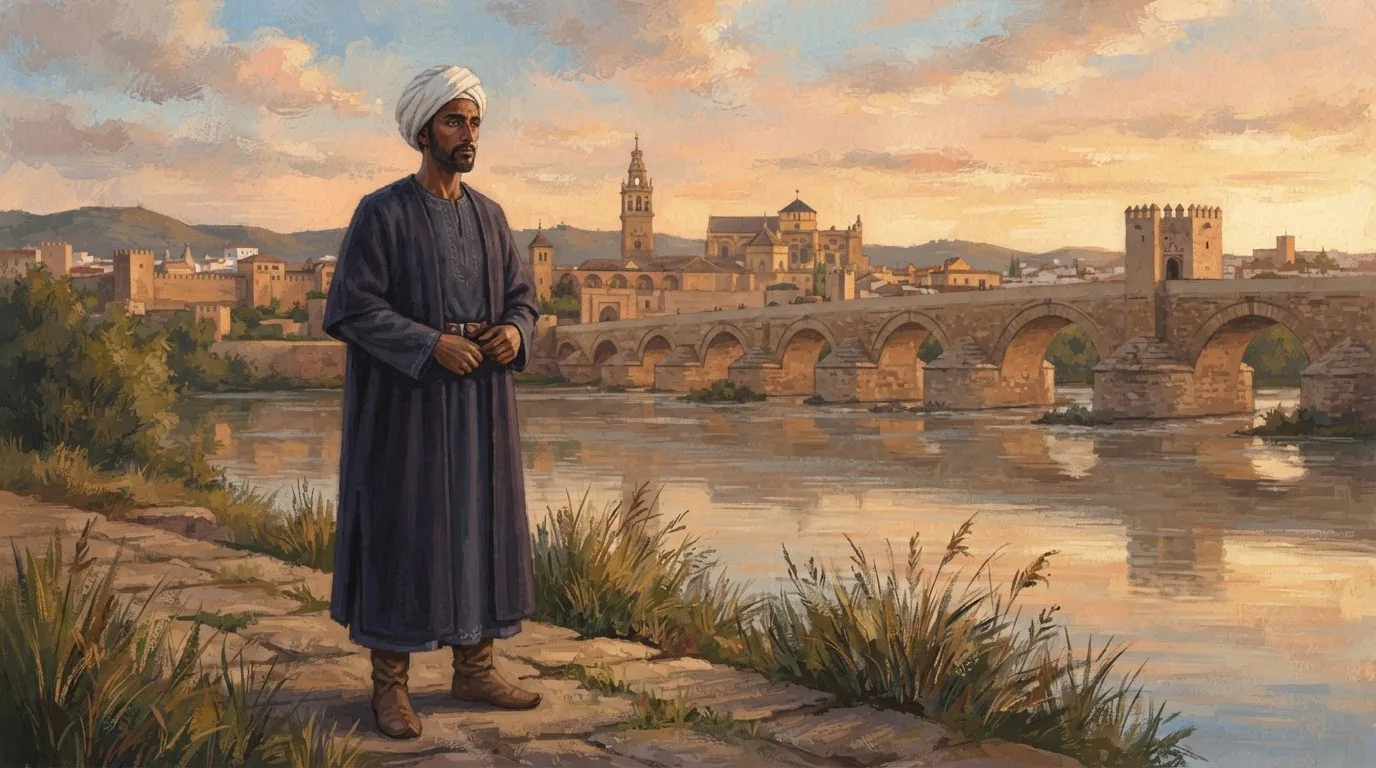
c. 790–857 Historical figure
Ziryab (c. 790-857), the Baghdad-trained court musician who settled in Córdoba in 822. Who he was, and the places and reading where his trace survives today.
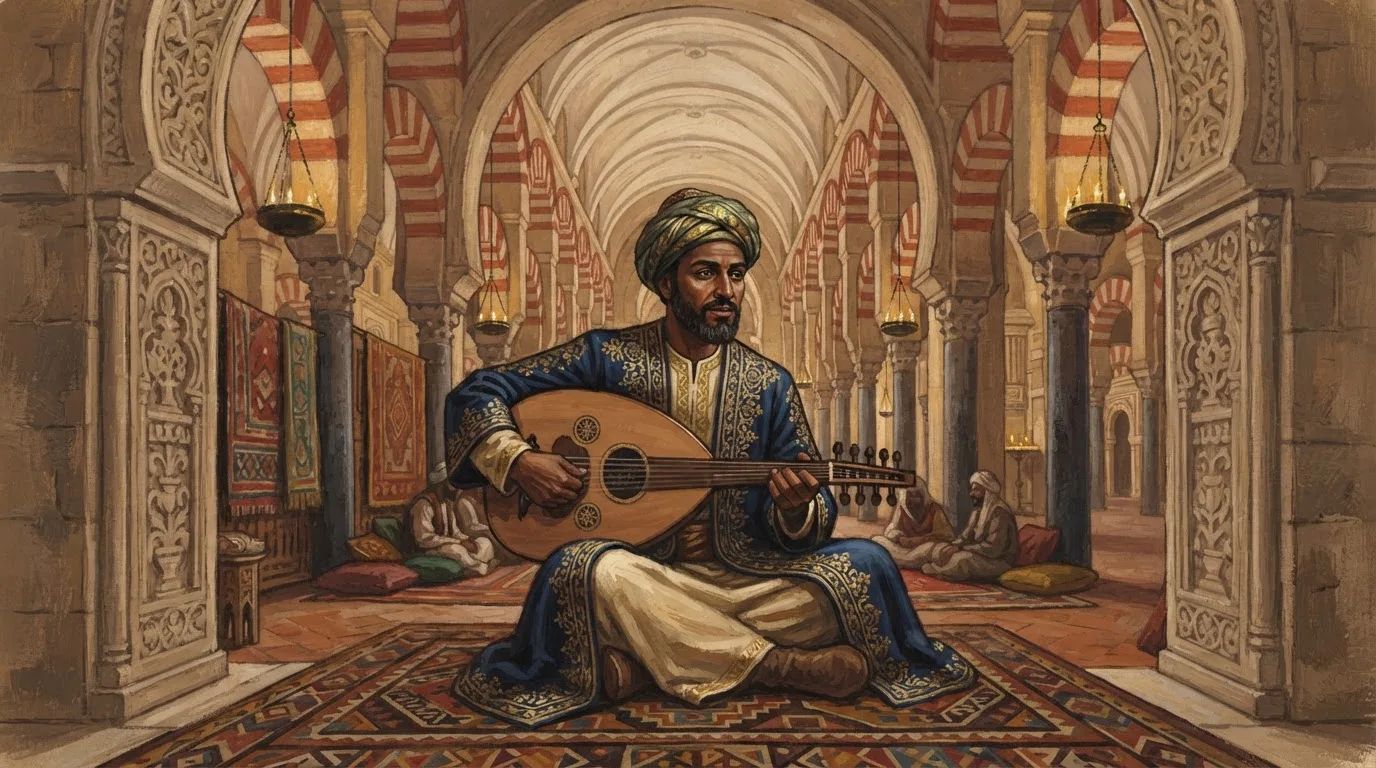
792–852 Historical figure
Abd al-Rahman II (792-852), emir of Córdoba from 822, expanded the Mezquita and patronised the arts. Where his traces still survive in the city today.
Undated
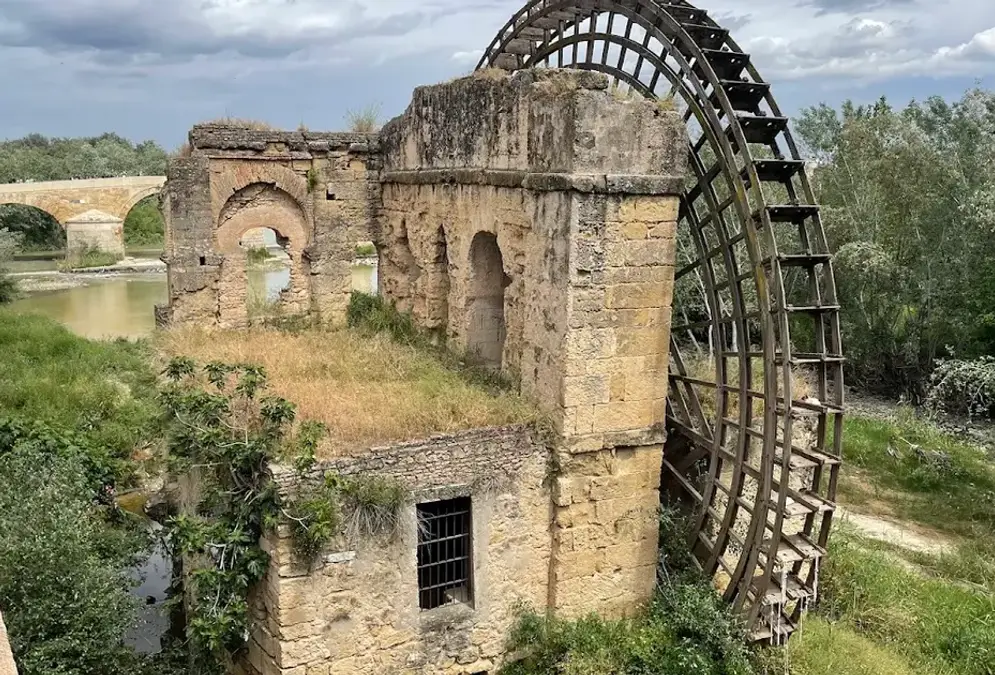
Monument
The Albolafia wheel turns again on the Guadalquivir, photographed from the Roman bridge against the Mezquita skyline. What's left of Córdoba's Arab mills.
Go deeper