Al-Hakam I: The Emir Who Crucified 72 Nobles
Al-Hakam I ruled Córdoba from 796 to 822 CE. Between the golden narratives lie three events: a banquet massacre, a suburban uprising, and 20,000 exiles.
Read the full story
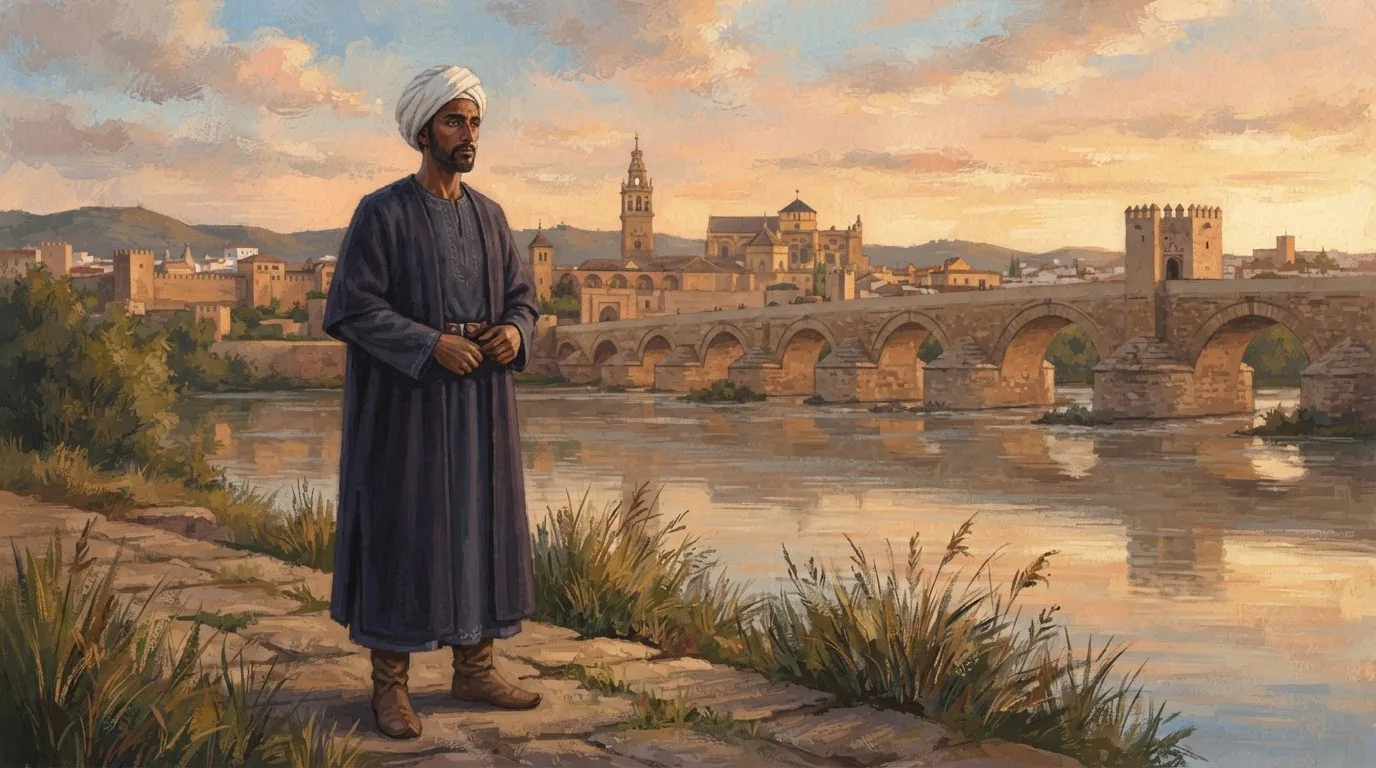
Al-Hakam I was the Umayyad emir of Córdoba from 796 until his death in 822, a reign of 26 years. Born around 771, he was described as tall, dark and slim, a poet and orator who led his troops into battle himself. He is remembered less for that than for how he handled dissent in his capital.
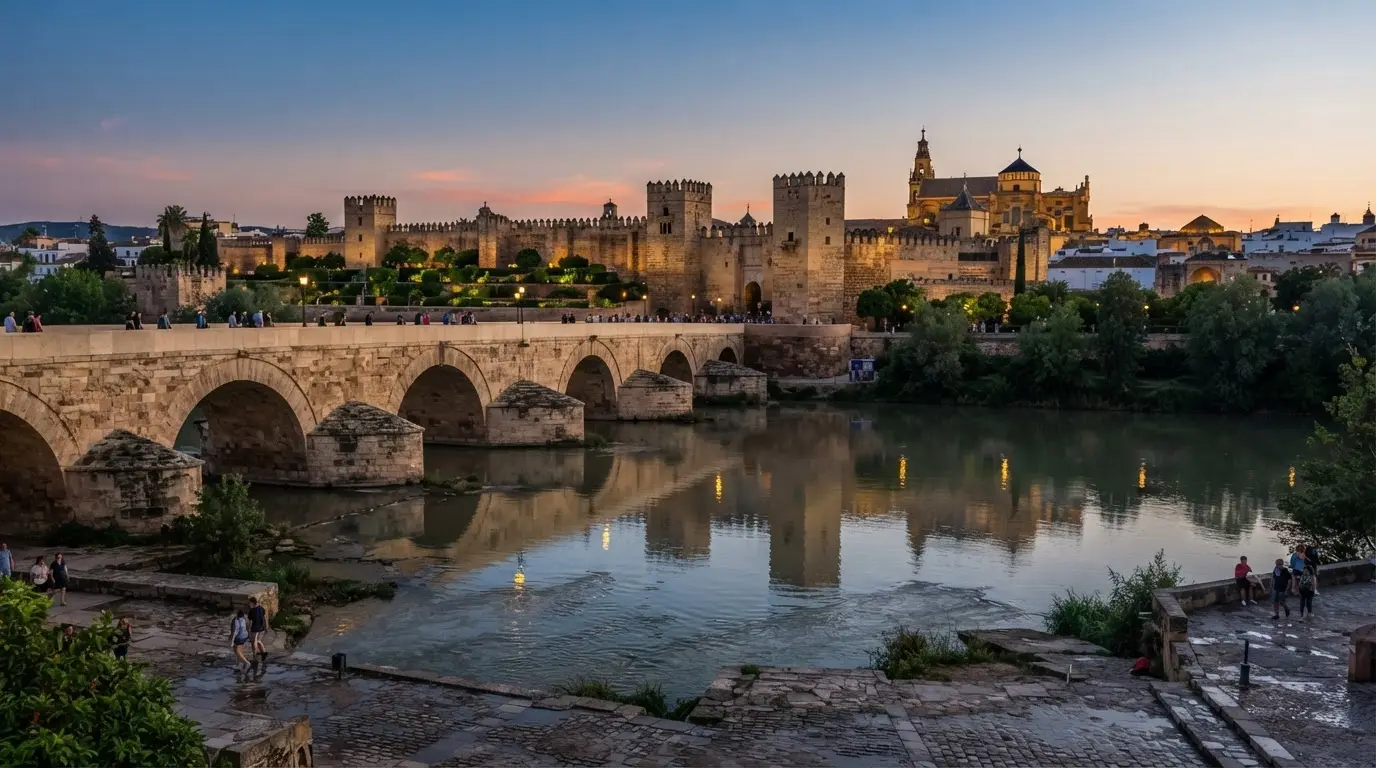
The place to stand is the Roman Bridge. The suburb of Shaqunda lay across it on the south bank of the Guadalquivir, and its 818 revolt ended in about 300 crucifixions and the expulsion of the survivors. The suburb is gone; excavations in the Miraflores area in 2001 were reported to bear out the repression.
His grandfather founded the dynasty: see Abd al-Rahman I. His son took the throne next: see Abd al-Rahman II. For the banquet massacre, the revolt and the exile, read the full story.
711–929
Muslim forces took Córdoba in 711, and governors ruled al-Andalus from it until Abd al-Rahman I declared an independent emirate in 756. He began the Mezquita in the 780s.
785 Monument
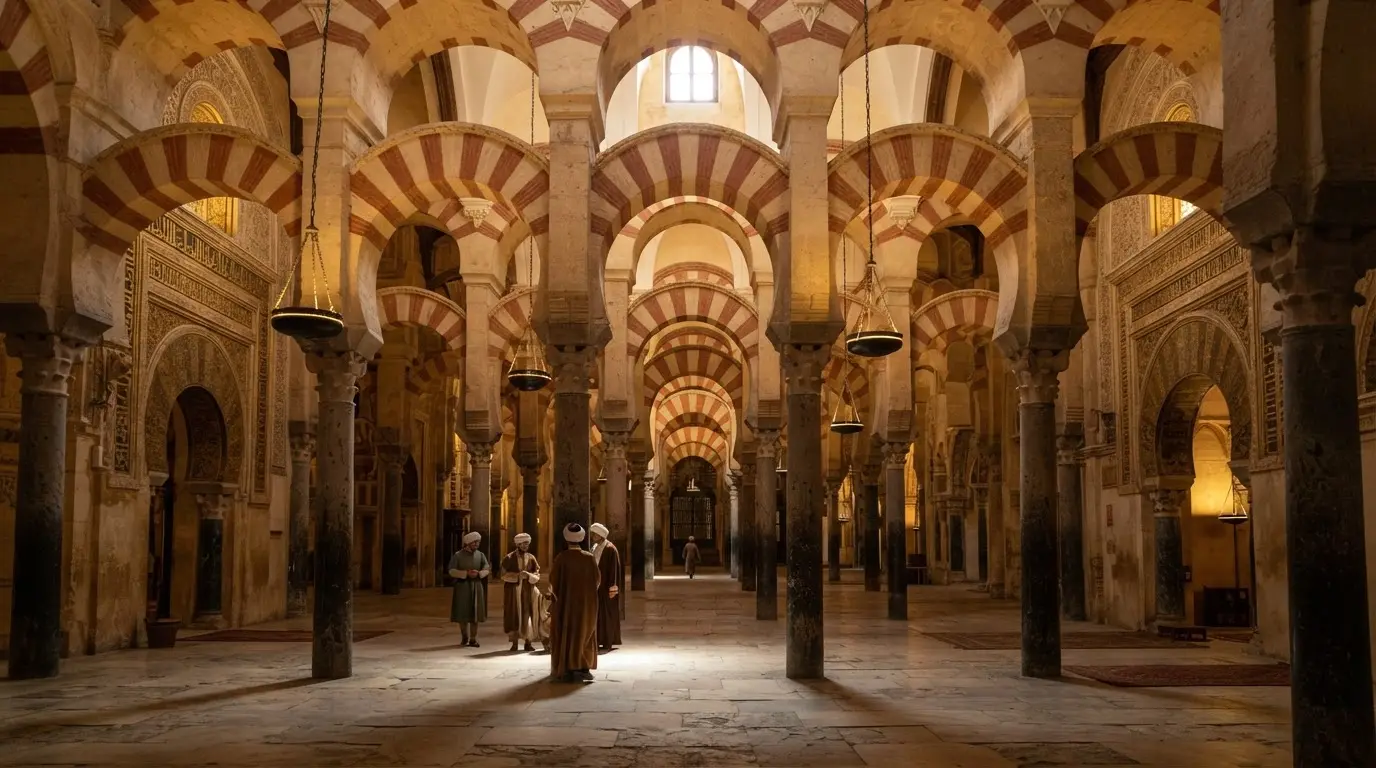
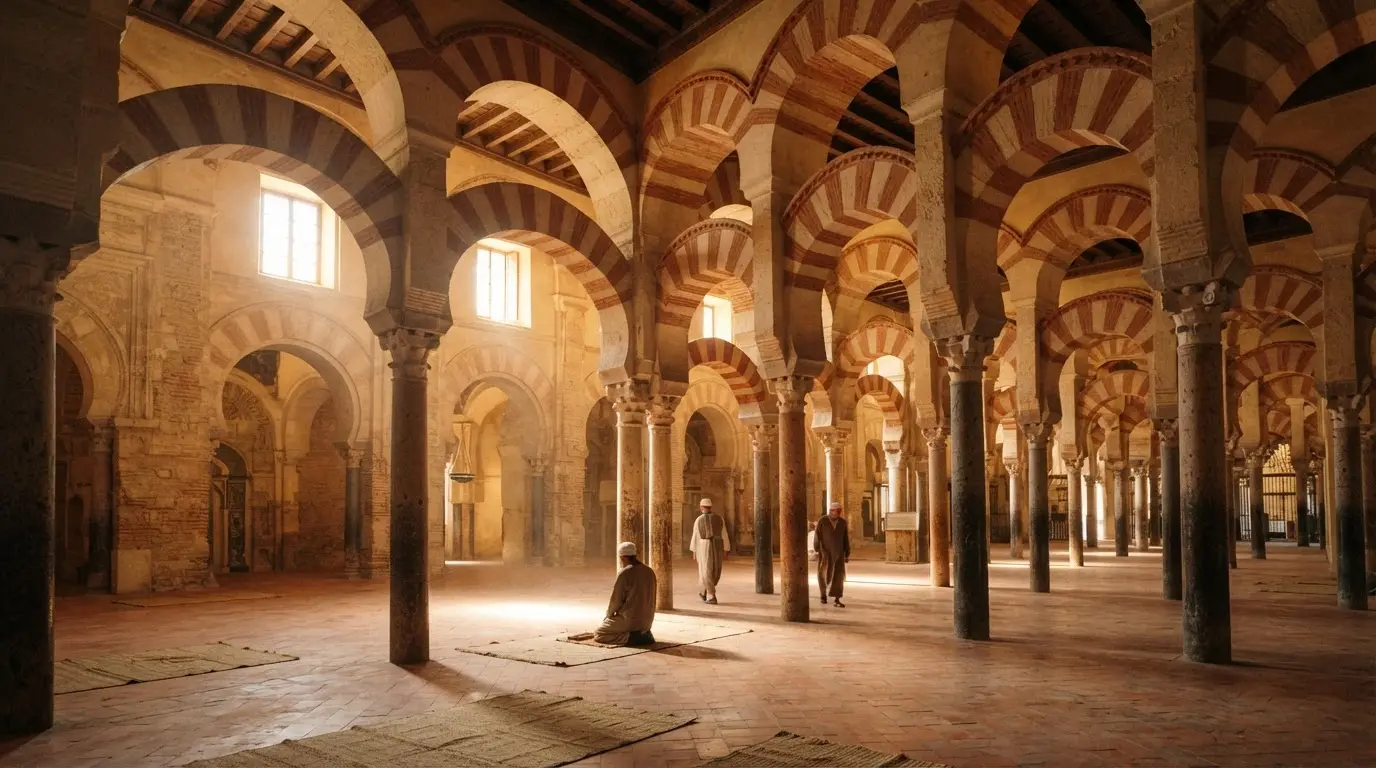
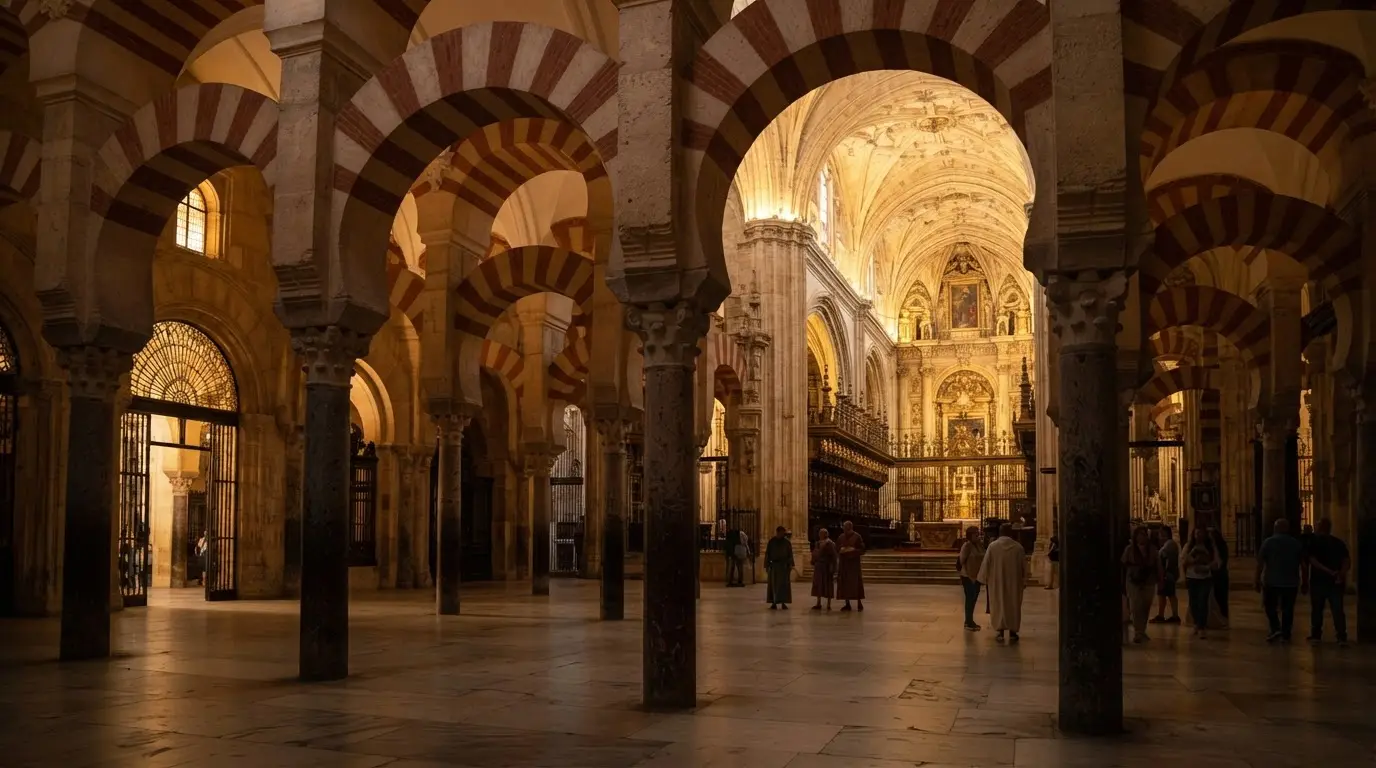
856 columns, 1,300 years of Islamic and Christian history. UNESCO monument in Córdoba, Andalusia. Red-and-white arches, Byzantine mosaics, a Renaissance nave.
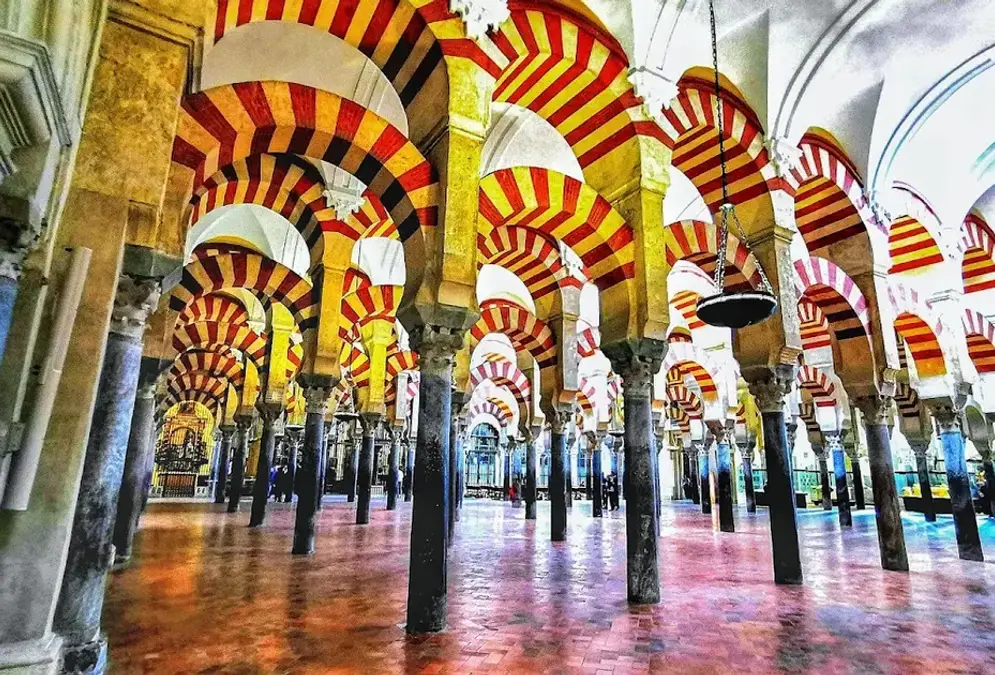
731–788 Historical figure
Abd al-Rahman I (731-788) founded the Emirate of Córdoba in 756 and began the Great Mosque. Where his trace remains in Córdoba today, and where to read more.
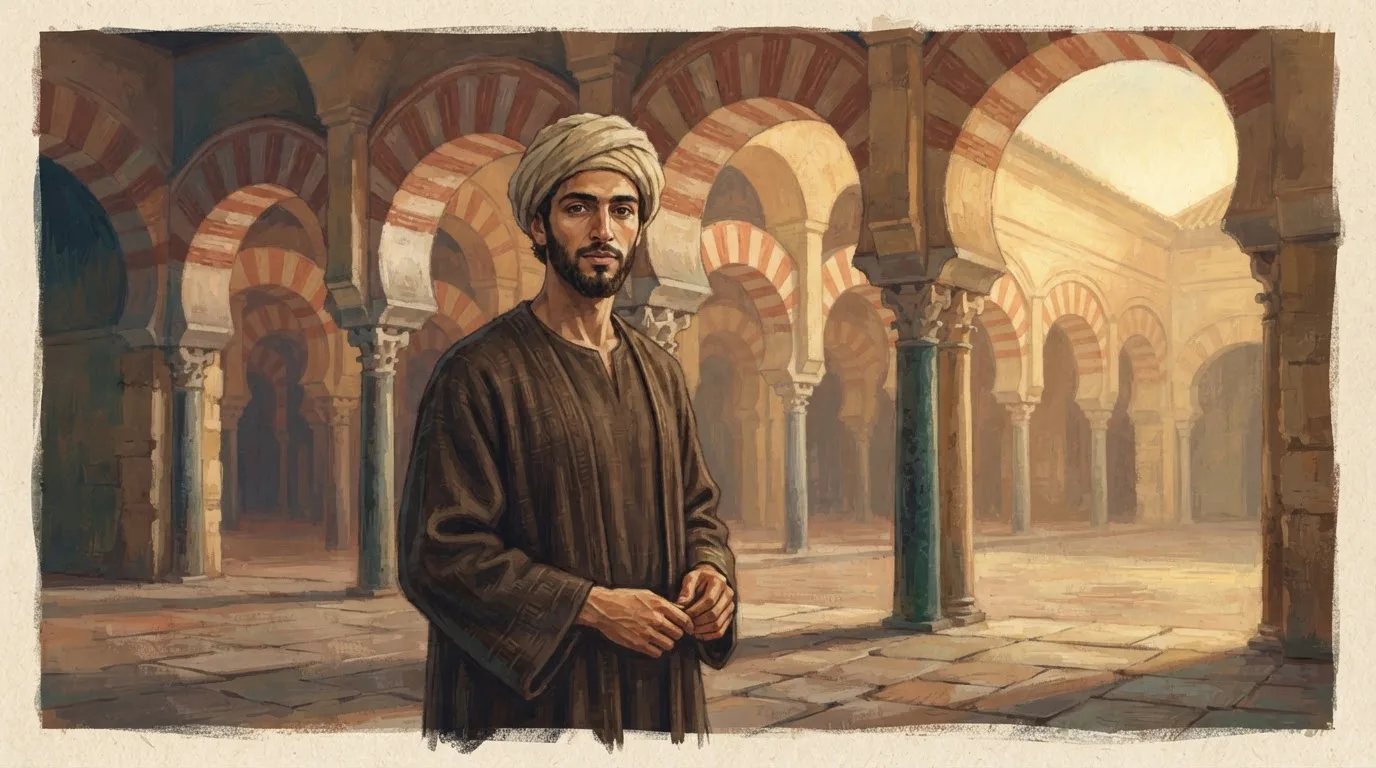
c. 790–857 Historical figure
Ziryab (c. 790-857), the Baghdad-trained court musician who settled in Córdoba in 822. Who he was, and the places and reading where his trace survives today.
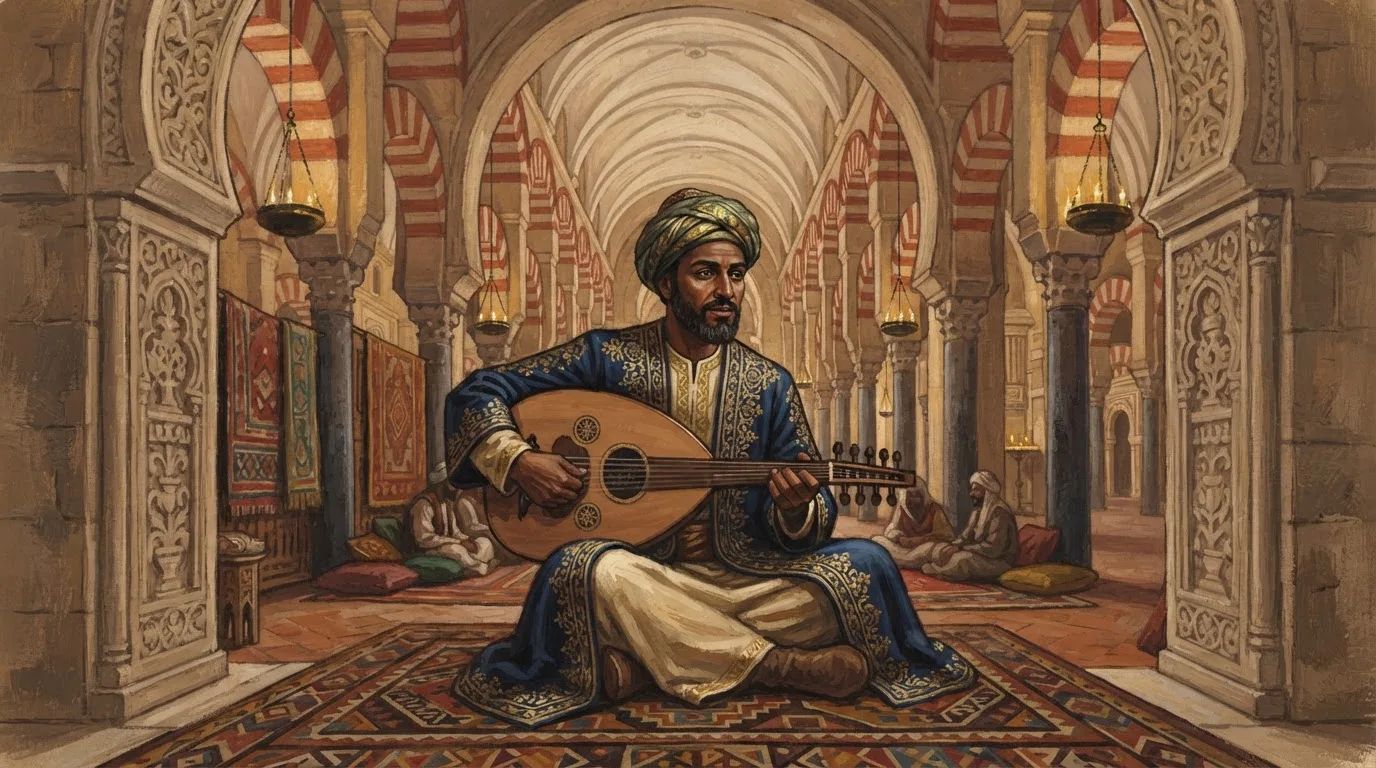
792–852 Historical figure
Abd al-Rahman II (792-852), emir of Córdoba from 822, expanded the Mezquita and patronised the arts. Where his traces still survive in the city today.
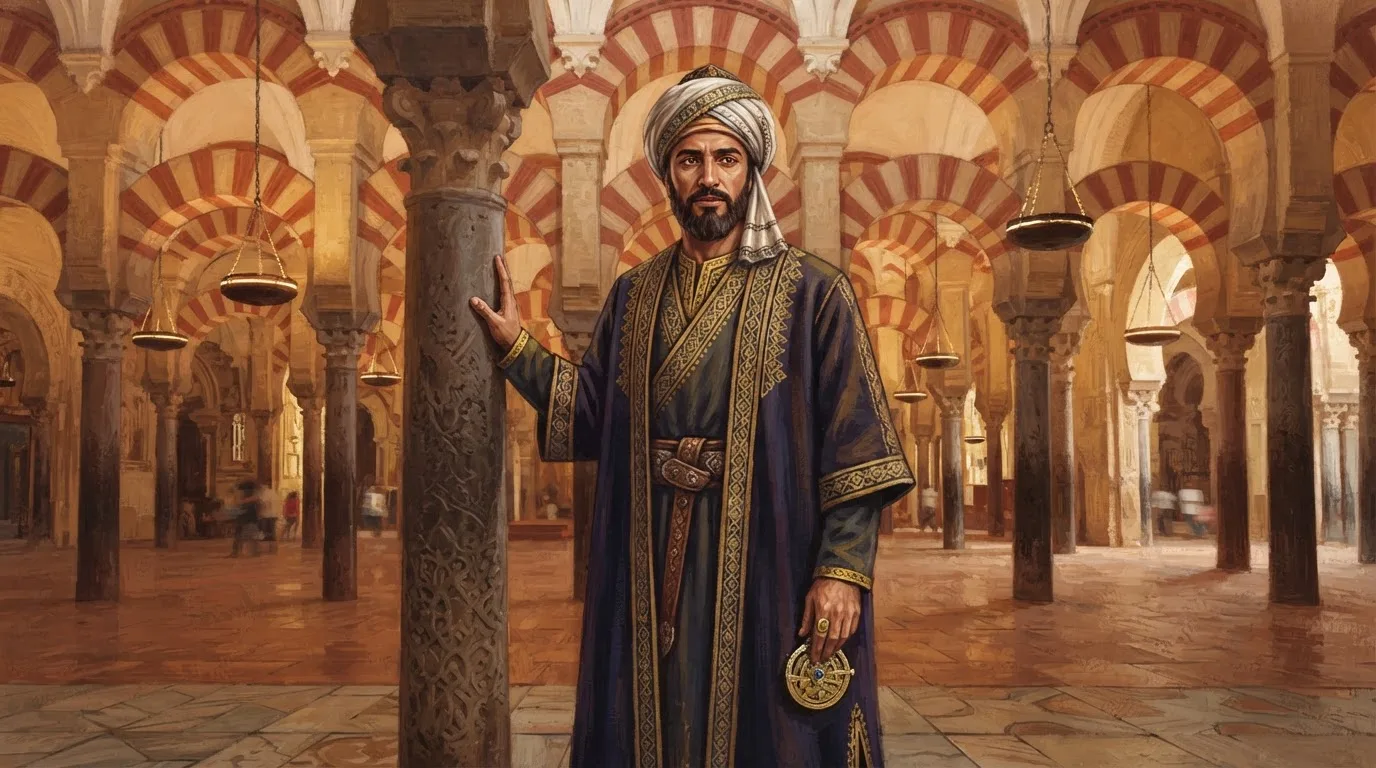
c. 810–887 Historical figure
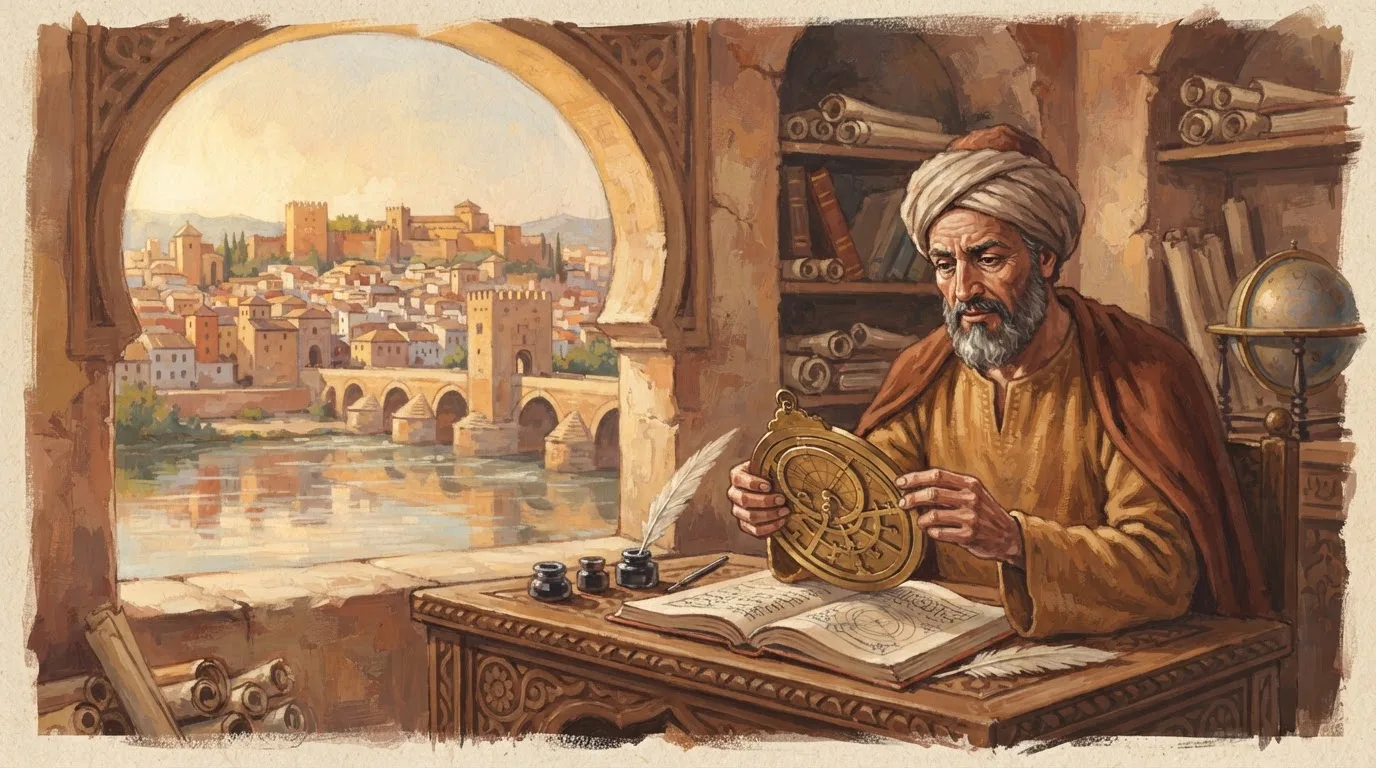
Ibn Firnas (c. 810–887), Andalusi polymath and court scholar of Córdoba. Cross the bridge that bears his name and read the full story of his flight legend.
Undated
Monument
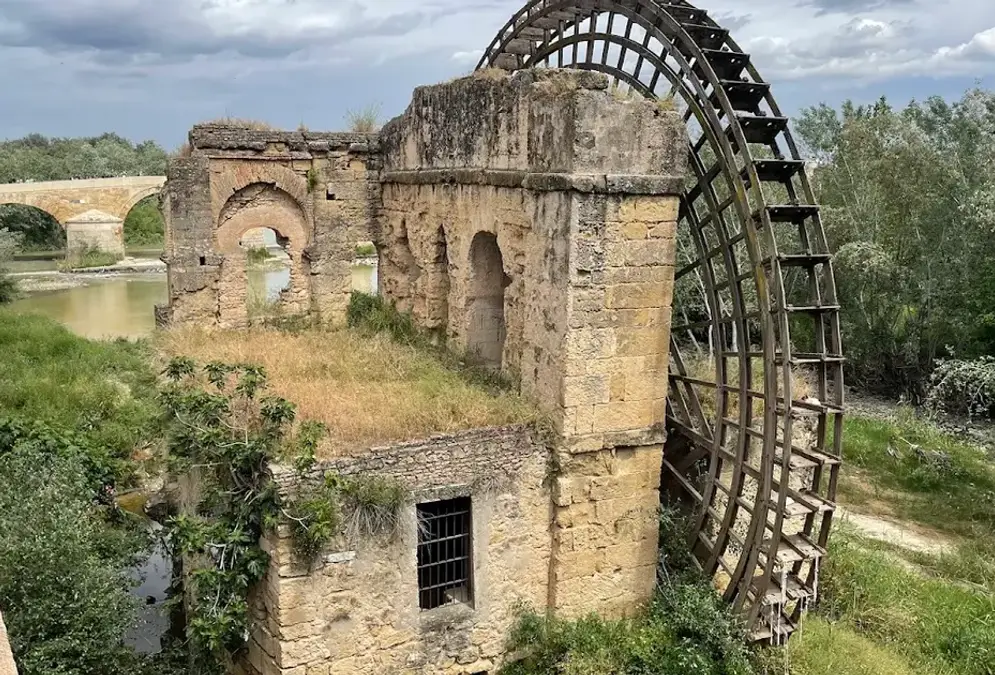
The Albolafia wheel turns again on the Guadalquivir, photographed from the Roman bridge against the Mezquita skyline. What's left of Córdoba's Arab mills.
Go deeper