
The Monasterio de la Encarnación is a working Catholic convent on calle Encarnación in Córdoba, home to Cistercian nuns since it was founded in 1510. Its church is protected as a Bien de Interés Cultural. This is a monument to know about rather than one to plan a morning around: no opening hours or admission price are published, and the community lives in enclosure.
How a bequest became a convent
The story starts in 1503, when the canon Antón Ruiz de Morales decided to leave his house for a beaterio, a lay religious house, to be run by his niece Juana González de Morales. Six years later, on 11 July 1509, a papal bull from Julius II turned the foundation into a convent. The prior of San Jerónimo de Valparaíso is named among those charged with carrying the bull out.
The convent itself was created on 2 April 1510, with Juana González de Morales as its first abbess. She resigned in favour of Guiomar de Albornoz, a nun of the convent of Las Dueñas.
Confirm access before you walk over
No hours or fees are published for the convent, and the nuns live in enclosure. Check with the community or the diocese first, and keep it as an optional stop rather than a fixed point in your day.
The church
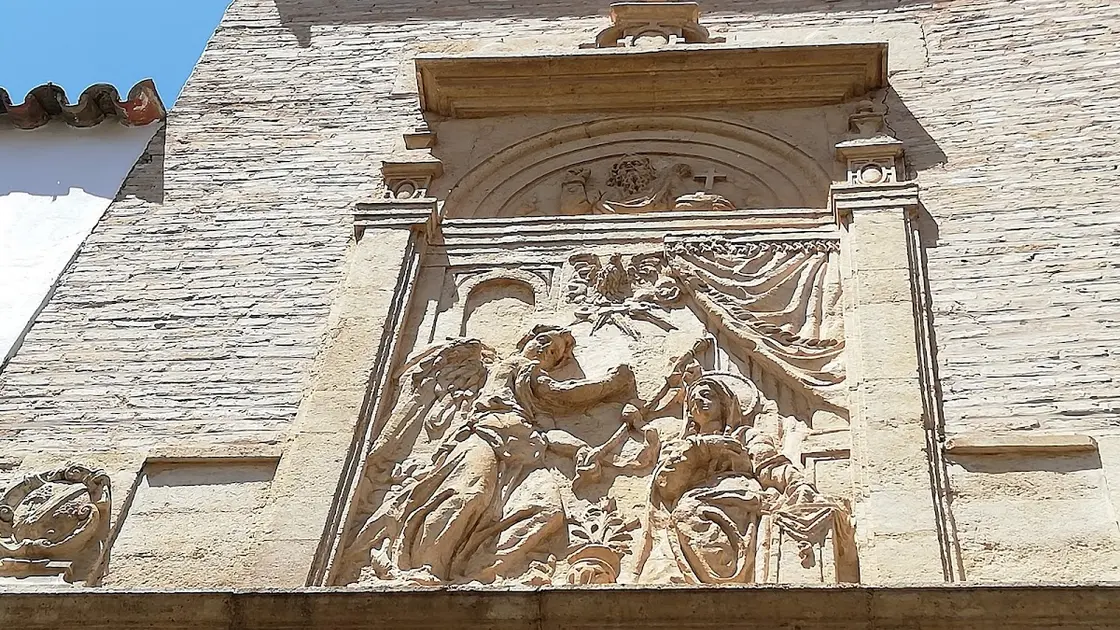
The convent church has a single nave with several altars, and the building is usually described as Baroque. The Junta de Andalucía's heritage institute, the IAPH, catalogues the building as the Convento de la Encarnación, asset number 19681.
The community also keeps a figure of the Christ Child that, by its own tradition, was found in the river on 11 December 1701 and donated to the convent on 8 January 1702.