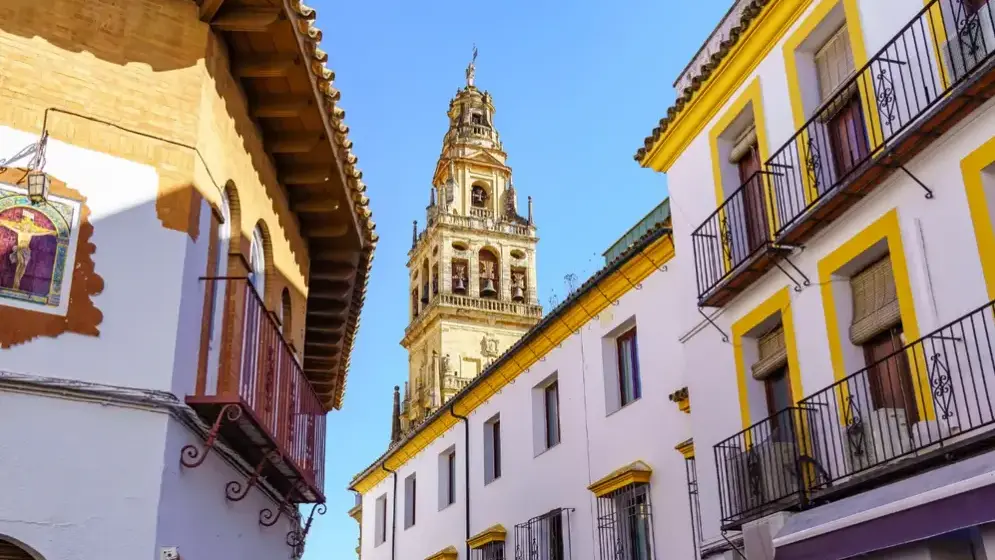

San Nicolás de la Villa is a Gothic-Mudéjar parish church whose tower, finished in 1496, stands on the remains of an Islamic minaret. It is one of the fourteen parishes founded by Ferdinand III that survive today, and it is still a working church rather than a museum. Come for the tower and the carved doorway; plan around the fact that no permanent opening hours are published.
What to see
The church was built in the style of those raised after Ferdinand III's conquest of Córdoba. It keeps its original Gothic-Mudéjar structure, an almost square floor plan with three naves and no transept.
The tower
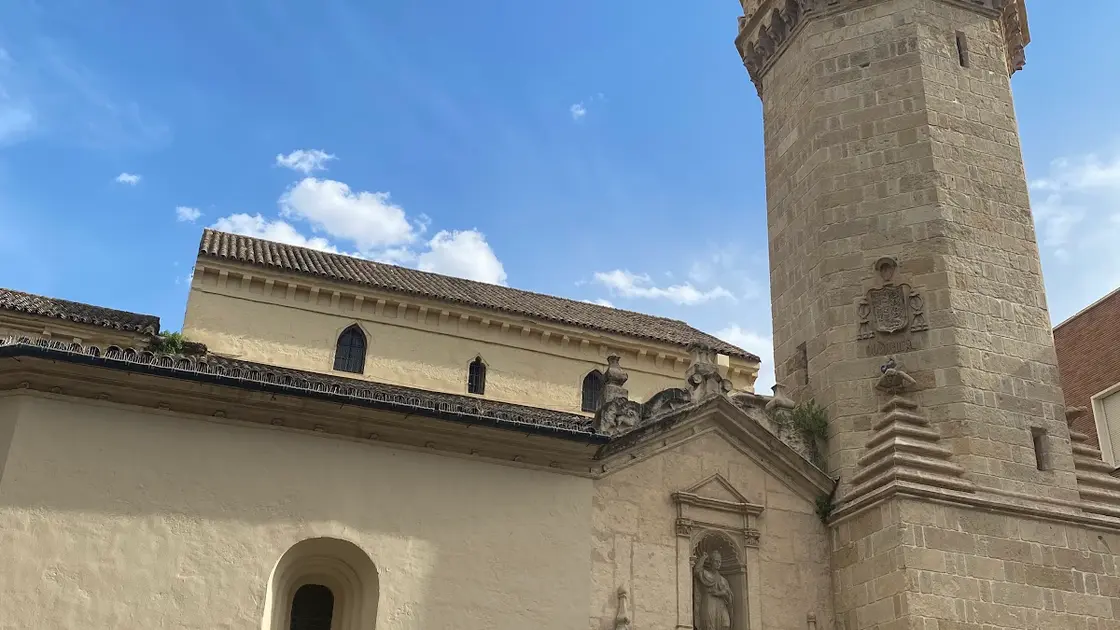
The tower is the main reason to detour here. Andalucía's tourist board notes its marked military air and dates it to the period of the Catholic Monarchs, built on the remains of an Islamic minaret. The Junta's heritage guide is more exact: it was finished in 1496 according to an inscription on one face, and is attributed to Gonzalo Rodríguez. An 18th-century brick belfry crowns the older shaft.
Its shape proved influential. The architect Carlos Sáenz de Santamaría replicated it for the 1929 Ibero-American Exposition in Seville, and that copy still stands on Avenida de la Reina Mercedes.
Doorways and ceilings
The main doorway dates from the 16th century and shows Renaissance and Mannerist influence. The Baptismal Chapel, built in 1540-54, is attributed to Hernán Ruiz II, and the north portal was executed in 1555.
Inside, the central nave is roofed with a polychrome Renaissance coffered ceiling. The sacristy has a Mudéjar alfarje ceiling with lacería and a central mocárabe, painted and gilded in Gothic style. Treat the sacristy as a bonus rather than a given on an ordinary visit.
The ochre exterior
Since the Baroque era the outside has kept a characteristic ochre limewash that hides and protects the masonry. The 17th and 18th centuries also reshaped the tower, the doorways and the roofs of the two side naves, which is why a medieval plan wears a Baroque finish.
Shoot the tower in its glazed roof detail
The 18th-century brick belfry is topped by a pyramidal roof covered in black, green and white glazed ceramic scales. Bring a longer lens or step back down the street to catch it against the ochre walls.
Why "de la Villa"
The name distinguishes this church from San Nicolás de la Ajerquía, another church in Córdoba.