
A Rival Capital by Design
Almanzor rose from palace notary to the effective ruler of al-Andalus by the late 970s, serving as ḥājib, chief minister, to the child caliph Hisham II.[7] Once his grip on power was secure, he abandoned the court at Medina Azahara and ordered a new capital built between 979 and 987 on the Guadalquivir's right bank, to house his family, his administration, his army, and the entire apparatus of government.[7] He called it Madinat al-Zahira, meaning 'flourishing city,' and the choice of name was not incidental.
The two cities are easy to confuse, and they were meant to be compared. Medina Azahara, Abd al-Rahman III's palace-city sits west of Córdoba, built a generation earlier as the ceremonial seat of the Umayyad caliphate. Madinat al-Zahira sits roughly twelve kilometers east[3] — Almanzor's answer to a court he no longer controlled, raised by the man who now ran the state in everything but title. One survives today as excavated ruins open to visitors. The other, until January 2026, was a name in the chronicles and nothing else.
Erased on Purpose
The order came first, and it came from the very dynasty Almanzor had built the city to serve. According to a later chronicle, on 15 February 1009 the caliph-claimant Muhammad al-Mahdi commanded his forces to 'raze the city, topple its walls, tear down its gates, dismantle its palaces, and erase all traces.'[8] Execution took longer than the order: Almanzor had died in 1002,[6] and his sons could not hold what he had built through force of personal loyalty alone. The crisis that followed climaxed in April 1009, when Córdoba's own population joined the demolition, looting and dismantling the city to wipe out every trace of the Amirid dynasty.[6] This was the opening act of the Fitna, the civil war that ended the Caliphate, four years later.
Almost nothing physical remained standing to investigate — which is precisely why the location took a thousand years, and twenty-two failed guesses, to even attempt to pin down.
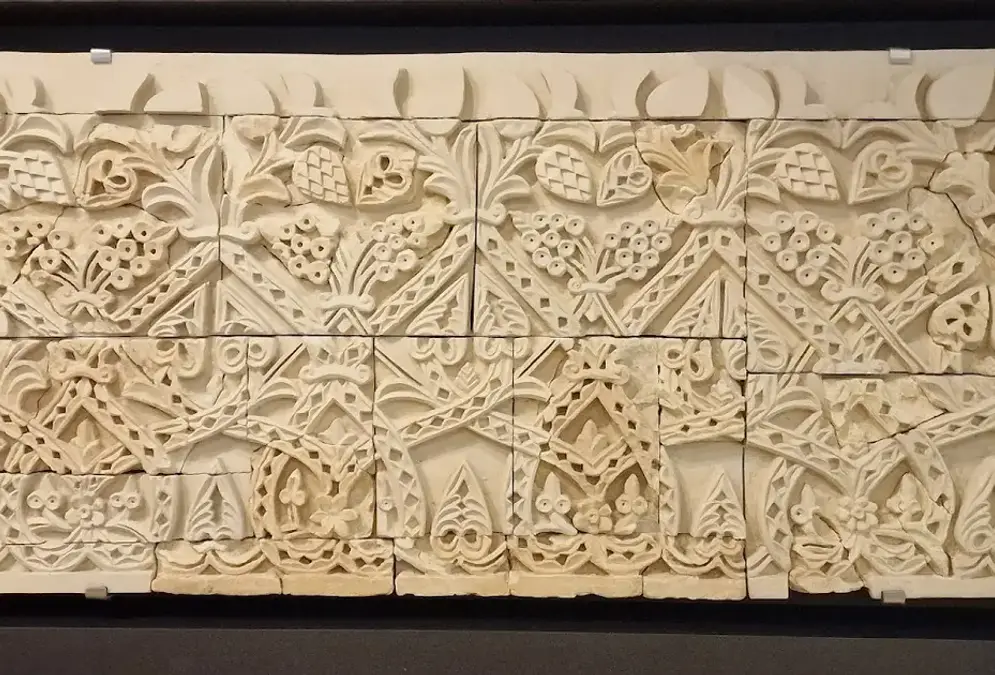
Explore nearby · Museum
Museo Arqueológico de Córdoba
33,500 pieces in a Renaissance palace built over a Roman theatre: mosaics, Iberian sculpture, Caliphal ceramics. Free for EU citizens. Closed Mondays.
A Thousand-Year Topographical Enigma
Unlike Medina Azahara, which survives as excavated ruins open to visitors today, Madinat al-Zahira was almost completely dismantled after Almanzor's fall, its stone likely reused as building material elsewhere around Córdoba. That disappearance is exactly what turned it into what one recent study calls a 'topographical enigma' — a lost address with no ruin field to survey.[9] Over more than a century, historians floated twenty-two separate hypotheses for where the city had stood. Every one of them relied on reading medieval chronicles and squinting at the modern landscape; none could point to a specific patch of ground and say, 'dig here, and see what you find.'[1]
22
That changed only in January 2026, when Antonio Monterroso Checa's study became the first of the twenty-two to rest on something other than literary interpretation: verifiable terrain data.[10] The distinction matters. A hypothesis argued from a chronicle can be debated forever. A hypothesis backed by measurable ground anomalies can be tested.
What the LiDAR Actually Found at Cabezos de las Pendolillas
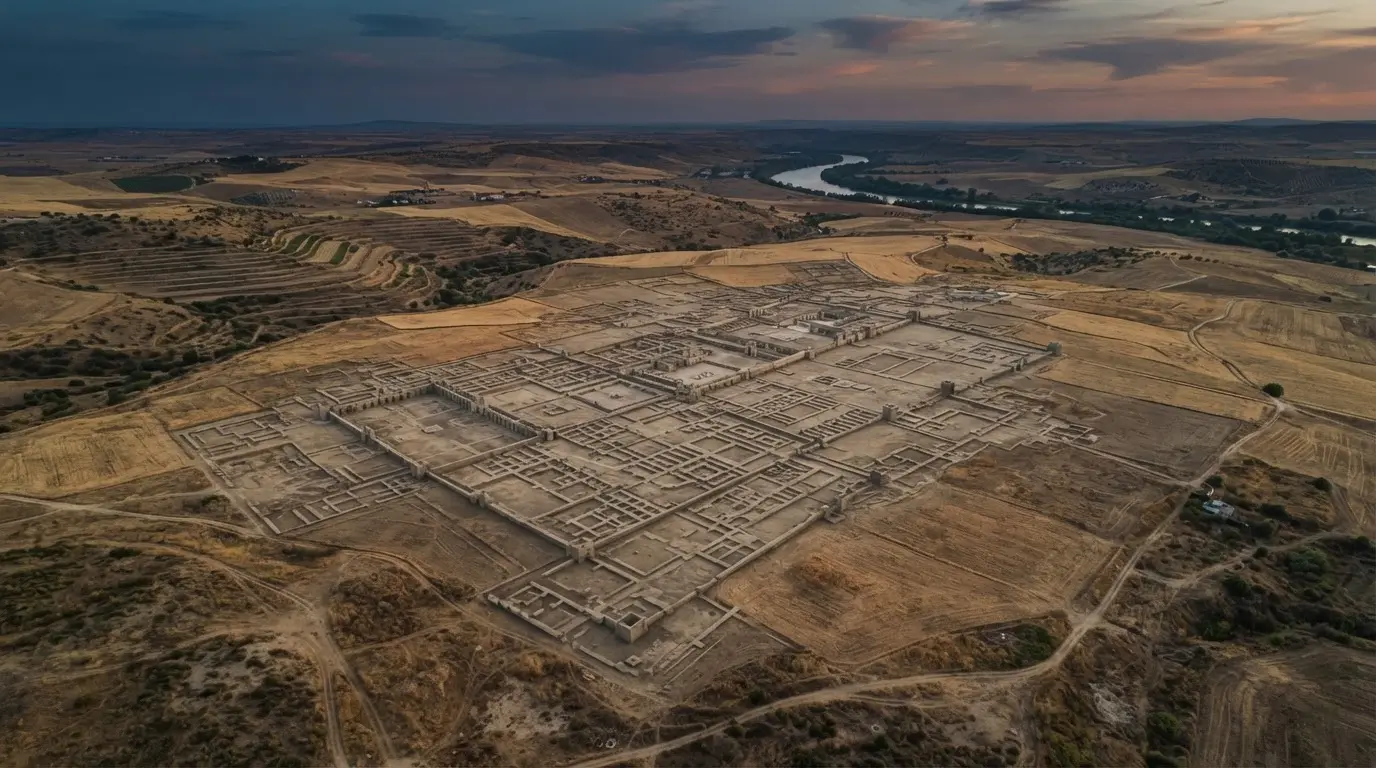
Monterroso Checa's method wasn't excavation, it was elevation data. Using LiDAR captured by Spain's National Geographic Institute (IGN), he mapped the terrain around Cabezos de las Pendolillas, a stretch of countryside near Alcolea, roughly twelve kilometers east of the Great Mosque.[3] What the scan found was not a natural landform. Across more than 1,200 linear meters, the terrain carries anomalies consistent with buried, planned construction:[4]
- Rectangular and square building footprints laid out in blocks, not scattered
- A terraced architectural organization adapted to the slope of the land
- Sections of orthogonal urban planning, with some structures facing southeast
None of that is what erosion or farming leaves behind. It is what a city leaves behind.
The scale is the second piece of evidence. Once mapped, the site's total estimated footprint comes to roughly 120 hectares — matching the size of Medina Azahara itself, and reinforcing the idea that Almanzor built his rival capital to be just as monumental as the one he had abandoned.[5]
From Royal Stud Farm to Excavation Target
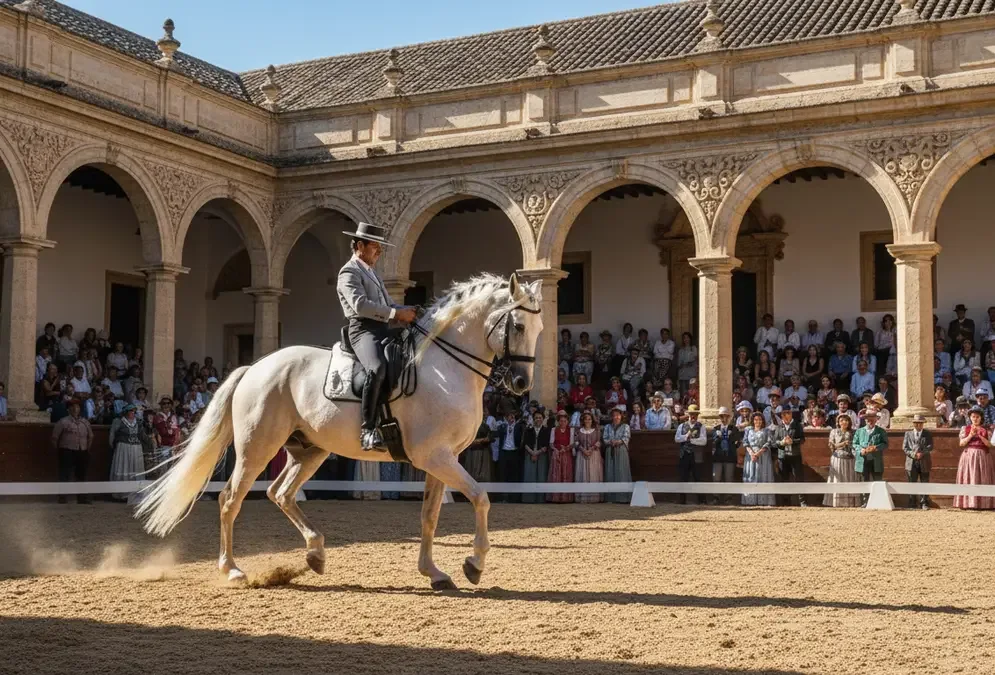
For five centuries, nobody digging into the history of Cabezos de las Pendolillas was looking for a lost caliphal capital. From at least the 15th century, the land was documented as a dehesa tied to the Crown's Royal Domain, and under Philip II it became the seat of the Royal Stud Farms, pastureland for the monarchy's horses, not a demolished seat of government.[11] Whatever Almanzor built there had already vanished from memory by the time anyone thought to write the place down.
It would not be the first time Córdoba has found something enormous hiding under an ordinary use. Workers renovating City Hall once stumbled onto Córdoba's Roman temple, buried underneath without looking for one either. What LiDAR has done for Madinat al-Zahira is narrow a thousand-year guessing game down to one testable patch of ground; the next step, an actual excavation, hasn't happened yet. Until it does, the flourishing city Almanzor built to outlast a caliphate remains exactly what it has been for a thousand years: a strong hypothesis, not a confirmed address.
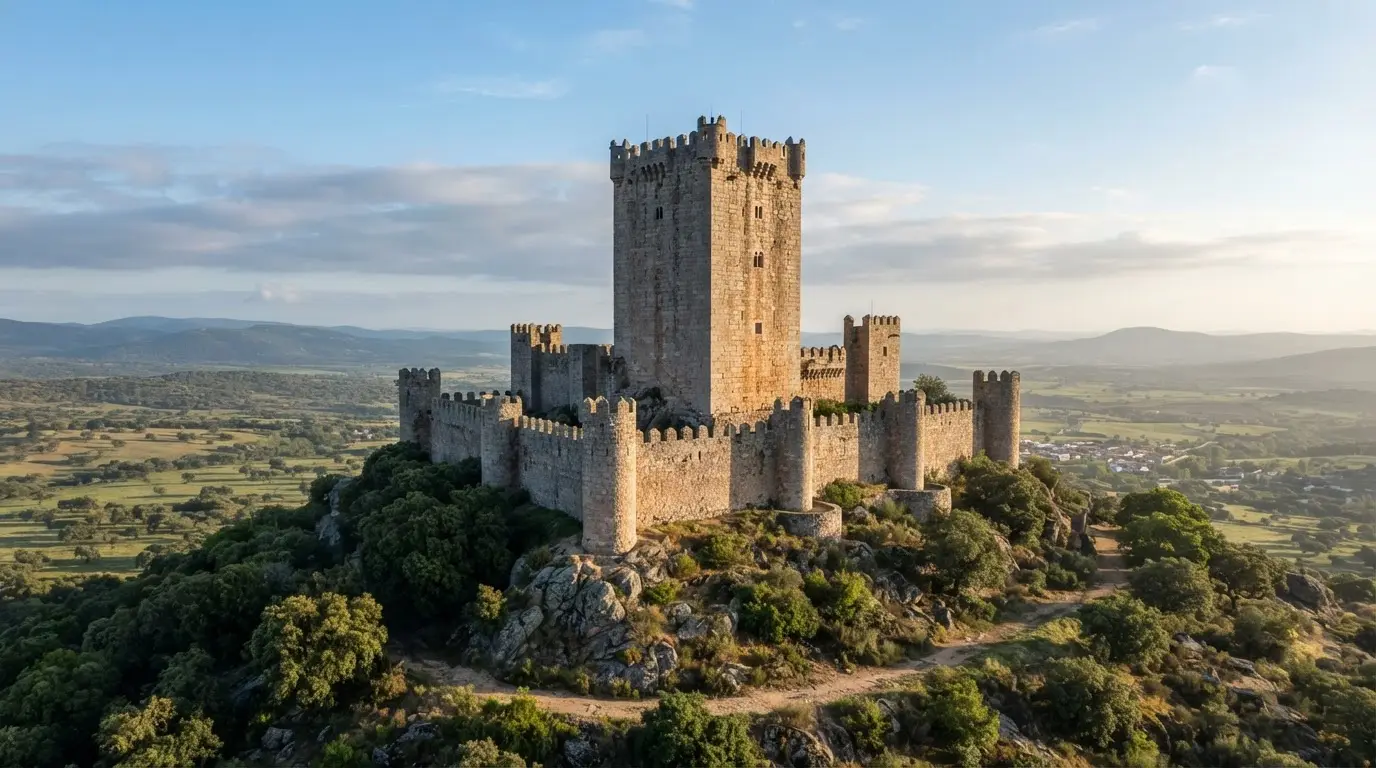
Deep dive · Article
47 Metres Tall and Almost Unknown: Spain's Tallest Keep
Belalcázar Castle's 47 m keep is listed by the Junta de Andalucía as Spain's tallest. How it grew, what to see inside and how to book the free guided visit.
Recommended tours
Tours are selected for quality, not commission. We earn a small fee if you book — at no extra cost to you.