
The Raid at Finca El Palancar
Police first took an interest in Finca El Palancar in January 2012, after investigators learned of a serious looting incident at the nearby Alcurrucén archaeological site, a stretch of Roman-era villas and burial grounds that forms part of the wider Roman Córdoba story.[4] Two months later, officers from the Judicial Police Brigade of Jaén searched the property and recovered two Roman bronze statues that the brothers who owned the land had been hiding.[5] Both figures showed real damage: one was missing its head and part of the abdomen, the other its genitals, though most of the broken fragments turned up alongside the statues themselves.[6]
The statues were not meant to stay in Spain. Investigators said the brothers were preparing to sell the pair to a private collection.[7] A separate account, traced by Wikipedia to a 2020 RTVE documentary on the case, names the intended buyer as a Qatari sheikh working through an Italian intermediary — a claim resting on that single television investigation and not independently confirmed here.[8] Whichever version is closer to the truth, the destination was the same: out of Spain, and out of public reach, for good.
A Black-Market Price and a Light Sentence
Police valued the pair at around six million euros each when they seized them[1] — a figure they benchmarked against a similar bronze that had sold at auction in 2007 for twenty-eight million euros.[9] For two statues found hidden under farm buildings near Pedro Abad, it was a startling number, and it explains why the case reached a specialist art-crime unit rather than a routine burglary desk.
The prosecution that followed was almost anticlimactic. The two brothers pleaded guilty and accepted a sentence of six months in prison for misappropriation of the statues; a more serious smuggling charge was dropped along the way, and no restitution payment was ultimately ordered.[10] For statues valued in the millions, it was a light landing — and a reminder that Spain's heritage-protection laws, at the time, carried far less bite than their subject matter deserved.
What Are the Ephebes of Pedro Abad?
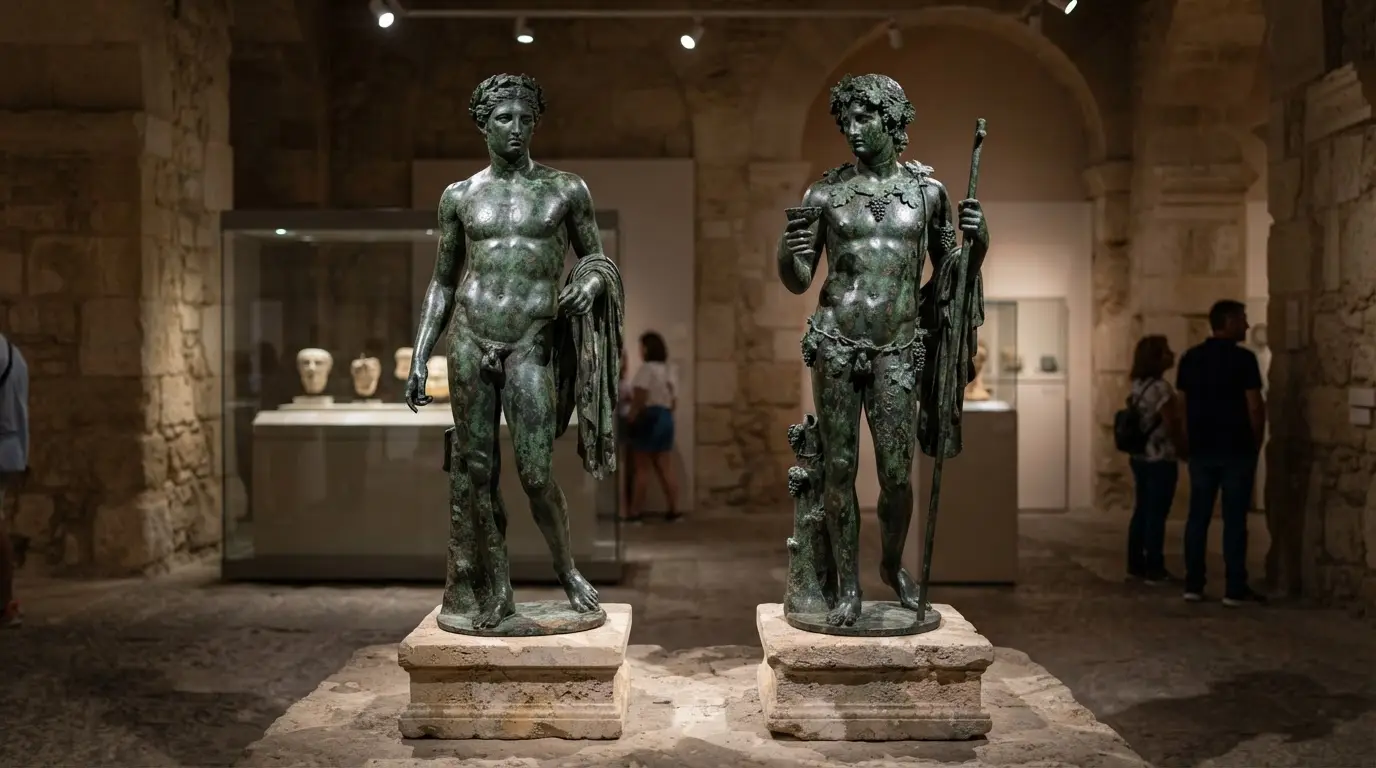
The two statues are formally known as the Efebo Apolíneo and the Efebo Dionisíaco, bronze figures of nude young male servants dating to the 1st or 2nd century AD.[2] They belong to a rare type of decorative sculpture known as a lampadóforo, or lamp-bearer, used by Roman households to hold trays and lamps during banquets in the triclinium, the formal dining room found in the Roman houses of Córdoba belonging to the city's wealthiest families.[12] Only eight bronzes of this kind are known to survive anywhere in the world, in museums from Naples to Berlin, and Córdoba's is the only pair ever found together.[2] The Apolíneo stands 1.4 metres tall and weighs 48 kilograms; the smaller Dionisíaco stands 1.22 metres and weighs 31.[11]
Early research points to a specific origin: a Roman villa near the ancient town of Sacili Martialium, identified with the Alcurrucén site itself, in what is now the municipality of Pedro Abad.[13] That origin ties the ephebes to the same countryside villas and forgotten roads that keep turning up fragments of Roman Baetica across the province.
Explore nearby · Museum
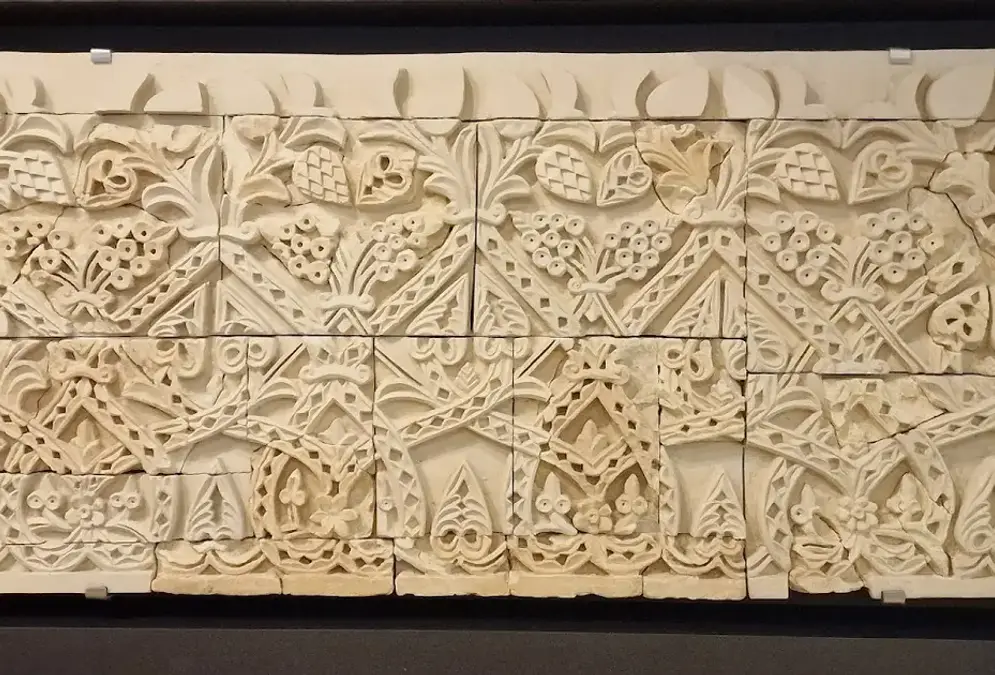
Museo Arqueológico de Córdoba
33,500 pieces in a Renaissance palace built over a Roman theatre: mosaics, Iberian sculpture, Caliphal ceramics. Free for EU citizens. Closed Mondays.
A Restoration Without Precedent
The ephebes spent years in limbo before anyone could put them on show. They were declared a Bien de Interés Cultural (BIC), Spain's highest heritage-protection category, on 14 May 2019 — nearly seven years after the raid.[14] Until then, and for another year afterward, they sat in storage at Córdoba's own Archaeological Museum, the same institution that would eventually display them, waiting for funding and a restoration team.[15]
The Instituto Andaluz del Patrimonio Histórico (IAPH) in Seville, led by conservator Constanza Rodríguez, was authorized to begin a study and conservation program on the statues in 2020, but hands-on restoration treatment did not start until March 2021 and ran for roughly two and a half years, wrapping up in October 2023.[3] The team pieced the fragments back together using a material never before applied to Andalusian heritage conservation: polyamide-12, a 3D-printable polymer normally reserved for car parts and aircraft components, used here to rebuild the statues' internal support structure.[16] The work was sponsored in part by the private Fundación Magtel, alongside the regional government.[18]
From the Reina Sofía to Permanent Display in Córdoba
Before Córdoba got them back, the restored ephebes made one more stop. From 15 November 2023 to 4 March 2024, they stood upright for the first time ever, on loan to Madrid's Museo Reina Sofía for the Picasso 1906 exhibition, opened by King Felipe VI and Queen Letizia.[20] It was a temporary appearance, not a change of ownership — the statues belonged to Córdoba, and they were always coming home.
They arrived at Córdoba's Archaeological Museum on 9 October 2024, going on permanent public display for the first time since their seizure twelve years earlier.[21] At the unveiling, regional Culture Minister Patricia del Pozo said the ephebes were being shown "for the first time in Córdoba, standing and fully restored."[22] The restoration itself later won an accésit at the 2025 Hispania Nostra heritage awards, recognised for its technical rigour.[19]
Deep dive · Article
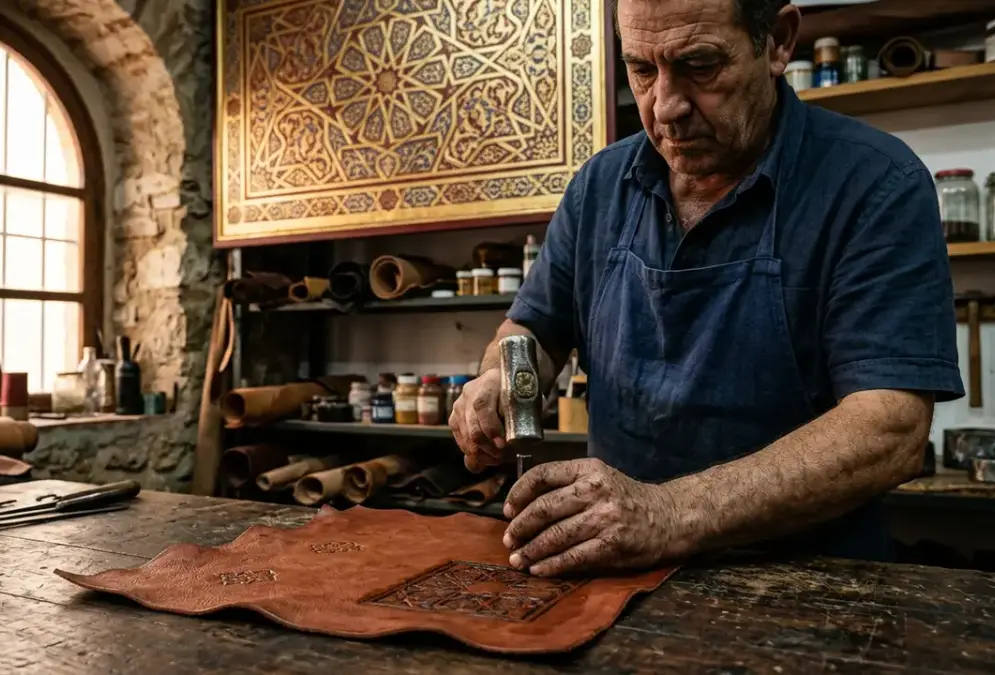
Cordobán Leather: The Craft That Named the English Cordwainer
Córdoba gave English its word for shoemaker. How medieval goatskin tanned with sumac became Europe's finest leather and named a London guild still active today.
Recommended tours
Tours are selected for quality, not commission. We earn a small fee if you book — at no extra cost to you.
What still isn't settled is who was really waiting on the other end of that black-market sale. The private-collection buyer named in the court record has no public face; the Qatari sheikh mentioned in a single television documentary has never been confirmed elsewhere. For now, the ephebes stand under museum lights in the city closest to where they were made, the closest thing this story has to an ending anyone can verify.