The Santuario de la Fuensanta is the shrine of Córdoba's co-patron Virgin, set on the edge of the city where, by tradition, a spring appeared after an apparition. It is a Bien de Interés Cultural in the Monument category, declared by Junta de Andalucía Decree 8/2007, and its small fountain shrine, the humilladero, is the only fully Gothic construction in Córdoba. Come for the ex-votos and the camarín rather than for grand architecture; this is a working devotional place, not a museum.
The legend of the spring
Tradition says the Virgin appeared to a wool-carder named Gonzalo García, and that the well beside the church marks the spot. The date of the apparition is disputed: the Junta de Andalucía's provincial historical archive leans towards 1442 over 1420. Treat both as tradition, not record.
The documented story starts later. The church seems to have been begun around 1450 and finished in 1454, and the works were recorded as complete by 1494. In 1455 Queen María, wife of Alfonso of Aragon, visited and funded a hospice.
Confirm access before you go
No permanent opening hours are published, so ask locally about opening, Mass times and the camarín before making a special trip.
What to look at
The humilladero and the well
The humilladero is the Gothic fountain shrine, the oldest-feeling corner of the complex. The well curb is a much later addition: early 20th-century Neo-Gothic work by the sculptor Mateo Inurria. So you get Gothic from two different centuries, side by side.
The church and the camarín
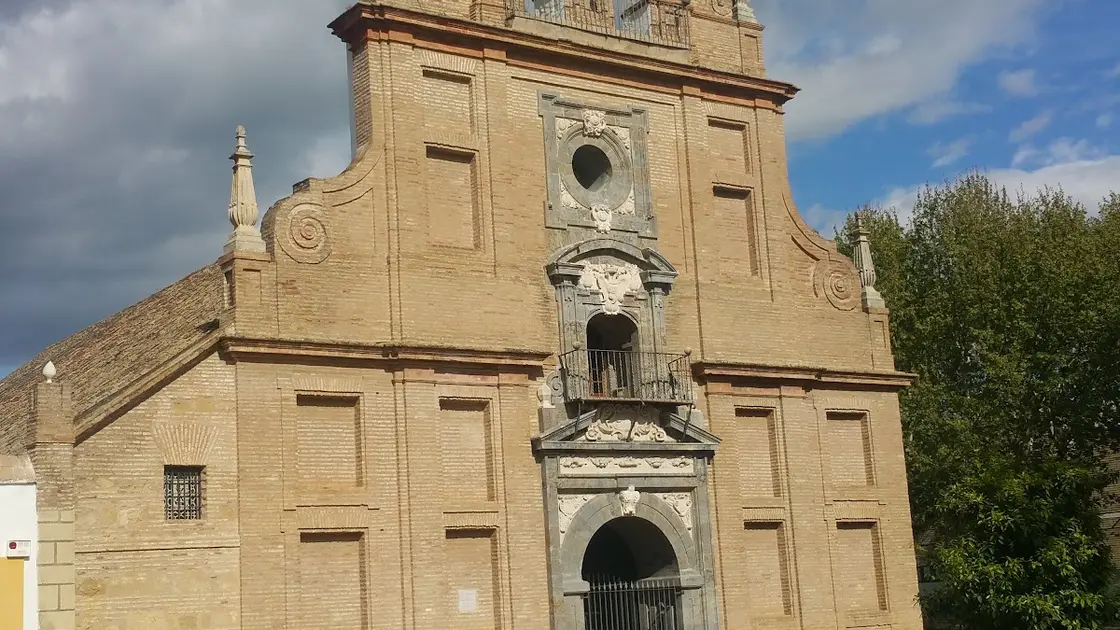
The church is the result of several rebuildings, one of them in 1646 that gave it its Baroque structure. It is presided over by a camarín of the late 17th century that houses the image of the Virgin, reached by a staircase of red Cabra marble where ex-votos are displayed.
The ex-votos and the flood tiles
The offerings are the reason to linger. The Junta's heritage record counts 472 ex-votos, including 49 painted ones dated between 1800 and 1897. Under the portico beside the patio, the surviving ex-votos include a caiman and a whale rib. On the walls, tiles mark how high the Guadalquivir rose on certain dates, a reminder of how close the river runs.