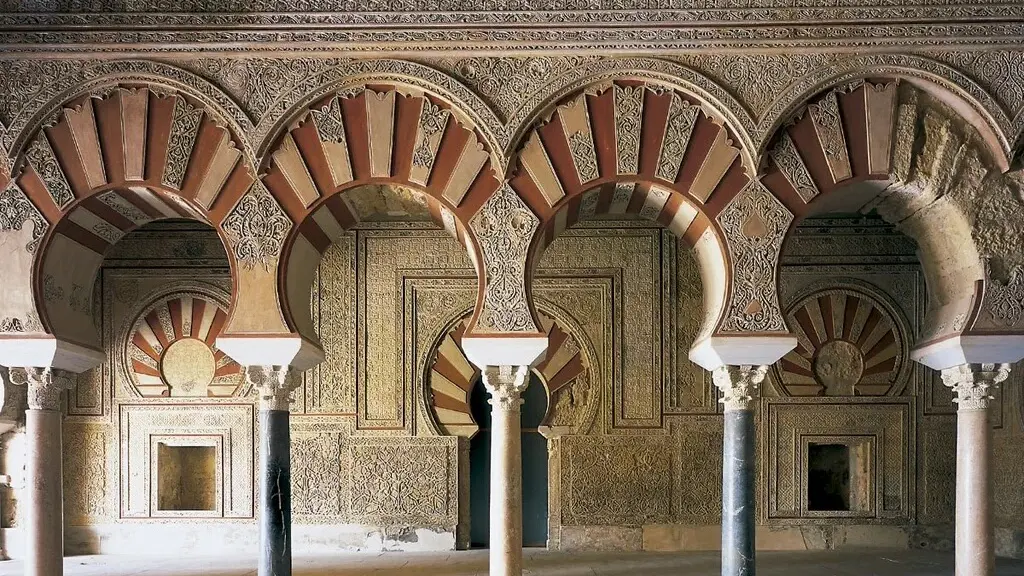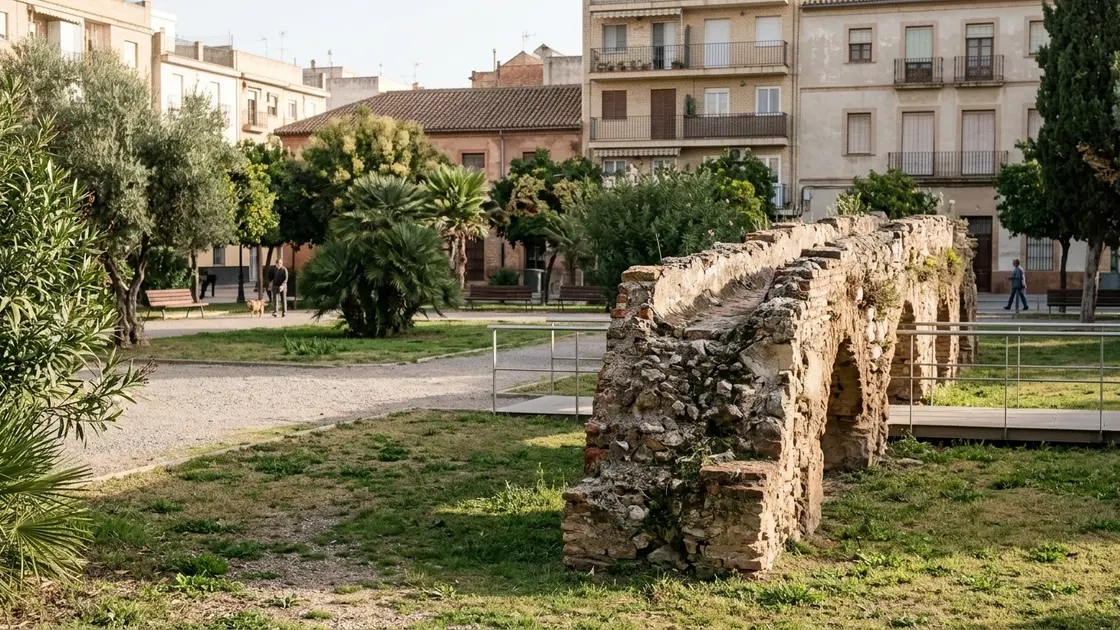

The Valdepuentes Aqueduct is a Roman water channel for Corduba that the caliphs later reused to supply Madinat al-Zahra. It runs mostly underground, so there is no arcade to photograph. Come for the engineering story, and know before you go that the best-preserved structure, the caliphal bridge, sits on private land.
What the aqueduct is
The IAPH heritage sheet gives the aqueduct a route of 24 km, fed by two intake branches on the north-western side of the Córdoba sierra: the Arroyo Bejarano at Santa María de Trassierra and the Veneros de Vallehermoso. The main channel is a rectangular box of 90 x 64 cm, built in opus caementicium and lined inside with opus signinum.
Most of the line is buried. Only short raised stretches, carried on opus incertum retaining walls, break the surface, which is why Corduba's water supply never left a skyline of arches behind.
The drop shafts on the Valdepuentes slopes
The slopes of Valdepuentes hold the technical curiosity. The IAPH counts 39 drop shafts (pozos de resalto) in barely two kilometres, a cascading device that slowed the water on a steep descent. The same sheet knows of only one thorough parallel, the Yzeron aqueduct at Lyon, dated to the Julio-Claudian period.
Do not plan a walk to the caliphal bridge
The IAPH places the tenth-century bridge-aqueduct inside a private estate, and no visiting arrangements are published. Treat it as something to read about, not a stop to build a route around.
From Roman channel to caliphal supply
Two inscriptions refer to the building of the aqueduct, and it is also known as the Aqua Vetus or Aqua Augusta, one of three aqueducts serving Roman Corduba. Inside the city, the IAPH describes two branches: a main one entering at the north-eastern corner of the wall to feed the upper town, and a secondary one heading for the south-west.
The tenth century added a second life. Caliphal engineers reused the box of the first-century Aqua Augusta and built a new bridge-aqueduct of unmistakably caliphal workmanship, the structure most people now mean by Valdepuentes. The IAPH records water reaching the pool of another palace, Darnnaora, on 31 January 941.
The supply fed the palace, not the town around it. For the full account of how the water reached Medina Azahara, including the drainage side, read How the Valdepuentes Aqueduct Fed Medina Azahara.