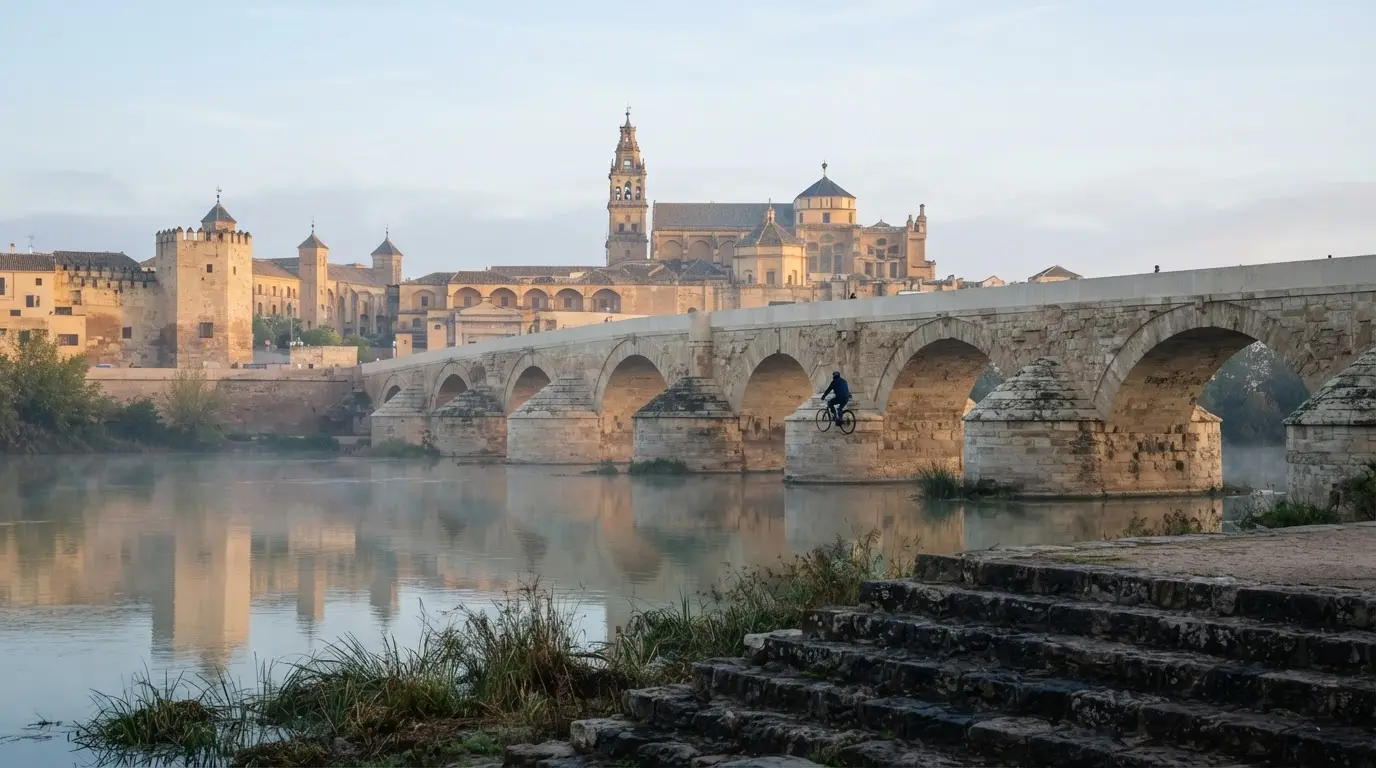

Córdoba, the city that would not bow to the Goths
In 584 Leovigild caught his son in Córdoba,[1] a city that had refused to acknowledge Gothic lordship for 20 years and that a scholarly dictionary of Christian biography calls the headquarters of the imperial and Catholic power in the peninsula.[3] Leovigild had wanted it long before, and a place with centuries of Roman Córdoba behind it was worth a night attack. John of Biclaro, the contemporary chronicler of the reign, has the king enter by night, subdue a city long in revolt against the Goths and keep it for himself.[4]
- c. 572
- 581
Arian synod at Toledo
Rebaptism of converts is no longer demanded.[14]
- 583-584
Siege of Seville
The city falls in 584 and the rebellion collapses upriver.[17]
- 584
Hermenegild caught in Córdoba
Deposed and sent into exile at Valencia.[1]
- 13 April 585
Traditional date of death
Birth date unknown.[24]
When this happened is less settled than the story suggests. The same dictionary dates the fall to "early in 572?", question mark included,[5] the translator of Biclaro's chronicle reads its fourth year of Leovigild as 570-571,[6] and Leovigild became sole king when his brother Liuva died in 571 or 572.[7][8] A fair summary is c. 572, give or take a year.
Córdoba was not the only holdout, since other parts of Baetica also stood outside Visigothic rule.[9] The point to carry forward is that Córdoba does not change hands in 584. A prince is taken there, a decade or so after the city itself was brought to heel.
A Frankish bride, a province and a plot in Seville
Leovigild's answer to a divided court was marriage. He gave his son Hermenegild a Frankish bride and part of a province to rule,[10] and a later account puts the couple, Hermenegild and Ingunthis, in Seville to secure family peace.[11] Peace did not last.
Biclaro's wording is blunt: Hermenegild "initiated a coup" through the plot of Queen Gosuintha, and once the rebellion was launched he was shut in Seville.[12] The dates of the revolt shift by a year or two from one account to the next, but the shape is constant, a king's son holding a great river city against his father.
Religion sharpened the quarrel. In 581 Leovigild gathered a synod of Arian bishops at Toledo,[13] and the Arian council dropped the old demand that Catholic converts be rebaptised, an easier road into the king's church.[14] Leander of Seville, the Catholic bishop of the rebel city, ended up banished.[15]
Whether Hermenegild himself had turned Catholic is the question later writers cared about most, and Biclaro never mentions it.[16]
Seville falls, and the prince runs for Córdoba
Leovigild marched south for the siege of Seville, which lasted through 583 into 584.[17] Biclaro says the city fell partly through hunger, partly through the sword and partly because the king shut off the Baetis, as the Guadalquivir was then called;[18] the Catholic account makes it a siege of nearly two years.[19] Cutting the river that fed a city is a cold and effective piece of engineering.
The Byzantines, with their own foothold in the south, were drawn in as well. In the Catholic tradition Leovigild bought their betrayal of the prince for 30,000 gold solidi.[20]
After Seville fell, Leovigild went up the Guadalquivir valley to Córdoba, and there the rebellion collapsed.[17] By road today the A-4 covers the 141 km from Seville to Córdoba in about 1 h 42 min.[34] Spanish scholarship reads the prince's flight as probably aimed at Córdoba,[21] and Biclaro's sentence is flat: Leovigild "caught his aforementioned son in the city of Cordoba", and the deposition and the exile to Valencia follow in the same breath.[1]
Other accounts add a scene Biclaro does not give. In them Hermenegild took refuge in a church at Córdoba and was enticed out by false promises, with an imperial prefect bribed to give him up.[22][23] Treat the church as tradition rather than chronicle, vivid and possible but resting on later telling.
Martyr or rebel: who wrote Hermenegild's afterlife
Biclaro records only that Hermenegild was killed by Sisebert in the city of Tarraco, with no word on why.[25] The version that shaped Catholic Europe comes from Pope Gregory the Great's Dialogues: Leovigild sent an Arian bishop to the prison on Easter Eve of 585,[26] and the prince, refusing communion from him, was beheaded on Easter Day.[27]
Gregory the Great's Hermenegild is a Catholic martyr who rose against the tyranny of an Arian father.[28] Gregory of Tours, writing in Frankish Gaul, was colder: "Poor prince, he did not realize that the judgment of God hangs over anyone who makes such plans against his own father, even if that father be a heretic."[29]
The Spanish record sides with neither. Biclaro and Isidore of Seville, the writers closest in time and place, show no martyr at all.[2] Biclaro's interest lay in what came next: in the first year of his reign Hermenegild's brother Reccared became Catholic by God's help.[30]
Deep dive · Article
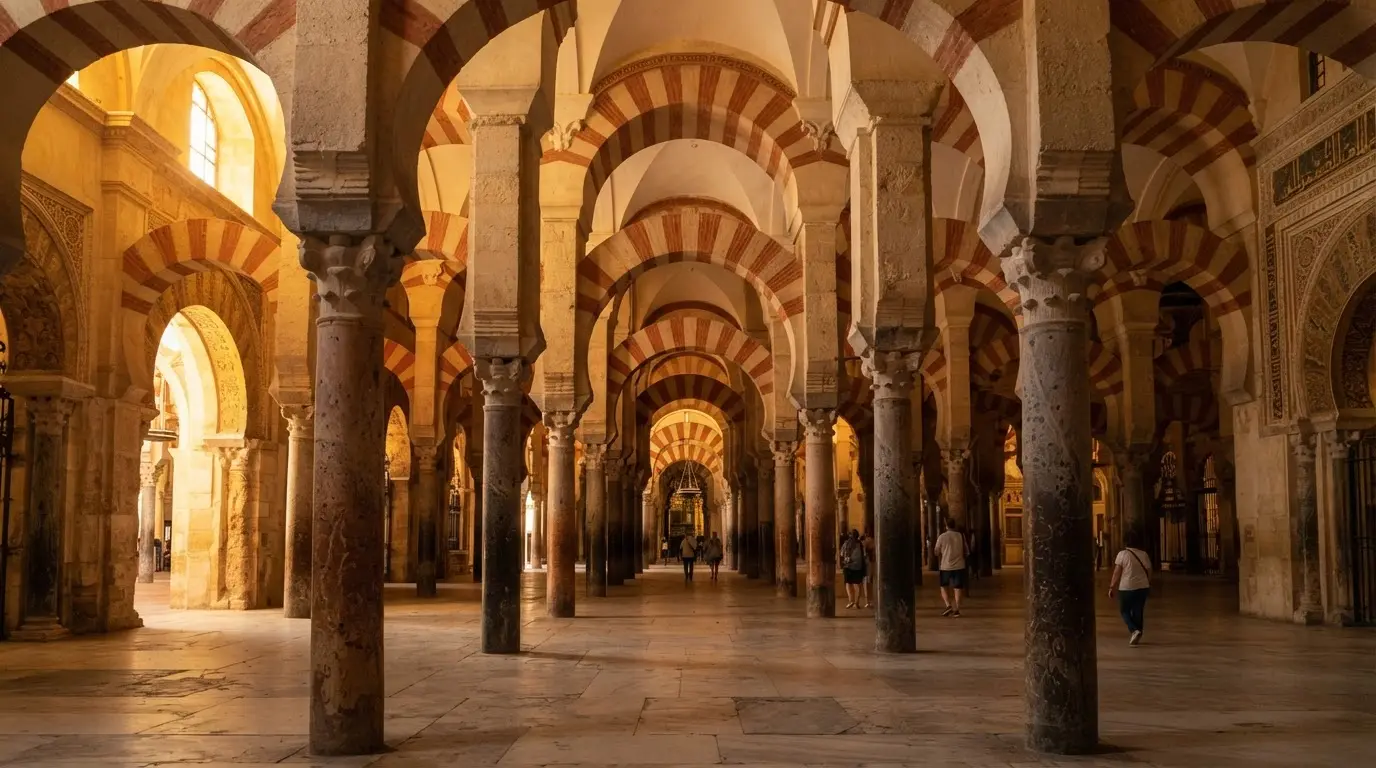
Abd al-Rahman III: The Morning Córdoba Became a Caliphate
Abd al-Rahman III was the first Caliph of Córdoba, declared on January 16, 929, ruling Córdoba for 49 years and starting work on Medina Azahara in 936 CE.
The cult came late and from outside. In 1585, at the urging of Philip II, Pope Sixtus V authorised the veneration of Hermenegild in Spain,[31] a millennium after the traditional date of his death. Córdoba's later reputation for convivencia belongs to a different century and a different set of rivals, because the Arian quarrel ended in conversion, not coexistence.
What survives in Córdoba of Hermenegild's century
No sourced monument, plaque or tomb in the city is tied to Hermenegild himself, so his Córdoba is a moment rather than a place. The nearest physical witness is from his century: in the basement of the Mezquita-Catedral lie the archaeological remains of the Visigothic Basilica of San Vicente.[32]
A brick inscription reading EX OFF LEONTI names the workshop that supplied the materials and dates the construction to the 6th century.[33] Nothing ties the prince to that church, but it is the closest surviving trace of the Christian city he was caught in, and part of the Córdoba that existed before the Mezquita.
Explore nearby · Monument
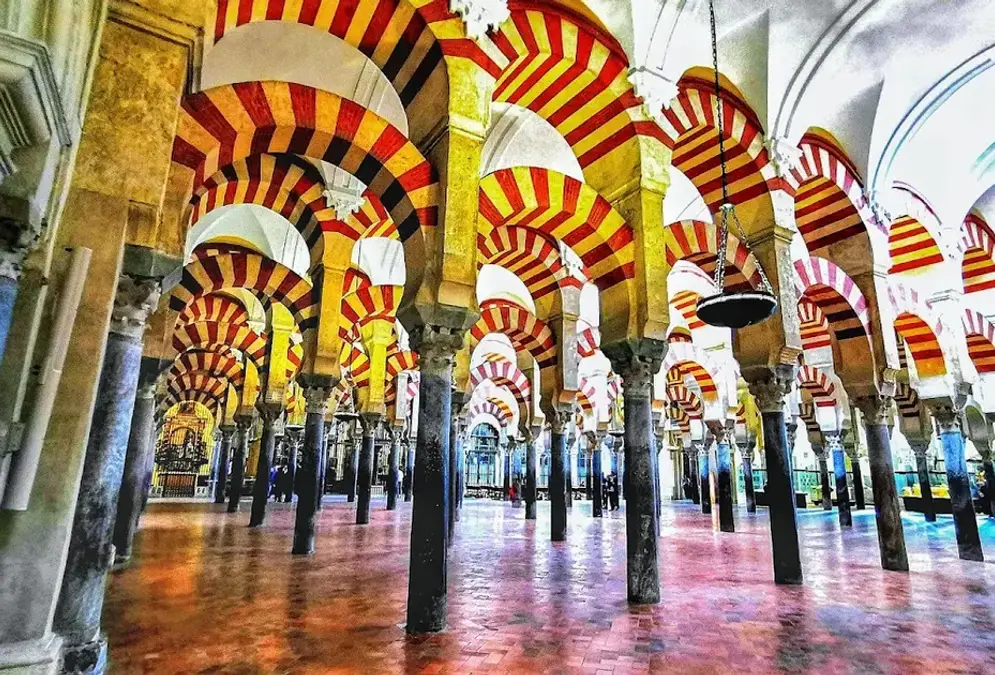
Mezquita-Catedral de Córdoba
856 columns, 1,300 years of Islamic and Christian history. UNESCO monument in Córdoba, Andalusia. Red-and-white arches, Byzantine mosaics, a Renaissance nave.
The river is the one piece of geography that has not changed. Leovigild came up the Guadalquivir valley to reach the city,[17] and anyone walking the south bank today follows the same line of approach.
Recommended tours
Tours are selected for quality, not commission. We earn a small fee if you book — at no extra cost to you.
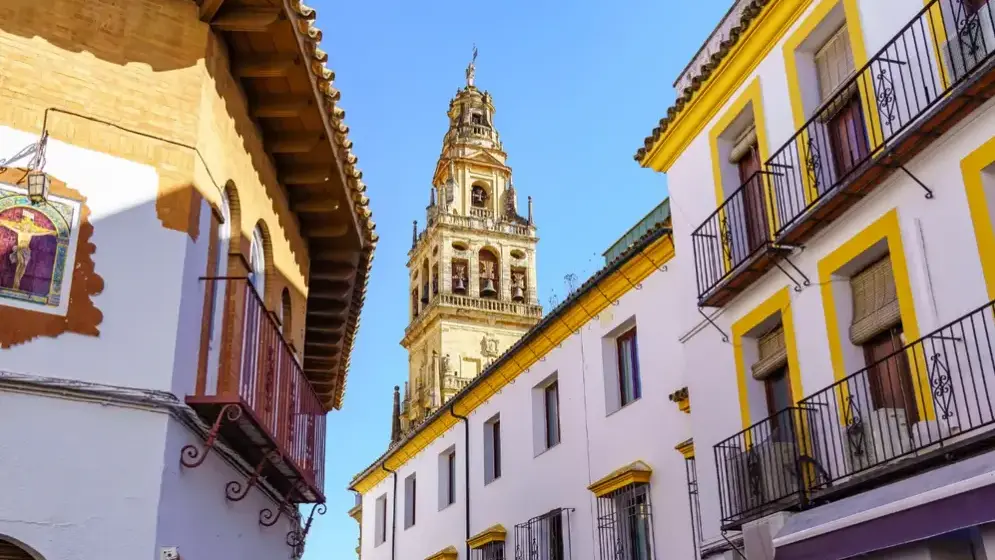
Within a few generations the kingdom Leovigild fought to hold was gone, and Córdoba belonged to the dynasty of Abd al-Rahman I. The Gothic prince's story survives mostly in the chronicles, with the basilica's brick stamp as the one thing you can stand in front of.