
What the Hall of Mosaics holds
The Alcázar's Hall of Mosaics is a room of Roman mosaics shown on its walls. The city's tourism board describes a series of Roman mosaics, discovered underneath the Corredera, displayed around its walls[1]. That is the whole provenance the official text gives, and it is worth holding on to.
The square above is a 17th-century Castilian plaza. The pavements beneath it belong to Roman Corduba. Plaza de la Corredera: Córdoba's Rectangle With Roman Roots tells the square's story in full; this piece stays with the objects.
A mosaic is a picture built from small cut stones, so what you see up close is texture: rows of tesserae following the outline of a figure, a darker band for a shadow, a pale field around it. The panels are displayed around the walls of the Hall, so you can step close for the texture, then stand back and let the figures resolve.
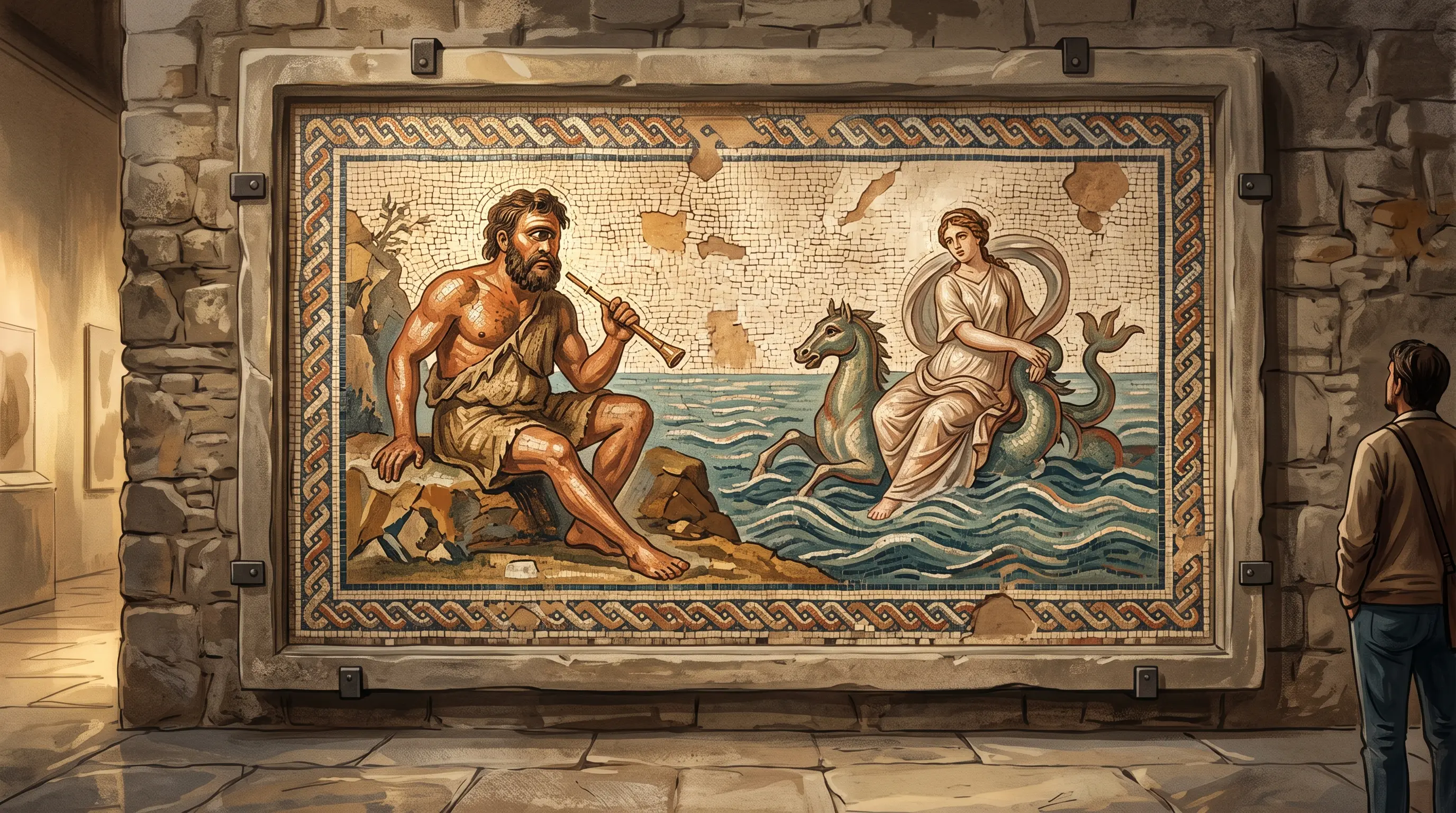
The Polyphemus and Galatea panel
A colourful panel shows the Cyclops Polyphemus wooing the sea-nymph Galatea[3]. A catalogue record held by the Theoi mythology gallery places it in the Alcázar de los Reyes Cristianos[4] and gives its period as Imperial Roman[2], with no century attached.
That restraint is useful. Older web pages give a 2nd or 3rd century date, but the sources checked for this article do not, so none is stated here. The Imperial period runs for several centuries; "Imperial Roman" is accurate and no more precise than the evidence in hand.
Explore nearby · Monument
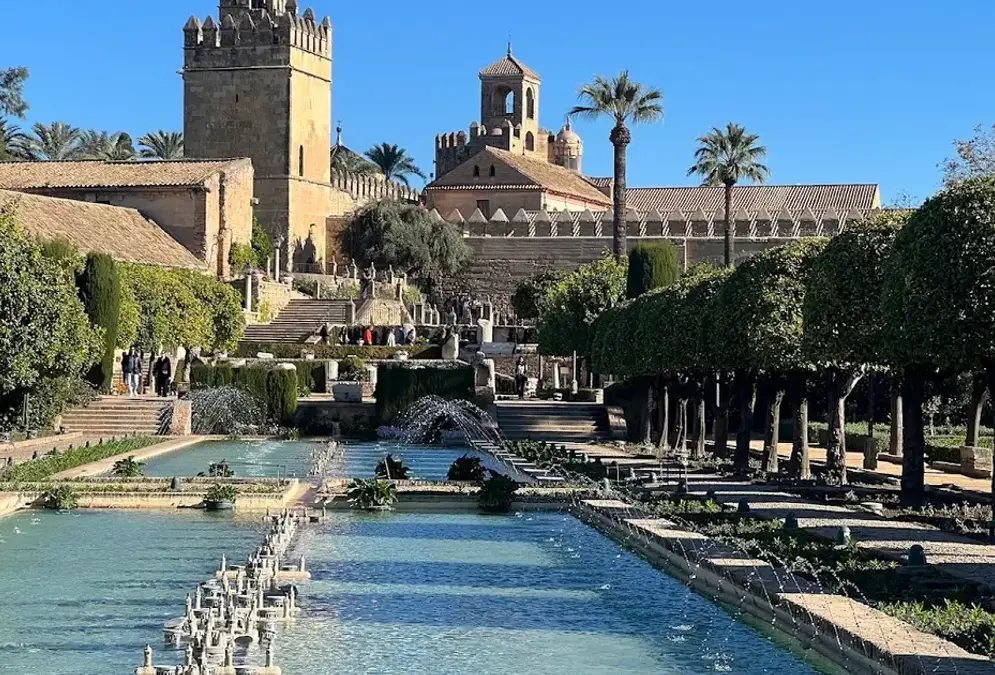
Alcázar de los Reyes Cristianos
Alcázar de los Reyes Cristianos, Córdoba: free entry on Tuesdays. A 14th-century fortress-palace with terraced Moorish-inspired gardens and Roman mosaics.
One local writer calls it the colourful depiction of Polyphemus and Galatea, "a Greek tale of beauty and the beast but without the Disney romance"[5]. That is fair: the giant is the pursuer, and the myth does not end well for him. Look for the colour first, then the two figures, then the sea around them.
The perspective claim: what the sources do and do not say
A claim circulates in travel blogs that Córdoba's Roman mosaics, Polyphemus and Galatea above all, use two planes of depth and a play of light and shadow that foreshadow Renaissance perspective by more than a thousand years. It is a tidy story, and it flatters the city.
Here is the record, source by source:
- The tourism board's page on the Alcázar de los Reyes Cristianos describes the mosaics and where they were found, nothing more[1].
- The catalogue entry names the myth, the museum and the period[4][2].
- The local press piece describes the colour and the story[5].
- None of the three mentions perspective, Brunelleschi, shading or depth.
That is an absence in what was read, not a refutation. Roman mosaicists did work illusionistic effects elsewhere in the empire, and Katherine Dunbabin's The Mosaics of the Greek and Roman World (Cambridge, 1999) is the standard survey a reader would check. It was not consulted here, so nothing is claimed from it.
The larger problem is the word itself. Renaissance perspective is a geometric system with a single vanishing point. A painted or tessellated illusion of depth is a different thing, and nothing in the Córdoba sources even raises the comparison.
So treat the claim as unproven. If a guide tells you the Polyphemus panel anticipates Brunelleschi, ask which catalogue or scholarly study says so. A mosaic that can be seen and described honestly does not need the borrowed prestige.
Seeing them, and where to go next
Go to the Alcázar de los Reyes Cristianos for the mosaics. Check its page for current hours and ticket prices before you set out, because neither is confirmed in the sources used here.
Then walk back to the square they came from. The Plaza de la Corredera has nothing Roman visible at street level, but knowing what lies under the terraces changes how you read the place.
Recommended tours
Tours are selected for quality, not commission. We earn a small fee if you book — at no extra cost to you.
For wider Roman Córdoba, the Archaeological Museum holds the city's main collection of finds, and Roman houses in Colonia Patricia shows how ordinary Roman homes looked, the kind of setting where floors like these were laid.
Deep dive · Article
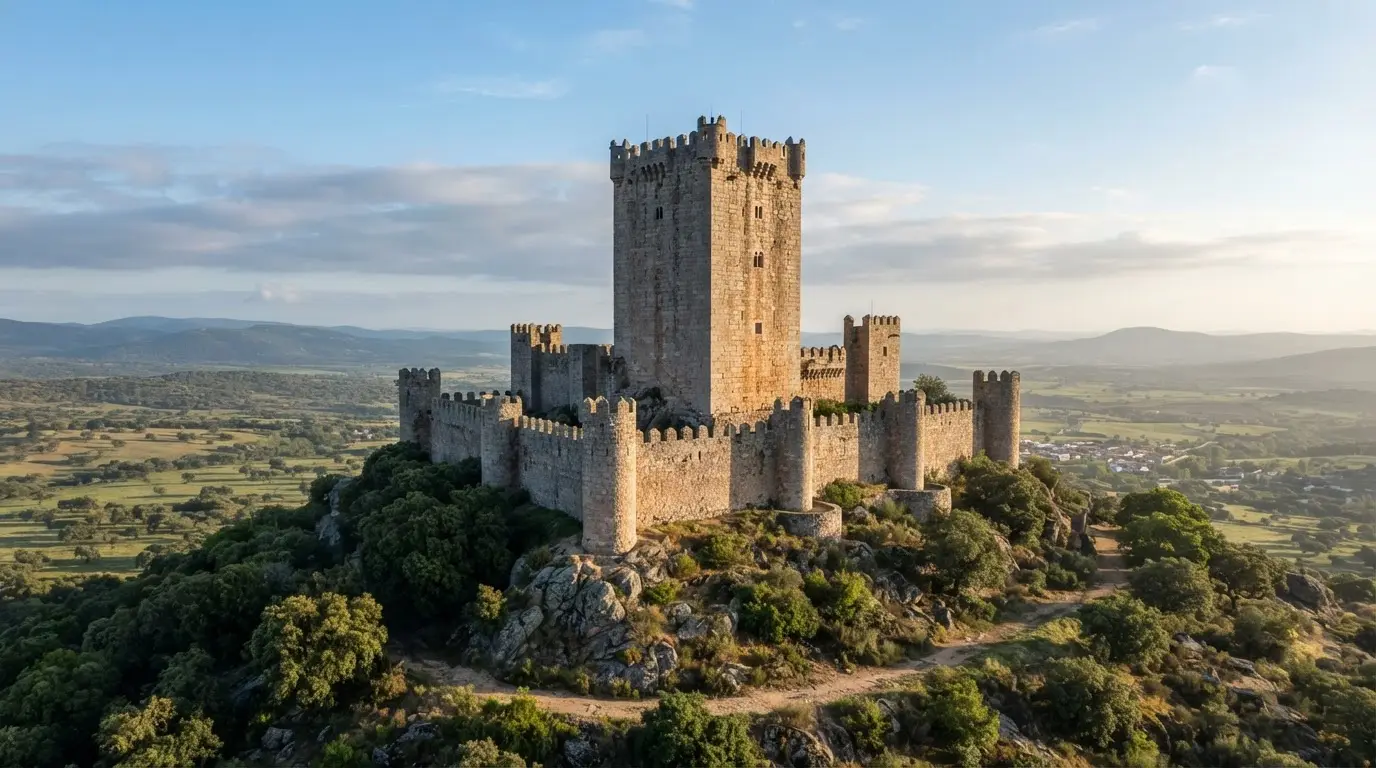
47 Metres Tall and Almost Unknown: Spain's Tallest Keep
Belalcázar Castle's 47 m keep is listed by the Junta de Andalucía as Spain's tallest. How it grew, what to see inside and how to book the free guided visit.
You may also want the Roman bridge for the same period.