Córdoba's 16th-Century Slave Market: The Portuguese Trade
Córdoba's 16th-century slave trade sat in Seville's shadow, fed by Portuguese trading networks reaching the Guinea coast, its own record thin but real.
Art history background with eight years writing interpretive content on Córdoba's Caliphal heritage.
Updated Published
history-buffs
Córdoba has left no square or building identified as its 16th-century slave market. Its trade functioned instead in the shadow of Seville, the region's dominant hub, itself fed by Portuguese trading posts on the Guinea coast. What survives in the record is precise on law, religion, and the wider trading system; it is far thinner on price, named merchants, or any specific location in Córdoba itself.
Seville's enslaved share
7.4%
16th-century population, the region's dominant hub[1]
Seville slave trade begins
1462
Portuguese traders' established route into Andalusia[2]
Córdoba's place in Andalusia's 16th-century slave trade
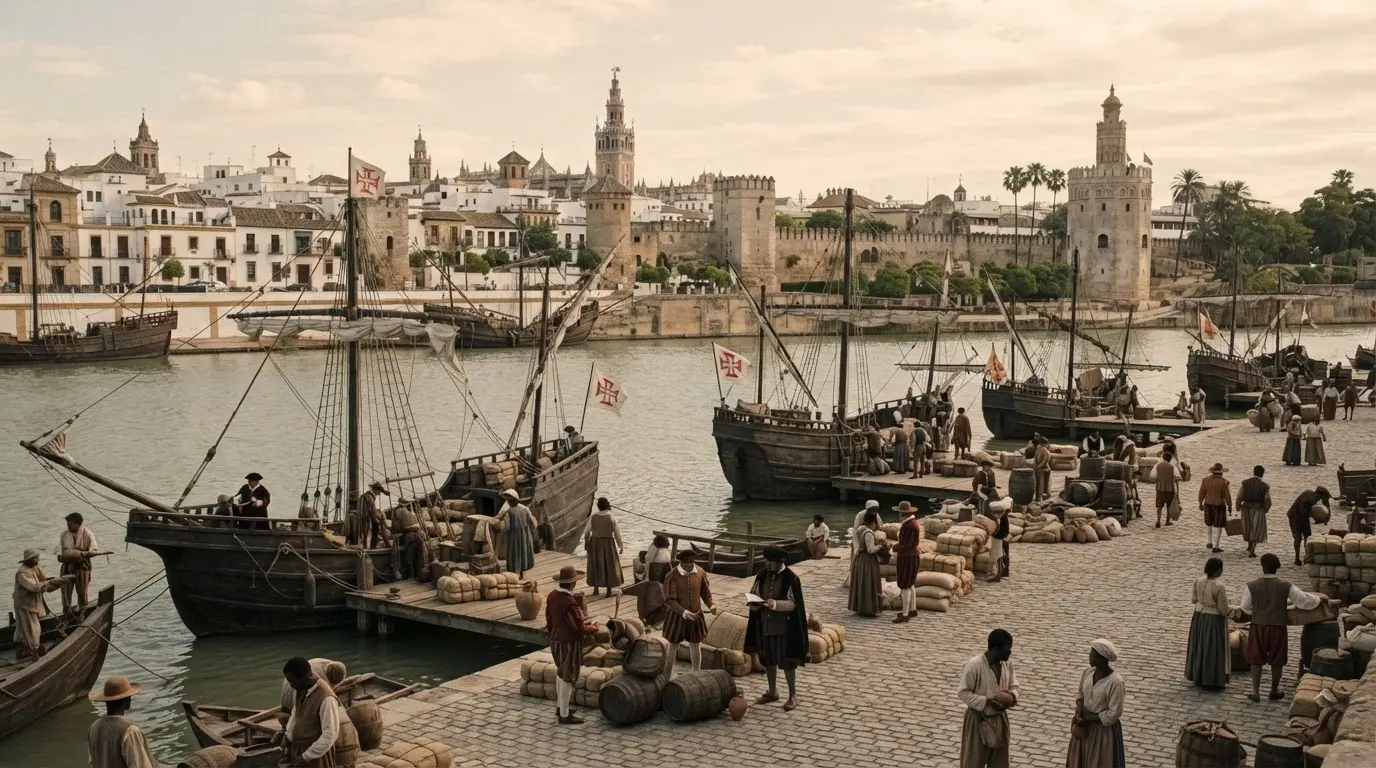
Seville held the license; Córdoba worked in its shadow. Andalusia's 16th-century slave trade ran through the regional hub of Seville, where the enslaved made up an estimated 7.4% of the city's population[1] by mid-century. Córdoba, ninety kilometres upriver, operated on a far smaller scale: real transactions took place there, but nothing in the sources checked for this article points to a dedicated market square or building set aside for the trade, the way Seville's institutional footprint is documented.
What the record shows instead is absence more than detail. No inventory, deed, or civic ordinance naming a Córdoba slave market has surfaced in the sources available here, a gap that says as much about how private and notarised these transactions were as it does about whether such a document ever existed. That gap is the clearest documentary picture available: a trade real enough to leave legal and price records elsewhere in the region, but never centralised enough, or public enough, to leave behind a street name in Córdoba itself.
The Portuguese factorías and the Guinea coast supply chain
The enslaved people sold in Córdoba did not arrive from a single trade route so much as from an evolving Portuguese supply chain shaped across the preceding century. That chain began with Portuguese captains Antão Gonçalves and Nuno Tristão's documented raids on the West African coast in 1441[7], matured into a regular Portuguese-run trade operating out of Seville by 1462[2], and fed into the Asiento system, Spain's slave-trade licensing regime: individual contracts of this kind trace to the early 1500s, and the system operated in various forms into the late 18th century[3].
The mechanism that fed Andalusian markets, Córdoba included, was the factoría system: fortified Portuguese trading posts on the West African coast. Castile did not run its own supply chain. Royal licenses were instead granted to prominent individuals, who subcontracted the actual trading to Seville-based merchants (many Portuguese, Genoese, or Florentine), required in turn to source enslaved people through Portuguese factorías[4]. By the mid-16th century, most people enslaved through this route and shipped toward the Spanish Americas originated in Upper Guinea, typically embarked via the Cape Verde Islands, with later captives from Lower Guinea and West Central Africa gathered at the factoría of São Tomé joining the flow[6].
Everyone in this chain took a cut. Nobody in Castile touched the African coast directly; the trade that reached Córdoba had already passed through several sets of hands (an African-coast factoría, a Lisbon or Seville merchant house, a Castilian buyer) before an enslaved person ever stood in front of a notary in Córdoba.
Timeline
1441
First Portuguese raids
Captains Antão Gonçalves and Nuno Tristão carry out one of the first documented enslavement raids on the West African coast.
1462
Regular Seville trade begins
Portuguese traders establish a regular slave trade operating out of Seville, Andalusia's future regional hub.
Early 1500s
Asiento system takes shape
Individual licensing contracts of this kind emerge, growing into a system Spain used to tax and regulate the trade into the late 18th century[3].
Trade networks and the limits of the Córdoba record
Who exactly bought and sold in Córdoba's 16th-century slave trade is harder to pin down than the trade's existence itself. Specific merchant names, origin lists, and price figures once considered for this article traced back to sources that could not be independently verified, and are left out here rather than repeated on the strength of a single unconfirmed retelling. What can be said with more confidence is structural: Córdoba's trade sat downstream of Seville's, where merchant capital and the licensed Portuguese supply chain were concentrated, rather than functioning as a self-contained local market.
Recommended tours
Tours are selected for quality, not commission. We earn a small fee if you book — at no extra cost to you.
Data of this kind survives, where it does, because notaries recorded sales as legal contracts, with witnesses and a fixed fee structure, the same documentary habit that gives historians firmer dates and figures for Seville than for Córdoba specifically.
the historic Ribera square, a short walk from the cathedral, is commonly described as one of Córdoba's principal inn and lodging districts across the early modern period. No surviving record ties a specific slave transaction to that square, however, and none should be implied here; it is mentioned only as plausible historical context, not as a documented site.
Law, conversion, and the narrow path to freedom
Legal status in 16th-century Castile was not fixed at the moment of sale. Conversion to Christianity could materially improve an enslaved person's treatment and their prospects of eventual manumission[5], a fact that shaped both the strategies enslaved people pursued and the categories the law used to describe them. Spanish law and Inquisitorial practice distinguished sharply between groups: moriscos (Muslim converts and their descendants) were tracked for suspected relapse into Islamic practice, while berberiscos (enslaved North Africans, often prisoners of war rather than victims of the Guinea trade) occupied a separate legal category again, tied to the ongoing conflict along Spain's Mediterranean frontier rather than to the Atlantic trade.
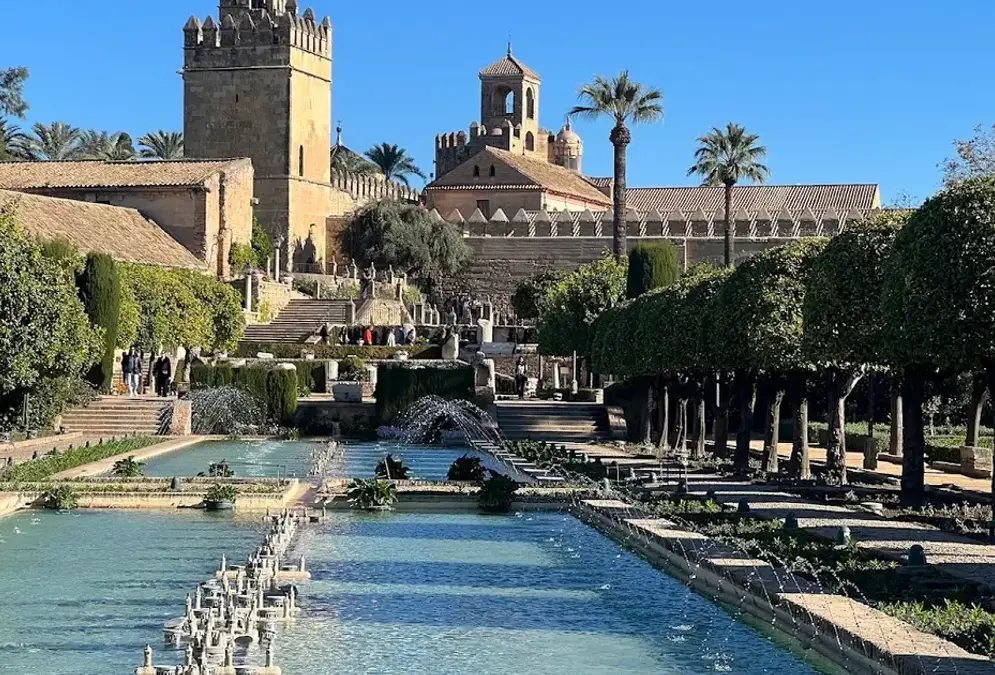
This is also where Córdoba's civic and religious institutions overlapped most directly with the lives of enslaved and formerly enslaved people. The Alcázar de los Reyes Cristianos, headquarters of the city's Inquisition tribunal from 1482, held jurisdiction over questions of religious conformity that bore directly on an enslaved convert's standing: a baptismal record, a witnessed confession of faith, or a documented relapse could each alter someone's legal position.
Manumission itself was never automatic. It required a master's decision, usually recorded before a notary, and depended on services rendered, a purchase price paid by the enslaved person themselves, or a bequest in a will. None of these paths were common. Most people bought into Córdoba's 16th-century slave trade died enslaved.
Why Córdoba's slave-market record is so thin
Córdoba's 16th-century slave trade is documented, but thinly compared to Seville's. Much of what circulates specifically about Córdoba, precise merchant names, prices, or municipal ordinances, could not be independently verified against a checkable source for this article, and has been left out rather than repeated on the strength of secondary retellings alone. What the verifiable record does offer is the wider system Córdoba sat inside: Seville's documented scale, the Asiento's formal licensing, and the Portuguese supply chain feeding both cities. What it does not offer, for Córdoba specifically, is topography: which street, which square, which building. That absence may reflect how private and notarised these transactions were, or simply how much less has survived, or been made accessible, for Córdoba than for Seville.
That gap matters for how the story gets told outside academic circles. It is tempting to attach a building or a plaza to a market this well-documented in other respects, and Córdoba's tourist material occasionally does. The honest position is narrower: Plaza del Potro's inn district is a plausible, unconfirmed context, not a documented site. Extending Seville's better-recorded market geography onto Córdoba, where the record is genuinely thinner, risks converting a reasonable inference into a fact nobody actually wrote down.
The contrast with Plaza de la Corredera is instructive. That square's layered public history, spanning Roman mosaics, bullfighting, Inquisition ceremony, and market trading, survives in unusual documentary detail because each use left behind either archaeology or an institutional record built to be kept. The slave trade's paperwork was notarial and private by design; it was never meant to become a public record of place, only of price and legal title.
What the record does support without qualification is Córdoba's position in a much larger system: a smaller market operating in Seville's shadow, fed in turn by Portuguese factorías and the Guinea coast trade whose scale and licensing are well documented even where Córdoba's own local detail is not. That is enough to place 16th-century Córdoba precisely on the map of Iberian slavery, even without a plaza, a price, or a merchant's name to point to.
Frequently asked questions
Was there slavery in Córdoba, Spain in the 16th century?
Yes. Córdoba functioned as a secondary slave market in 16th-century Andalusia, subordinate to Seville, the region's principal trading hub, though transactions there were handled on a smaller and less institutionalised scale than in Seville itself.
Where did enslaved people sold in Córdoba come from?
Most originated from West Africa, brought through the Portuguese factoría system: fortified trading posts on the Guinea coast. By the mid-16th century, most captives came from Upper Guinea via the Cape Verde Islands, later joined by people from Lower Guinea and West Central Africa gathered at the factoría of São Tomé. These supply chains fed the Iberian market through Seville before reaching secondary markets like Córdoba.
What was the Portuguese factoría system?
Factorías were fortified Portuguese trading posts on the West African coast where enslaved people were gathered before being shipped to Iberian and, later, American markets. Castilian royal licenses were granted to prominent individuals who subcontracted the actual trading to Seville-based merchants, many of them Portuguese, Genoese, or Florentine, who were required to source enslaved people specifically through these Portuguese posts.
How much did an enslaved person cost in 16th-century Córdoba?
No independently verifiable price figure specific to Córdoba survives in the sources checked for this article. Prices in the wider Iberian slave trade varied by age, origin, and skill, and better-documented figures exist for Seville, the regional hub Córdoba's trade fed into, than for Córdoba's own transactions specifically.
Was Córdoba a major slave market compared to Seville?
No. Seville was Andalusia's dominant slave-trading city, with the enslaved making up an estimated 7.4% of its population in the 16th century. Córdoba's trade operated on a far smaller scale, and no source checked for this article documents a dedicated public site there, unlike Seville's better-recorded market geography.
Could enslaved people in Córdoba gain their freedom?
Manumission was possible but never automatic or common. It required a master's decision, usually recorded before a notary, tied to services rendered, a purchase price paid by the enslaved person, or a bequest in a will. Conversion to Christianity could improve treatment and the odds of eventual freedom, though most people enslaved in 16th-century Córdoba died enslaved.
What role did the Guinea coast play in the Iberian slave trade?
The Guinea coast was the primary source region for enslaved people funneled through the Portuguese factoría system into Iberian markets, including Córdoba. Upper Guinea, shipped via Cape Verde, was the dominant source by the mid-16th century, with Lower Guinea and West Central Africa, gathered at São Tomé, joining the trade later in the century.
When did Spain's Asiento slave-trade licensing system end?
The Asiento system's individual licensing contracts trace to the early 1500s, letting other nations sell enslaved people into Spanish territory in exchange for tax revenue. It operated in various forms into the late 18th century, regulating a long stretch of the trade that fed markets across Andalusia, including secondary markets like Córdoba's.
“At first, royal licenses (authorizations) were granted to leading figures who subcontracted operations to Seville-based merchants, many of them foreigners, not only Portuguese, but also Genoese and Florentine. All were obliged to use Portuguese factories.”
“By the middle of the sixteenth century, most of the enslaved people transported to the Spanish Americas originated in Upper Guinea, typically embarking via the Cape Verde Islands.”