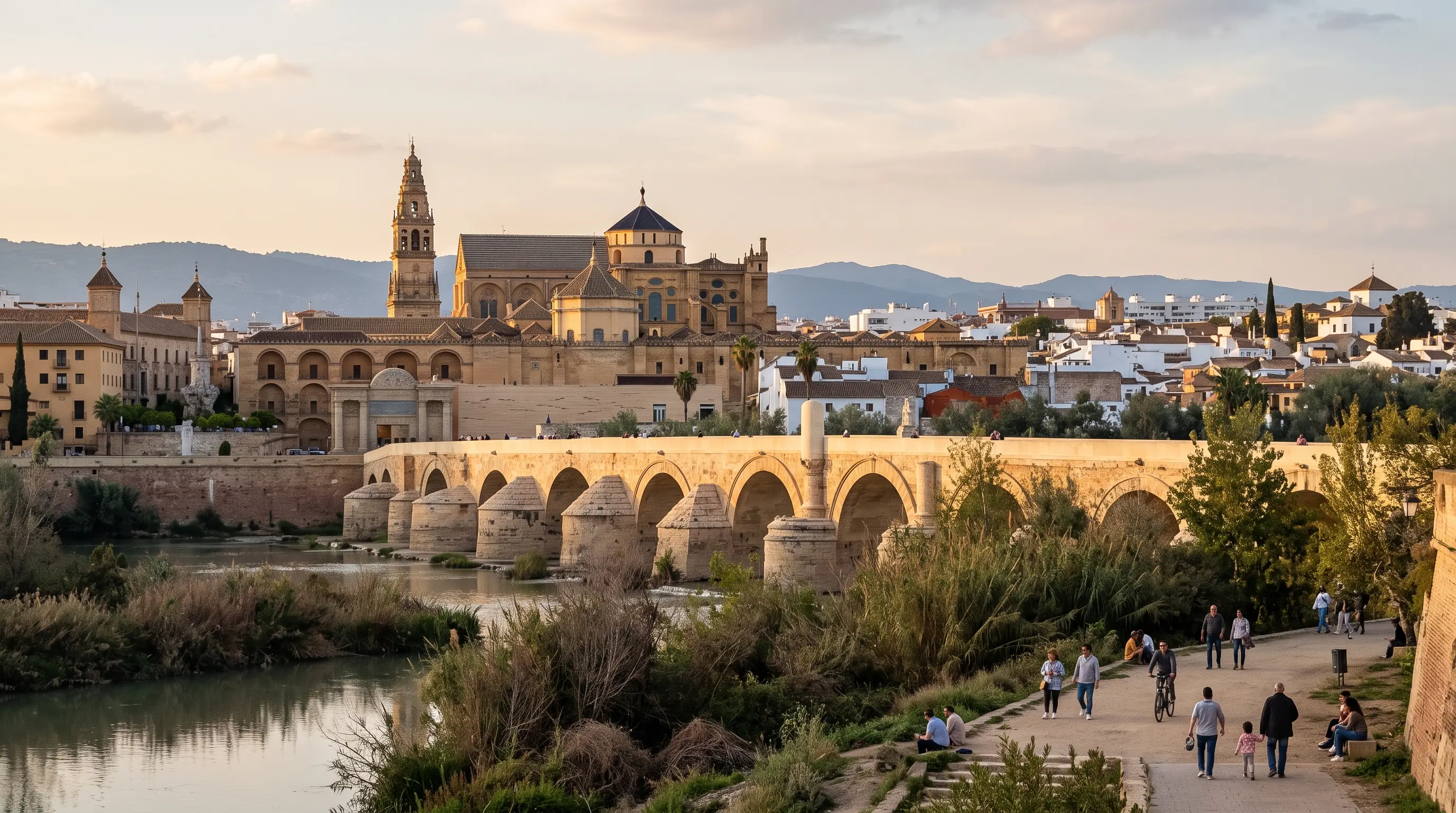

Córdoba's official population: 323,262
The number comes from the Padrón municipal, the register of residents that every Spanish town hall keeps. It became official by royal decree: Real Decreto 1117/2025, dated 3 December 2025, declares the figures from the revision referred to 1 January 2025 to be the official ones.[4]
It counts the municipality, not the old town. Everyone registered anywhere inside the municipal boundary is in the 323,262,[1] a territory the next section measures.
Within Andalusia, Spanish Wikipedia, citing the INE's 2025 figures, ranks Córdoba third behind Seville and Málaga.[5] A national rank is left out on purpose, because checking it means comparing every non-capital city above 100,000 too. Planning to see Seville and Granada as well? The Córdoba, Granada and Seville guide is the route page.
Two series circulate, and this article keeps them apart. Every city and province population is the Padrón revision made official by the BOE for 1 January 2025. INE's España en cifras provincial table is a separate series: it puts Córdoba province at 773,163,[6] against the Padrón's 772,153.[3] The province densities further down come from that INE table and are labelled as such.
Area and density: a huge municipality, a compact centre
Córdoba's municipal term covers 1,255.24 km², which a publication of the provincial tourism board calls the largest in Andalusia.[2] The figure comes from a 2018 document and carries no survey year, so treat it as a working number.
Divide the population by that area and you get about 258 people per km², my own arithmetic on the two sourced figures. Treat it as an average. A visitor walking from the Mezquita-Catedral to the river covers a sliver of the municipal term, which is why "Córdoba is small" and "Córdoba has Andalusia's largest municipal term" are both true.
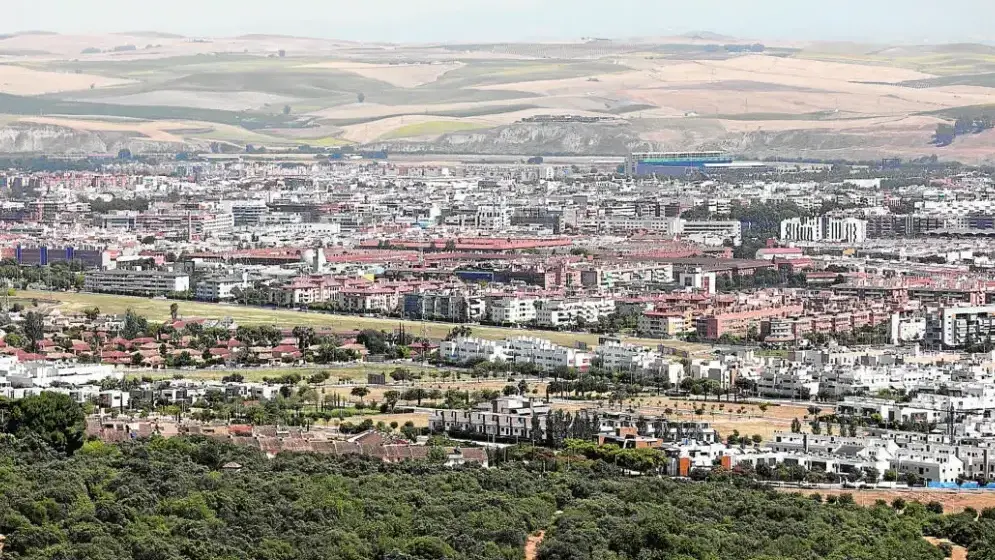
Explore · Neighbourhood
Arruzafa
Hidden above Córdoba, Arruzafa's hills once held Umayyad summer palaces. Today: the Parador hotel, panoramic valley views, and 4 km from the old town.
Metro area and province: why there is no single number
The province of Córdoba had 772,153 registered residents on the same date,[3] so the capital holds about 42% of them (my own division of 323,262 by 772,153).
A metropolitan figure is harder. INE's Urban Indicators do define a functional urban area for Córdoba, the "AUF de Córdoba",[12] and a municipality joins such an area when at least 15% of its working population commutes to the city for work.[13] No population for that area turned up in the INE material checked here, so none is given: any metropolitan total depends on which municipalities are counted. Beyond the city itself, the province total is the one number worth quoting.

Deep dive · Article
An Andalusian Treasure Has Sat in the British Museum Since 1932
A silver hoard dug up in Córdoba in 1915 left Spain against the law and has been in the British Museum since 1932. Here is how, and what a 2026 study found.
Recommended tours
Tours are selected for quality, not commission. We earn a small fee if you book — at no extra cost to you.

Córdoba, Seville and Granada compared
Same register, same date. Seville's city has 689,423 residents[14] and Granada's has 233,975.[15] Seville is about 2.1 times Córdoba. Córdoba is 89,287 people ahead of Granada, whose city is about 72% of Córdoba's (my own arithmetic on the two sourced figures).[1]
The provinces tell a different story. Seville province has 1,976,624 residents,[16] Granada province 942,618[17] and Córdoba province 772,153.[3] Granada's province outweighs Córdoba's by about 170,000 even though its capital is smaller.
Density widens the gap, on a different basis. These are INE's province-level España en cifras figures, not Padrón-based ones: 56.1 people per km² for Córdoba,[6] 74.8 for Granada[18] and 140.9 for Seville,[19] so by that measure Córdoba's province is the emptiest of the three. City densities are not compared here: no official Granada municipal area was found and Seville's published areas vary by source. The table gives the areas that are sourced.
| City | City population | Province population | Municipal area (source-dependent) |
|---|---|---|---|
| Córdoba | 323,262[1] | 772,153[3] | 1,255.24 km²[2] |
| Seville | 689,423[14] | 1,976,624[16] | 142.44 km², 2023 city yearbook[20] |
| Granada | 233,975[15] | 942,618[17] | No sourced figure |
The numbers say nothing about what each city is like to visit. Córdoba vs Seville and Córdoba vs Granada take that up.