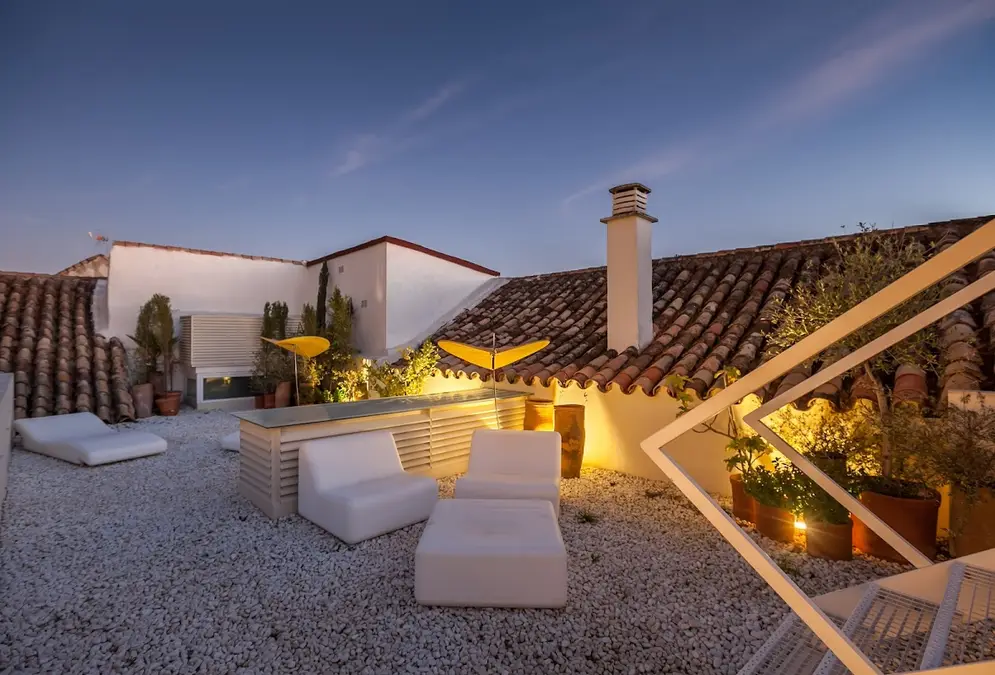
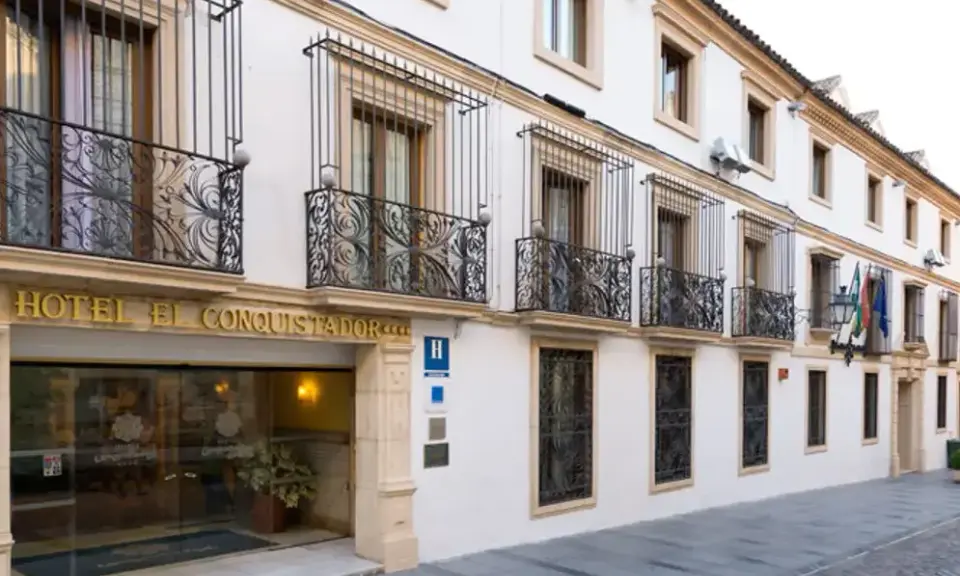
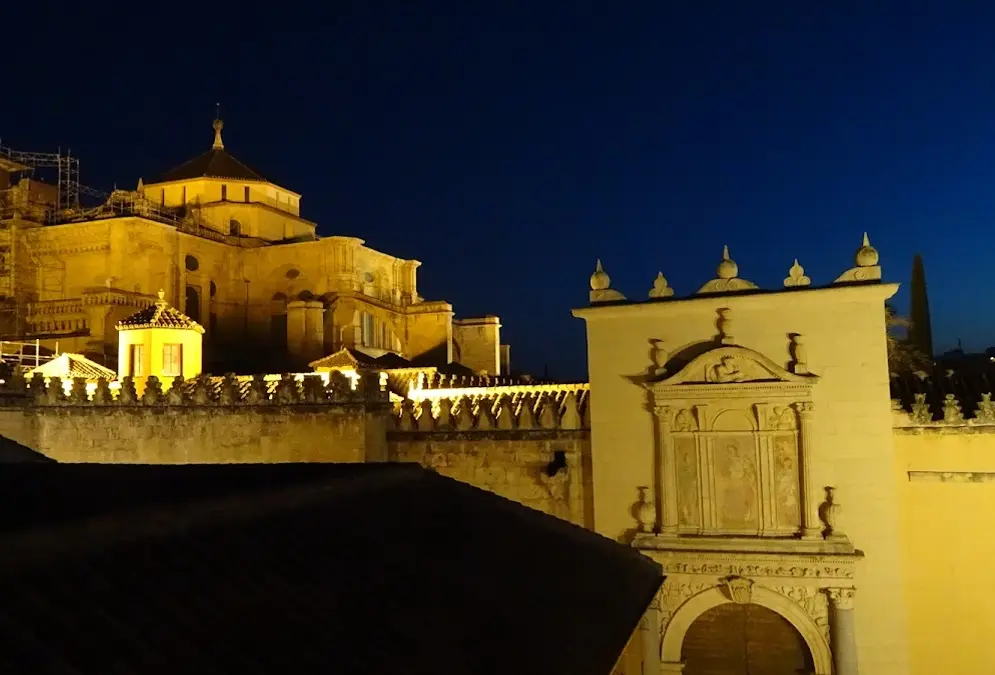
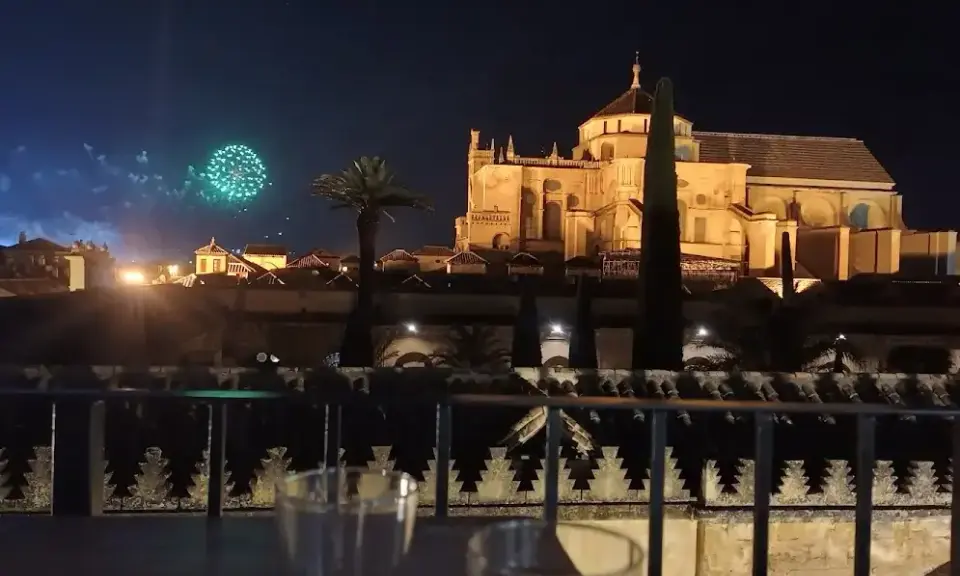
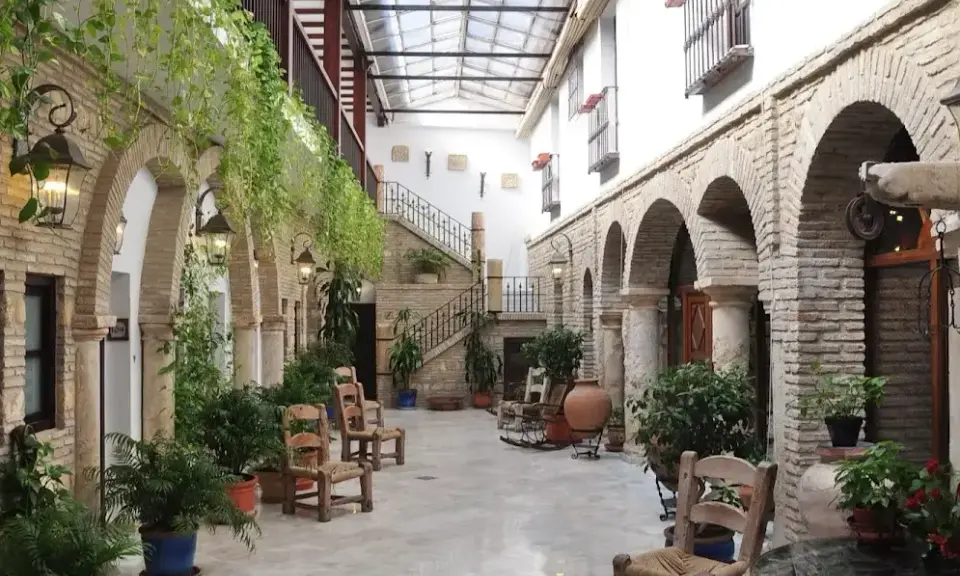
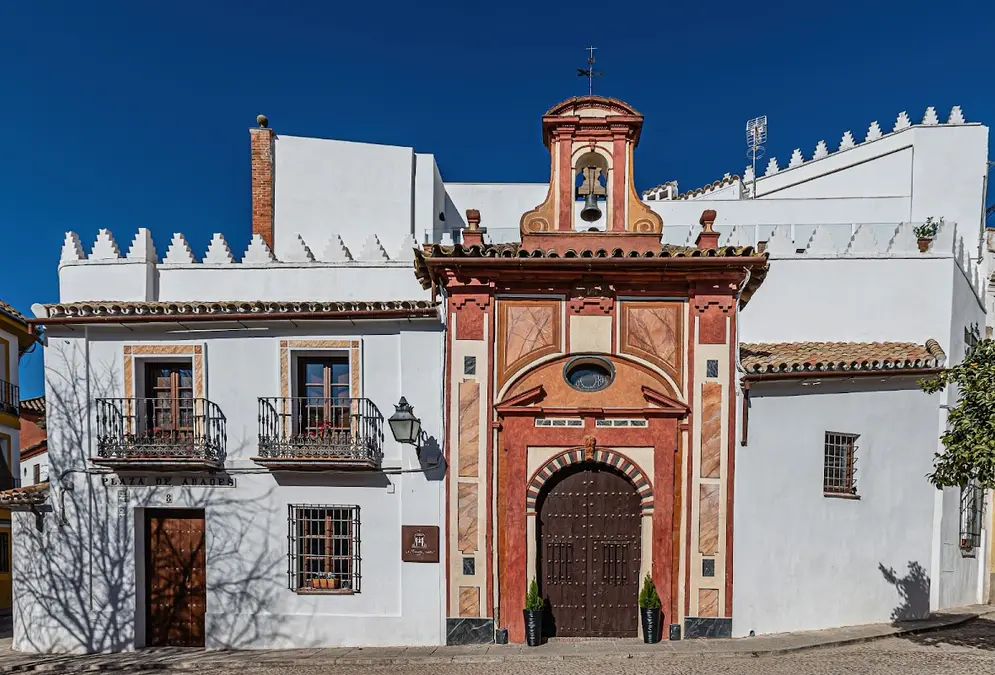
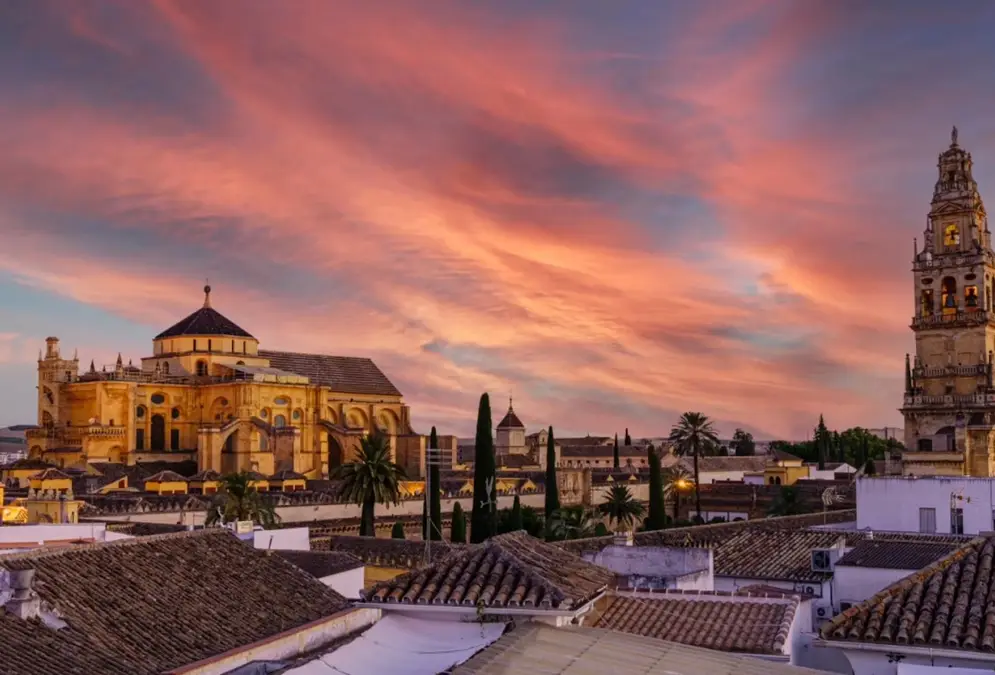
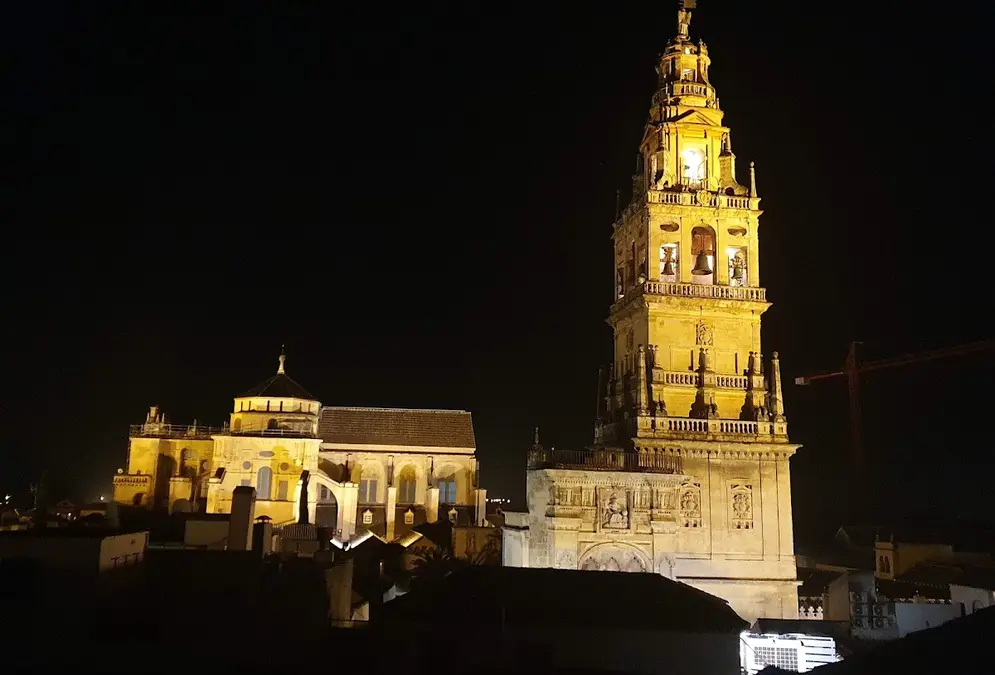
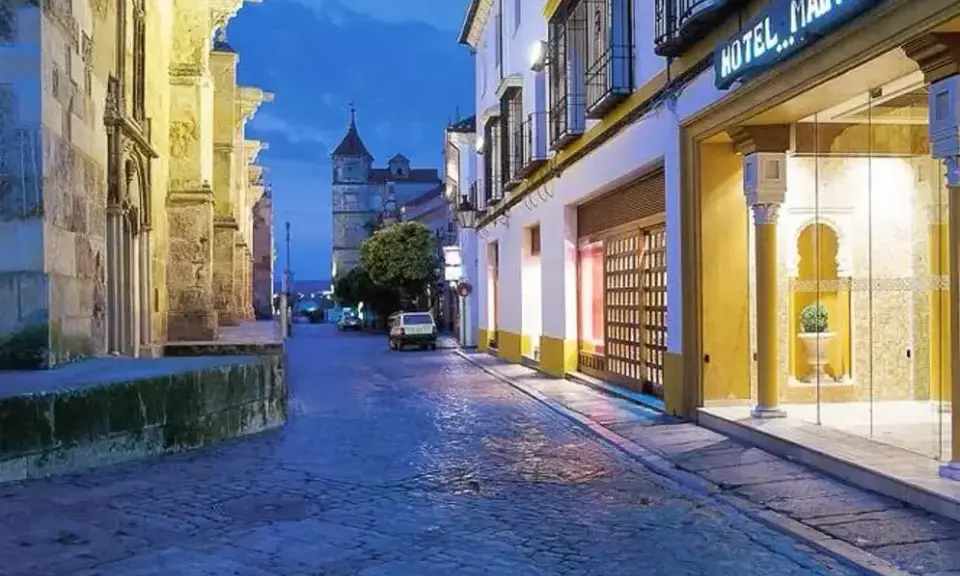
Plaza del Potro occupies a quiet corner of Centro that most visitors walk past without stopping — which is their loss. The 1577 fountain with its foal still stands at the centre. The Posada del Potro, the 15th-century inn where Cervantes reportedly slept and which he described in Don Quixote as a haunt of rogues and thieves, survives along one side as a cultural centre. Two museums share the opposite building: the Museo de Bellas Artes, with Zurbarán and Murillo, and the Museo Julio Romero de Torres, devoted to Córdoba's most celebrated early 20th-century painter. Hotels on the square itself are minimal, so the practical approach is to base in Centro and walk the 8 minutes to the Mezquita. Casa de los Azulejos on Calle Fernando Colón sits about 5 minutes northwest of the square — 9 rooms, original 1934 Mensaque azulejos, a seasonal pool, and free on-site parking (a genuine rarity; public garages in Centro run €18-22 per day) from €72. Hospes Palacio del Bailío is about 10 minutes away on Calle Ramírez de las Casas Deza — a 16th-century Renaissance palace with 1st-century Roman mosaics visible through its restaurant floor and a spa in restored Roman baths from €218. Cats Hostel on Calle Santa Marta, about 8 minutes from the square, occupies a former monastery with a central patio and dorm beds from €15.
The difference between staying near Plaza del Potro and staying in the Judería is the difference between Córdoba's tourist zone and the city where people actually live. In the Judería, the lanes fill by 10am with tour groups threading toward the Mezquita; the restaurants near the main entry have photo menus and staff positioned at the door. Near Potro, the morning sounds like a city. The square itself sits at the edge of the commercial pedestrian streets and draws the occasional guided group, but none of the sustained foot traffic that has hollowed out the Judería's restaurant scene. The trade-off is real: you walk 8 minutes to the Mezquita rather than 2, and the restaurant density within a 200-metre radius is lower. What you get in exchange is Bodegas Campos two minutes south (traditional Cordoban cooking since 1908, the kind of place where the menu changes with what came in that morning) and streets where the tabernas serve whoever is passing, not whoever just came off a bus.
For the practical questions: Casa de los Azulejos works best for couples driving to Córdoba — the free parking alone is worth the difference over a Judería hotel for anyone with a car. Cats Hostel suits budget travellers and solo backpackers who want an organised base with a social patio; luggage storage is available before the 2pm check-in, which matters if you arrive on the morning train from Seville. Hospes Palacio del Bailío is for people to whom the room is part of the itinerary, not just a place to sleep. Walking times from the square: Mezquita-Catedral is 8 minutes east; Plaza de la Corredera is 5 minutes northwest; the Guadalquivir riverfront is 3 minutes south. The square has no dedicated public parking lot, but the Calle de la Bodega area just north of the riverfront has street parking that fills by 9am in high season.