10-day itinerary
10-Day Andalusia Itinerary: The Sweet Spot
Five cities, three UNESCO World Heritage sites, one gorge town, and a beach day to decompress. This is the route most first-time visitors to Andalusia should take — enough time to slow down in each place without the fatigue of daily moves.

Written by
María Fernanda González Ten years covering Córdoba's UNESCO heritage sites, sourcing from Junta de Andalucía documentation.
Updated Published
The Route at a Glance
Days 1–2
Seville
2 nights
Days 3–5
Córdoba
3 nights
Days 6–7
Granada
2 nights
Day 8
Ronda
1 night
Days 9–10
Málaga
2 nights
Seville → Córdoba
AVE, 45 min
Córdoba → Granada
Train, 1h30–1h40
Granada → Ronda
Bus, ~2h30
Ronda → Málaga
Train, ~2h
Interactive map — loads as you scroll (requires JavaScript)
At a Glance
Cities
5
Pace
Comfortable
Budget
€1,200–1,800
Best for
Most travelers
Transport
Trains + 1 bus
Season
Mar–May, Sep–Oct
Day-by-Day Itinerary
SEV
Seville — Days 1–2
Fly in, settle in, start with the big three
D1
Day 1: Arrival and the Real Alcázar
Get oriented, beat the afternoon heat
Morning — arrival
Fly into Seville (SVQ) or take the AVE from Madrid (2h30). Drop bags at your hotel in the Santa Cruz neighbourhood and walk straight to the Real Alcázar before the midday crowds arrive. Book tickets the evening before — the €16.50 entry covers the palace and gardens. The tile-work in the Salón de los Embajadores, commissioned by Pedro I in 1364, is more intricate than anything in Granada.
Afternoon
Cross to the Cathedral and La Giralda (€13, tower included). Climb the 34 ramps — they were built for horses, not steps, so it is an easy ascent. The view over the city from the top takes in the Alcázar gardens below and the Sierra Norte in the distance.
Lunch in the Triana market across the river: good counter service, no tourist trap pricing.
Evening
Walk the Barrio Santa Cruz after 7pm when the day-trippers leave. Dinner at one of the outdoor tables near the Jardines de Murillo. Order a cold fino sherry with your food — Seville is the right city to start this habit.
D2
Day 2: Triana, Flamenco, and the Plaza de España
The other Seville, beyond the postcard
Morning
Cross to Triana, Seville's ceramics and flamenco quarter. Walk the covered market, then up Calle Castilla for the azulejos workshops. The Museo del Baile Flamenco (€12) explains the dance's history with more depth than you expect from a small building.
Afternoon
The Plaza de España in the Parque de María Luisa is genuinely impressive at close range — the 1929 Ibero-American Exposition left behind a semicircular palace with tiled alcoves for each Spanish province. Go after 4pm when tour buses thin out. The row boats on the canal are €6 for 35 minutes.
Evening
Book a flamenco show for tonight — the serious venues (Casa de la Memoria, La Casa del Flamenco) fill up two to three days ahead. Tomorrow you move to Córdoba, so pack tonight and leave bags ready.
Seville → Córdoba
AVE high-speed train, 41–45 minutes. Departs Santa Justa station. Fares from €15 if booked a week ahead; €25–30 on the day. Around 6 daily departures between 7am and 9pm. No luggage storage needed — most Córdoba hotels allow early drop-off.
Full Seville–Córdoba transport guideCOR
Córdoba — Days 3–5: Cultural Centerpiece
Four UNESCO sites in three days — this is the heart of the route
Three nights in Córdoba is the right call. It is the only city on this route with four UNESCO World Heritage designations — the Mezquita-Catedral, the historic centre, the Medina Azahara, and the Jewish Quarter — and you want time to walk the smaller streets without agenda.
D3
Day 3: Mezquita-Catedral and the Jewish Quarter
Córdoba's two most concentrated hours of architecture
Morning (9am–1pm)
1
Mezquita-Catedral
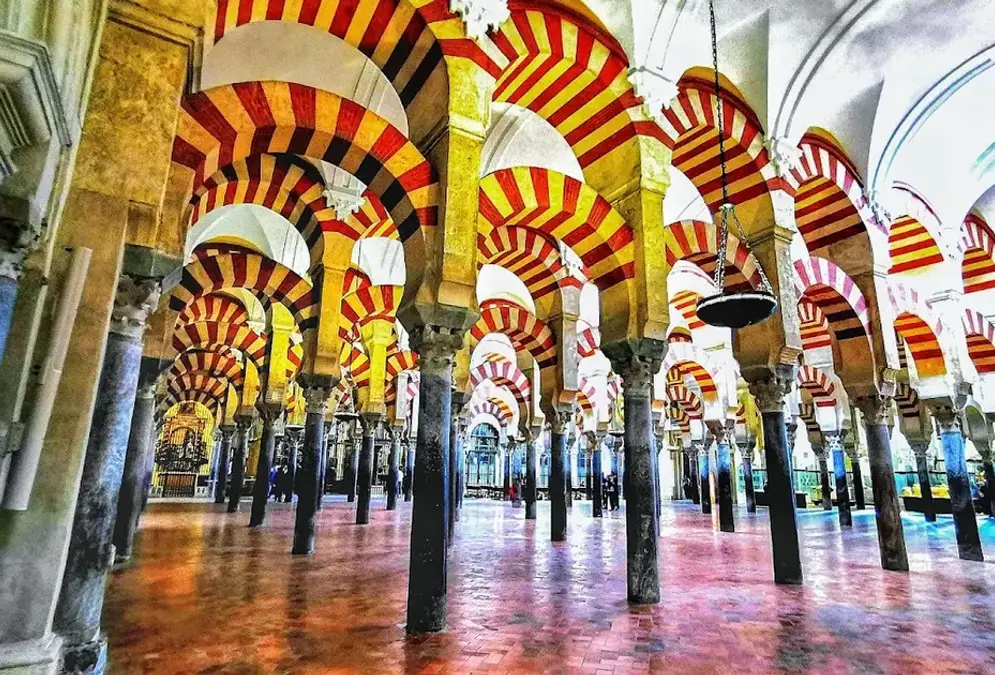
Arrive at opening time (10am weekdays, 8:30am for free prayer entry before 10am on weekdays). The forest of 856 jasper and marble columns is darker and stranger than photographs suggest — the double arches absorb sound oddly. Allow 1h30–2h. Don't skip the Bell Tower (+€4): the view over the Roman Bridge and the Guadalquivir from 54 metres is the best in the city.
Tickets: €15 general, book at tezkor.com to skip the queue.
2
Jewish Quarter (Judería)
Walk north from the Mezquita into the Judería. The streets narrow to a metre in places. The Calleja de las Flores frames a view of the Bell Tower that every phone in Córdoba has photographed — go early morning or after 7pm to have it to yourself. The 14th-century synagogue on Calle Judíos (free for EU citizens) is one of three surviving medieval synagogues in Spain.
Lunch
Order salmorejo — the thick, cold tomato soup that Córdoba invented and every Sevillian restaurant has quietly stolen. Better here than anywhere else on the route.
Afternoon
Rest during the 3–5pm heat, then cross to the south bank via the Roman Bridge for sunset. The 16-arch bridge dates to the 1st century BC, rebuilt under Abd al-Rahman I. The view back at the Mezquita from the Torre de la Calahorra turns terracotta at around 7pm from March through October.
D4
Day 4: Alcázar, San Basilio, and Local Food
Gardens, patio culture, and Córdoba at the table
Morning
1
Alcázar de los Reyes Cristianos
The 14th-century fortress where Ferdinand and Isabella met Columbus in 1486 to approve the Americas expedition. The Roman mosaic collection inside is underrated — three rooms of 1st-century floors pulled from the foundations of a Roman theatre. The terraced gardens smell of orange blossom from March through May.
Tickets: €5. Free Tuesday to Friday before 9:30am.
2
San Basilio neighbourhood
Walk fifteen minutes south of the Alcázar into San Basilio, the neighbourhood that won the National Patio Competition six times running. Several patios open year-round (look for signs on iron doors). In May, every courtyard fills with geraniums stacked four metres high. The rest of the year, they are quieter but no less impressive.
Lunch — local Córdoba food
Try flamenquín, Córdoba's fried rolled pork, and rabo de toro (braised oxtail). Both are served at almost every traditional restaurant in the city centre.
Evening
Plaza de la Corredera, the only rectangular arcaded square in Andalusia, has good outdoor bars for early evening. Thursday through Saturday evenings, the square fills with locals rather than tourists.
D5
Day 5: Medina Azahara, Olive Oil, and a Last Evening Stroll
The fourth UNESCO site and a taste of what Córdoba exports
Morning
1
Medina Azahara — half-day excursion
The 10th-century palatine city built by Caliph Abd al-Rahman III sits 8km west of the old town. He reportedly employed 10,000 workers and 1,500 mules to build it; it was finished, sacked, and abandoned within 75 years. The scale of what remains — carved marble halls, sunken gardens, a full city grid — only makes sense once you walk it. Allow 2–3 hours on site.
Entry: free for EU citizens, €1.50 for others. No public bus — take a taxi (€15 each way) or a guided morning tour with transport included.
Afternoon
2
Olive oil tasting
The province of Córdoba produces roughly 12% of the world's olive oil — more than Greece as a whole. Tastings at specialist shops in the old town run 45–60 minutes and teach you to read the difference between picual, hojiblanca, and arbequina. Take two or three small bottles home; they travel well in checked luggage wrapped in clothes.
Evening — last stroll in Córdoba
Walk the Mezquita perimeter after dark when the floodlights come on. The orange walls and the tower lit from below look nothing like the daytime version. Pack tomorrow — your train to Granada leaves in the morning.
Córdoba → Granada
Renfe direct train, 1h28 to 1h42 depending on service. Departs Córdoba Central station. Fares from €17 booked in advance. The journey passes through olive groves and the Sierra Nevada foothills — sit on the right side of the train heading south for better views.
Full Córdoba–Granada transport guideGRA
Granada — Days 6–7
The Alhambra, the Albaicín, and the last Nasrid capital
D6
Day 6: Alhambra Full Day
Book two months ahead — this is not an exaggeration
Full day
The Alhambra requires timed entry tickets booked well in advance — ideally 6–8 weeks out for peak season (March–May, September–October). The Nasrid Palaces slot is the one that sells out first: these 14th-century rooms with carved stucco stalactite ceilings are what most people come for. General admission is €21 per person.
Plan at minimum 4 hours: the Nasrid Palaces (allow 90 minutes), the Alcazaba fortress tower, and the Generalife gardens with their water channels and cypress alleys. The gardens are quieter after 3pm and especially good in May when the roses bloom.
Book at: alhambra-patronato.es. No resellers. Expect to pay face value.
Evening
Dinner in the Realejo neighbourhood at the foot of the Alhambra hill. The stretch around Plaza del Campillo has several restaurants where tapas are still served free with drinks — Granada kept this tradition where most of Andalusia dropped it.
D7
Day 7: Albaicín, Cathedral, and Sacromonte
Moorish Granada from street level
Morning
Walk up through the Albaicín, the hillside Moorish quarter with carmenes (enclosed garden houses) behind whitewashed walls. The Mirador de San Nicolás faces the Alhambra at eye level — most guidebooks call this the best view in Spain and they are not wrong about it. Go before 9am to avoid tour groups.
Afternoon
Granada's Cathedral (€5) was begun in 1523 on the site of the main mosque and took 180 years to finish. The Capilla Real next door holds the tombs of Ferdinand and Isabella — the people who commissioned Columbus and expelled the Moors. The carved silver screen around the tombs is worth the 90 minutes.
Walk east to Sacromonte, Granada's cave quarter, where Romani families have lived for centuries and where zambra flamenco developed. Several cave houses are open to visitors as museums; the cave flamenco shows in the evening are commercial but the setting is genuine.
Granada → Ronda
Bus via Antequera, approximately 2h30 total. ALSA operates this route; fares €15–25. No direct train. The alternative is to rent a car for the Ronda and Málaga leg — the A-397 mountain road into Ronda from the coast takes about 1 hour and is one of the better drives in Andalusia.
RON
Ronda — Day 8
One town, one gorge, one bridge. That is the whole point.
D8
Day 8: Puente Nuevo, El Tajo, and the Bullring
Ronda works well as a single day
Morning
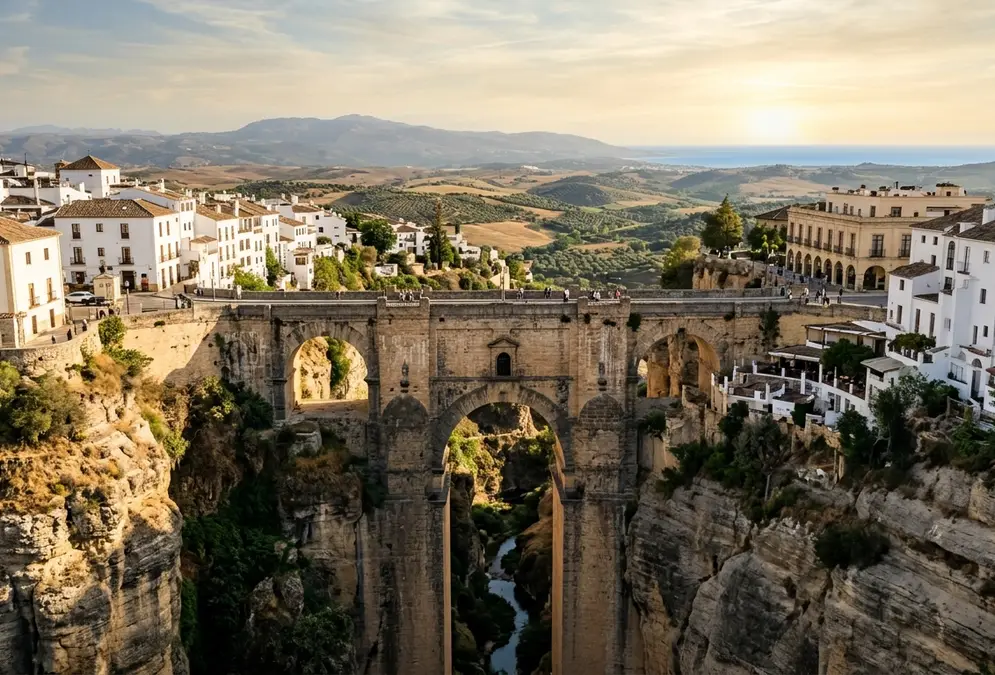
The Puente Nuevo (New Bridge) spans the El Tajo gorge at 120 metres. Built between 1751 and 1793, it took 42 years because the first design collapsed. Walk across it, then go down the path on the west side to the gorge floor for the photograph everyone uses. The walk down takes 20 minutes; back up takes 30.
The Plaza de Toros de Ronda (€9) opened in 1785 and is Spain's oldest bullring still in use. The Museo Taurino inside documents the Romero family who developed modern bullfighting here. Whether you have any interest in bullfighting or not, the ring itself — 66 metres in diameter, surrounded by two tiers of white arches — is an extraordinary piece of 18th-century architecture.
Afternoon
Walk the El Tajo gorge trail from the old town side — the path runs along the edge of the cliff through gardens and ruined Arab baths. The scale of the drop becomes clear only when you are standing at the bottom looking up at the bridge. Allow 90 minutes round trip. The Jardines de Cuenca at the north end of the old town have a different angle on the gorge and are quieter.
Evening
Dinner on one of the terraces overlooking the gorge. The parador restaurant (expensive) and Bardal (locally recommended) are on opposite ends of the budget. Either way, the view is the same.
Ronda → Málaga
Regional train (Renfe Media Distancia), approximately 2 hours. Fares around €20. Two or three daily departures — check timetables as the last train leaves mid-afternoon. The mountain section through the Serranía de Ronda is the most scenic train journey in this part of Andalusia.
MAL
Málaga — Days 9–10
End at the coast, start relaxed, leave through the airport
D9
Day 9: Alcazaba, Picasso, and Old Town Tapas
Málaga has more to it than the airport suggests
Morning
The Alcazaba (€3.50) is an 11th-century Moorish fortress built into the hill above the port. The attached ruins of a Roman amphitheatre at the entrance are 1st-century and free to walk through. The Castillo de Gibralfaro above it (+€2.20, or combined ticket €5.50) takes another 45 minutes to climb and has the best view in the city: the port, the old town, and on clear days, the Rif mountains of Morocco.
The hike between both fortresses takes about 20 minutes along a wooded path — bring water in summer.
Afternoon
The Picasso Museum Málaga (€12, or free from 6–8pm on Sundays) holds 233 works from family collections, including early ceramics, drawings, and oil paintings donated by Picasso's daughter-in-law. It occupies the 16th-century Palacio de los Condes de Buenavista, two minutes' walk from his birth house on Plaza de la Merced. Allow 90 minutes.
The Soho arts district, south of the old town, has good tapas bars around Calle Nicasio Calle — cheaper and less crowded than the cathedral area.
Evening — old town tapas
Calle Carretería and Calle Granada in the old town are the local bar streets. Order espetos de sardinas (sardines grilled on cane stakes over charcoal) if the timing is right — they are a Málaga tradition and done well only at the right places.
D10
Day 10: Beach Morning, Cathedral, Departure
Decompress before you leave
Morning
Playa de la Malagueta is a 10-minute walk east from the cathedral, right in the city. Come between 8–11am before it fills up. The beach bars (chiringuitos) open from 9am and serve coffee, fresh orange juice, and toast with olive oil.
The Cathedral La Manquita ("the one-armed woman" — one tower was never built due to funds running out) is worth 45 minutes. Entry €6. The interior is Baroque, the proportions are odd because of the missing tower, and the organ dates to 1782. It is one of those buildings where the flaw becomes the feature.
Airport: Málaga-Costa del Sol (AGP) is 12km from the city centre. Train from María Zambrano station takes 12 minutes, €1.80. The C1 line runs every 20 minutes.
Different amount of time?
Same route, different pace.
7D
Short on time? Try 7 days
Cuts Ronda and trims each city by a day. Works well if you are flying in and out of the same airport.
10D
You are here: 10 days
The route most people should take. Five cities, comfortable pace, nothing feels rushed.
14D
More time? Try 14 days
Adds the white villages, a Costa de la Luz day, and two nights in Jerez de la Frontera.
Practical Tips for This Route
Book the Alhambra first
Before you book hotels, before you buy train tickets: lock in your Alhambra date at alhambra-patronato.es. Nasrid Palace slots for peak season (March–May, September–October) sell out 6–8 weeks in advance. Everything else on this route can be arranged with a week's notice.
Train tickets and timing
All train legs (Seville–Córdoba, Córdoba–Granada, Ronda–Málaga) should be booked on Renfe.com. Prices jump in the last 48 hours. The Granada–Ronda leg has no direct train — book the ALSA bus at alsa.com separately. Renfe and ALSA have different apps and websites; you will need both.
Season matters
March to May and September to October are the right months: temperatures 18–28°C, lower accommodation prices than July–August, and the Córdoba Patio Festival in May if you time it right. July and August are genuinely hot (Córdoba regularly hits 40°C), and Seville and Málaga see peak tourist numbers.
Stay inside the historic cores
In Seville, Santa Cruz or El Arenal puts you within walking distance of everything. In Córdoba, any hotel inside the old walled city means no transport costs for days 3–5. In Granada, stay in the Realejo or just below the Albaicín. In Málaga, the historic centre around Calle Larios is compact and walkable. Ronda is small enough that hotel location barely matters.
Book your Córdoba day tours ahead
Tours are selected for quality, not commission. We earn a small fee if you book — at no extra cost to you.
On a 10-day route, Córdoba typically gets one full day — these tours make it count.
From Seville: Córdoba Full-Day Tour
Discover Córdoba on a guided full-day trip from Seville. Visit the Mezquita-Cathedral, stroll the Jewish Quarter, and explore the Alcázar with a knowledgeable guide. Transport included.
10 hours
From €55
4.6 (781 reviews)
Reserve Your Spot
✓ Verified GetYourGuide reviews
Córdoba Guided Tour: Mosque, Jewish Quarter & Alcazar
Three-hour circuit of the Mezquita's 856-column prayer hall, the Jewish Quarter's whitewashed lanes, and the Alcázar's Roman mosaics. Skip-the-line access included.
Skip the line 3 hours
From €45
4.5 (615 reviews)
Reserve Your Spot
✓ Verified GetYourGuide reviews
Mosque, Jewish Quarter and Alcázar 3-Hour Tour
The complete Córdoba experience in 3 hours: the Mosque-Cathedral, the Jewish Quarter, and the Alcázar, with an expert local guide and skip-the-line access.
Skip the line 3 hours
From €45
4.7 (490 reviews)
Reserve Your Spot
✓ Verified GetYourGuide reviews
Rent a car in Córdoba
We earn a small commission if you book a car through this search — at no extra cost to you.
A car makes the smaller Andalusian towns between major stops far easier to reach. Compare rental rates.
Book your Córdoba nights
We earn a small commission if you book a hotel through this search — at no extra cost to you.
On a 10-day Andalusia route, two or three nights in Córdoba give you Medina Azahara and the patios without rushing.