14-day itinerary
14-Day Andalusia Itinerary: The Full Experience
Nine cities, two weeks, and enough time to eat lunch somewhere with no English menu. This is the itinerary for people who want Andalusia without skipping anything that matters.

Written by
María Fernanda González Ten years covering Córdoba's UNESCO heritage sites, sourcing from Junta de Andalucía documentation.
Updated Published
The route
Madrid as your gateway, a day in Toledo, two nights in Seville, three in Córdoba, two in Granada, then the slower south: Ronda, the White Villages, Málaga, and finally Cádiz before flying home. Fourteen days sounds like a lot until you're in the middle of it.
Madrid
Day 1
Toledo
Day 2
Seville
Days 3-4
Córdoba
Days 5-7
Granada
Days 8-9
Ronda
Day 10
White Villages
Day 11
Málaga
Days 12-13
Cádiz
Day 14
Interactive map — loads as you scroll (requires JavaScript)
At a glance
Cities
8+ stops across Andalusia and Castile
Pace
Relaxed — 2-3 nights at most stops
Budget
€1,800-2,800 per person (transport, accommodation, meals, entry fees)
Best for
Travelers who want to understand Andalusia, not just photograph it
Transport
Trains and buses between cities; car essential for the White Villages day
Best season
March-May and September-October. Summer above 42°C in Córdoba is genuinely brutal
Day by day
D1
Day 1
Madrid — arrival
Fly into Barajas (Madrid MAD), drop your bags at your hotel near Sol or La Latina, and resist the urge to do too much. This is an arrival day. The Prado opens at 10:00 and closes at 20:00 (€15 general admission, free from 18:00 Monday-Saturday) — it's the world's densest collection of Velázquez and Goya and worth four hours if you have the energy.
If contemporary art matters more, the Reina Sofía houses Picasso's Guernica (free after 19:00). By evening, you want a seat at a bar in La Latina — the stretch of Calle Cava Baja has enough tapas for a long, slow dinner. You have a full day tomorrow, so don't overdo it.
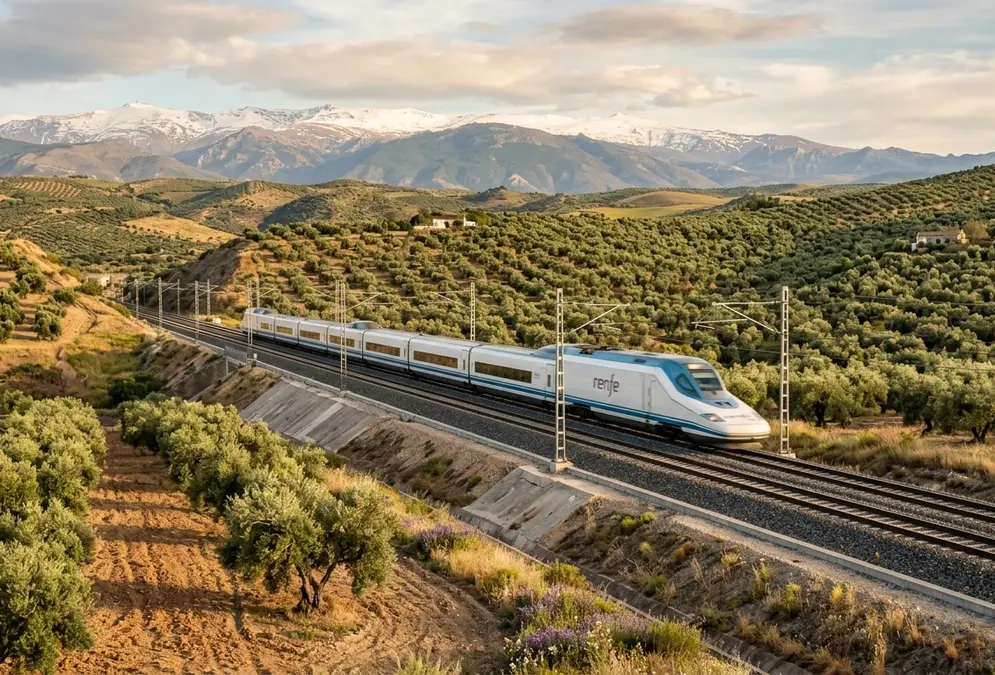
Next: Renfe regional train to Toledo from Madrid Atocha. 30 minutes, roughly €6 each way. Trains leave every 30-60 minutes. Return in the evening and consider taking the night AVE direct to Seville (2h30) to save a Madrid hotel night.
D2
Day 2
Toledo — day trip from Madrid
Toledo is 30 minutes from Madrid by Renfe and packs three religions into a single hilltop: the Cathedral (begun 1226, €10), the Alcázar fortress (€5), the El Greco Museum (€3), and a Jewish Quarter that predates the Inquisition by several centuries. The old city is almost entirely walkable from the station — take the escalators up from the river if you want to skip the climb.
Spend the full day here, then make your choice: return to Madrid for a second night, or take the early evening AVE directly to Seville (2h30 from Madrid Atocha, departures around 17:00-19:00). The second option saves a hotel night and puts you into Seville in time for a late dinner in Triana.
Next: AVE from Madrid Atocha to Seville Santa Justa, 2h30. Tickets from €20 booked ahead. See the Madrid train guide for operator comparison and booking tips.
D3
-4
Days 3-4
Seville — two full days
Day 3 belongs to the historic core. The Real Alcázar (€14.50, book online to skip the queue — it's genuinely bad without a timed entry) is one of the finest examples of Mudéjar architecture in existence, built by Pedro I in 1364 on Moorish foundations. After the Alcázar, walk north to the Cathedral and Giralda (€13): the tower was the minaret of the original mosque. Santa Cruz in the afternoon, Plaza de España at golden hour — you'll photograph the ceramic province tiles along with everyone else and not feel bad about it.
Day 4 is for the other Seville. Cross the Guadalquivir to Triana for the morning — the market on Calle San Jacinto opens early and the cafés around it fill with locals. Come back across the river for Metropol Parasol (free to walk under, €3 rooftop views), the Macarena basilica, and a walk along the city walls. Evening on the river, watching the light drop behind the Torre del Oro.
Next: AVE Seville to Córdoba, 45 minutes, from €7. Around 20 trains a day. Full details in the Seville-Córdoba guide.
D5
-7
Days 5-7
Córdoba — the cultural centerpiece
Why three nights?
Most visitors give Córdoba one day. That's enough for the Mezquita. Three days means you also get Medina Azahara, the neighborhood walks, the smaller patios that guidebooks ignore, and an evening slow enough to notice the smell of orange blossom in the streets around the Judería. If three days doesn't fit your trip, the interactive trip planner can rebuild these days around whatever time you actually have.
5 Day 5: The historic heart
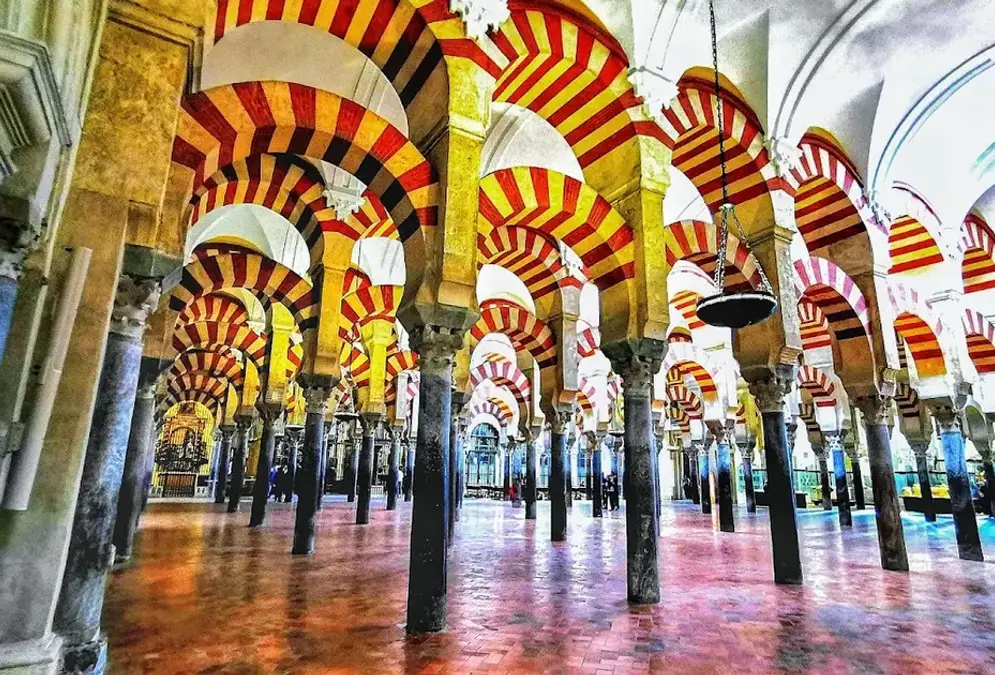
Start at the Mezquita-Catedral when it opens at 10:00 (€15 general entry, free for morning Mass between 8:30-9:30 if you want to skip the fee). The 856 columns of jasper and marble create a forest effect unlike any other building in Europe — the Renaissance cathedral inserted into the middle of the prayer hall in 1523 is either a desecration or a marvel, depending on your perspective. Allow two hours minimum.
Spend the afternoon in the Judería, Córdoba's medieval Jewish quarter. The 14th-century synagogue (€0.30) is the third-oldest surviving in Spain. The Calleja de las Flores is the most photographed alley — get there before 9:00 or after 18:00 for a clear shot. The Roman Bridge at sunset: 16 arches spanning the Guadalquivir, built in the 1st century BC, with the Calahorra Tower on the far bank.
6 Day 6: Palaces, patios, and food
Morning at the Alcázar de los Reyes Cristianos (€7, gardens included) — Isabella and Ferdinand used this as their court and received Columbus here in 1489. The garden fountains run all morning; the mosaic floors inside are 3rd-century Roman. Then walk north to the Palacio de Viana (€10 for all 12 patios, €6 patios only) — a 16th-century Renaissance palace whose courtyards are stacked with climbing roses and jasmine. Go in June during the Patio Festival and some of these open for free.
Afternoon in San Basilio, the neighborhood southwest of the Mezquita that most visitors miss entirely. The flower-filled private patios are genuinely different from the palace patios — smaller, quieter, kept by families who've lived here for decades. Lunch anywhere that doesn't have a laminated picture menu. Order salmorejo — Córdoba's cold tomato soup, thicker than gazpacho, served with jamón and boiled egg.
7 Day 7: Medina Azahara and a farewell dinner
Medina Azahara, 8 km west of Córdoba, is the caliphate's ghost. Abd al-Rahman III began building it in 936 AD as a rival to Baghdad — 25,000 workers, 4,300 columns, a population of 12,000. Destroyed in 1009 during the Berber uprising, it lay buried until excavations began in 1910. The UNESCO-listed museum is excellent; the ruins themselves, in the morning light, feel more remote than they are. Entry €1.50 for EU residents, €7 for others. The shuttle from Glorieta Ibn Rushd runs regularly.
If you want one more hour in the afternoon, the olive oil tasting experiences in Córdoba are genuinely educational — the Campiña Sur sub-region produces oils with a bitterness and peppery finish that's distinct from what you get in Catalonia or Italy. Book ahead; capacity is small. Farewell dinner somewhere along the Calleja del Pañuelo.
Next: Renfe to Granada, 1h30-1h40 direct (or change at Antequera-Santa Ana). From €15. See the Córdoba-Granada guide for timetables and what to book ahead.
D8
-9
Days 8-9
Granada — the Alhambra and the hill
Book the Alhambra at least 2 months ahead. Standard entry is €21 including the Nasrid Palaces (the part most people actually want). Tickets go on sale 3 months in advance at alhambra-patronato.es. Don't leave this until the week before.
Day 8 is the Alhambra. The Nasrid Palaces are the draw — intricate stucco, reflecting pools, cedar ceilings — but the Generalife gardens and the Alcazaba fortress deserve equal time. Allow 4-5 hours total. The views of the Sierra Nevada from the Alcazaba walls are best in late morning before haze builds. Buy lunch outside; the on-site café is overpriced.
Day 9 is the other Granada. The Albaicín is a Moorish hill quarter that became a UNESCO site in 1994 — narrow whitewashed lanes, tea houses, and the best view of the Alhambra from the Mirador de San Nicolás (go at 17:00, before the tourist groups arrive at 18:00). Sacromonte, the cave district where Granada's Romani community settled, is 20 minutes walk from the Albaicín; the cave museum (€5) explains the history without sentimentality. The Cathedral (€5) and the adjoining Royal Chapel, where Ferdinand and Isabella are buried, round out the afternoon.
Next: Bus Granada to Ronda via Antequera (Alsa operates this route), around 2.5-3 hours total. No direct train. Check Alsa.com for schedules; 2-3 departures daily.
D10
Day 10
Ronda — a town on the edge
Ronda sits 750 metres above sea level on a plateau split by the El Tajo gorge — 100-metre cliffs falling straight down to the Guadalevín river. The Puente Nuevo bridge (1793) spanning that gorge is not a subtle sight. Walk across it, then walk down into the gorge via the Camino de los Molinos for the view back up. About 45 minutes round trip and worth every step.
Ronda's bullring (1785) is the oldest in Spain and significant in bullfighting history — Pedro Romero, who defined modern corrida technique, was born here. You don't need to care about bullfighting to find the museum interesting (€8). The old quarter around the Arab baths and the Casa del Rey Moro gardens fill the afternoon. Book dinner at a restaurant with a terrace over the gorge; sunset from here is as dramatic as anywhere on this route.
Next: Car recommended for the White Villages day. Rent from Ronda or Málaga (return the car in Málaga afterward). Public transport exists but runs infrequently and makes the circuit nearly impossible in a single day.
D11
Day 11
White Villages — the circuit
Car is essential today
The Pueblos Blancos sit in the Sierra de Grazalema, connected by narrow mountain roads. A rental car lets you choose your own stops and pace. Without one, you're relying on a bus that runs once a day between some villages and not at all between others.
Three villages make a coherent circuit. Start at Setenil de las Bodegas: a village where streets run through the overhang of a volcanic rock formation, houses literally built into cliffs. The bar terraces under the rock are genuinely surreal, not just photographically. An hour here is enough.
Drive 20 minutes to Grazalema, a mountain village at 800m with a reputation for the highest rainfall in Spain (ironic given the surrounding summer drought). The cheese here — cured sheep's milk, semi-hard — is sold in the market on the main square. In the afternoon, continue 15 minutes to Zahara de la Sierra, a fortress town above a turquoise reservoir. Walk up to the castle (free) for views over the water. Drive to Málaga from here takes about 90 minutes on the A-384 and A-357.
Next: Drive to Málaga, about 90 minutes from Grazalema via the A-384 and A-357. Return the rental car at Málaga Airport or the city centre.
D12
-13
Days 12-13
Málaga — coast and culture
Day 12: The Alcazaba (€3.50) and Gibralfaro castle (€3.50 or €5.50 combined) sit on the same hill above the city — the Alcazaba is Moorish 11th-century, the castle higher up has views over the bay. Allow 2-3 hours for both. The Picasso Museum (€12, free on Sunday evenings) occupies a 16th-century palace in the old town and holds 233 works from all periods of his career. Picasso was born in Málaga in 1881 — his birthplace on Plaza de la Merced is free to enter.
Day 13: A slower day. The beach in the morning — La Malagueta is central and perfectly serviceable; Pedregalejo or El Palo, 3 km east by bus, are quieter. If you want a day trip, Nerja (1 hour by bus) has the Balcón de Europa cliff walk and the Cueva de Nerja prehistoric caves (€12). Or go to Frigiliana, a white village above Nerja that's more intact than the Ronda circuit villages. Afternoon back in Málaga to pack for the morning journey to Cádiz.
Next: Train or bus to Cádiz, 2-2.5 hours depending on service. Renfe operates Málaga-Cádiz via Bobadilla; Alsa runs buses. Check both — sometimes the bus is faster and cheaper.
D14
Day 14
Cádiz — the Atlantic end
Cádiz is one of the oldest continuously inhabited cities in Western Europe, founded by the Phoenicians around 1100 BC. Three thousand years of history in a city you can walk end to end in 45 minutes. The old town is on a narrow peninsula; the Atlantic pushes in on three sides. La Caleta beach sits between two 18th-century castles. The Cathedral (€6) has one of the strangest domes in Spain, covered in yellow and white ceramic tiles that catch the coastal light.
Spend the morning in the old town, the Barrio de la Viña (the neighbourhood that gave birth to Cádiz's Carnival, Spain's largest), and the Mercado Central for a final lunch of fried fish — pescaíto frito is the local specialty and different here than anywhere else you've had it. For departure: Jerez de la Frontera airport is 30 minutes away by bus or taxi; Seville airport is 90 minutes by bus. The AVE from Cádiz to Madrid runs via Seville and takes around 3h30 total.
Short on time?
Fourteen days is the right length for this route but not always possible. These compressed variants keep the best of Andalusia without the White Villages leg or the Toledo detour.
7 days
Essential Andalusia
Seville, Córdoba, Granada. The triangle that started the tourism industry in the 1960s — still unbeatable for a first visit.
10 days
The Extended Triangle
Adds Ronda and Málaga to the triangle. More coast, more mountain, still manageable without a car for most of the route.
Practical tips for this route
Car rental: Day 11 only
You need a car only for the White Villages day. Rent from Ronda the evening before, do the circuit, return to Málaga. One-way rentals between Ronda and Málaga are available; budget €40-60 for the day including fuel. Everything else on this route is covered by Renfe and Alsa.
Alhambra booking
Book the Nasrid Palaces slot the day you confirm your dates — ideally 2-3 months out. The 8:30 and 14:00 slots sell first. If you miss everything, the Alhambra Experiences site sometimes releases cancelled tickets 24 hours before. Check at midnight Spain time.
Festival timing
If you're traveling in late April or early May, Córdoba's Patio Festival (usually first two weeks of May) opens private flower-filled courtyards that are otherwise closed. Seville's Feria de Abril falls in late April. Both increase hotel prices and require booking accommodation 3-4 months ahead. Both are worth it.
Pack for temperature swings
Spring and autumn can drop to 8-10°C at night in the mountain sections — Ronda, Grazalema, and even Granada at elevation. You'll want a layer you can tie around your waist by noon. In summer, the opposite problem: Córdoba and Seville regularly hit 42°C in July. Plan outdoor sightseeing for before 10:00 and after 17:00.
Book your Córdoba day tours ahead
Tours are selected for quality, not commission. We earn a small fee if you book — at no extra cost to you.
Two days in Córdoba on a 14-day route — more time to explore beyond the Mezquita.
From Seville: Córdoba Full-Day Tour
Discover Córdoba on a guided full-day trip from Seville. Visit the Mezquita-Cathedral, stroll the Jewish Quarter, and explore the Alcázar with a knowledgeable guide. Transport included.
10 hours
From €55
4.6 (781 reviews)
Reserve Your Spot
✓ Verified GetYourGuide reviews
Córdoba Guided Tour: Mosque, Jewish Quarter & Alcazar
Three-hour circuit of the Mezquita's 856-column prayer hall, the Jewish Quarter's whitewashed lanes, and the Alcázar's Roman mosaics. Skip-the-line access included.
Skip the line 3 hours
From €45
4.5 (615 reviews)
Reserve Your Spot
✓ Verified GetYourGuide reviews
Mosque, Jewish Quarter and Alcázar 3-Hour Tour
The complete Córdoba experience in 3 hours: the Mosque-Cathedral, the Jewish Quarter, and the Alcázar, with an expert local guide and skip-the-line access.
Skip the line 3 hours
From €45
4.7 (490 reviews)
Reserve Your Spot
✓ Verified GetYourGuide reviews
Rent a car in Córdoba
We earn a small commission if you book a car through this search — at no extra cost to you.
On a 14-day Andalusia loop, a rental car is the most flexible way to connect the route. Compare rates here.
Book your Córdoba nights
We earn a small commission if you book a hotel through this search — at no extra cost to you.
Córdoba usually gets two or three nights on a 14-day loop. Pick your dates to see what's available.