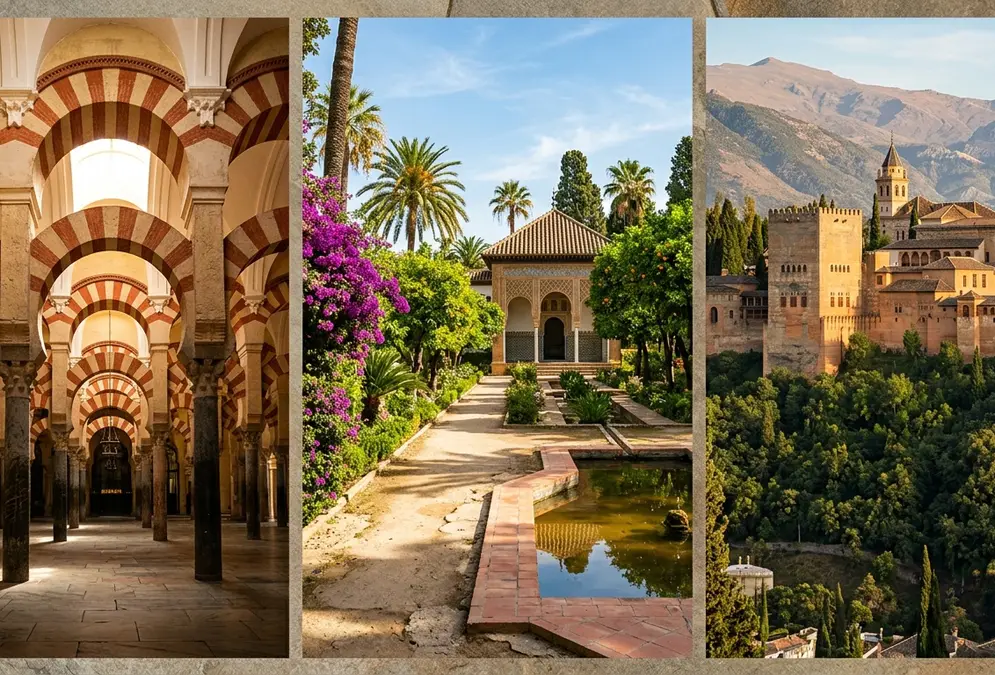
7-day itinerary
7-Day Andalusia Itinerary: The Essentials
Seville, Córdoba and Granada in one focused week. Three cities, two AVE connections, and the best of Moorish Andalusia without a wasted day.

Written by
María Fernanda González Ten years covering Córdoba's UNESCO heritage sites, sourcing from Junta de Andalucía documentation.
Updated Published
In this guide
Jump to a section
Route overview
This is the classic triangle: two days in Seville for the Alcazar and the Santa Cruz quarter, three days in Córdoba for the Mezquita and the medina, two days in Granada for the Alhambra. The AVE high-speed rail connects all three. No car needed.
Seville
Days 1–2
Córdoba
Days 3–5
Granada
Days 6–7
45 min by AVE from Seville to Córdoba. Then 1h30–1h40 Renfe from Córdoba to Granada.
Route map
Interactive map — loads as you scroll (requires JavaScript)
At a glance
- Cities
- 3
- Pace
- Focused
- Budget
- €800–1,200
- Best for
- First-timers
- Transport
- AVE trains
- Best season
- Mar–May, Sep–Oct
- Book ahead
- Alhambra (2+ months), AVE (2–3 weeks)
Day-by-day itinerary
S
Seville — Days 1–2
Fly into Seville or arrive by AVE from Madrid (2h30)
Day 1 — Seville's monumental heart
Morning: Start early at the Real Alcazar. The rooms in the Mudéjar Palace cool down fast in summer heat, and morning light hits the tilework best. Then cross to the Cathedral and Giralda (the tower climb gives the only real aerial view of the old city). Book both online the day before to skip the queue.
Afternoon: Walk into the Santa Cruz quarter, the former Jewish barrio. Get lost a bit. Take the tram or walk to Plaza de España for the afternoon light on the ceramic tile alcoves.
Evening: Cross to Triana over the Isabel II bridge for tapas. Order montaditos at El Rincón de la Alfalfa or head for a flamenco show at one of the tablaos on Calle Betis. Dinner after 9pm.
Day 2 — Seville beyond the postcards
Morning: Climb to the roof of Metropol Parasol (Las Setas) early — the panoramic walkway is worth the €3 before crowds arrive. Walk through the Macarena quarter to see the basilica and the intact section of 12th-century city wall.
Afternoon: Walk south along the Guadalquivir. Stop at Torre del Oro (the 13th-century watchtower, now a small naval museum, admission €3). Have lunch at a terrace along the river.
Evening: Farewell dinner in the Alameda de Hércules neighborhood. Pack tonight for tomorrow's train.
Seville to Córdoba: AVE high-speed train, 45 minutes, €15–30. Book 2–3 weeks ahead for cheaper seats. Station: Santa Justa (Seville) to Córdoba Central. Full Seville to Córdoba travel guide
C
Córdoba — Days 3–5
The cultural centerpiece of the route. Three days is the right amount of time.
Day 3 — The Mezquita and the Jewish Quarter
Morning: The Mezquita-Catedral opens at 8:30am. Book the earliest slot you can. The 856 columns of jasper and granite feel completely different when the light first comes through the arches and you're sharing them with twenty people rather than two thousand. Budget 2 hours minimum.
Afternoon: Walk into the Jewish Quarter (Judería). Find the Synagogue on Calle Judíos (one of three surviving medieval synagogues in Spain, €0.30 entry for EU citizens). Walk through the flower-pot alleys of Calleja de las Flores.
Evening: Watch sunset from the Roman Bridge. The view back to the Mezquita's tower from the middle of the bridge is the one locals know. Tapas afterward in the streets behind the bridge.
Day 4 — Alcazar, San Basilio and slow food
Morning: Alcazar de los Reyes Cristianos (€7). The 14th-century royal gardens are best before 11am when tour groups arrive. The watchtower gives a wide view of the Guadalquivir.
Afternoon: Walk west into San Basilio, the neighborhood that wins the Festival de los Patios each May. The private courtyards aren't always open outside festival season, but the streets themselves are worth the walk. Stop for salmorejo at a bar on Plaza Campo Santo de los Mártires. Thicker and richer than gazpacho, it comes with a drizzle of olive oil and shredded jamón.
Evening: Flamenco tablao. The ones inside the Judería are tourist traps. Ask your hotel for the current local recommendation or check the municipal program for peña shows.
Day 5 — Medina Azahara and olive oil
Morning: Half-day excursion to Medina Azahara, 8km west of Córdoba. Abd al-Rahman III built this palatial city in 936 as a statement of Caliphal power. Only 10% has been excavated. Free on Sundays. Take the tourist bus from the train station (€12 return).
Afternoon: Back in town, take an olive oil tasting session — Córdoba sits inside the world's largest olive oil producing region. A 90-minute tasting teaches you to distinguish early harvest (peppery, green) from ripe harvest (smooth, buttery). Pack a bottle to take home.
Evening: Farewell dinner at a proper Córdoban restaurant. Order rabo de toro (braised oxtail) or berenjenas con miel de caña (fried eggplant with cane honey syrup). Both are local dishes you won't find this well done in Granada or Seville.
Córdoba to Granada: Renfe train, 1h30–1h40, €17–35. Around 4–5 trains per day. Book in advance — seats sell out on Friday afternoons and Sunday evenings. Full Córdoba to Granada travel guide
G
Granada — Days 6–7
Arrive by train from Córdoba. Granada's bus station is closer to the center than the train station.
Day 6 — Alhambra day
Full morning: The Alhambra takes a full morning if you want to do it properly. Buy tickets directly at alhambra-patronato.es at least 2 months ahead for spring visits (€21 general admission). The Nasrid Palaces are timed entry only. Start with those, then work through the Alcazaba fortress and the Comares Palace.
Late morning: Walk through the Generalife gardens after the palaces. The water channels and summer palace are less crowded after midday.
Evening: Walk up to the Albaicin neighborhood and find the Mirador de San Nicolás. Arrive 30 minutes before sunset. The view across to the Alhambra with the Sierra Nevada behind it is why people come to Granada. Get there early enough to claim a spot on the wall.
Day 7 — Albaicin, Cathedral and Sacromonte
Morning: Walking tour of the Albaicin: the oldest Moorish neighborhood in Granada, with white-washed houses, fig trees over courtyards, and narrow lanes that predate the Reconquista. Stop at the Cathedral and the adjacent Royal Chapel, where Ferdinand and Isabella are buried (€5).
Afternoon: Walk east to Sacromonte, the cave quarter carved into the hillside above town. Some of the cave houses are still lived in. The cave museum (Museo Cuevas del Sacromonte, €5) explains the gitano community history. Several companies offer zambra flamenco shows in the caves at night.
Departure: Granada Airport has limited connections. Most people fly from Malaga (90 min by bus from Granada) or take the AVE back to Madrid from Granada's train station. If you have an extra day, the drive to Malaga through the Alpujarra mountains is worth the detour.
Have more time?
Seven days is the minimum to do these three cities without rushing. With 10 or 14 days you can slow down, add a day trip, or include Ronda and the coast.
10-day variant
10-Day Andalusia Itinerary
Extra days in Córdoba for day trips to Medina Azahara and the Campiña. Adds Ronda or the white villages.
14-day variant
14-Day Andalusia Itinerary
The full circuit: adds Cadiz, Jerez de la Frontera, and the Costa de la Luz. A proper immersion.
Practical tips
Book ahead
Alhambra tickets disappear 2+ months out in spring. AVE seats are cheapest 3 weeks ahead. The Mezquita rarely sells out but early slots go fast in summer. Book everything the week you plan, not the week you travel.
Timing your days
In July and August, the heat between 1pm and 5pm makes outdoor sightseeing uncomfortable. Work monuments into the morning. Use siesta hours for a long lunch or air-conditioned museum. Resume after 5:30pm.
Dining rhythms
Lunch is the main meal (1:30–3:30pm). The menu del dia (€12–18) gives you two courses plus bread and a drink at prices restaurants won't charge at dinner. Dinner starts at 9pm. Eating before 8:30pm marks you as a tourist.
Comfort basics
Comfortable shoes are non-negotiable. Cobblestones in the Judería and Albaicin chew through soles and ankles. Carry a refillable water bottle: all three cities have public drinking fountains. Lightweight linen in summer, a layer for winter evenings.
Book your Córdoba day tours ahead
Tours are selected for quality, not commission. We earn a small fee if you book — at no extra cost to you.
The Mezquita skip-the-line sells out mid-morning in high season.
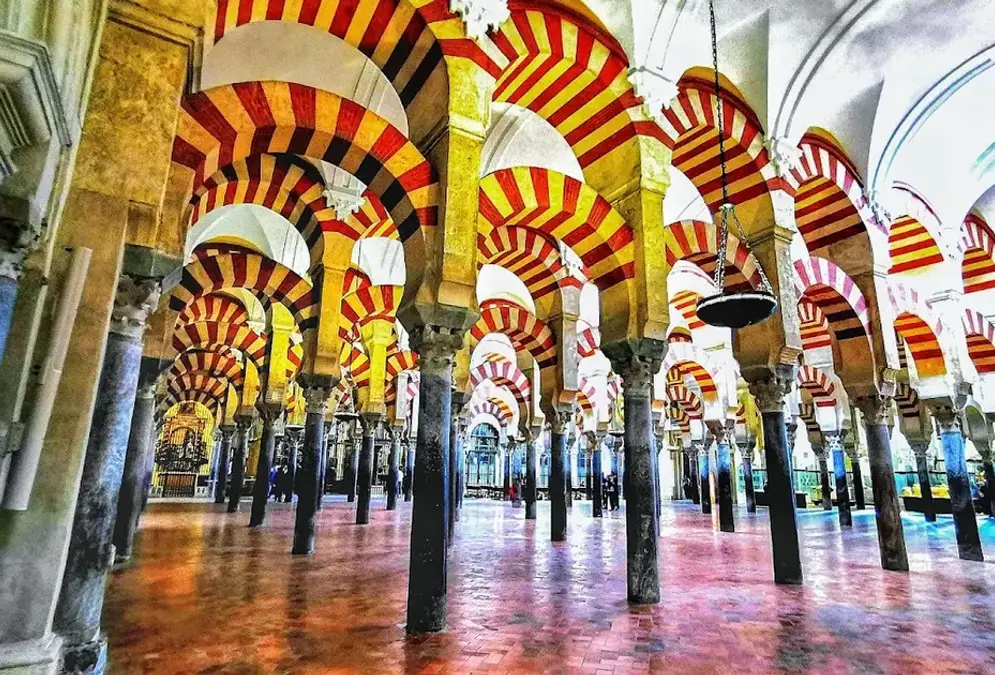
From Seville: Córdoba Full-Day Tour
Discover Córdoba on a guided full-day trip from Seville. Visit the Mezquita-Cathedral, stroll the Jewish Quarter, and explore the Alcázar with a knowledgeable guide. Transport included.
10 hours
From €55
4.6 (781 reviews)
Reserve Your Spot
✓ Verified GetYourGuide reviews
Córdoba Guided Tour: Mosque, Jewish Quarter & Alcazar
Three-hour circuit of the Mezquita's 856-column prayer hall, the Jewish Quarter's whitewashed lanes, and the Alcázar's Roman mosaics. Skip-the-line access included.
Skip the line 3 hours
From €45
4.5 (615 reviews)
Reserve Your Spot
✓ Verified GetYourGuide reviews
Mosque, Jewish Quarter and Alcázar 3-Hour Tour
The complete Córdoba experience in 3 hours: the Mosque-Cathedral, the Jewish Quarter, and the Alcázar, with an expert local guide and skip-the-line access.
Skip the line 3 hours
From €45
4.7 (490 reviews)
Reserve Your Spot
✓ Verified GetYourGuide reviews
Rent a car in Córdoba
We earn a small commission if you book a car through this search — at no extra cost to you.
A car opens up Andalusia's smaller towns between the main cities. Compare rental rates for your route.
Book your nights in Córdoba
We earn a small commission if you book a hotel through this search — at no extra cost to you.
The Córdoba stop is usually two nights on this route. Check rates for the Judería and nearby.