
The Roman technique that started it all
The mazamorra cordobesa history does not begin with almonds, and it does not quite begin with bread either. It begins with a mortarium and a very Roman way of pounding strong, cheap ingredients into a paste.
Colonia Patricia Corduba (Roman Córdoba, capital of Hispania Baetica) knew a preparation called moretum: a soft cheese close to ricotta, pounded in a stone mortar with raw garlic, herbs, olive oil, salt, and vinegar until everything bound into a stiff, spreadable paste.[8] The poet Virgil described a version of it in a short poem of the same name, written for peasant readers who would have recognised the dish on sight. Moretum was not itself a bread dish: it was a paste eaten with bread, spread on a slice rather than made from one. It was not a luxury preparation. It was what a Roman smallholder made when garlic and herbs were free from the garden and cheese needed using up.
1st–5th c. CE
Alongside moretum, Roman soldiers and civilians in Córdoba drank posca: water mixed with wine vinegar, sometimes with herbs. The vinegar habit it embedded in Andalusian cooking would survive every subsequent wave of population and culture. That acid component is still present in mazamorra and its descendant salmorejo today.
What moretum actually handed down to mazamorra was not an ingredient list — bread appears nowhere in it — but a method: pound strong, cheap ingredients together in a mortar with oil, vinegar, and salt until they cohere into something stable enough to eat cold. Centuries later, cooks in Al-Andalus applied exactly that logic to a different base ingredient. Stale bread, soaked and pounded, could do the same binding work moretum's cheese had done. No eggs, no cream, no thickening agents: just the structural work that wheat proteins have been doing in this part of Andalusia ever since that substitution was made.
When the Roman legions left Córdoba in the 5th century, the mortarium stayed. The pounding technique stayed. The vinegar stayed. What changed, over the following centuries, was which ingredient did the binding work, and eventually, under Moorish cooks, what got added to bread once it took over that role.
How the Moors added almonds and made it mazamorra
The Umayyad Caliphate of Córdoba reached its peak under Abd al-Rahman III, who declared himself Caliph in 929 CE. At that point, Córdoba was among the largest cities in Europe, rivalling Constantinople in size — scholarly population estimates range from 100,000 to 450,000, placing it alongside Constantinople rather than surpassing it.[6] Its kitchens had access to ingredients from across the Mediterranean and to culinary texts from Baghdad.
The Kitab al-Tabikh (Book of Cooking) — the oldest cookbook known to survive from the Iberian Peninsula — was compiled in Al-Andalus and the Maghreb during the 12th and 13th centuries, in or shortly after the Almohad period.[1] It documents an already sophisticated caliphate-era kitchen, exactly the kind of refined culinary culture capable of taking a rough, Roman-style pounded paste and turning it into something more considered. The Moorish addition that turned that pounded-bread base into mazamorra was blanched almonds: ground into the bread-garlic-oil paste, they introduced richness, fat, and a mild sweetness that the Roman preparation lacked.
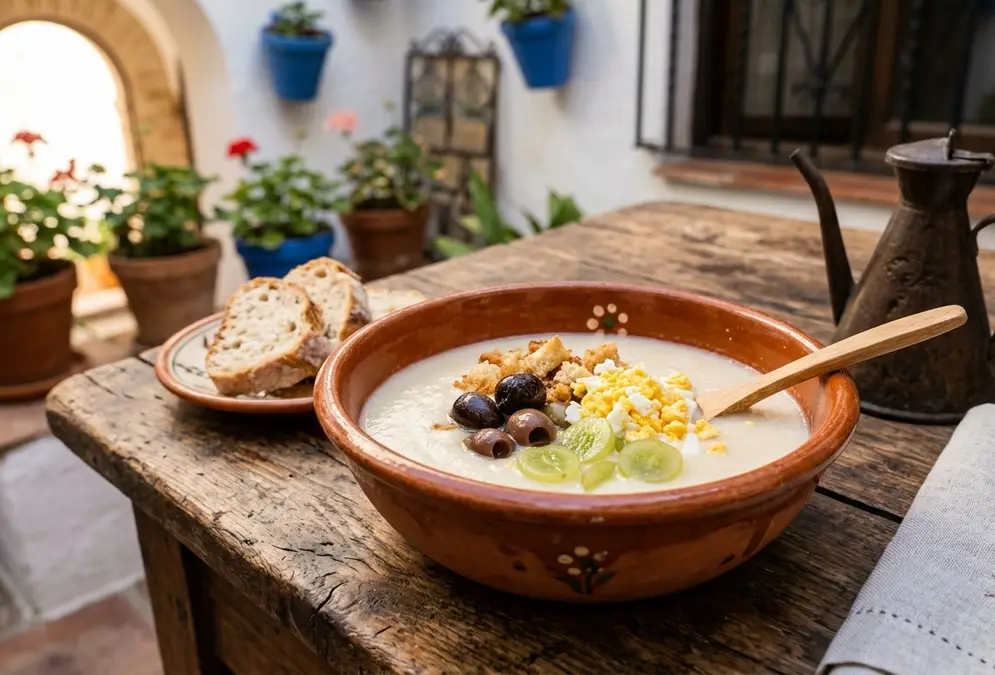
The result is mazamorra cordobesa as it still exists today: stale bread, blanched almonds, garlic, extra virgin olive oil, sherry vinegar, salt, cold water. White, thick enough to eat with a spoon, served chilled. The ingredients were cheap and local: bread from the week's baking, almonds from the caliphate-era groves south of the city, garlic from every market garden, oil from the same Baena and Priego de Córdoba groves that supply today's PDO producers.
Explore nearby · Monument
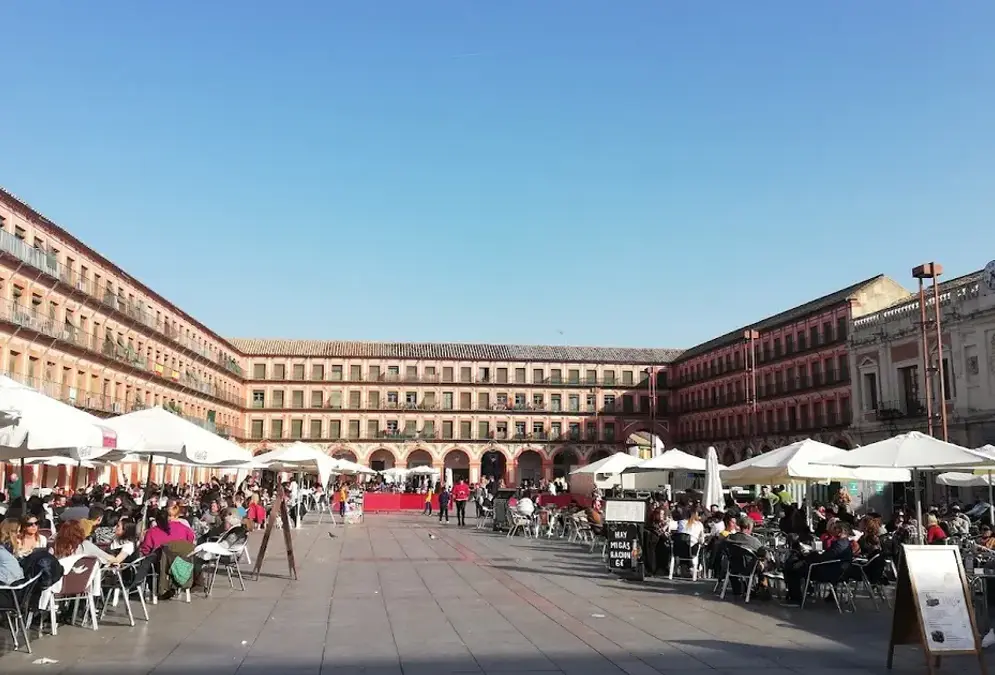
Plaza de la Corredera
Andalusia's only Castilian arcaded square, built in 1683 over a Roman forum. Once a bullfighting ring, now lined with bar terraces and a Sunday flea market.
Mazamorra was not palace food. It appears in household accounts and market records as working-household staple, filling and nutritious with no meat required. Its survival into the 21st century has the same cause: it is genuinely good food made from things that are always available.
The Convivencia: The Story Córdoba Tells About Itself produced intellectual and architectural achievements that get more attention than the kitchen. The cold almond soup is one of the overlooked ones.
The recipe: five ingredients, one bowl
The mazamorra cordobesa recipe has not changed structurally in six centuries, which makes it either very good or very conservative depending on how you look at it. Five core ingredients: stale bread (pan telera or any dense white crumb), blanched almonds (ground), raw garlic, extra virgin olive oil, and sherry vinegar (or dry white wine vinegar). Salt. Cold water to thin it to eating consistency. Everything goes into a blender or, if you want to be historically accurate, into a mortar.
The proportions matter. A rough ratio: 200g stale bread (soaked in water then squeezed out), 100g blanched almonds, 1–2 fat garlic cloves, 100ml extra virgin olive oil, 2 tablespoons sherry vinegar. The bread should be genuinely stale: day-old pan telera that has dried out, not fresh bread softened in water. Fresh bread produces a gluey result rather than a clean emulsion. The oil goes in slowly, as it does in mayonnaise, so the bread-almond-garlic base can absorb it without splitting.
The texture when finished is closer to thick custard than to soup. A bowl held sideways would not pour freely. This is intentional: mazamorra should be eaten with a spoon, not drunk.
Traditional toppings in Córdoba:
Recommended tours
Tours are selected for quality, not commission. We earn a small fee if you book — at no extra cost to you.

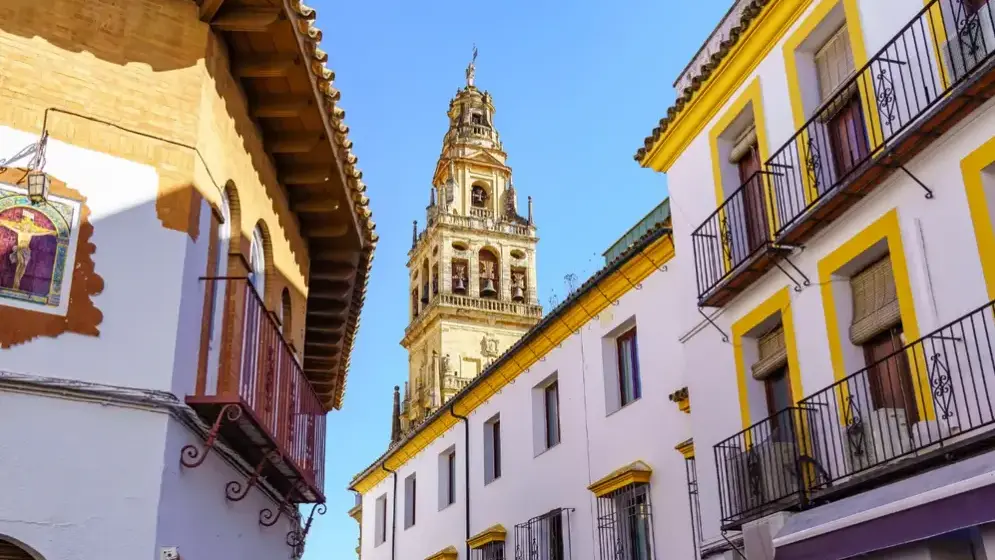

- Black olives (whole or halved)
- Hard-boiled egg (crumbled or quartered)
- Halved green grapes
The grapes are the one that surprises most visitors. The sweetness of the grape against the garlic-sharp base is the same sweet-savoury logic documented in Berenjenas con Miel — Moorish Roots of Córdoba's Sweetest Tapa. Both dishes come from the same Al-Andalus kitchen culture.
Modern variations in Córdoba restaurants add chopped apple, raisins, anchovies, or marinated sardines. The anchovy version is worth ordering if you see it: the salt and umami from the fish push the almond base somewhere interesting. The apple version is more of a summer refreshment than a full tapa.
Why salmorejo replaced it, and why mazamorra survived anyway
The critical turning point in mazamorra cordobesa's history came in the 18th century, not in 1492. Tomatoes reached Spain from Mexico and Peru in the first half of the 16th century, though no record survives of them entering through Seville's port or being grown in the royal Iberian gardens; the documented route into Europe instead ran through Italian merchants, with the first European botanical mention recorded in Italy in 1544.[7] From there, the plant moved through Iberia cautiously, first as a botanical curiosity, then as a garden plant, then gradually as a kitchen ingredient. By the 18th century, vine-ripened tomatoes were cheap and abundant enough in Andalusian gardens that cooks began using them in quantity.
What happened next was not a deliberate reinvention. Cooks in Córdoba replaced the almonds in mazamorra with tomatoes. The formula was otherwise identical: stale bread, garlic, olive oil, vinegar. The acid previously supplied by sherry vinegar was now supplied partly by the tomato itself. The white emulsion became red. Salmorejo cordobés, the dish Córdoba is now famous for, was the result.
Why did the red version win? The direct answer is visual appeal. Tomatoes are visually distinctive: a glossy scarlet-orange bowl photographs well, sells well to restaurant customers, and looks exciting in a way that a pale beige bowl does not. When Córdoba became a tourism destination in the second half of the 20th century, restaurateurs gravitated toward salmorejo because it communicated itself in a photograph. Mazamorra required an explanation.
But mazamorra did not disappear. It survived in home kitchens for the same reason that most pre-commercial food survives: home cooks were not selecting for tourism value. They were cooking food that their households actually liked, using ingredients that were cheap and available. The almond version was cheaper in some periods (before almonds became a premium export product), required no fresh tomatoes, and worked year-round from pantry staples.
Mazamorra still turns up in Córdoba, on menus at traditional tabernas and in home cooking. But you will not find it on the tourist-facing menu boards outside the Mezquita. For the full story of how tomatoes transformed Andalusian cold soups, Salmorejo — The Córdoba Dish That Perfected Over Centuries covers that arc in detail. And because Córdoba was not the only Andalusian city making choices with the new ingredient, the salmorejo vs gazpacho comparison traces exactly how the two cities diverged — Córdoba keeping the bread and building a thicker emulsion, Seville adding cucumber and pepper and producing something pourable.
Mazamorra and ajoblanco: the same dish, two names
A useful clarification before you order in Córdoba: mazamorra cordobesa and ajoblanco are functionally the same dish. Identical ingredients (bread, almonds, garlic, olive oil, sherry vinegar, cold water). Identical toppings (olives, egg, grapes). One critical difference: water content.
Ajoblanco contains more water, producing a lighter soup that you can drink from a glass. Mazamorra cordobesa contains less water, producing the thicker spoon-eaten version. If the distinction sounds minor, taste them side by side: ajoblanco is refreshing in the way a cold drink is refreshing; mazamorra is satisfying in the way a small meal is satisfying. The same ingredients at different consistencies produce genuinely different eating experiences.[3]
The naming geography is consistent but not absolute. Ajoblanco is the name you hear more often on the Andalusian coast, particularly in Málaga, where it appears on every summer menu. Mazamorra is the Córdoba name, and it carries the implication of thickness. When you see mazamorra on a Córdoba menu, expect a bowl and a spoon, not a glass.
Where ajoblanco and mazamorra differ from the broader family of Andalusian cold bread-soups is precisely in their age. Both are pre-Columbian preparations: no tomatoes, no peppers, no New World ingredients. They represent what Andalusian cooks were eating before 1492. Salmorejo, porra antequerana, and gazpacho all require the Columbian Exchange. Mazamorra does not.
Porra antequerana is worth mentioning here as the closest post-tomato relative: a thick bread-tomato emulsion from Antequera in Málaga province that sometimes includes green bell pepper. It may have developed in parallel from the same mazamorra base, or one may have influenced the other along the Andalusian trade routes. Nobody knows for certain, and the Antequera cooks are not shy about defending their version's priority.
Where the name comes from, and why it went two directions
The etymology of mazamorra is more roundabout than it looks. It traces back to Ancient Greek paxamádion, meaning a small, hard, twice-baked biscuit. That word passed into Andalusian Arabic as pičmáṭ, and from there into Spanish as mazamorra — a shift pulled along the way by the unrelated Spanish word masa, meaning dough, which nudged both the pronunciation and the sense of the word toward 'a worked mass of dough.'[5] Between the Greek biscuit and the Spanish dough, the word ends up describing exactly what the dish is: something dried and baked, then reworked into a paste.
Spanish ships carried the word to the Americas in the 16th century, where it attached itself to an entirely different preparation: maize porridge. In Peru, Colombia, and Ecuador, mazamorra refers to a sweetened corn pudding with nothing in common with the Córdoba original except the word itself and the general idea of working a starch into a paste.[4] The Latin American dish is cooked and sweet; the Córdoba dish is raw and savoury. They share a name, not a recipe.
This divergence in meaning is not unusual in food history. The same word carrying different dishes across an ocean happens everywhere colonial contact occurred. What makes the mazamorra case interesting is that both traditions are still alive. You can order mazamorra in Lima or Bogotá and get a warm corn dessert. You can order mazamorra in Córdoba and get a cold almond soup. The same word, thousands of kilometres apart, producing opposite experiences.
Deep dive · Article
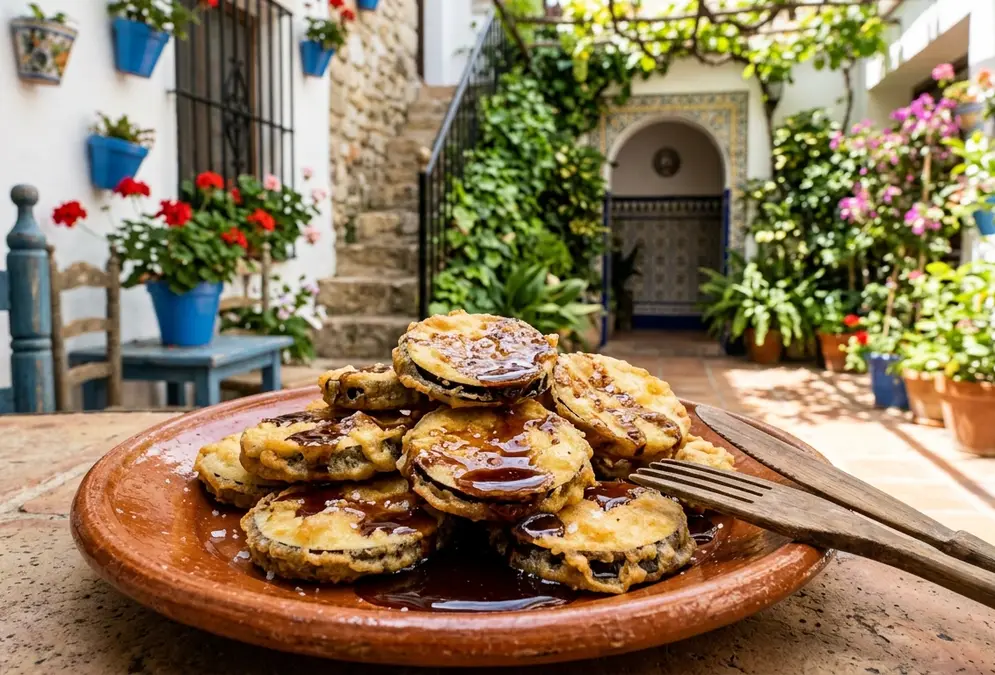
Berenjenas con Miel — Moorish Roots of Córdoba's Sweetest Tapa
The Moorish origin of berenjenas con miel traces to 8th-century Al-Andalus, where fried aubergines and honey defined sweet-savoury cooking in Córdoba.
For food history purposes, the Córdoba dish's lineage is more traceable: from a Greek word for a twice-baked biscuit, through Andalusian Arabic, into a Castilian kitchen that was already pounding stale bread in the Roman manner and had blanched almonds from the caliphate gardens to add to it. The result is one of the few dishes you can eat today whose name, technique, and cultural context are all directly documented in sources going back centuries.
The Mazamorra Cordobesa dish page has practical information on current restaurants serving it in Córdoba. If you want to compare it directly with its descendant, the Salmorejo page covers where to taste a proper version.