
La Llave de la Judería is three 17th-century townhouses connected by corridors and patios, with 9 rooms in total. Every room is different: original terracotta floors in one, exposed beams in another, coffered ceilings (artesonados) or Moorish alcoves in others. The name refers to the keys of the old homes in the Judería, and the place feels like walking into a Córdoban family house that has accumulated its details across generations.
The Rooms
Because each room is different, it is worth asking when booking which one suits you. The top-floor room has ceiling beams and rooftop views over the Judería; a ground-floor suite has a private patio entrance. All rooms have air conditioning, good mattresses, and private bathrooms that blend traditional azulejo tiles with modern fittings. Wi-Fi is fast and covers the whole property. The size of rooms varies. The doubles are genuinely spacious rather than squeezed.
For couples, the room with the private patio entrance is the one to request. You step directly from bed onto a flagstone courtyard at 7am with coffee and no one else around. For solo travellers or those on a longer stay, the top-floor room gets good morning light and a view over the orange-tree canopy below. If you plan to sleep late in summer, ask for an interior-facing room. The Judería lanes are pedestrianised and quiet, but the stone carries sound.
The Patios
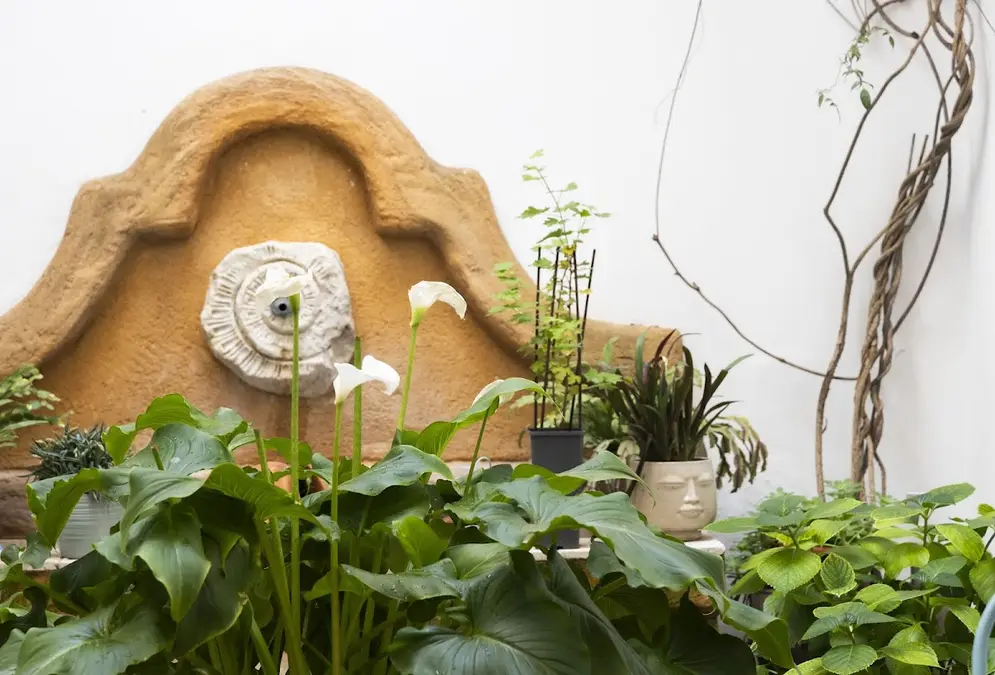
Three interior patios create natural cool spaces through the hottest part of the day. The main patio has a century-old orange tree, genuinely old and genuinely large, and a ceramic fountain. The tree shades the whole courtyard by midday and produces actual fruit, which sometimes ends up on the breakfast table. The other two patios are smaller and more private. These are not decorative features added for atmosphere. They are structural elements that have been here since the 17th century, doing the same job they always did.
Breakfast can be served in the main patio when the weather permits, which in Córdoba means roughly March through November. Sitting under the orange tree at 8am in April, when the blossom is out and the lanes outside are still empty, is the reason this kind of small hotel exists.
The owners' family welcome is the kind that shows up in reviews not as a category score but as an actual anecdote: the recommendation that turned into the best dinner of the trip, the lift to the station at an impossible hour.
Who Stays Here
The hotel draws couples looking for something with character over the anonymous chain-hotel experience, and history-focused travellers who want to be inside the story rather than adjacent to it. It also works well for families who want the extra space of a connected multi-building property. What it does not offer is a pool, a spa, or a gym. There is no lobby bar. The 9 rooms means the property never feels crowded, and the owners have time to actually attend to guests rather than process them.
The Location
The hotel is on Calle Romero, a quiet street in the medieval Jewish quarter. The Mezquita-Catedral entrance is 150 metres, about 2 minutes on foot. The Synagogue and the the photogenic flower alley are 3 minutes away. For dinner, Taberna Salinas is 100 metres (traditional Córdoban food, open since 1879) and Bodegas Mezquita is 200 metres. The Hammam Al Andalus is 5 minutes away.
In the evening, when the last of the day-trippers have headed back toward the station, Calle Romero becomes a different street. The stone cools, the shadows lengthen, and the Mezquita bells carry over the rooftops. Walking out the front door at dusk and covering the 150 metres to the Mezquita takes less time than checking out of a larger hotel.
Rooms start at €62/night, which is hard to beat for this address and this standard of finish.
Practical Notes
Check-in is from 14:00; checkout by 12:00. With only 9 rooms, the handover is personal rather than queued at a desk. If your train or bus arrives early, the owners will store your bags and let you know the moment the room is ready. Arriving on foot from the train station takes about 20 minutes; a taxi from the AVE station costs around €8 and drops you at the edge of the pedestrianised zone, then five minutes on foot with your bag. The nearest public car park is a 10-minute walk at the Campo Santo de los Mártires, charging roughly €16 per day. One honest limitation: the medieval stone walls hold heat late into summer nights. The air conditioning handles it, but the units in the smaller rooms are audible when running. If you sleep lightly, ask about the quietest unit when you book.