
20 June — every year
Noche Blanca del Flamenco Guide
Spain's largest free flamenco night: 11 stages across the historic centre, 8 hours of back-to-back performances, 100,000 people and one city entirely given over to flamenco. Here is how to plan it.

Written by
María Fernanda González Ten years covering Córdoba's UNESCO heritage sites, sourcing from Junta de Andalucía documentation.
Updated Published
At a glance
- When
- Third Saturday of June (since 2008)
- Where
- 11 stages across the historic centre
- Entry
- Free — no tickets, no wristbands
- Hours
- 10:30 pm – 6:00 am
- Attendance
- Over 100,000 spectators
- Must-see
- Patio de los Naranjos at midnight
In this guide
Jump to a section
Planning for 2027?
This guide documents the 2026 edition, held on 20 June 2026. The stage map and the night-planning advice hold up from one year to the next, but the artists and set times named below were that year's programme. Córdoba publishes the next edition's date and full lineup on the official site in spring 2027. See the Noche Blanca del Flamenco event page for the confirmed 2027 details once they are announced.
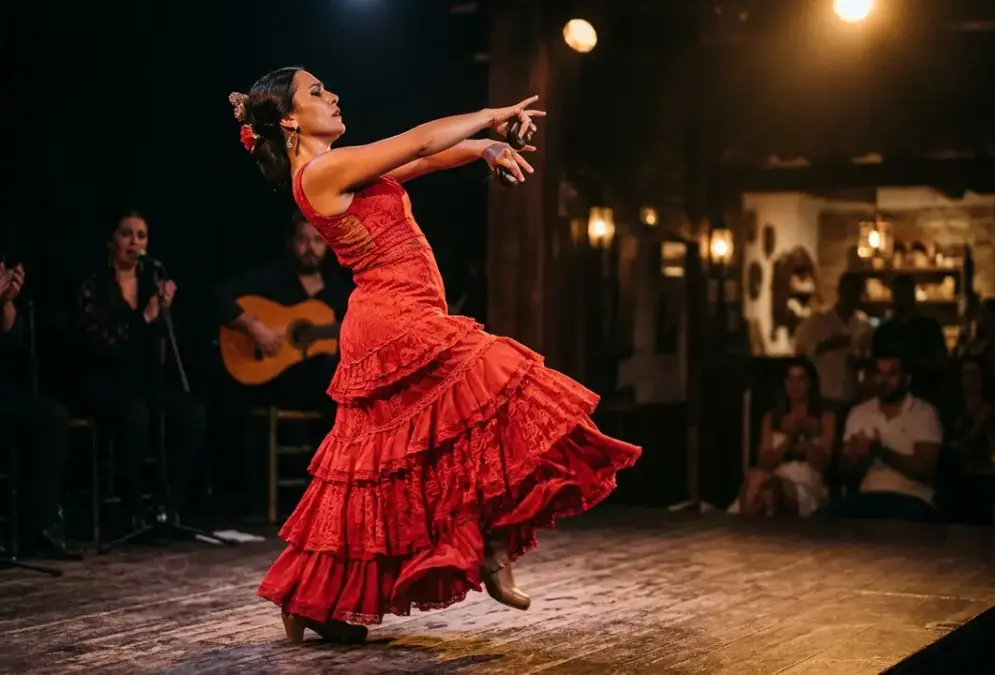
What is the Noche Blanca del Flamenco
Every June since 2008, Córdoba dedicates one entire night to flamenco. Eleven stages open simultaneously across the historic centre: in courtyards, medieval squares, and monument gardens. Entry is free at every stage. The performances run for eight hours without stopping, from 10:30 pm to dawn. More than 100,000 people move through the city that night.
The Noche Blanca del Flamenco is not a festival in the usual sense — there is no single venue, no ticket to buy, no headliner at a fixed time. It is a city-wide event that rewards people who know how to navigate it. This guide is a planning tool for exactly that.
For dates, lineup announcements, and the event itself, see the Noche Blanca del Flamenco event page. The programme is published on the official website a few weeks before the night — check it in advance to see which artists are performing at which stages.
2026 edition — In memory of Fosforito
The 2026 edition of the Noche Blanca del Flamenco honoured the legacy of Antonio Fernández Díaz 'Fosforito' (1932–2025), one of the greatest flamenco cantaores in history, who passed away in November 2025. Born in Puente Genil, near Córdoba, Fosforito dedicated his life to preserving the deepest and most demanding forms of flamenco cante. The Centro Flamenco Fosforito in Córdoba bears his name and holds much of his documentary archive.
Why Córdoba does this
Córdoba has a particular relationship with flamenco. The Santa Marina neighbourhood produced some of the most important figures in the art form's history — including Manolete (the bullfighter whose corridas were set to flamenco) and the lineage that connects to dancers and guitarists performing today. The Centro Flamenco Fosforito traces this history in the city's documentary archive.
The Noche Blanca is an expression of that rootedness: not a commercial concert but a civic event, funded by the city, free to everyone, held at monuments that belong to the public. That is why the atmosphere differs from any ticketed festival.
How to plan your night
The mistake most people make at the Noche Blanca is treating it like a music festival with a schedule to optimise. It works differently. The goal is depth at a few stages, not coverage of all eleven. Choose two or three anchors, stay longer than feels comfortable, and let the night move at the pace of the cante.
The essential night (3 stages)
- 1. Tendillas 10:30 pm (1 hour)
- 2. Patio de los Naranjos midnight (arrive 11:30 pm, stay until 1:30 am)
- 3. Plaza del Potro 3:30 am (until 5 am)
Best for first-timers. Covers the main spectacle, the unmissable courtyard experience, and the most intimate stage. Home by 5 am.
The all-nighter (5 stages)
- 1. Tendillas 10:30 pm
- 2. Patio de los Naranjos midnight (arrive 11:30 pm)
- 3. Entorno de la Calahorra 1:00 am
- 4. Plaza de la Corredera 2:30 am
- 5. Jardines del Alcázar 5:00 am
For serious flamenco followers willing to walk. After the Patio, cross south to the Calahorra at 1 am, then loop north to the Corredera. End at dawn in the Alcázar gardens.
The late-night route (3 stages)
- 1. Plaza de la Corredera 2:30 am
- 2. Plaza del Potro 3:30 am
- 3. Jardines del Alcázar 5:00 am
Start late, avoid the early crowds, and see the programme at its most concentrated. Good for those who prefer smaller audiences and quieter streets between venues.
The Patio rule
Whatever plan you choose, the Patio de los Naranjos at midnight is non-negotiable. Arrive at 11:30 pm and commit. Everything else is negotiable.
The six key stages
The full programme lists eleven stages, but six anchor points define the night. These are the venues with the highest artistic weight and the strongest sense of place. The others serve as overflow or secondary programming — worth catching if you pass by, but not worth prioritising over these six.
10:30 pm
Plaza de las Tendillas
Opening — main stage
The night opens at the city's central square with the highest production values of the evening. Expect a full PA system, lighting rigs, and the headline artists. The atmosphere is electric but impersonal — 10,000 people pressed onto a hard-paved square. Good for the opening spectacle; move on after an hour.
Arrive by 10:00 pm for a decent spot. The square fills from all sides — the café terraces at the edges give you height advantage.
1:00 am
Entorno de la Calahorra
Roman Bridge setting
A smaller stage set against the Calahorra tower, with the Roman Bridge behind you and the Mezquita silhouette across the river. Moving to 1:00 am in 2026, this slot now sits deep in the night, between the Corredera and the Potro. The riverside setting is at its most intense at this hour — the medieval bridge lit, the city quieter, the performance intimate.
Stand on the bridge itself for the best sightline to the tower stage. From the Patio de los Naranjos, walk south through the Judería — roughly 8 minutes to reach the river.
midnight
Patio de los Naranjos (Mezquita)
The essential stop
The enclosed courtyard of the Mezquita, beneath centuries-old orange trees, with the minaret rising above the audience. Capacity is limited and the courtyard amplifies sound in a way no open square can. The cante jondo at midnight in this setting is the defining memory of the Noche Blanca for most people who attend.
Arrive by 11:30 pm and do not leave. The courtyard fills to capacity and latecomers wait outside. Once you are in, stay put until the performance ends.
2:30 am
Plaza de la Corredera
Large popular stage
The colonnaded square hosts one of the larger stages of the late-night programme. By 2:30 am the crowd has thinned to the committed: serious flamenco followers, nighthawks, and people who have paced themselves. The atmosphere shifts from festival to devotional.
The arcaded galleries around the square give shelter and better acoustics than standing in the centre. Bars inside the square stay open and serve food.
3:30 am
Plaza del Potro
Most intimate stage
A small medieval square near the Museo de Bellas Artes. The stage here is the smallest of the programme and the audience is close enough to see the sweat on the dancers' faces. Artists assigned to this slot know they have a discerning crowd — performances tend to be technically precise rather than spectacular.
If you want to understand flamenco rather than just witness its scale, this is the stage to prioritise. Get here before 3:15 am.
5:00 am
Jardines del Alcázar
Closing at dawn
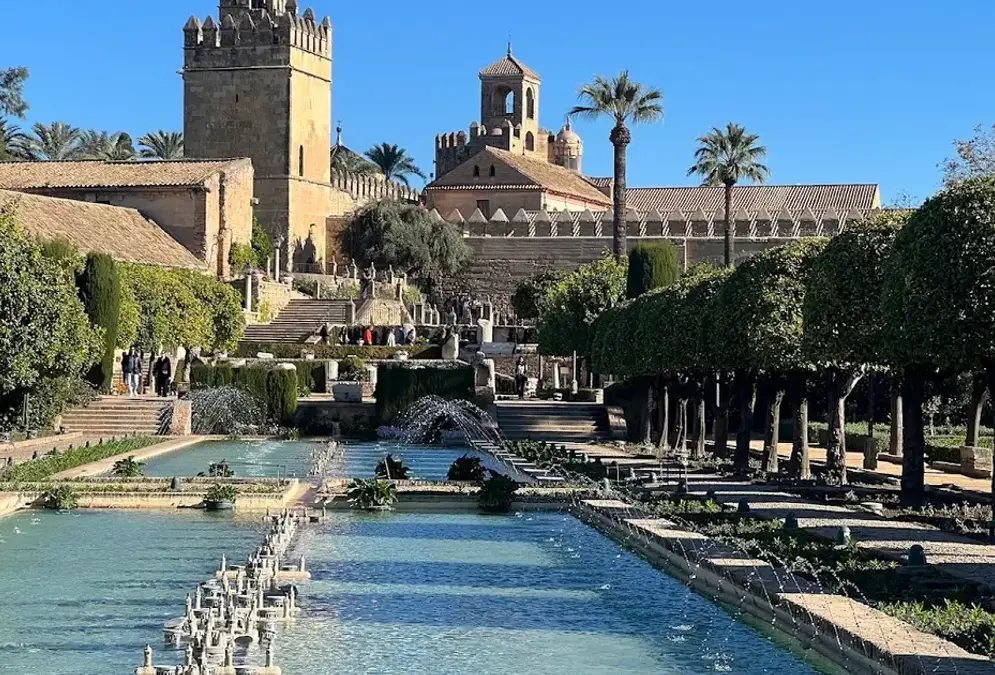
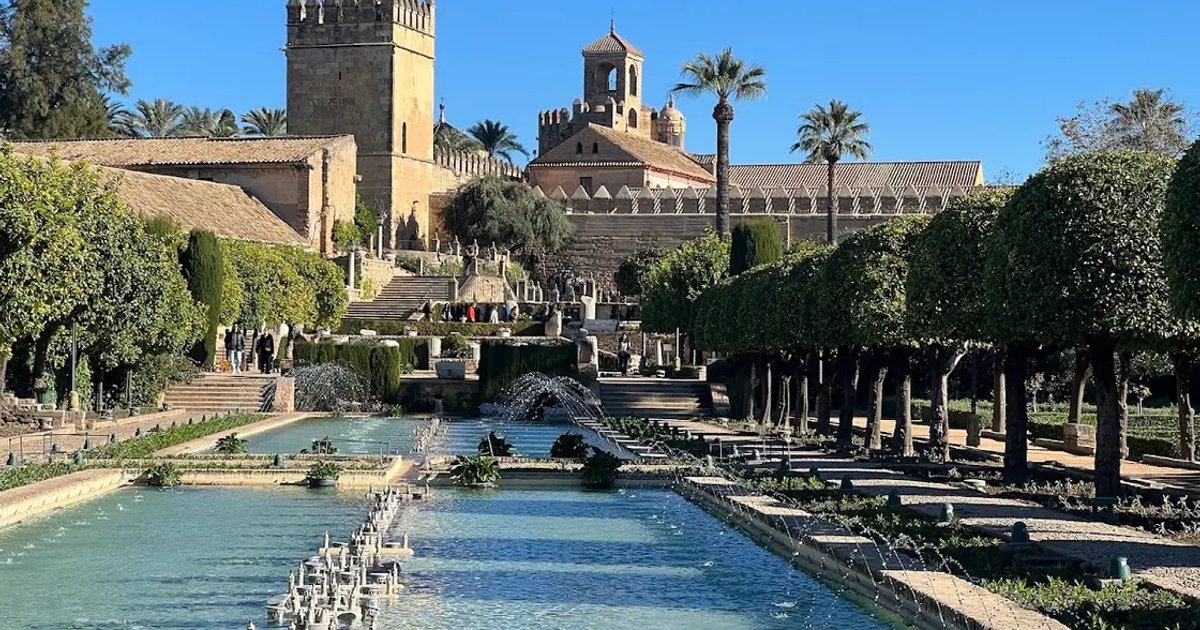
The gardens of the Alcázar receive the final performance as the sky begins to lighten. Fountains and cypress trees frame a stage that feels like it belongs in a dream. The audience by this point is small, exhausted, and completely silent between songs. One of the more unusual live music experiences available anywhere in Spain.
Worth staying up for even if you have seen nothing else. The walk from Potro takes 12 minutes. Bring something to sit on — the paths are stone.
Full night timeline
All ten performances, in order. Two stages run simultaneously at 1:00 am and 2:00 am — choose one and commit rather than trying to cross between them.
10:30 pm
Plaza de las Tendillas
OpeningManuel Lombo
Lombo x Bambino
cante
11:00 pm
Plaza de San Agustín
Fosforito tributeDavid Pino, Bernardo Miranda, Yolanda Osuna, Niño de Peñaflor
Nazareno y Olivares
cante
midnight
Patio de los Naranjos
EssentialMaría Toledo
Vicente entre dos pianos
cante
1:00 am
Entorno de la Calahorra
María del Mar Moreno
baile
1:00 am
Cine Fuenseca
Competition winnersSara Dénez & Ángel Flores
Origen
cante/toque
2:00 am
Plaza Conde de Priego
Lela Soto
baile
2:00 am
Compás de San Francisco
Monia Abdelali
baile
2:30 am
Plaza de la Corredera
Maki & María Artés
baile
3:30 am
Plaza del Potro
Most intimateEzequiel Benítez
cante
5:00 am
Jardines del Alcázar
Closing — dawnLos Estanques & El Canijo de Jerez
fusion
Two simultaneous stages
At 1:00 am, the Entorno de la Calahorra and Cine Fuenseca run at the same time. At 2:00 am, Plaza Conde de Priego and Compás de San Francisco overlap. Pick one per slot — the walk between them at that hour is too far to catch both.
Stage-by-stage guide
Early evening: 10:30–midnight
Plaza de las Tendillas — 10:30 pm
The main stage draws the biggest early crowd. Plan on one performance set (roughly 45–60 minutes) and then move. Manuel Lombo opens the night with Lombo x Bambino, a programme built around his command of cante jondo. Arrive, take in the spectacle, and leave after an hour.
Plaza de San Agustín — 11:00 pm
David Pino, Bernardo Miranda, Yolanda Osuna and Niño de Peñaflor perform Nazareno y Olivares — the evening's designated Fosforito tribute. A short walk north of Tendillas. Catch 20–30 minutes here, then move south to reach the Patio by 11:30 pm.
Midnight: the Patio de los Naranjos
The enclosed courtyard of the Mezquita-Catedral holds perhaps 2,000 people standing comfortably. At midnight, that space fills with an audience that has sought it out deliberately — you will not find casual passers-by here. The orange trees, the minaret silhouette above the roofline, and the acoustics of the enclosed courtyard create conditions that no purpose-built concert venue can replicate.
Stay for at least 90 minutes. The show at the Patio typically runs in sets of 20–30 minutes each — different styles of flamenco (cante, toque, baile) rotate through the programme. The transition between a bailaora finishing and a cantaor beginning, in silence broken only by the sound of the city beyond the walls, is worth the entire night. In 2026, María Toledo performs Vicente entre dos pianos — cante with piano accompaniment beneath the orange trees.
Small hours: 2:30–5:00 am
Plaza de la Corredera — 2:30 am
Maki and María Artés take the colonnaded square at 2:30 am. The bars inside the arcade stay open — use this as a rest stop and eat something before the final stretch.
Plaza del Potro — 3:30 am
Ezequiel Benítez takes the smallest stage of the programme, in one of the oldest squares in the city near the Museo de Bellas Artes. By this hour, the audience came specifically for the small scale. Technically demanding performances, and quiet between songs in a way the earlier stages are not.
Dawn: the Alcázar closing
The gardens of the Alcázar de los Reyes Cristianos host the final performance as the sky moves from black to deep blue. The cypress trees, fountains, and garden paths make a stage set that exists nowhere else. The audience is small — a few hundred people at most, those who have stayed the full night. The first birds begin as the last dancer finishes.
Los Estanques open the set; El Canijo de Jerez (Marcos del Ojo Barroso) closes it — flamenco-rock and psicodelia in a garden setting that makes the fusion feel less incongruous than it sounds.
It is a 12-minute walk from Potro to the Alcázar. Leave Potro by 4:45 am to be in position before the gates fill.
Listen before you go
Nine of the ten performing artists are on Spotify. A few hours with their catalogues before the night makes the difference between watching flamenco and hearing it.
Manuel Lombo
Cante jondo10:30 pm — Tendillas
María Toledo
CanteMidnight — Patio de los Naranjos
Sara Dénez
Cante1:00 am — Cine Fuenseca
Ángel Flores
Guitar1:00 am — Cine Fuenseca
Lela Soto
Baile2:00 am — Plaza Conde de Priego
Monia Abdelali
Baile2:00 am — Compás de San Francisco
María Artés
Baile2:30 am — Plaza de la Corredera
Maki
Baile2:30 am — Plaza de la Corredera
El Canijo de Jerez
Flamenco-rock5:00 am — Jardines del Alcázar
David Pino, María del Mar Moreno, and Ezequiel Benítez are not currently on Spotify. Search for their names on YouTube for recordings.
“cante jondo always sings at night. It knows nothing of morning or evening, mountain or plain. It knows only the night, a deep night studded with stars.”
What to bring
Essential
- · Comfortable shoes — you will walk 5–8 km across the night. Not the night for new footwear.
- · A light jacket or layer — temperatures drop noticeably after 2:00 am, even in June. The Alcázar gardens are cooler than the streets.
- · Water — bars and kiosks are open all night but water is easier carried than queued for at 3 am.
- · Phone fully charged — mobile data is congested at the Tendillas stage; download a map of the historic centre offline beforehand.
Optional but useful
- · Small foldable seat pad — the Alcázar paths and some stage perimeters offer standing only; a pad makes the dawn wait easier.
- · Printed programme — the official website publishes the full lineup a few weeks before the event. A printed copy avoids battery drain.
- · Cash — some outdoor bars are cash-only during the event.
- · Earplugs — the Tendillas stage is loud. The Patio is not. Useful for the early hours if you want clear hearing at the intimate stages later.
Crowd dynamics
Understanding how the crowd moves through the night is more useful than any schedule. The Noche Blanca is one event but three distinct phases in terms of atmosphere.
10:30 pm – midnight: the city fills
The early streets are crowded and festive — families, visitors, younger locals who have come for the atmosphere rather than the art. The Tendillas stage draws the biggest crowd of the night here. The Patio de los Naranjos begins filling around 11:00 pm. If you are positioned at the Patio by 11:30 pm, you will notice the crowd shift in character as the midnight hour approaches — the families leave, the serious listeners arrive.
Midnight – 2:00 am: peak concentration
This is when the event reaches its emotional peak. The Patio is at capacity, the streets between stages are thick with movement, and every bar in the centre is open. For experienced flamenco followers, the quality of the performances in this window is typically the highest of the night — artists perform with the awareness that this is the hour the audience has waited for.
2:00 am – dawn: the night narrows
By 2:00 am the casual crowd has left. What remains is a smaller, committed audience — people who have planned the whole night, serious aficionados who have come from other cities for the programme, and night-workers taking breaks from bar shifts. The atmosphere in the streets becomes quieter but the performances become more intense. The Potro and Alcázar stages are at their best in this window.
The golden rule
Arrive early at the Patio de los Naranjos, stay late at the Potro. The reverse never works as well.
Logistics and accommodation
Arriving in Córdoba for the Noche Blanca
Recommended arrival: The day before, or early on 20 June. You want to be rested for a night that runs to 6 am.
By train: Córdoba has AVE high-speed connections from Madrid (1h45), Seville (45 min), and Málaga (1h). The last trains from Madrid depart around 9:00 pm; from Seville around 9:30 pm. If you are day-tripping, the earliest trains back run at around 6:00–7:00 am.
By car: Drive in the day before. The historic centre is entirely car-free on the night of the event.
Where to stay
Historic centre (Judería, Centro): The best choice — you walk to every stage and walk back to sleep. Book 2–3 months in advance; the Noche Blanca weekend fills early.
Near the station: The station is a 20-minute walk from the historic centre. A practical option if the centre is fully booked, but you will want taxis after 2 am.
Price uplift: Expect a 30–50% premium on June 20 versus surrounding nights. Book as early as possible.
Getting around on the night
All on foot: The historic centre is pedestrianised for the event and all six key stages are within 20 minutes' walk of each other.
Taxis: Available on the edge of the pedestrian zone (Avenida del Gran Capitán, Paseo de la Victoria). Useful for returning to hotels outside the centre after the event ends.
Parking: Several car parks near the centre operate through the night (Parking El Arcángel, Parking Colón). If you are driving, leave the car parked and walk.
Practical tips
Official information
Official programme: nocheblancadelflamenco.cordoba.es — published a few weeks before the event with full artist lineups per stage.
Municipality: cordoba.es — transport and logistics information closer to the date.
Food and drink through the night
Before the event: Dinner in the Judería or Centro at 8:30–9:30 pm. Most sit-down restaurants close their kitchens by 10:30 pm. Do not eat heavily.
During the night: Bars around Plaza de la Corredera serve montaditos (small sandwiches) and tapas until 4 am or later. Most accept cards, some cash only.
At dawn: The cafeterías around the train station open at 6:00 am. A breakfast of café con leche and tostada after the Alcázar closing is a reasonable end to the night.
Weather and June conditions
Evening temperature: 26–30°C at 10:30 pm, dropping to 18–22°C by 4 am. The drop is significant after midnight.
Rain: June in Córdoba is very dry. Rain on the night of the Noche Blanca is rare; the event has never been cancelled due to weather, but check forecasts the day before.
Heat: The 20 June day can reach 38–42°C. Stay hydrated during the day and rest in the afternoon — you are planning an eight-hour night.
Estimated costs
Stage entry Free
Dinner before event €25–45
Drinks & food during the night €20–40
Accommodation (1 night) €80–200
Transport to/from Córdoba €20–80
Total per person €145–365
Plan your Noche Blanca visit
Córdoba on the night of 20 June: eleven stages, eight hours, one city given over to flamenco. Book accommodation early — the Noche Blanca weekend fills months in advance.
Frequently asked questions
How many stages can I realistically visit in one night?
Three to four is the practical limit for most people. The stages are spread across the historic centre, and walking between them — plus queueing for position at the Patio de los Naranjos — adds up fast. Trying to see all eleven means spending the night in transit rather than watching flamenco. Choose two or three anchors and build your night around them.
What time should I arrive at the Patio de los Naranjos?
By 11:30 pm at the latest — the courtyard has limited capacity and fills to the point where entry is controlled from around 11:45 pm onwards. Once inside, stay. The orange-tree courtyard at midnight is the single best experience of the Noche Blanca and not worth rushing through. Plan at least 90 minutes here.
How do I get between the stages?
On foot. The historic centre is car-free for the night and all six main venues are within 20 minutes' walk of each other. Taxis operate on the edge of the pedestrian zone but are not practical for moving between stages. Download a map before you go — mobile data is slow at the Tendillas stage due to crowd load on the network.
What is the atmosphere like for someone who has never seen flamenco?
It is accessible without any prior knowledge. The scale of the event — 100,000 people, free entry, a full city turned over to one art form for one night — communicates the seriousness of flamenco better than any introduction. Start at the Patio de los Naranjos for the most emotionally immediate experience. The guide to flamenco in Córdoba gives more context on what to listen for.
Is the Noche Blanca suitable for families with children?
The early stages (Tendillas at 10:30 pm, Plaza de San Agustín at 11:00 pm) are manageable for older children. The event runs until 6:00 am and the later stages are not suited to younger children. If you are visiting as a family, plan for a 10:30 pm–1:00 am window and stay near the early stages.
What should I wear?
Comfortable walking shoes above everything else — you will cover 5–8 km across the night. A light jacket for after 2:00 am when the temperature drops noticeably even in June. Smart casual works at all stages; there is no dress code but the Alcázar gardens at dawn reward a little more effort.
Where should I eat before the Noche Blanca?
Further reading
Sources
3 references Show Hide
- Noche Blanca del Flamenco — Official Site (opens in a new tab)
Official programme, artist lineups and practical information
- Ayuntamiento de Córdoba — Cultural Events (opens in a new tab)
Official city website with logistics and transport information
- Turismo de Córdoba (opens in a new tab)
Official tourism office for Córdoba, Andalusia
Book tours & activities in Córdoba
Tours are selected for quality, not commission. We earn a small fee if you book — at no extra cost to you.
Guided tours, skip-the-line tickets, and bookable experiences — browse everything available in Córdoba.
 1.5 hours
 Mosque-Cathedral Skip-the-Line Guided Tour
4.7 From €29
Reserve
 1.5 hours
 Mosque-Cathedral Skip-the-Line Guided Tour
4.6 From €28
Reserve
 3 hours
 Jewish Quarter, Mosque & Alcázar Tour
4.6 From €49
Reserve
Self-guided Mosque-Cathedral E-Ticket with Audio Guide
4.2 From €18.50
Reserve
 70 minutes
 Caballerizas Reales Equestrian Show
4.5 From €18.50
Reserve
2 hours Mosque & Jewish Quarter Tour with Tickets
4.6 From €35.55
Reserve
3 hours Mosque-Cathedral, Jewish Quarter & Alcázar Tour
4.6 From €49.99
Reserve
 1.5 hours
 Alcazar Guided Tour and Skip-the-Line
4.2 From €19
Reserve