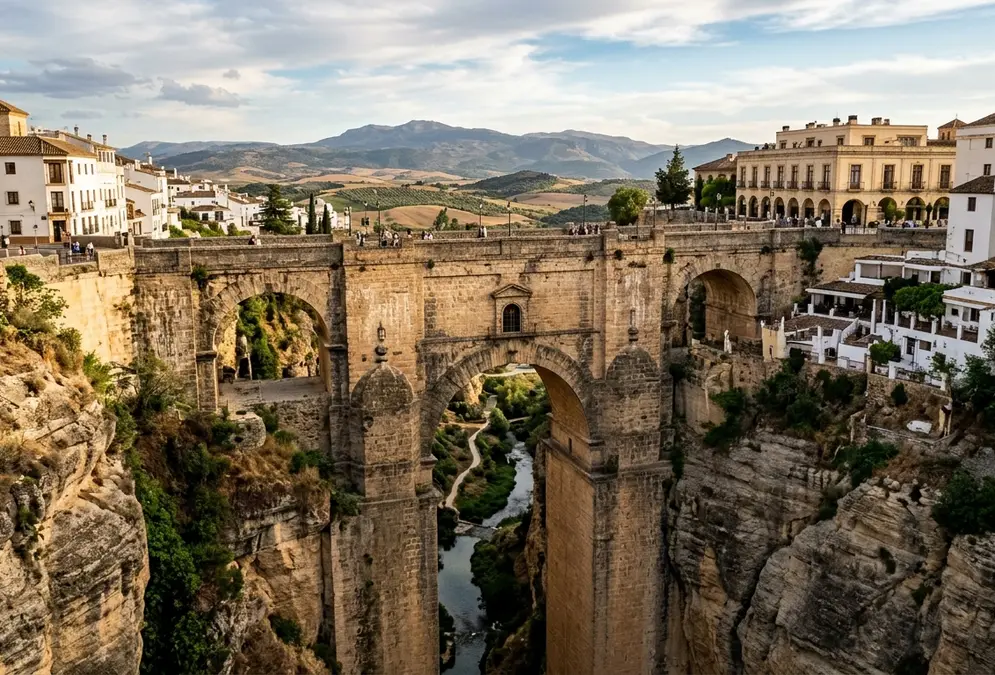
~155 km from Córdoba
Ronda Day Trip from Córdoba
Ronda sits on a 100-metre cliff above El Tajo gorge, about 155 km south of Córdoba. The Puente Nuevo bridge alone draws people from across Andalusia. Allow 2.5 hours each way by train.

Written by
Carmen Ruiz Montoya Eight years of field research on hiking routes and natural parks in Córdoba province.
Updated Published
On this page
Jump to a section
- Distance
- ~155 km from Córdoba
- By train
- 2h15–2h30 · from €7
- By car
- ~2h via A-45 + A-367
- Duration
- Full day (5–6 hours in Ronda)
- Best season
- Spring (Apr–May) · Autumn (Sep–Oct)
- Bono Turístico
- €12 covers 6 monuments
Ronda is one of the most visited towns in Andalusia, and it earns that. The Puente Nuevo — a 98-metre stone bridge spanning El Tajo gorge, completed in 1793 — is genuinely spectacular. The old town is compact and walkable, the Plaza de Toros is among the oldest in Spain, and the Arab baths are the best preserved in the south. From Córdoba, the train takes around 2.5 hours via Bobadilla. The round trip eats into your day, but the 5 to 6 hours you get in Ronda are enough to cover the main sights at a reasonable pace.
Check train status before booking
The Córdoba–Ronda rail line via Bobadilla has experienced service disruptions from infrastructure works. Check renfe.com for current schedules before planning. A replacement bus service may operate when trains are suspended.
How to get there
Train (Renfe)
RecommendedVia Bobadilla or Antequera
- Journey time
- 2h15–2h30
- Price (2nd class)
- from €7 advance
- Frequency
- ~3–4 departures/day
- Change at
- Bobadilla or Antequera
Renfe runs around 3 to 4 departures daily from Córdoba to Ronda, with the journey typically requiring a change at Bobadilla or Antequera. Book a few days ahead at renfe.com for the best prices. An early morning train (departing around 7:30–8:30am) gives you the most time on the ground.
Check schedules on RenfeBy car
Best option for Setenil detour
- Journey time
- ~2 hours
- Distance
- ~155 km
- Route
- A-45 south → A-367 west
- Parking
- Paid lots near old town
The drive south on the A-45 is fast motorway until you hit the Serranía de Ronda, where the road winds through mountain terrain. A car is the only practical option if you want to include Setenil de las Bodegas in the same day. Several paid car parks sit just outside the old town, within 5 to 10 minutes' walk of the Puente Nuevo.
What to see in Ronda
Start here 45–60 min · Museum €3
Puente Nuevo
Built over 40 years and completed in 1793, the Puente Nuevo spans El Tajo gorge at a height of 98 metres. The bridge itself is free to walk across; the chamber built into its central arch has been converted into a small museum on the bridge's construction and history (€3). The viewpoints below the bridge — most accessible from the Camino de los Molinos walking path — give the classic photograph looking straight up at the arch. Allow 45 to 60 minutes.
La Ciudad · Old Town 1.5–2 hours · Baths €4.50
Arab Baths and La Ciudad
Ronda's old town (La Ciudad) occupies the southern plateau of the cliff. The Moorish street grid survives mostly intact, and the neighbourhood requires no itinerary beyond wandering. The Arab Baths date from the 13th century and are among the best-preserved Islamic baths in Andalusia. Three chambers — cold, warm and hot — retain their original star-shaped skylights. Entry is €4.50 or included in the Bono Turístico.
The Mondragón Palace (now the municipal museum) and the Iglesia de Santa María la Mayor are both in La Ciudad and worth passing through if you have time. The main street, Calle Armiñán, connects the old and new towns.
Historic bullring 45–60 min · €6.50
Plaza de Toros
Built between 1779 and 1785, Ronda's bullring is one of the oldest in Spain and the place most associated with the Romero dynasty of matadors, who codified many of the rules of modern bullfighting here. The arena has an unusual two-storey covered gallery; the museum inside covers Ronda's role in the development of Spanish tauromachism. Entry is €6.50 or included in the Bono Turístico.
Alameda del Tajo
20–30 min · FreeA public garden on the western edge of the new town with views over the gorge. Good for a mid-afternoon break between the Plaza de Toros and the return journey. The gardens overlook the countryside rather than the bridge, so position yourself for sunset at the Puente Nuevo viewpoint instead if you're staying late.
Bono Turístico — is it worth it?
The combined pass (€12) covers six monuments: the Puente Nuevo museum, Arab Baths, Casa del Gigante, Museo Joaquín Peinado, Mondragón Palace, and the Plaza de Toros. Individual entry to the Arab Baths (€4.50) plus the Plaza de Toros (€6.50) already costs €11, so if you're adding the Puente Nuevo museum (€3), the pass saves you €2.50 on just those three. It pays for itself clearly at four or more sites.
One-day itinerary
Timing note
This itinerary assumes an early train departure from Córdoba (~7:30–8:30am) arriving in Ronda around 10:00–10:30am. Check renfe.com for current first departures. A car allows more flexibility on the return.
7:30
Depart Córdoba
Take the first morning train toward Ronda (change at Bobadilla or Antequera). Book the ticket the previous day to get the best price.
10:15
Arrive Ronda station
The train station is about 15 minutes' walk from the old town, or a short taxi. Walk up through the new town (Mercadillo) toward the gorge.
10:30
Puente Nuevo + viewpoints
The bridge and its museum. Then follow the path down into the gorge (Camino de los Molinos) for the classic looking-up view. Morning light is best. Buy your entry ticket at the Puente Nuevo museum box office and collect the Bono Turístico if you plan to visit four or more sites.
11:45
Arab Baths and La Ciudad
Cross the bridge into the old town and work your way to the Arab Baths. Then wander La Ciudad's streets toward Mondragón Palace and Santa María la Mayor at your own pace.
Afternoon
13:30
Lunch
The restaurants around Plaza del Socorro and Calle Virgen de la Paz in the new town are more reliable than tourist traps near the bridge. Casa Santa Pola (courtyard, traditional Andalusian) or El Lechuguita (tapas bar, no reservation needed) are both solid choices. Aim for 1:30pm arrival — Spanish lunch service runs 1–4pm.
15:00
Plaza de Toros
The museum inside the bullring tells the story of Ronda's place in Spanish bullfighting. Allow 45 to 60 minutes for the arena and exhibits.
16:15
Alameda del Tajo
A short walk from the Plaza de Toros. The gardens give views over the countryside; it's a quieter way to end the afternoon than fighting for space at the Puente Nuevo.
17:30+
Return to Córdoba
Check return train times before you leave Córdoba in the morning. Last trains back are typically in the early evening. Arriving in Córdoba around 8–9pm is a reasonable expectation.
Setenil de las Bodegas: optional detour
By car only — tight timing on public transport
Setenil de las Bodegas is a white village 22 km from Ronda (about 30 minutes by car) where houses are built directly into overhanging rock ledges. The result is a village with streets covered by solid rock ceilings — restaurants, bars, and homes tucked into the cliff face. It's unusual and worth seeing if the logistics work.
Getting there
By car ~30 min each way
By bus (Autobuses Paco Pepe) ~45 min, Mon–Sat only
Time in village 1.5–2 hours
What to see
- Calle Cuevas del Sol and Calle Cuevas de la Sombra — the rock-canopied streets
- Church of La Encarnación (16th century)
- Village square and local restaurants (jamón and goat cheese)
When to arrive
The village gets crowded with tour buses between 11am and 2pm. If you're driving, aim to arrive after 2:30pm for a quieter visit and better afternoon light on the rock faces. From Ronda, that means finishing lunch by 2pm and driving straight out.
Budget for the day
Estimated cost per person
Return train (advance) €14–50
Bono Turístico (6 monuments) €12
Lunch €15–28
Coffee + miscellaneous €5–10
Estimated total €46–100
Money-saving tips
- Book train tickets 3–7 days ahead for the lowest Renfe prices
- Buy the Bono Turístico (€12) if visiting 3+ monuments — it pays for itself
- Eat lunch at places on Plaza del Socorro, away from the bridge tourist area
- Walk from the train station to the old town (~15 min) to avoid taxi cost
- The Puente Nuevo bridge itself is free to walk across
Make the most of your Córdoba base
Tours are selected for quality, not commission. We earn a small fee if you book — at no extra cost to you.
Book a city tour on a non-day-trip day — skip-the-line access from €28.
Best Seller
Top Rated
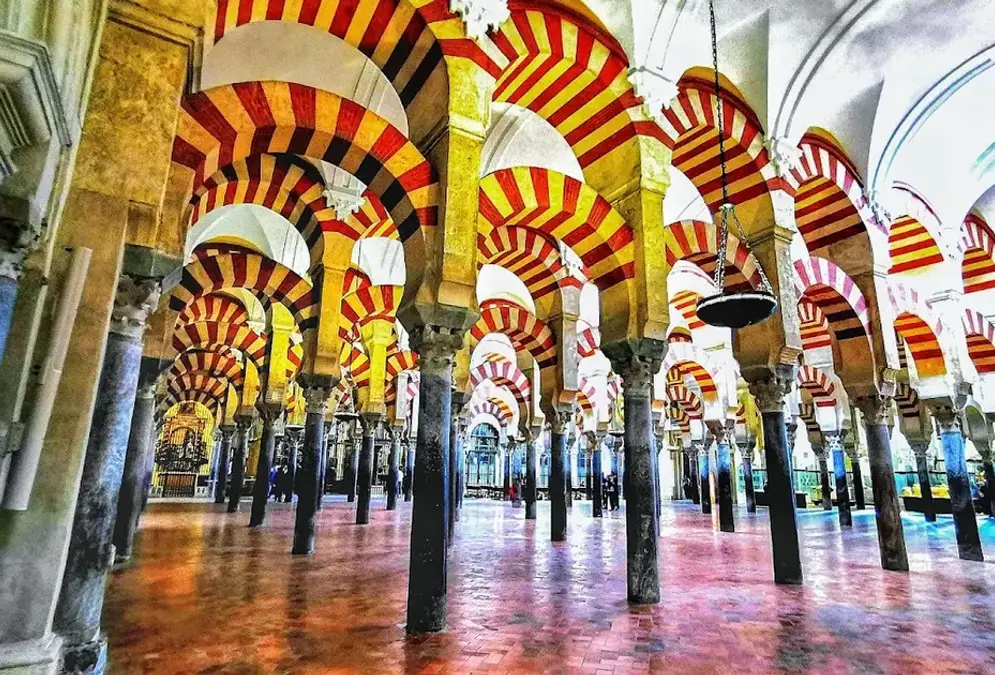
Mosque-Cathedral Skip-the-Line Guided Tour
Skip the queue and explore the Mezquita-Cathedral with a knowledgeable local guide. Discover 13 centuries of layered history in one of Spain's most iconic monuments.
Skip the line 1.5 hours
From €29
4.7 (7,293 reviews)
Reserve Your Spot
✓ Verified GetYourGuide reviews
Books up weeks ahead in peak season
Córdoba Guided Tour: Mosque, Jewish Quarter & Alcazar
Three-hour circuit of the Mezquita's 856-column prayer hall, the Jewish Quarter's whitewashed lanes, and the Alcázar's Roman mosaics. Skip-the-line access included.
Skip the line 3 hours
From €45
4.5 (615 reviews)
Reserve Your Spot
✓ Verified GetYourGuide reviews
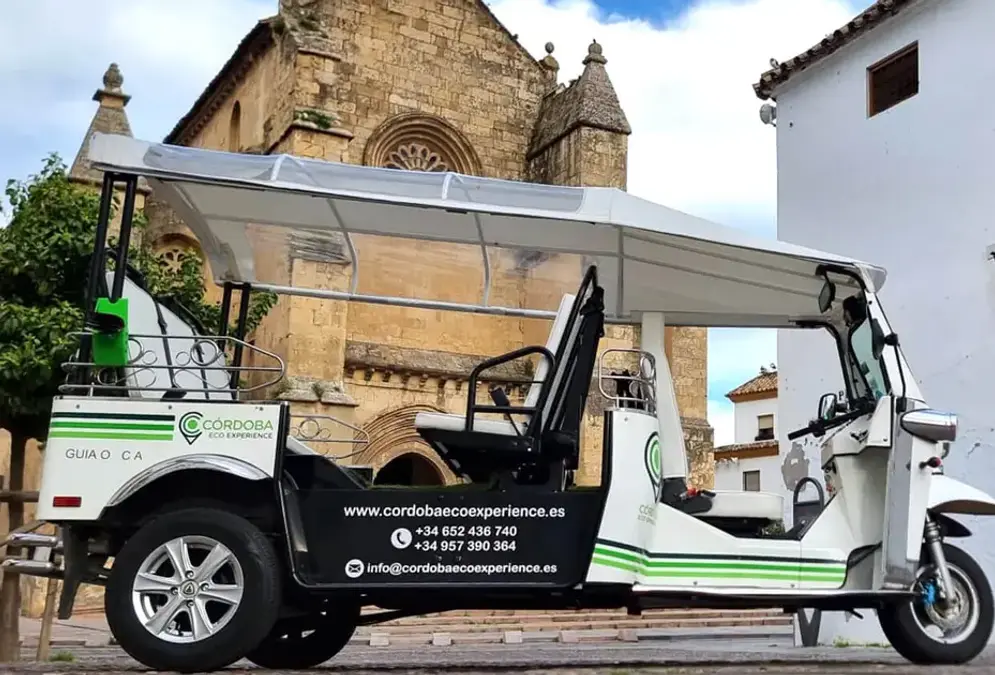
Guided City Tour by Tuk-Tuk
Zip through Córdoba's historic streets aboard a fun electric tuk-tuk. A comfortable, entertaining way to cover the main sights with a live guide narrating along the way.
1 hour
From €25
4.9 (347 reviews)
Reserve Your Spot
✓ Verified GetYourGuide reviews
Rent a car in Córdoba
We earn a small commission if you book a car through this search — at no extra cost to you.
The drive to Ronda through the Sierra is half the experience. Compare rental rates from Córdoba.
Frequently asked questions
How do you get from Córdoba to Ronda by train?
Renfe runs trains from Córdoba to Ronda via Bobadilla or Antequera. Normal journey time is 2h15 to 2h30, with tickets from €7 in second class. Check renfe.com for current schedules and any service disruptions before booking, as the line has been subject to infrastructure works.
Is Ronda worth a day trip from Córdoba?
Yes, but it's a long day. Plan on 2.5 hours each way, which leaves around 5 to 6 hours in Ronda. That's enough for the Puente Nuevo, the Arab baths, the Plaza de Toros, and a proper lunch. If you want to slow down or add Setenil de las Bodegas, an overnight stay makes more sense.
What is the Bono Turístico in Ronda?
The Bono Turístico is a combined ticket for six Ronda monuments: the Puente Nuevo museum, Arab Baths, Casa del Gigante, Museo Joaquín Peinado, Mondragón Palace, and the Plaza de Toros. It costs €12 and saves €8–10 compared to individual entry fees if you visit four or more sites.
Can you visit Setenil de las Bodegas on the same day as Ronda?
Technically yes, by car. Setenil is about 22 km from Ronda (30 minutes each way). Allow 1.5 to 2 hours in the village. By bus from Ronda, Autobuses Paco Pepe runs limited services (Monday–Saturday), so timing is tight. For a day trip from Córdoba without a car, skip Setenil and save it for a separate trip.
How long does it take to drive from Córdoba to Ronda?
About 2 hours for the 155 km drive via the A-45 south toward Málaga, then west on the A-367. The road climbs into the Serranía de Ronda as you approach — worth a window seat.
Ronda is one of those places where the image in your head turns out to be accurate. The gorge really is that vertiginous, the Puente Nuevo really does look like it shouldn't exist, and the old town really does empty out once you walk two streets back from the bridge. Take the early train, give yourself the afternoon, and don't rush the lunch.