
Córdoba's natural wine pioneer
Jugo Vinos Vivos opened in 2017 as the city's first bar built entirely around natural wine. The concept was simple and, at the time, rare in Córdoba: Spanish producers who farm organically or biodynamically, minimal intervention in the cellar, no industrial shortcuts. Eight years later, the bar has quietly become a reference point for anyone who takes wine seriously here.
Natural wines by the glass
The list changes constantly. Whatever the owners have just brought in, that is what you drink. On any given evening you might find a cloudy orange from Ribeiro, a reductive Montilla-Moriles fino, or a barely-fizzy red from some producer nobody outside Andalusia has heard of. The staff know their wines and give honest, unpretentious guidance. If something does not suit your palate, they will swap it. Most labels are by the glass, which is the point: discovery without commitment.
The regional focus shifts with the seasons. In autumn and winter, you are more likely to find structured reds from Ribera del Duero or Bierzo alongside lighter bottles from the Canary Islands. Spring and summer skew toward whites and oranges, with producers from Galicia's Rías Baixas and Rías Baixas neighbors showing up more often. Montilla-Moriles never disappears from the list regardless of season, since the local appellation a short drive south of Córdoba produces finos and amontillados that belong in this glass-to-producer format.
Artisan small plates
Food follows the same philosophy as the wine. Raw-milk cheeses from small dairies, artisan charcuterie, quality conserves, smoked fish, bread from a proper baker. The menu rotates with what is seasonal and available. Nothing is there for show; it is all calibrated to taste good with a natural wine.
First-timers often make the mistake of treating the food as an afterthought. The raw-milk cheese board in particular is worth treating as a main event. Producers change as the bar's relationships with small dairies evolve, but the approach is consistent: cheeses with real character, ideally with some age on them, that hold up to the more assertive bottles on the list.
The neighborhood and setting
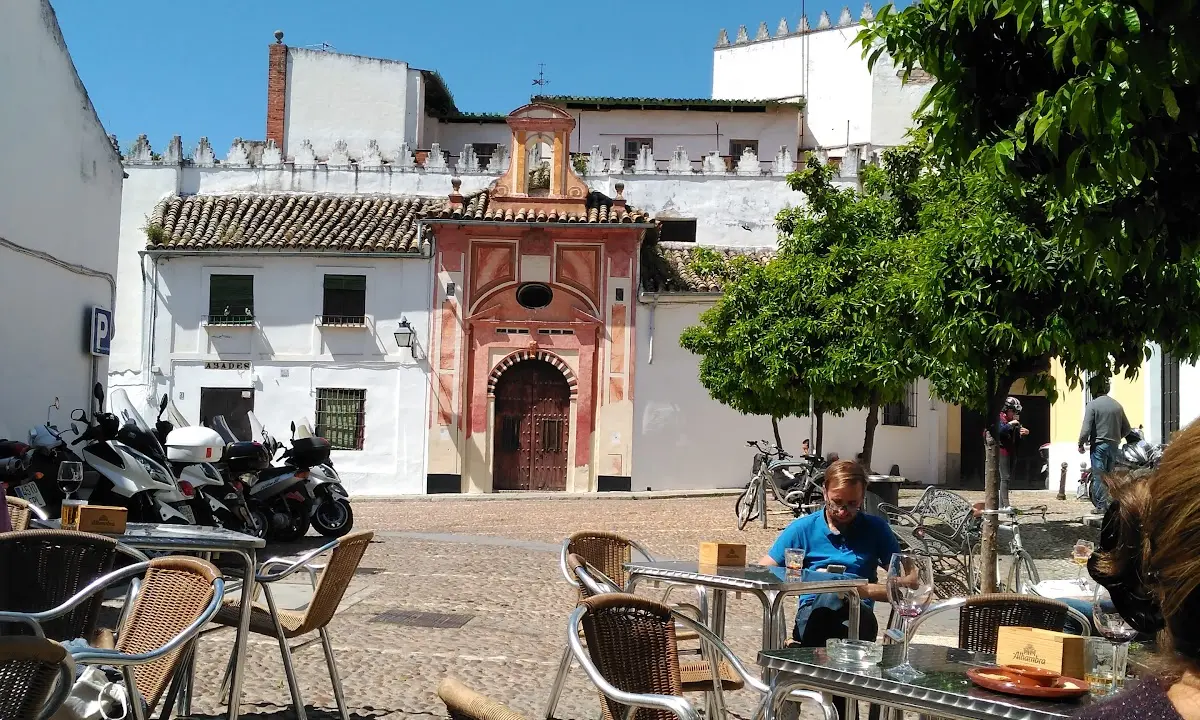
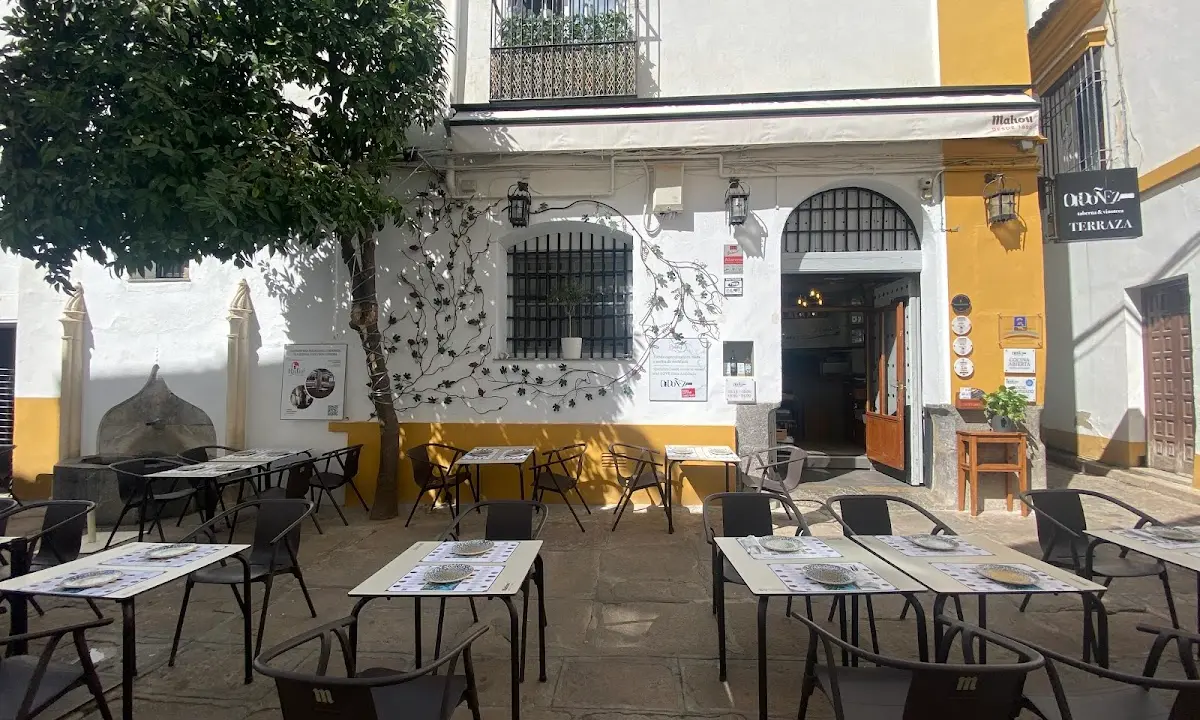
Plaza San Andrés is a short walk north of the Mezquita-Catedral and just outside the busiest tourist circuit. The square has one of the handsomer churches in the centro, the 15th-century San Andrés, and on weekday evenings it is mostly locals. The bar itself is compact. The counter takes up most of the space, there are a few stools, and the walls hold the wine. There is no outdoor terrace, no ambient lighting designed to signal wine seriousness. The experience is entirely in what is in the glass.
The crowd and the atmosphere
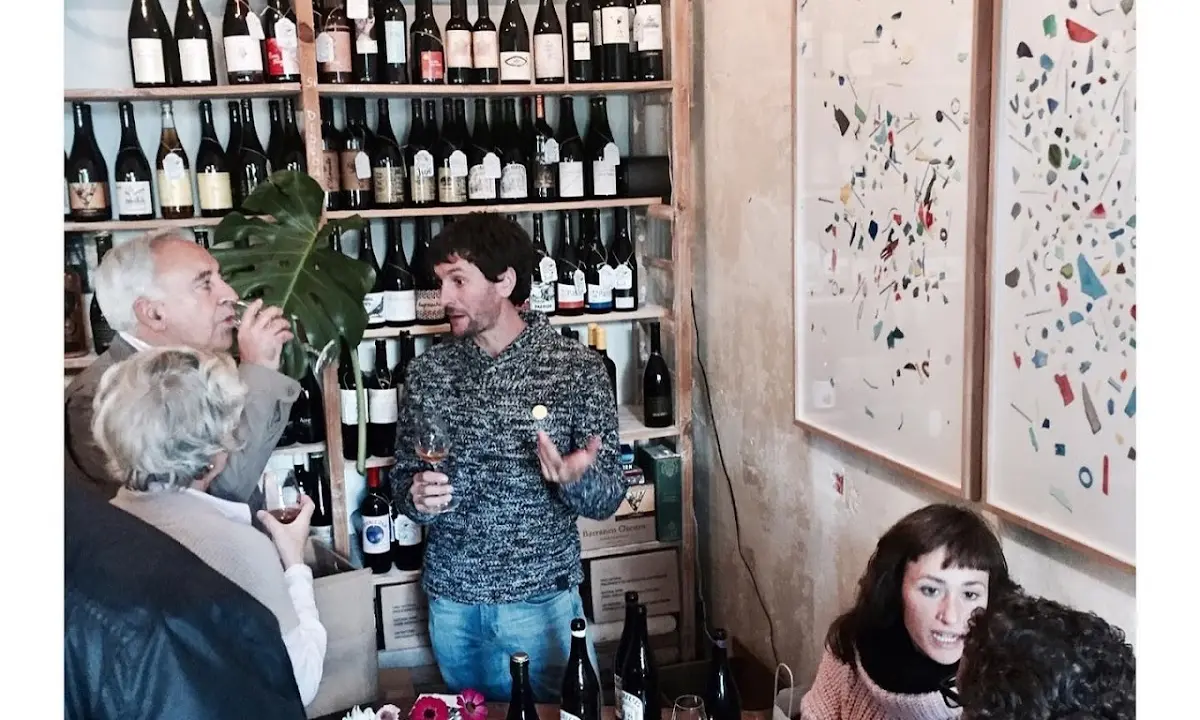
By 7 pm on a Thursday the bar fills with a regular cast: winemakers passing through, local chefs on their night off, a handful of travelers who found the address in a wine magazine. Conversations run long. Music stays low. The walls are plain, the counter worn. Jugo Vinos Vivos has no interest in looking like anything other than what it is.
For first-timers, the right move is to tell the staff what you normally drink and let them choose. Not because the list is confusing, but because the whole model depends on the staff knowing what is open that day and which bottles are showing well. A recommendation from someone who has tasted the stock is more useful than scanning labels from producers you have never heard of.
To continue your exploration of Córdoba's wine bars, Vinoteca Ordóñez in the Judería has a historic cellar and views of the Mezquita, while VinumPlay near the Roman Temple pours from a list of over 300 labels.
Jugo Vinos Vivos leads our Best Wine Bars in Córdoba and ranks fourth in the Top 10 Bars in Córdoba, the two essential guides for wine-focused visitors.
Buying by the glass vs. buying a bottle
The default at Jugo Vinos Vivos is the glass, and this is not a compromise. The staff open bottles throughout the service window and sell them by the pour until they are gone, which means what is available on a given evening depends on what is open and showing well. A glass typically runs €4–7 for still wines; skin-contact and sparkling pours tend toward the higher end. The price difference between a well-kept glass here and a glass at a conventional wine bar is narrower than you might expect.
Bottles can be ordered, and the owners encourage it if a label grabs you. The selection behind the counter is the same stock they sell by the glass, so nothing is held back for full-bottle orders. If you find something you want to take with you, ask: they sell bottles to go at retail prices, not restaurant markup.
When choosing, the most useful questions for the staff are: what is open right now, what is showing best today, and whether there is anything from a producer they have not stocked before. That last question often turns up something interesting, since the owners rotate new labels in deliberately rather than settling into a fixed list.